Disclosure: This article contains affiliate links. If you buy through these links, we may earn a commission at no extra cost to you.
Two names dominate the mold remover market: RMR-86 and Mold Armor FG502. Both are bleach-based sprays that remove mold without scrubbing, but they serve different jobs. Pick wrong and you waste money on a product that does not solve your actual problem.
Here is the short version. RMR-86 wins for tough, embedded stains on porous surfaces like wood and concrete. It uses 8.0% sodium hypochlorite and removes discoloration in 15 seconds. But it is not EPA registered as a mold killer. Mold Armor wins when you need an EPA registered disinfectant that kills mold spores while removing stains. It costs less per bottle and targets tile, sealed grout, and fiberglass. For bathroom maintenance with real remediation, Mold Armor is the smarter buy.
Quick Verdict
Stuck-on wood stain? RMR-86. Bathroom tile with recurring mold? Mold Armor. The deciding factor is surface type and whether you need to kill mold or just remove the stain. RMR-86 removes visible discoloration faster, but Mold Armor is the only one that kills mold spores.
At-a-Glance Comparison
| Feature | RMR-86 Pro (1 Gal) | Mold Armor FG502 (32 oz) |
|---|---|---|
| Price | $34.99 (Amazon) | $7.48 (Home Depot) |
| ASIN | B071V6RLWT | B001CSF44G |
| Active Ingredient | Sodium hypochlorite 8.0% | Sodium hypochlorite 4.0% |
| EPA Registered? | No (stain remover) | Yes (EPA Reg #4091-23) |
| Kills Mold? | No | Yes (99.9% bacteria/viruses/fungi) |
| Removes Stains? | Yes, in 15-60 seconds | Yes, in 10 minutes |
| Dwell Time | 15-60 seconds | 30 sec (kill) / 10 min (stain) |
| Surfaces | Porous + non-porous (wood, concrete, drywall, brick, tile, grout, vinyl) | Non-porous only (tile, sealed grout, fiberglass, laminate, vinyl, porcelain) |
| Smell | Very strong bleach | Strong bleach (lemon-scented) |
| Amazon Rating | 4.6★ (7,126 ratings) | 4.6★ (4,936 ratings) |
RMR-86: Instant Mold Stain Remover
RMR-86 is made by RMR Solutions, a veteran-owned company based in Michigan. The Pro 1-gallon jug is $34.99 on Amazon with a 4.6★ rating from 7,126 reviews. A 30 oz spray bottle is $15.99. The Pro formula uses 8.0% sodium hypochlorite, giving it higher concentration than any direct competitor.
Strengths
- Speed. Stains vanish in 15 to 60 seconds. Over 10,000 positive reviews mention instant results.
- Porous surface penetration. This is RMR-86’s biggest edge. It penetrates wood, drywall, concrete, and brick. Mold Armor is restricted to non-porous surfaces.
- No scrubbing. Spray, wait, rinse. Over 1,500 reviews mention the scrub-free feature.
- Surface range. Safe on wood, concrete, brick, drywall, vinyl siding, tile, grout, fiberglass, stucco, and shingles.
Weaknesses
- Not EPA registered. RMR-86 is a stain remover, not a mold killer. It removes visible discoloration but cannot claim to kill mold spores.
- Overpowering smell. Over 3,800 reviews mention the strong bleach odor. Users report needing a full-face respirator.
- Higher cost. At $34.99/gal ($0.27/oz), it costs more per ounce than Mold Armor.
- Packaging issues. Multiple Amazon reviews report bottles leaking in transit.
Best Use Case
Old, stubborn mold stains on porous materials. Black stains on wood siding, basement concrete walls, or drywall that has been cleaned before but still looks discolored. Also the go-to for post-flood restoration.
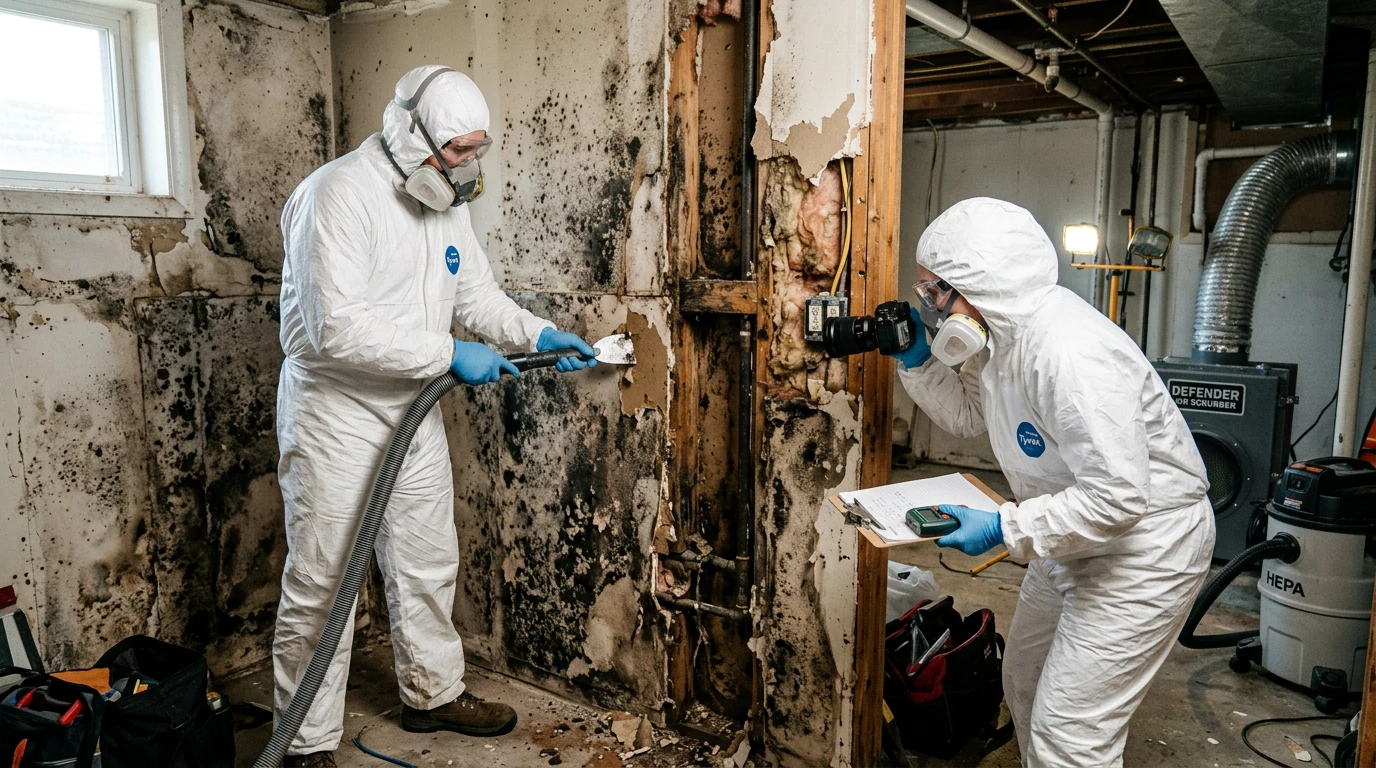
Mold Armor FG502: Mold and Mildew Killer + Quick Stain Remover
Mold Armor is made by W.M. Barr, a company with over 60 years in the cleaning industry. The FG502 model directly competes with RMR-86. A 32 oz bottle is $7.48 at Home Depot with a 4.6★ rating from 4,936 reviews. The formula uses 4.0% sodium hypochlorite plus 1.0% sodium carbonate and carries EPA registration number 4091-23.
Strengths
- EPA registered disinfectant. Registration 4091-23 means the EPA has approved this product to kill mold. It eliminates 99.9% of household bacteria in 10 seconds and fungi in 30 seconds.
- Two-in-one. Kills mold and removes stains in a single application. No separate kill step needed.
- Lower cost. At $7.48 for 32 oz ($0.23/oz), it matches RMR-86’s per-ounce cost on the gallon jug but with no bulk commitment.
- Prevents regrowth. Label states it prevents Aspergillus niger regrowth when reapplied every 7 days.
- Lemon scent. Helps mask the bleach odor better than RMR-86’s raw bleach smell.
Weaknesses
- Non-porous surfaces only. Will not work on wood, drywall, or unsealed concrete. Designed for tile, sealed grout, fiberglass, and vinyl.
- Slower stain removal. You wait 10 minutes versus RMR-86’s 15 seconds. On vertical surfaces, you may need to reapply.
- Strong fumes. Despite lemon scent, reviews warn about strong bleach fumes requiring a mask.
- Nozzle quality. Multiple reviews report the spray nozzle cracks or leaks during use.
Best Use Case
Bathrooms, kitchens, and other areas with non-porous surfaces. If you have recurring mold on shower tile, sealed grout, or fiberglass tub surrounds, Mold Armor handles the whole job: kill the mold, remove the stain, and prevent regrowth.
Head-to-Head: RMR-86 vs Mold Armor
Effectiveness
RMR-86 removes stains faster and penetrates deeper into porous materials. Users see results in 15 seconds even on old set-in stains on wood and concrete. Mold Armor is slower for stains (10 minutes) but actually kills mold spores. For complete remediation, Mold Armor wins because it addresses the root cause. For cosmetic stain removal on porous surfaces, RMR-86 has no equal.
Safety
Both products contain bleach and require caution. RMR-86 uses 8.0% sodium hypochlorite (double Mold Armor’s concentration) and is more aggressive. Multiple users report chemical burns and lung irritation from RMR-86 without a respirator. Mold Armor is still strong but users describe it as less overwhelming. Both require gloves, goggles, ventilation, and at minimum an N95 mask.
Smell
RMR-86 has an intense bleach smell that lingers for 24 hours or more. Over 3,800 Amazon reviews mention odor as the top complaint. Mold Armor uses a lemon scent that makes it more tolerable. Neither is pleasant to breathe, but Mold Armor wins on smell.
Cost per Use
RMR-86 costs $0.27/oz for the gallon jug. A typical bathroom application uses 2-4 oz, costing $0.54-$1.08 per use. Mold Armor at $0.23/oz costs $0.46-$0.92 per use. For small jobs the difference is minimal.
Ease of Use
Both are spray-and-walk-away products. RMR-86 is faster (15 seconds vs 10 minutes), which matters for large areas. Mold Armor requires keeping the surface wet for 10 minutes, meaning extra reapplications on vertical surfaces. But Mold Armor eliminates the separate mold killing step one spray covers both jobs.
Which to Choose by Scenario
Bathroom Tile and Grout
Pick: Mold Armor. Bathrooms have sealed grout, tile, and fiberglass, all non-porous. Mold Armor kills the mold and removes the stain in one step. If the grout is unsealed and deeply stained, use RMR-86 for stain removal first, then follow with a mold killer.
Outdoor Siding and Decks
Pick: RMR-86. For wood siding, fences, and concrete, RMR-86 penetrates better and works faster. Spray, wait 15 seconds, rinse. For vinyl siding, Mold Armor can work, but RMR-86’s speed makes it more practical for large exterior areas.
Porous Surfaces (Wood, Drywall, Concrete)
Pick: RMR-86. This is where RMR-86 has no competition. Mold Armor is labeled for non-porous surfaces only. RMR-86’s surfactant formula penetrates wood grain, drywall paper, and concrete pores to lift deeply embedded stains.
Large Area Treatment
Pick depends on surface. For non-porous areas like a full bathroom, Mold Armor is more economical. For porous basement walls or house siding, buy RMR-86 by the gallon and apply with a pump sprayer.
Preventative Maintenance
Pick: Mold Armor. Its label states it prevents Aspergillus niger regrowth for up to 7 days. RMR-86 has no preventative claim. For weekly mold prevention, choose Mold Armor.
How to Use the Winner Correctly
Whichever product you choose, bleach-based mold removers are strong chemicals. Follow these steps for safe, effective use.
Before You Start
- Wear full PPE. Chemical-resistant gloves, safety goggles, and at minimum an N95 mask. For RMR-86, a full-face respirator with organic vapor cartridges is strongly recommended.
- Ventilate. Open windows and doors. Use fans to pull air outside.
- Cover fabrics. Towels, bath mats, and shower curtains will be bleached if the spray reaches them.
- Test first. Spray a small hidden spot to check for discoloration.
Application
- Shake the bottle well. Both products settle during storage.
- Spray generously to cover the stain completely.
- Wait the correct dwell time. RMR-86: 15-60 seconds. Mold Armor: 30 seconds for disinfection, 10 minutes for stain removal. Reapply if the surface dries.
- Rinse thoroughly with water or wipe with a damp cloth.
- Repeat if needed. Deeply embedded stains may require a second application.
After Care
- Dispose of gloves and rinse reusable PPE with clean water.
- Keep the area ventilated for at least 30 minutes after use.
- Store the bottle upright with the original cap tightly sealed. RMR-86 can corrode spray nozzles if stored with the spray head attached.
- If using RMR-86 for stain removal only, follow up with an EPA registered mold killer to handle the spores.
Read the full review: RMR-86 Mold Remover review
Frequently Asked Questions
Does RMR-86 actually kill mold?
No. RMR-86 is a stain remover, not an EPA registered mold killer. It removes the visible discoloration left by mold but cannot legally claim to kill mold spores. For complete remediation, use an EPA registered mold killer first, then RMR-86 to remove the stain.
Can I use Mold Armor on wood?
No. Mold Armor FG502 is labeled for non-porous surfaces only. On untreated or unsealed wood, the formula absorbs into the grain and can bleach or damage the material. For mold stains on wood, use RMR-86 instead.
Which product has a stronger smell?
RMR-86 has the stronger smell by a wide margin. Users describe it as overwhelming and compare it to bleach five times stronger than regular household bleach. Mold Armor is lemon-scented, which helps somewhat, but still requires a mask and ventilation.
Do I need a mask for either product?
Yes. Both products contain bleach and produce strong fumes. Reviews describe lung irritation and chemical burns from exposure. At minimum use an N95 mask. For RMR-86, many reviewers recommend a full-face respirator with organic vapor cartridges.
Which product is better for preventing mold from coming back?
Mold Armor. Its label states it prevents regrowth of Aspergillus niger for up to 7 days. Regular reapplication keeps mold from returning. RMR-86 has no preventative claim.
Frequently Asked Questions
Does RMR-86 actually kill mold?
No. RMR-86 is a stain remover, not an EPA registered mold killer. It removes visible discoloration left by mold but cannot legally claim to kill mold spores. For complete remediation, use an EPA registered mold killer first, then RMR-86 for stain removal.
Can I use Mold Armor on wood?
No. Mold Armor FG502 is labeled for non-porous surfaces only. On untreated or unsealed wood the formula absorbs into the grain and can bleach or damage the material.
Which product has a stronger smell?
RMR-86 has the stronger smell. Users describe it as overwhelming and compare it to bleach five times stronger than regular household bleach. Mold Armor FG502 is lemon scented which helps somewhat.

Do I need a mask for either product?
Yes. Both products contain bleach and produce strong fumes. At minimum use an N95 mask. For RMR-86 many reviewers recommend a full-face respirator with organic vapor cartridges.
Which product is better for preventing mold from coming back?
Mold Armor. Its label states it prevents regrowth of Aspergillus niger for up to 7 days. RMR-86 has no preventative claim so you would need a separate product for prevention.
Are RMR-86 and Mold Armor safe to use on painted surfaces?
RMR-86 is generally safe on painted surfaces, but it’s crucial to perform a spot test in an inconspicuous area first, as its bleaching action can sometimes lighten certain paint colors. Mold Armor, while also typically safe, should similarly be tested, as its active ingredients can potentially interact with some paint types, especially older or less durable finishes, causing discoloration or damage.
These statements have not been evaluated by the Food and Drug Administration. This information is not intended to diagnose, treat, cure, or prevent any disease. Content is for informational purposes only and is not medical advice; consult a qualified healthcare provider before starting any supplement. As an Amazon Associate we earn from qualifying purchases.