Printable kit: Mold Symptom & Exposure Tracker ($5)
Eight weeks of daily logs that show your doctor when symptoms flare, where you were, and what changed when you left the building.
See what is inside, or get every kit in the Mold Crisis Kit ($29).
Your baby sleeps 14 to 17 hours a day. A toddler sleeps 11 to 14. A school-age child sleeps 9 to 12. That means children spend more time in their bedrooms than in any other room in the house — more time than most adults spend at work. If mold is growing in or near that room, your child is breathing mold spores for the majority of every 24-hour cycle.
The health consequences of mold exposure are more serious for children than for adults. Developing lungs, immature immune systems, faster breathing rates, and smaller airways all amplify the impact. Research has consistently linked early childhood mold exposure to a significantly increased risk of developing asthma — a condition that can follow a child for life. This guide covers what the science shows, how to check your nursery and children’s rooms, and what to do if you find a problem.
Why Children Are More Vulnerable to Mold
Children are not small adults when it comes to mold exposure. Several biological factors increase their susceptibility:
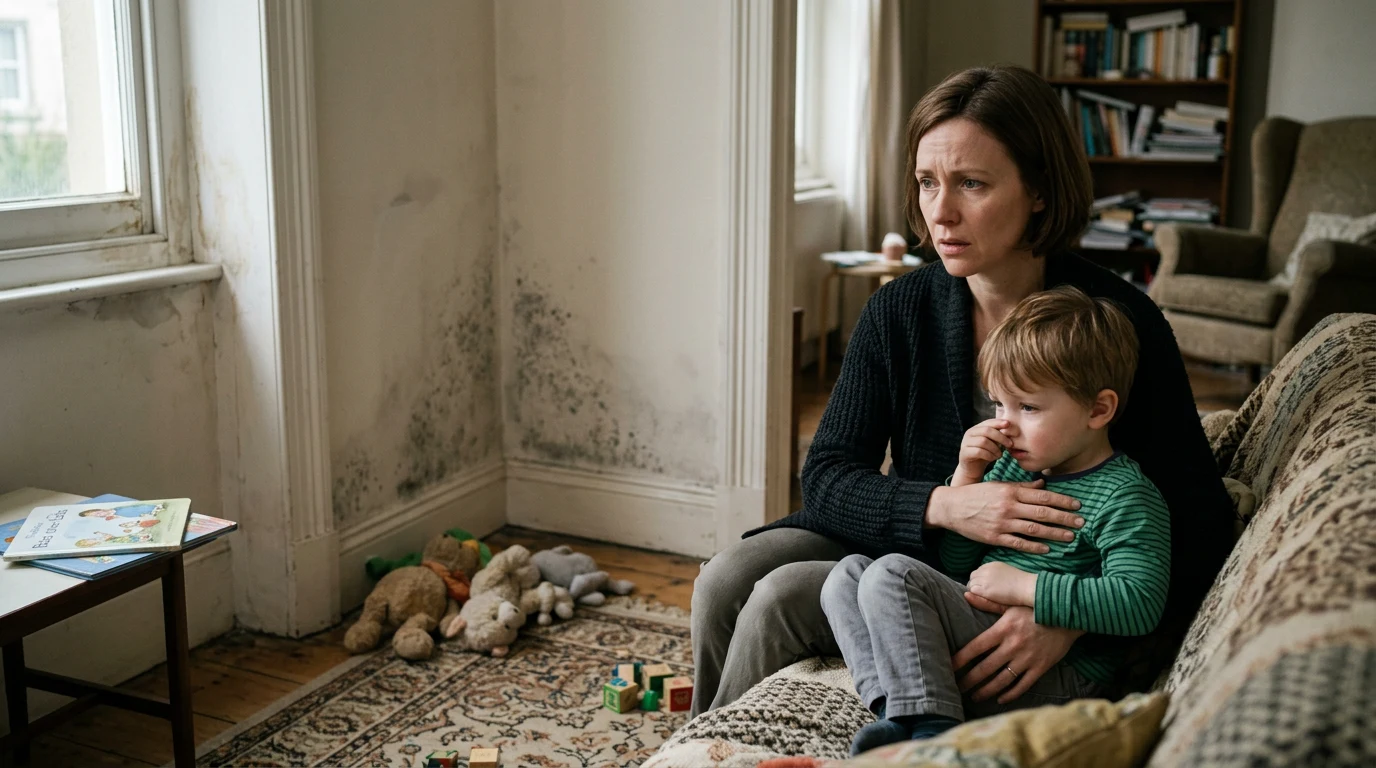
- Higher respiratory rate — infants breathe 30 to 60 times per minute compared to 12 to 20 for adults. A baby inhales approximately twice the volume of air per pound of body weight as an adult, meaning proportionally higher spore intake
- Developing lungs — the lungs continue developing until approximately age 6. Mold exposure during this critical window can permanently alter lung structure and function. Alveoli (the tiny air sacs where oxygen exchange occurs) are still multiplying — damage during this period cannot be fully repaired
- Immature immune system — a child’s immune system is still learning to distinguish threats from harmless particles. Mold exposure during this learning period can trigger inappropriate immune responses that persist as allergies and asthma
- Floor-level living — babies crawl, toddlers play on the floor, and young children spend significant time at floor level where mold spore concentrations are highest (2 to 5 times higher than at adult standing height)
- Hand-to-mouth behavior — infants and toddlers put everything in their mouths, ingesting mold spores from contaminated surfaces, toys, and their own hands after touching floors and walls
- Extended time indoors — young children, especially infants, spend the vast majority of their time inside the home, maximizing their cumulative exposure
The Mold-Asthma Connection in Children
The link between early mold exposure and childhood asthma is one of the most well-established findings in environmental health research.
According to the CDC’s overview of mold health effects, exposure to damp indoor environments and mold is associated with the development of asthma in children. Multiple large-scale studies have quantified this risk:
- Children exposed to visible mold in the first year of life have a 2 to 3 times higher risk of developing asthma by age 7 compared to children in mold-free homes
- Living in a home with dampness or mold during early childhood increases the risk of wheezing episodes by 30% to 50%
- Children who are sensitized to mold allergens and continue living in mold-exposed homes have worse asthma outcomes, more emergency room visits, and more missed school days than sensitized children who move to clean environments
The mechanism works in two stages. First, mold spore exposure sensitizes the child’s developing immune system — the body learns to treat mold proteins as dangerous invaders. Second, continued exposure triggers repeated allergic inflammation in the airways, which over time leads to the airway remodeling characteristic of chronic asthma: thickened bronchial walls, excess mucus production, and hyperreactive smooth muscle.
Symptoms of Mold Exposure in Children
Children may not be able to articulate what they are feeling. Parents need to watch for these signs:
In Infants (0 to 12 Months)
- Persistent congestion — constant stuffy or runny nose that does not resolve with standard treatment
- Noisy breathing — wheezing, rattling, or whistling sounds during breathing, especially during sleep
- Frequent coughing — particularly at night or upon waking, when mold spore exposure in the bedroom has been highest
- Skin rashes — unexplained rashes or eczema flares, especially on areas that contact bedding
- Increased fussiness — irritability and poor sleep that may indicate discomfort from congestion or skin irritation
- Frequent respiratory infections — recurring colds, bronchiolitis, or ear infections that exceed normal infant illness patterns (more than 6 to 8 colds per year in a daycare setting is typical, but persistent or unusual respiratory patterns warrant investigation)
In Toddlers and Young Children (1 to 5 Years)
- Chronic cough — lasting more than 3 weeks, particularly when dry and persistent at night
- Wheezing — audible wheezing during play, exercise, or sleep. Some parents describe it as a “creaky door” sound
- Nose rubbing and eye rubbing — allergic “salute” (upward nose rubbing) and persistent eye irritation
- Snoring or mouth breathing — swollen nasal tissues from mold allergy force mouth breathing, especially during sleep
- Dark circles under eyes — “allergic shiners” caused by nasal congestion restricting blood flow from the under-eye area
- Behavioral changes — fatigue, decreased activity level, and poor appetite from chronic illness
In School-Age Children (6 to 12 Years)
- All of the above plus:
- Exercise intolerance — difficulty keeping up during PE, sports, or active play
- Concentration problems — chronic congestion and poor sleep quality from mold exposure can affect focus and academic performance
- Frequent headaches — sinus pressure from mold-related congestion
- Missed school days — children with mold-related asthma miss an average of 3 to 5 more school days per year than children with well-controlled asthma
The Nursery Safety Check: Where to Look for Mold
Conduct this inspection before setting up a nursery and repeat every 3 to 6 months:

Walls and Windows
- Check all walls, especially exterior walls, for any discoloration, bubbling paint, or soft spots that indicate moisture
- Inspect window frames and sills for condensation stains, mold spots, or peeling caulk. Window condensation is a frequent moisture source in nurseries because parents often keep windows closed and the humidifier running
- Look behind furniture pushed against exterior walls — drywall mold often grows behind dressers and cribs where air circulation is blocked and cool wall surfaces trap condensation
Floor and Carpet
- Pull back carpet edges in corners and along baseboards. The carpet backing and pad trap moisture and support mold growth that is invisible from above
- If the nursery is above a crawl space, check the crawl space for mold. Contaminated air rises through floor penetrations directly into the baby’s breathing zone
- Smell at floor level — get on your hands and knees and inhale near the carpet, baseboards, and corners. Mustiness at floor level is a red flag
Ceiling and Above
- Look for water stains on the ceiling — even small, faded stains indicate past water intrusion that may have left hidden mold in the ceiling cavity
- If the nursery is below a bathroom, check the ceiling for moisture from bathtub or shower plumbing leaks above
- Check the attic space above the nursery for mold on sheathing, insulation, or rafters
HVAC and Air Supply
- Inspect the HVAC supply vent in the nursery. Remove the vent cover and look inside the duct with a flashlight. Dark discoloration or visible growth means mold in the ductwork is being blown directly into the baby’s room
- Check the return air vent similarly
- Replace the HVAC filter if it is older than 60 days. Use a MERV 11 or higher rated filter to capture mold spores
Humidifier Check
Nursery humidifiers are a common, overlooked mold source. Standing water in the reservoir grows mold within 24 to 48 hours. Contaminated mist carries mold spores directly into the air your baby breathes. Clean the humidifier every 2 to 3 days by disassembling and scrubbing all surfaces with white vinegar. Use distilled water only. And monitor room humidity — many parents over-humidify, pushing the nursery above 50% relative humidity and creating mold-friendly conditions on walls and windows.
Keeping Your Child’s Room Mold-Free
Humidity Control
Maintain nursery humidity between 40% and 50%. Place a hygrometer ($10 to $20) in the room and check daily. If humidity exceeds 50%, reduce humidifier output or run a small dehumidifier. Cold-weather condensation on windows is a sign that indoor humidity is too high for the temperature.
Ventilation
Ensure the nursery has adequate air circulation. Keep the door open when the child is not sleeping. If the room has a ceiling fan, run it on low to prevent stagnant air pockets in corners. Do not push the crib directly against an exterior wall — leave at least 4 inches of space for air to circulate behind the crib and prevent condensation on the cold wall surface.
Bedding and Fabrics
Wash crib sheets, blankets, and mattress covers weekly in hot water (130 degrees Fahrenheit or above) to kill mold spores. If the crib mattress has a waterproof cover, wipe it down with a mild vinegar solution monthly. Avoid storing stuffed animals on the floor or against exterior walls where they can accumulate moisture and mold spores.
Regular Inspections
Every 3 months, move the crib and any furniture away from walls and inspect for mold. Check under the crib mattress. Smell the carpet at floor level. Inspect window sills for condensation damage. These quick checks catch problems early before they become established infestations.
What to Do If You Find Mold in Your Child’s Room
Immediate Steps
- Move the child to a different room — relocate the crib or bed to a mold-free room immediately. Do not wait for remediation scheduling
- Close the affected room — keep the door closed and stuff a towel under it to limit spore migration to other rooms
- Run a HEPA air purifier — place one in the child’s temporary room and another in the hallway near the affected room. HEPA filters capture 99.97% of particles 0.3 microns and larger, including mold spores. Learn about air purifiers for mold
- Consult your pediatrician — report the mold discovery and any symptoms your child has been experiencing. Ask about allergy testing if your child has had chronic respiratory symptoms
Remediation
For mold areas smaller than 10 square feet, follow proper removal procedures while the child is out of the house. For any mold in wall cavities, on the ceiling, or covering an area larger than 10 square feet, hire a professional for full remediation. Children should not be in the house during professional mold remediation — the disturbance process releases massive quantities of spores.
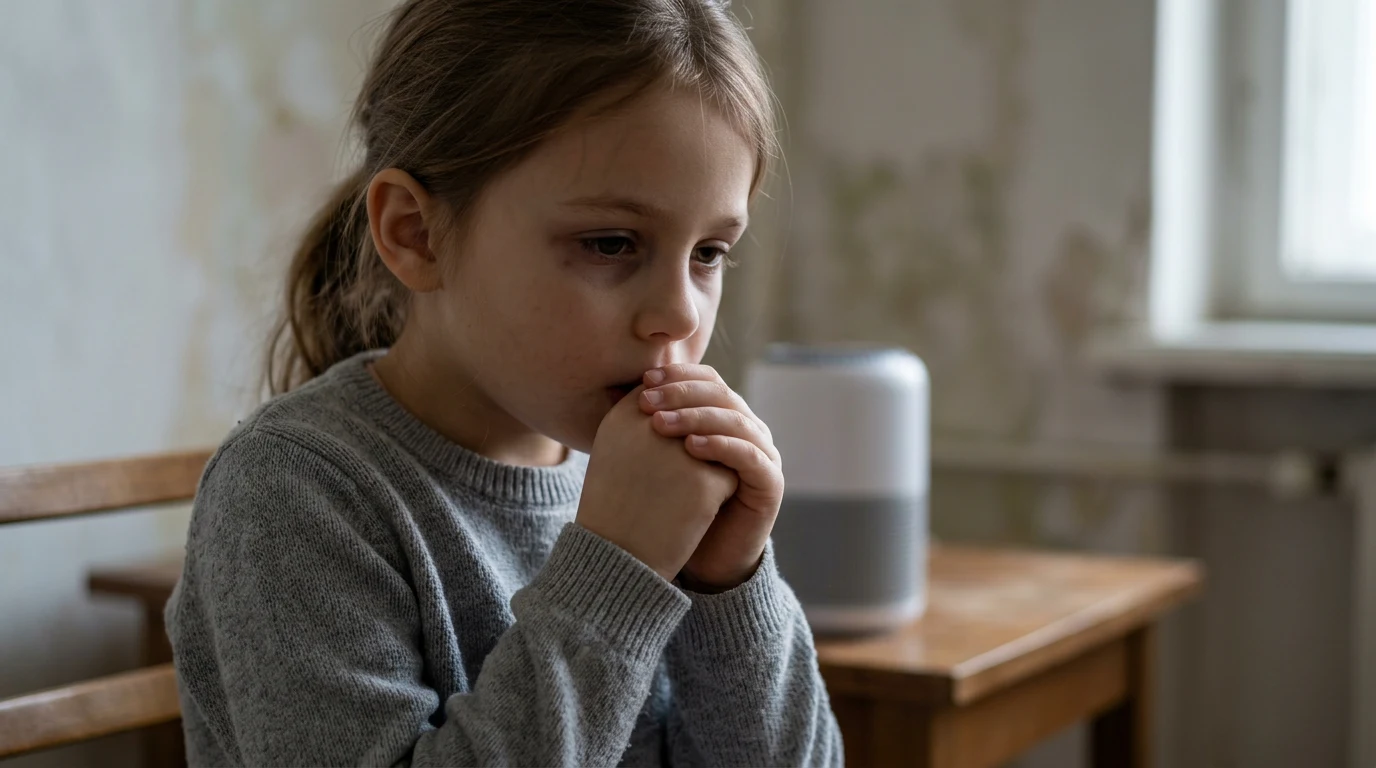
After remediation is complete and the area passes clearance testing, repaint with mold-resistant paint and consider mold prevention products to inhibit future growth.
Post-Remediation Monitoring
After remediation, monitor the room closely for the first 3 months. Check humidity weekly. Inspect the remediated area for any signs of returning moisture or growth. Watch your child for any resumption of symptoms. If mold returns, the moisture source was not fully addressed and requires further investigation.
Schools, Daycare, and Mold Exposure Outside the Home
Your child’s bedroom is not the only concern. Schools and daycare centers — often in older buildings with maintenance backlogs — are common sources of mold exposure:
- If your child’s symptoms worsen on school days and improve on weekends and vacations, the school building may be the exposure source
- Request a meeting with school administration to ask about recent water damage, HVAC maintenance, and any known mold issues
- You have the right to request an indoor air quality assessment if your child has documented mold-sensitive health conditions
- Portable HEPA air purifiers for classrooms are an accommodation some schools will accept for children with documented mold allergies
When to Get Professional Help
Seek professional evaluation if:
- Your child has persistent respiratory symptoms lasting more than 3 weeks
- A doctor has diagnosed asthma and symptoms are not well-controlled despite medication
- Multiple children in the same household develop similar symptoms
- You see mold in the child’s room and cannot identify or fix the moisture source
- Your home has had significant water damage in the past 12 months
Start with your pediatrician, who may refer you to a pediatric allergist for mold-specific IgE testing. Simultaneously, get a professional mold inspection of your home to identify any hidden contamination.
Frequently Asked Questions
Can mold in my baby’s room cause long-term health problems?
Research indicates that mold exposure during infancy and early childhood significantly increases the risk of developing asthma, which can be a lifelong condition. Early exposure may also increase sensitization to other allergens. However, removing the child from the mold environment and properly remediating the home can substantially reduce these risks. The earlier the intervention, the better the outcome.
Is it safe to use a humidifier in the nursery?
Humidifiers are safe when used correctly, but they are one of the most common sources of nursery mold problems. Rules: use distilled water only (tap water leaves mineral deposits that support mold), clean the unit every 2 to 3 days with vinegar, monitor room humidity and keep it below 50%, and turn the humidifier off if window condensation appears. If in doubt, the American Academy of Pediatrics recommends cool-mist humidifiers over warm-mist models.
My child only wheezes at night — could that be mold?
Nighttime wheezing is strongly associated with bedroom allergen exposure, including mold. When your child sleeps for 10 to 14 hours in a room with elevated mold spore counts, the prolonged exposure triggers inflammatory responses in the airways that manifest as nighttime coughing and wheezing. Inspect the bedroom thoroughly — behind the bed, under the mattress, window sills, and HVAC vents — and consider a professional air quality test of the room.
Should I get my child tested for mold allergy?
If your child has persistent respiratory symptoms, recurrent infections, or diagnosed asthma that is difficult to control, mold allergy testing is reasonable. A pediatric allergist can perform skin prick testing or blood IgE testing for common indoor mold species (Aspergillus, Penicillium, Cladosporium, Alternaria). A positive result, combined with confirmed mold in the home, provides a clear treatment path: remediate the mold and manage the allergy.
How quickly will my child improve after mold removal?
Acute symptoms like congestion, coughing, and eye irritation typically improve within 1 to 2 weeks of effective mold removal. Asthma control often improves within 1 to 3 months as airway inflammation subsides. Complete resolution depends on the duration and severity of prior exposure. Children who were exposed for a short period generally recover fully. Those with prolonged exposure may have persistent sensitization requiring ongoing allergy management.
What are the common signs of mold in a baby’s room?
Parents should look for visible mold growth, which can appear as spots of various colors (black, green, white, orange). A persistent musty or earthy odor, even without visible mold, is also a strong indicator of hidden mold growth.

How does mold in a baby’s room affect their health?
Infants and young children are particularly vulnerable to mold exposure, which can exacerbate asthma and allergies, leading to symptoms like coughing, wheezing, skin rashes, and nasal congestion. Prolonged exposure has also been linked to respiratory infections and other health issues in developing immune systems.
What are the first steps I should take if I suspect mold in my baby’s room?
Immediately remove your baby from the affected room to a safe, mold-free environment to prevent further exposure. Then, contact a qualified mold remediation specialist to assess the situation and determine the extent of the contamination.
Can I clean mold in my baby’s room myself?
For small, superficial mold patches (less than 10 square feet on non-porous surfaces), you might attempt to clean it with a mild detergent and water, ensuring proper ventilation and protective gear. However, for larger areas, recurring mold, or mold on porous materials like drywall or carpeting, professional remediation is crucial to ensure complete removal and prevent regrowth.

How can I prevent mold from returning to my baby’s room after remediation?
Maintain indoor humidity levels between 30-50% using a dehumidifier, especially in humid climates or during warmer months. Ensure good ventilation by opening windows regularly and using exhaust fans in bathrooms and kitchens to prevent moisture buildup.
Are there specific areas in a baby’s room that are more prone to mold growth?
Areas with potential moisture sources, such as around windows, near humidifiers, or behind furniture pushed against exterior walls, are common hotspots for mold. Also, check areas where spills might occur and not be fully dried, like under changing tables or near diaper pails.
These statements have not been evaluated by the Food and Drug Administration. This information is not intended to diagnose, treat, cure, or prevent any disease. Content is for informational purposes only and is not medical advice; consult a qualified healthcare provider before starting any supplement. As an Amazon Associate we earn from qualifying purchases.
