Fall creates a unique set of mold risks that catch homeowners off guard every year. The transition from summer heat to winter cold introduces moisture problems that do not exist in other seasons. Leaves pile up against foundations, homes get sealed tight before excess moisture is addressed, and outdoor items brought inside carry mold spores with them.
Understanding these three seasonal traps — and addressing them before temperatures drop — prevents the mold problems that many homeowners discover the following spring when it is too late for easy fixes.
Trap 1: Leaf Piles Against the Foundation
Fallen leaves are beautiful on the lawn and disastrous against your house. When leaves accumulate against the foundation, they create a wet, organic blanket that holds moisture directly against your home’s most vulnerable surface.
Why Leaf Piles Are a Mold Risk
- Leaves trap moisture: A 6-inch layer of wet leaves against a foundation wall can hold moisture for weeks, even between rainfalls. This sustained contact saturates the soil and creates hydrostatic pressure against basement walls.
- Decomposition generates heat and moisture: As leaves decompose, the process generates warmth and releases water vapor. A leaf pile against a cool foundation wall creates ideal condensation conditions.
- Leaves clog gutters and window wells: Wind-blown leaves fill gutters (causing overflow that dumps water at the foundation) and pack into window wells (creating standing water against basement windows).
- Organic matter feeds mold directly: Leaves are an excellent mold food source. Mold colonies that establish on decomposing leaves can spread to adjacent siding, foundation, and framing materials.
Prevention Actions
- Clear leaves from within 3 feet of the foundation at least every 2 weeks during fall
- Clean gutters after peak leaf fall (typically late October to mid-November depending on region)
- Install window well covers if you have below-grade windows — they prevent leaf accumulation and rainwater collection
- Rake mulch beds near the foundation — mulch combined with leaves holds even more moisture
- Check that downspout extensions are still properly positioned after leaf cleanup
Trap 2: Closing Up the House Traps Moisture
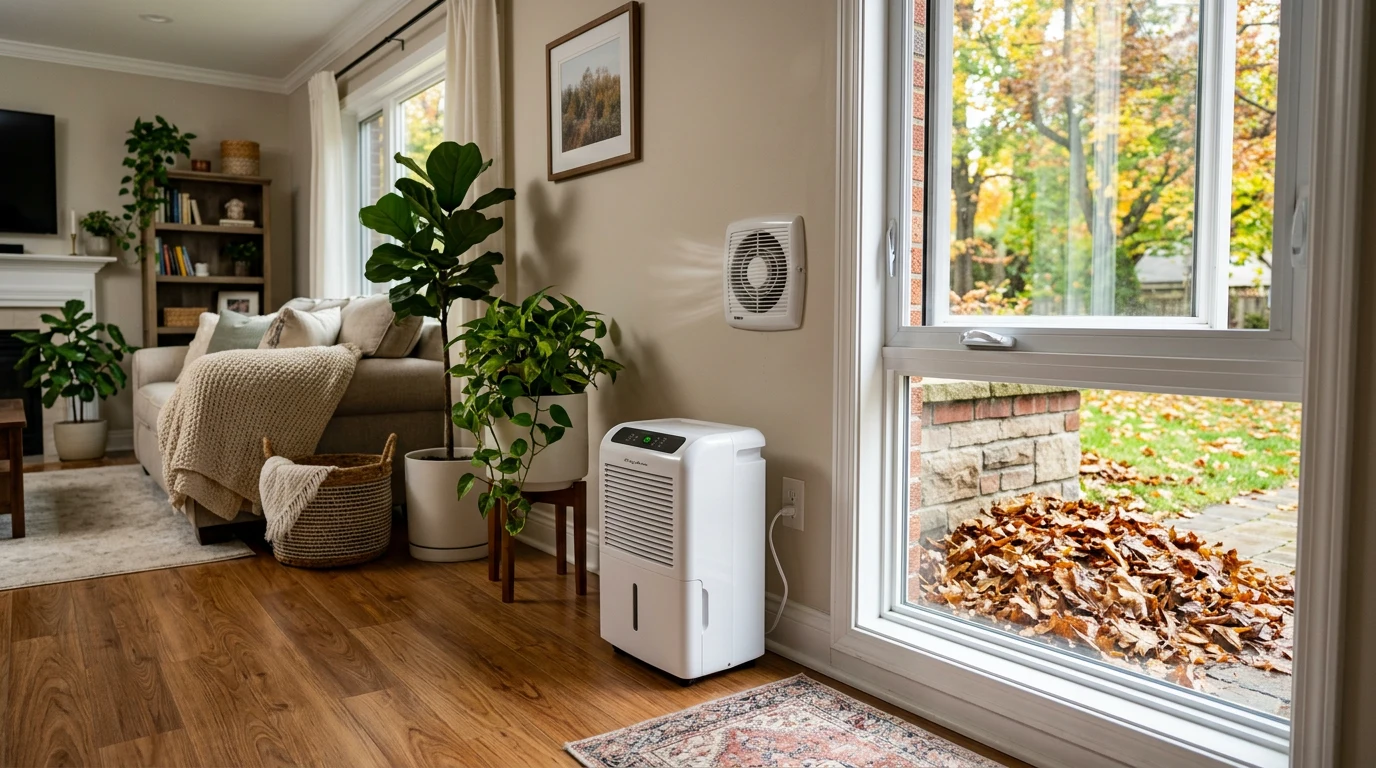
When the first cold snap arrives, the natural instinct is to close every window and seal every draft. The problem: your home has been accumulating humidity all summer, and suddenly shutting off ventilation traps that moisture inside.
The Sealed-House Moisture Cycle
During summer, open windows and AC systems manage humidity through constant air exchange. In early fall, many homeowners enter a transition period where they are not running AC (it is too cool) but are not running heat yet either. Windows stay closed for comfort. The result:
- Cooking, showering, and breathing continue generating 2 to 4 gallons of moisture per day for an average family
- No mechanical system is removing that moisture
- Humidity climbs gradually — often to 60% or higher — without anyone noticing
- Cool exterior walls attract condensation from the warm, moist interior air
- Within weeks, mold begins growing on cool surfaces: exterior wall interiors, closets on exterior walls, and behind furniture against exterior walls
Prevention Actions
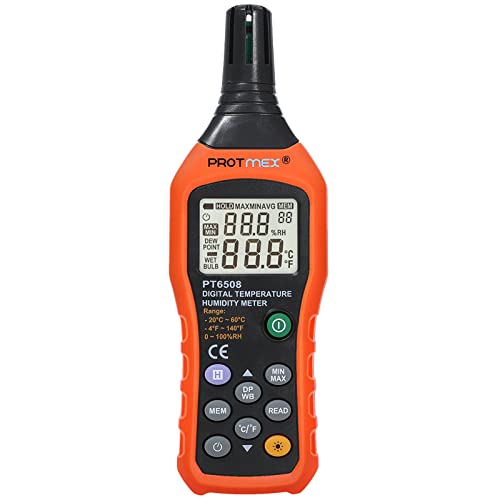
- Monitor humidity with a hygrometer: A digital hygrometer is essential during the fall transition. If indoor humidity exceeds 55%, take action immediately.
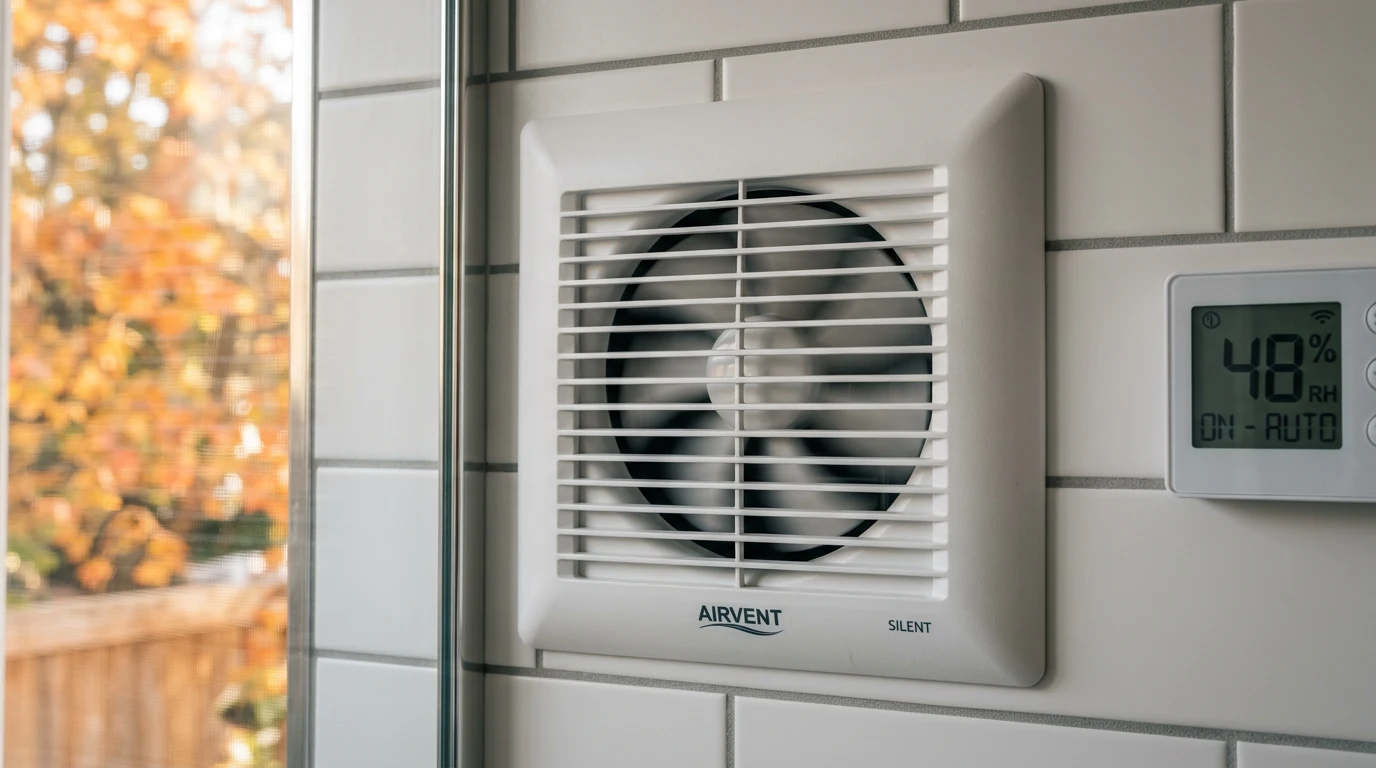
- Run exhaust fans actively: Continue running bathroom fans for 30 minutes after showers and kitchen fans during cooking. In a sealed house, these are your primary moisture removal tools.
- Open windows strategically: On dry fall days when outdoor humidity is below 50%, open windows for 30 to 60 minutes to flush accumulated moisture. Check a weather app for humidity readings before opening up.
- Run the dehumidifier: Do not shut off your basement dehumidifier until indoor humidity is consistently below 50% without it running. In many climates, that means running it through October or even November.
- Switch to heating sooner rather than later: Running your furnace dries indoor air. The earlier you transition to heating, the less time your home spends in the dangerous “sealed but not dehumidified” transition period.
According to the EPA, the ideal indoor humidity range is 30% to 50%. During the fall transition, aim for the lower end of that range to compensate for reduced ventilation.
Trap 3: Outdoor Furniture and Seasonal Items Brought Inside
As temperatures drop, homeowners move items indoors for winter storage: patio furniture cushions, outdoor rugs, garden tools, holiday decorations from the garage, and summer sports equipment. Many of these items have been exposed to moisture, rain, and outdoor mold spores for months.
Why This Matters
- Outdoor cushions absorb moisture and mold: Patio furniture cushions that have been rained on repeatedly may harbor mold colonies inside the foam. Bringing them into a warm, enclosed space gives existing mold ideal growing conditions.
- Stored items in garages and sheds already have mold: Cardboard boxes, fabric items, and paper goods stored in non-climate-controlled spaces often develop mold during humid summer months. Moving them inside transfers the problem.
- Wet firewood introduces massive moisture: A cord of green or rain-soaked firewood can release 500 or more gallons of water vapor as it dries. Stacking wet firewood inside — even in the garage — dramatically raises humidity. Store firewood outdoors, covered, at least 20 feet from the building.
Prevention Actions
- Inspect items before bringing inside: Check all outdoor cushions, rugs, and fabric items for visible mold, musty odor, or damp spots. Clean and fully dry items before storage.
- Replace cardboard with plastic bins: Cardboard boxes in storage areas are mold magnets. Swap them for plastic storage containers with tight-fitting lids.
- Clean and dry seasonal items: Wipe down garden tools, outdoor furniture frames, and sports equipment before putting them in indoor storage.
- Never store wet items in enclosed spaces: If an item is not completely dry, leave it outside or in a well-ventilated area until it is.
- Ventilate storage areas: Closets, attics, and storage rooms where seasonal items are kept need air circulation. Leave doors slightly open or use a small fan to prevent stagnant, humid air.
Fall Mold Prevention Timeline
Here is a week-by-week schedule for fall mold prevention:
September
- Check and clean gutters (pre-leaf-fall clearing)
- Verify dehumidifier is still running in basement and crawl space
- Place hygrometers in basement, bathrooms, and bedrooms if not already there
- Inspect and clean outdoor items before the rush to bring them inside
October
- Begin regular leaf clearing from foundation perimeter (every 2 weeks)
- Monitor indoor humidity daily — watch for the sealed-house humidity climb
- Ensure bathroom fans run 30 minutes after every shower
- Transition to heating when nighttime temperatures consistently drop below 50 degrees Fahrenheit
November
- Final gutter cleaning after all leaves have fallen
- Install window well covers
- Check that HVAC system is running and circulating air throughout the house
- Inspect crawl space before winter closure
- Bring in firewood only as needed — never stockpile wet wood indoors
Why Fall Mold Goes Unnoticed Until Spring
The most insidious aspect of fall mold is its delayed discovery. Mold that begins growing in October or November often goes unnoticed until spring for several reasons:
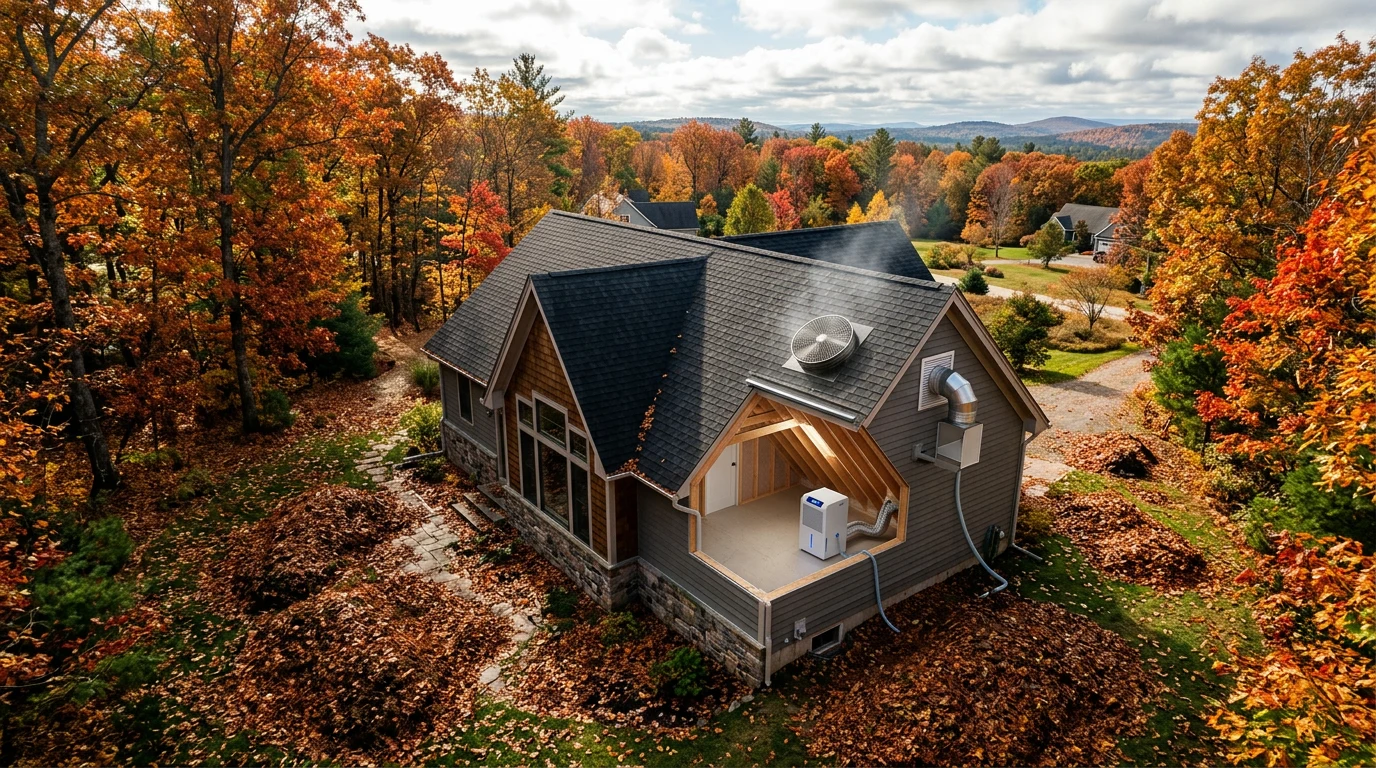
- Winter heating dries out surface moisture, making visible signs less obvious
- Cold temperatures slow (but do not stop) mold growth — colonies remain dormant but alive
- People spend less time in basements, crawl spaces, and attics during winter
- When spring humidity returns, dormant mold explodes into visible growth seemingly overnight
That “sudden” spring mold problem actually started 4 to 6 months earlier during the fall transition. Preventing it in September and October is far easier and cheaper than removing it in April.
Frequently Asked Questions
At what temperature should I stop worrying about mold?
Most mold species slow their growth below 40 degrees Fahrenheit but do not die. They become dormant and resume growing when temperatures rise. Since indoor temperatures stay above 60 degrees Fahrenheit year-round in heated homes, mold can grow indoors during any season if moisture is present.
Should I leave basement windows open in fall?
Only if outdoor humidity is below 50%. On cool, damp fall days (common in October and November), opening basement windows can actually introduce more moisture. Check outdoor humidity with a weather app before ventilating. A dehumidifier is more reliable than natural ventilation during fall.
Can I compost leaves near my house?
Keep compost piles at least 20 feet from the foundation. Decomposing organic matter generates moisture, heat, and abundant mold spores. A compost pile near the house can elevate mold spore counts around your home and introduce moisture to the foundation area.
When should I turn off my dehumidifier for winter?
Do not use a calendar date — use your hygrometer. Turn off the dehumidifier when indoor humidity stays below 45% consistently without it running (usually once your heating system has been operating regularly for several weeks). In many climates, this is late November to December. Resume in early spring.
Frequently Asked Questions
Why is fall a particularly risky time for mold growth, even if it feels dry outside?
Fall brings a unique combination of factors that encourage mold. While days might be sunny, cooler nights lead to condensation on surfaces like windows and pipes, providing the moisture mold needs to thrive. Additionally, falling leaves and debris can trap moisture against foundations and in gutters, creating hidden damp areas.
What are the ‘seasonal traps’ mentioned in the article title, and how do they contribute to mold?
The seasonal traps refer to specific fall conditions that commonly lead to mold issues. These often include blocked gutters and downspouts, which cause water to overflow and pool around foundations; damp leaf piles against the house; and increased indoor humidity from heating or less ventilation, especially in basements and attics.
How can blocked gutters and downspouts specifically lead to mold inside my home?
Blocked gutters prevent rainwater from being directed away from your house, causing it to spill over and saturate the ground directly next to your foundation. This excess moisture can then seep into your basement or crawl space through cracks, creating a damp environment ripe for mold growth on walls, floors, and stored items.
Is leaving fallen leaves near my house really a significant mold risk, or just a minor aesthetic issue?
Leaving fallen leaves piled against your home’s foundation is a significant mold risk, not just an aesthetic one. These piles trap moisture against the siding and foundation, creating a consistently damp environment that encourages mold and mildew to grow on exterior surfaces and potentially penetrate into your home’s structure.
My basement always feels damp in the fall. Is this normal, or a sign of a mold problem?
A consistently damp basement in the fall is not normal and is often a strong indicator of a potential mold problem or conditions that will soon lead to one. Cooler temperatures combined with a lack of ventilation can trap humidity, creating ideal conditions for mold growth on porous surfaces like wood, drywall, and stored items.
What are some immediate steps I can take to prevent fall mold, even before professional remediation?
Immediately clear gutters and downspouts of all debris to ensure proper water drainage away from your home. Also, rake and remove any leaf piles or organic matter accumulated against your foundation, as these trap significant moisture. Inside, consider using a dehumidifier in damp areas like basements to control humidity levels.
These statements have not been evaluated by the Food and Drug Administration. This information is not intended to diagnose, treat, cure, or prevent any disease. Content is for informational purposes only and is not medical advice; consult a qualified healthcare provider before starting any supplement. As an Amazon Associate we earn from qualifying purchases.
