When homeowners discover mold in their basement, they rarely suspect the gutters. They look for leaking pipes, cracked foundations, or rising water tables. But in a surprising number of cases, the root cause is 20 feet above ground level — overflowing gutters and improperly directed downspouts that pour thousands of gallons of water directly against the foundation every year.
The connection between gutters and basement mold is straightforward: water that collects near your foundation eventually finds its way inside. Once inside, it raises humidity, soaks building materials, and creates the persistent moisture that mold needs to thrive.
How Gutter Overflow Causes Foundation Moisture
A typical 1,500-square-foot roof collects approximately 935 gallons of water per inch of rainfall. During a moderate rainstorm of 2 inches, that is nearly 1,900 gallons of water flowing through your gutter system. When gutters are clogged or undersized, that water overflows and falls directly along the foundation wall.
According to the EPA’s guide to mold and moisture, exterior water management is a fundamental part of mold prevention. Here is how the damage cascade works:
- Overflow water saturates the soil against the foundation. Saturated soil creates hydrostatic pressure — water pushing against your basement walls from the outside.
- Water migrates through concrete and block. Concrete and cinder block are not waterproof. They are porous, and water under pressure slowly moves through them via capillary action.
- Moisture appears on interior basement walls. You may see damp patches, white mineral deposits (efflorescence), or actual water beading on the wall surface.
- Humidity rises in the basement. Even without visible water, moisture migrating through foundation walls can raise basement humidity to 65% to 80% — well above the 55% threshold where mold actively grows.
- Mold colonizes within days. Drywall, carpet, wood framing, and stored items near the damp wall become mold food sources. Colonies can establish within 24 to 48 hours of sustained moisture exposure.
The Downspout Problem: 12 Inches Is Not Enough
Even when gutters are clean, standard downspout installations create a mold risk. Most downspouts terminate 6 to 12 inches from the foundation — barely past the siding. During heavy rain, the concentrated flow from a single downspout dumps 100 or more gallons per hour at one point along the foundation.
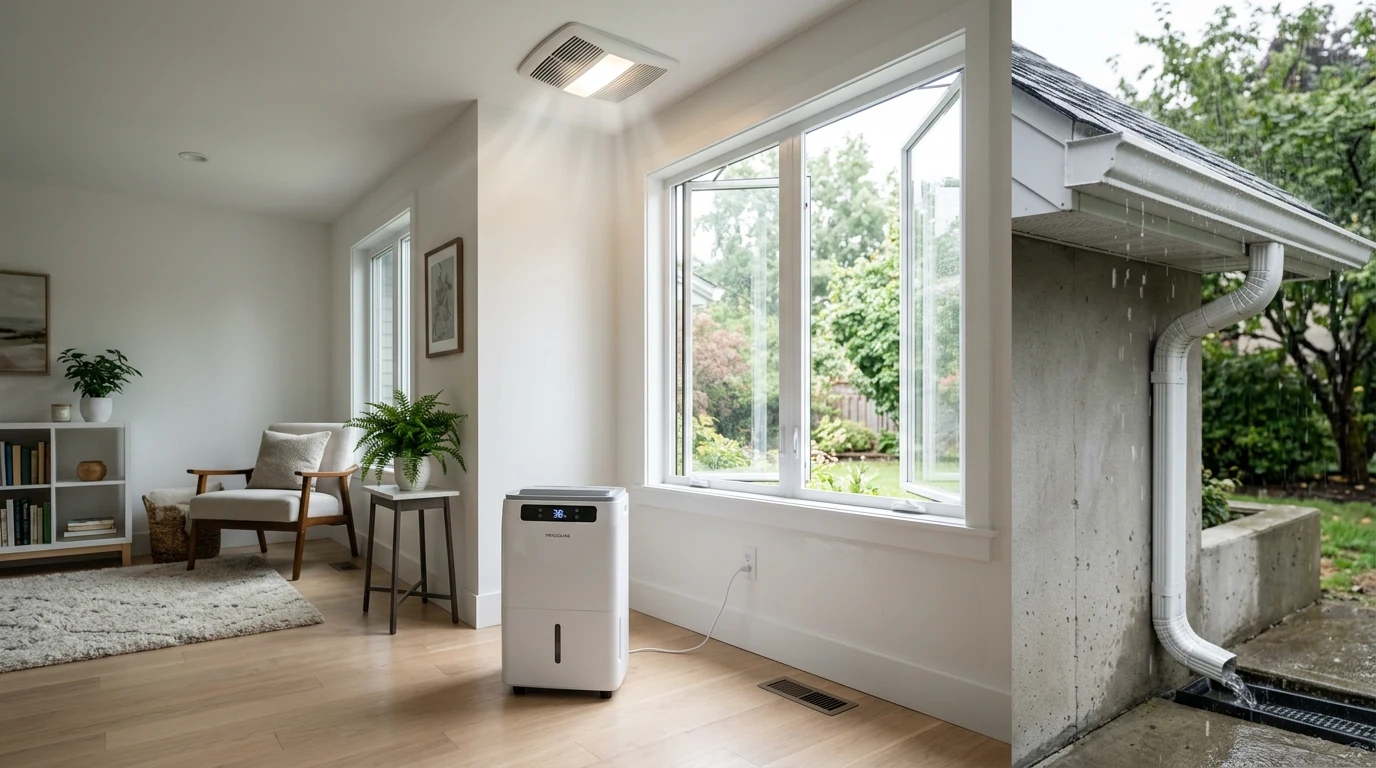
This concentrated water load is actually worse than evenly distributed rainfall on the ground. Instead of spreading across the full foundation perimeter, all the water from a large section of roof is funneled to one spot, creating localized saturation and maximum hydrostatic pressure right at your basement wall.
The 6-Foot Rule
Extend every downspout at least 6 feet from the foundation. This single change redirects water far enough from the building that natural soil drainage handles it before it can affect the basement. For homes with chronic basement moisture, 10 feet is better.
Downspout extension options:
- Rigid PVC extensions ($5 to $15 each): Snap onto existing downspouts and run along the ground surface. Durable and inexpensive. Best when the grade slopes away from the house.
- Flexible roll-out extensions ($10 to $20 each): Coil up when dry and unroll when water flows. Good for areas where a permanent extension would interfere with foot traffic or lawn mowing.
- Underground drain pipe ($200 to $800 professionally installed): Buried PVC pipe routes downspout water to a pop-up emitter 10 to 20 feet from the foundation. The most effective and invisible solution. Required for homes with significant grading problems.
- Splash blocks ($5 to $10 each): Placed at the base of the downspout to redirect water away. Minimum effective solution — better than nothing, but not as effective as a full extension.
Gutter Maintenance Schedule for Mold Prevention
A proper gutter maintenance schedule prevents the overflow that leads to foundation moisture and eventually basement mold.
Spring Cleaning (April to May)
- Remove accumulated debris from winter — leaves, sticks, seed pods, and pollen
- Flush the entire gutter system with a garden hose
- Check that water flows freely to each downspout
- Verify downspout extensions are still properly positioned (winter ice and snow can shift them)
- Inspect gutter seams for leaks — water dripping from seams lands directly on the foundation
Fall Cleaning (November)
- Clear all leaf debris after most trees have dropped their leaves
- Check for any sections where gutters have pulled away from the fascia — sagging gutters spill water behind the gutter, right against the house
- Verify downspout connections are tight
- Consider installing gutter guards if you have multiple mature trees near the house
After Major Storms
After any storm with heavy rain or wind, do a quick visual check. Walk the perimeter of your house during or immediately after rain and look for overflow points, puddles forming near the foundation, or downspouts that have disconnected.
Grading: The Ground-Level Component
Gutters and downspouts handle roof water, but the ground surface around your home determines where that water goes next. Proper grading is the ground-level partner to a good gutter system.
Ideal Foundation Grading
- Slope: The soil should drop at least 6 inches over the first 10 feet from the foundation in all directions
- Material: Use compacted clay soil or graded topsoil — not mulch, gravel, or sand near the foundation. Mulch and gravel allow water to pass through rather than running away from the house.
- Flower beds: Raised flower beds against the foundation trap water. If you have them, ensure they have excellent drainage and do not create a basin that holds water against the wall.
To test your grading, run a garden hose at the base of your foundation and watch where the water flows. It should move away from the house. If it pools or flows toward the foundation, re-grading is needed.
Signs Your Gutters Are Causing Basement Mold
These symptoms suggest a direct connection between your gutter system and basement moisture problems:
- Basement dampness worsens after rain: If your basement walls are drier during dry spells and wetter after storms, the moisture source is exterior water intrusion — likely poor gutter drainage.
- Mold concentrated near exterior walls: Mold on basement walls that face the exterior, especially below ground level, points to water migrating through the foundation.
- White mineral deposits on basement walls: Efflorescence (white, chalky deposits) on concrete or block walls means water has been migrating through the wall and evaporating on the interior surface, leaving minerals behind.
- Staining or erosion at downspout locations: Visible soil erosion, splashback staining on siding, or sediment buildup directly below downspouts indicates water is being deposited too close to the foundation.
- Musty odor that worsens seasonally: A musty smell that is stronger in spring and fall (peak gutter clog seasons) points to seasonal water intrusion from gutter-related sources.
Gutter Guards: Are They Worth It?
Gutter guards reduce (but do not eliminate) the need for gutter cleaning. For mold prevention, they are worth considering if:

- You have multiple large trees overhanging your roof
- You cannot safely clean gutters yourself
- Professional gutter cleaning costs $150 to $300 per visit in your area
- You have experienced overflow-related basement moisture in the past
Gutter guard costs range from $3 to $20 per linear foot installed, depending on the type. For a typical home with 150 to 200 feet of gutters, that is $450 to $4,000. Mesh and micro-mesh guards perform best for debris filtration.
Even with guards installed, inspect gutters annually. No guard system is perfect, and some debris accumulation is inevitable.
The Complete Exterior Water Management System
Gutters are one part of a complete exterior water management system. For maximum basement mold prevention, all three components must work together:
- Gutters: Collect roof water and direct it to downspouts. Must be clean, properly pitched (1/4 inch drop per 10 feet toward downspouts), and leak-free at seams.
- Downspouts: Carry water from gutters to ground level. Must extend at least 6 feet from foundation and discharge onto a surface that slopes away from the house.
- Grading: Directs surface water away from the foundation. Must maintain a 6-inch drop over 10 feet in all directions.
If your basement shows signs of moisture despite clean gutters and extended downspouts, the issue may require additional measures like interior drainage systems, sump pumps, or exterior waterproofing. But before investing $5,000 to $15,000 in those solutions, ensure the basics are in order first — clean gutters and proper downspout extensions solve the problem in a significant percentage of cases.
Frequently Asked Questions
How often should I clean my gutters to prevent mold?
At minimum, twice per year — once in late spring and once in late fall after leaves have dropped. If you have pine trees (which shed needles year-round) or multiple deciduous trees overhanging your roof, consider cleaning 3 to 4 times per year.
Can clogged gutters cause mold in the attic?
Yes. When gutters overflow, water can back up under roof shingles (especially with ice dams in winter) and seep into the attic space. This trapped moisture leads to mold growth on roof sheathing and rafters. Proper gutter maintenance helps prevent this backup.
What if my yard slopes toward the house?
If re-grading is not feasible, install a French drain or curtain drain between the slope and your foundation. This underground drainage channel intercepts surface water before it reaches the foundation. Combined with extended downspouts, it provides effective protection even on problem lots.
Do underground downspout drains freeze in winter?
They can. Install underground drains with a pop-up emitter that allows the system to overflow if the pipe freezes. Burying the pipe below the frost line (4 to 6 feet in northern states) prevents most freezing. Alternatively, use a disconnect fitting that allows you to switch to an above-ground extension in winter.
Is gutter cleaning something I can do myself?
For single-story homes, yes — with a stable ladder and a gutter scoop. For two-story or higher homes, the fall risk makes professional cleaning ($150 to $300) a safer investment. Falls from ladders during gutter cleaning send an estimated 90,000 people to emergency rooms annually in the United States.
How do gutters directly prevent water from entering my basement?
Gutters are designed to collect rainwater from your roof and channel it away from your home’s foundation. By diverting this water, they prevent it from saturating the soil around your basement walls, which significantly reduces hydrostatic pressure that can force water through cracks or porous concrete.
What role do downspouts play in preventing basement mold, specifically?
Downspouts are crucial extensions of the gutter system, directing the collected rainwater even further away from the foundation. If downspouts are too short or clogged, water will pool near the house, increasing the likelihood of basement leaks and subsequent mold growth due to persistent moisture.
Can clogged gutters contribute to basement mold even if my basement has no visible cracks?
Absolutely. Clogged gutters overflow, allowing water to cascade directly down the side of your house and pool at the foundation. This constant saturation can lead to water seeping through microscopic pores in concrete or mortar joints, creating a damp environment conducive to mold growth even without large, visible cracks.

How does proper gutter maintenance impact basement mold prevention?
Regular gutter cleaning and maintenance ensure that the system functions optimally, effectively diverting water away from your foundation. Neglecting maintenance leads to clogs, overflows, and ultimately, increased moisture around your basement, which is the primary catalyst for mold development.
Is it possible for mold to grow in my basement even with a perfectly functioning gutter system?
While a well-maintained gutter system significantly reduces the risk, it doesn’t eliminate all potential sources of basement moisture. Other factors like internal plumbing leaks, high indoor humidity, or significant groundwater issues can still contribute to basement mold, even with effective exterior water diversion.
Beyond preventing water entry, how do gutters indirectly help with overall basement humidity and mold?
By preventing water from pooling around the foundation, gutters reduce the amount of moisture that can evaporate into the basement air. Less external moisture infiltration means lower overall basement humidity, making it a less hospitable environment for mold spores to germinate and grow.
These statements have not been evaluated by the Food and Drug Administration. This information is not intended to diagnose, treat, cure, or prevent any disease. Content is for informational purposes only and is not medical advice; consult a qualified healthcare provider before starting any supplement. As an Amazon Associate we earn from qualifying purchases.
