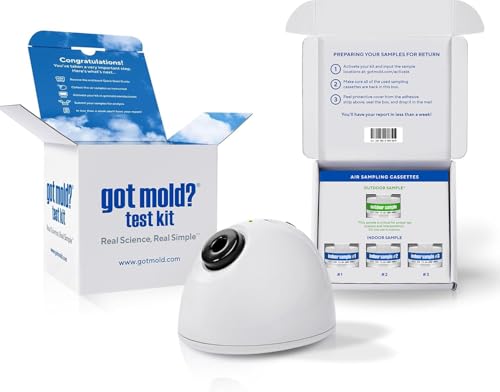
If you have been researching mold DNA testing, EnviroBiomics comes up quickly. It is one of a small number of laboratories in the United States running the ERMI panel, and the pricing and kit options differ enough from its competitors to be worth understanding before you order. This is a breakdown of what the lab analyzes, what it charges as of August 2026, and where it sits against the main alternative.
We have not purchased or run these panels ourselves. Everything below comes from the laboratory’s published specifications, current listed pricing, and accreditation status, cross-checked against the EPA’s own documentation of the underlying method.
What Is EnviroBiomics?
EnviroBiomics is a commercial environmental laboratory in San Antonio, Texas, specializing in molecular analysis of indoor contaminants. Rather than identifying mold by looking at spores under a microscope, the lab works from DNA, using quantitative PCR and next-generation sequencing to identify and count specific organisms in a dust sample.
The lab holds ISO/IEC 17025 accreditation, the international standard for the competence of testing laboratories. That is a meaningful credential: it means an independent accrediting body has audited the lab’s methods, equipment calibration, and quality systems. It speaks to how reliably the sample is analyzed. It says nothing about whether the ERMI index itself is a validated diagnostic, which is a separate question covered further down.
What EnviroBiomics Tests For
The catalog goes well beyond the standard mold panel:
- ERMI. The 36-species DNA panel developed by EPA scientists, scored against a national reference set of homes. HERTSMI-2 scoring is included.
- HERTSMI-2. A five-species subset of the ERMI panel, focused on the species most associated with water damage.
- Actino Dust. Actinobacteria analysis. These bacteria often accompany chronic moisture problems and are invisible to any mold-only panel.
- Endotoxin (LAL). Measures bacterial endotoxin, a separate contaminant class from mold entirely.
- Mycotoxins. The compounds some molds produce, as distinct from the mold organisms themselves.
- Human Bacteroides. A marker used to identify sewage contamination.
The Actino and endotoxin panels are the genuinely differentiating items. A home with a long-running moisture problem can produce a moderate ERMI score while carrying a significant actinobacteria load, and a mold-only test will never surface that.
EnviroBiomics Pricing in 2026
Listed pricing as of August 2026. Each range runs from the slowest turnaround to the fastest, so the low number is what you pay on a standard five-business-day schedule. Confirm current pricing at the lab before ordering.
| Panel | Price range | What you get |
|---|---|---|
| HERTSMI-2 | $130 to $265 | 5-species water-damage screen |
| ERMI | $240 to $435 | All 36 species, HERTSMI-2 scoring included |
| Endotoxin (LAL) | $145 to $287 | Bacterial endotoxin only |
| HERTSMI-2 + Endotoxin | $275 to $537 | Short mold screen plus endotoxin |
| ERMI + Endotoxin | $385 to $707 | Full mold panel plus endotoxin |
| Actino + ERMI200 | $485 to $500 | Actinobacteria plus expanded mold panel |
The detail most people miss: the ERMI includes HERTSMI-2 scoring. Ordering the HERTSMI-2 separately at $130 only makes sense if the five-species screen is all you want. If you are weighing the two, our ERMI vs HERTSMI-2 breakdown covers when the cheaper option is genuinely sufficient.
Swiffer Kit or Vacuum Kit?
EnviroBiomics offers both collection methods at the same analysis price, which is not universal among ERMI labs.
- Swiffer cloth kit. You wipe settled dust from surfaces such as window sills, door frames, and shelf tops. Best for homes with hard flooring or limited carpet.
- Vacuum kit. Collects from carpet and upholstery, where dust accumulates in volume and over a longer period.
Sampling technique affects the result more than most people expect. Wiping a recently cleaned surface gives the lab very little to work with. Our full ERMI guide covers collection technique in detail, and the report walkthrough explains what comes back.
EnviroBiomics vs Mycometrics
Mycometrics, in Monmouth Junction, New Jersey, is the other laboratory most commonly named in ERMI discussions. The two price quite differently.
| EnviroBiomics | Mycometrics | |
|---|---|---|
| ERMI | $240 to $435 | $285 |
| HERTSMI-2 | $130 to $265 | $150 |
| Payment | Paid at order | $50 deposit, balance on sample receipt |
| Rush pricing | Built into the listed range | Added on top, up to $570 for weekend or holiday |
| Kit options | Swiffer cloth or vacuum | Swiffer-style cloth |
| Own-kit option | Not listed | Yes, saves shipping and handling |
| Location | San Antonio, TX | Monmouth Junction, NJ |
On a standard turnaround the two land close together, with EnviroBiomics slightly cheaper on the ERMI and Mycometrics slightly cheaper on the HERTSMI-2. The gap opens up on speed. Mycometrics adds rush fees on top of the base price, reaching $570 for weekend or holiday processing, while the EnviroBiomics range already includes its fastest option at $435. If you are not in a hurry, price them head to head. If you need results within a day or two, work out the fully loaded cost before choosing.
Mycometrics also lets you submit your own Swiffer cloth to avoid kit shipping charges. That saves money and adds risk, since contamination of an unsealed cloth is then entirely on you.
What an ERMI Result Actually Tells You
Accreditation covers the analysis. It does not settle what the resulting number means, and this is where honest reporting matters more than lab marketing usually allows.
The EPA developed the ERMI and states that it “is a research tool developed by EPA scientists for estimating mold contamination” and that it “has been peer reviewed for research purposes but has not been validated for non-research purposes.”[1] In 2013 the EPA’s Office of Inspector General published a report warning that the public may be making mold cleanup decisions based on a tool built only for research applications.[2]
This is not a reason to skip testing or to dismiss a high score. It is a reason to treat the number as one input. A high ERMI justifies looking hard for a moisture source. It does not by itself justify tearing out drywall, and it cannot tell you whether anyone in the household is reacting to anything. Our guide to interpreting an ERMI score puts the ranges in context, and ERMI vs air testing covers when a dust panel is the wrong tool entirely.
Who This Lab Suits, and Who Should Skip It
Worth considering if: you are buying a home and want a baseline before closing, you have a known past water event and want to know what it left behind, you are verifying a completed remediation, or you want actinobacteria and endotoxin analysis that a mold-only panel will not provide.
Probably not the right first step if: you can already see visible growth, in which case you have your answer and the money is better spent on removal. Our guide to when testing is actually warranted walks through the cases where a lab panel changes what you do, and DIY versus professional testing covers the cheaper alternatives.
Whatever the score says, the response is the same in every case: find the water. Mold is a symptom of a moisture problem, and a panel that tells you what is growing has still not told you where it is growing or why.
Frequently Asked Questions
Is EnviroBiomics a legitimate lab?
EnviroBiomics is an ISO/IEC 17025 accredited environmental laboratory based in San Antonio, Texas. ISO/IEC 17025 is the international standard for testing and calibration laboratory competence, and accreditation means an outside body has audited the lab’s methods and quality systems. That covers how the sample is analyzed. It does not change the fact that the EPA classifies the ERMI itself as a research tool that has not been validated for non-research use.
How much does an ERMI test cost at EnviroBiomics?
The ERMI ranges from $240 to $435 as of August 2026. The spread is driven by turnaround time, from same-day up to five business days, and by whether you choose the Swiffer cloth kit or the vacuum kit. HERTSMI-2 scoring is included with the ERMI, so you do not need to order both.
What is the difference between the Swiffer kit and the vacuum kit?
The Swiffer cloth kit collects settled dust by wiping surfaces, and suits homes with hard flooring or limited carpet. The vacuum kit pulls dust from carpet and soft furnishings. Both feed the same DNA analysis. Choose based on what surfaces dominate the space you are sampling.
Should I use EnviroBiomics or Mycometrics?
Both run DNA-based ERMI analysis. EnviroBiomics lists $240 to $435 for the ERMI with HERTSMI-2 included and offers a vacuum kit option. Mycometrics lists the ERMI at $285 with a deposit structure and charges rush fees separately, up to $570 for weekend or holiday turnaround. If you need results fast, compare the rush pricing directly, because that is where the two diverge most.
Does a high ERMI score mean my home is unsafe?
No. An ERMI score estimates relative mold burden compared with a reference set of homes. It does not locate a source, does not measure exposure, and is not a health assessment. The EPA developed it as a research tool and states it has not been validated for non-research purposes. Treat an elevated score as a reason to inspect for water damage, not as a verdict on the building.
References
- U.S. Environmental Protection Agency. Environmental Relative Moldiness Index (ERMI). epa.gov
- U.S. EPA Office of Inspector General. Public May Be Making Indoor Mold Cleanup Decisions Based on EPA Tool Developed Only for Research Applications, Report 13-P-0356, August 22, 2013. epa.gov
These statements have not been evaluated by the Food and Drug Administration. This information is not intended to diagnose, treat, cure, or prevent any disease. Content is for informational purposes only and is not medical advice; consult a qualified healthcare provider before starting any supplement. As an Amazon Associate we earn from qualifying purchases.