Our Pick
Our pick for best mid-range smart air purifier
The Levoit Core 600S-P is AHAM VERIFIDE at 391 CFM for rooms up to 2,933 sq ft, with a 3-stage filter and an auto mode that raises fan speed when its own sensor reads a spike.
99.97% on 0.1 to 0.3 micron particles
See it on Amazon ›
As an Amazon Associate, we earn from qualifying purchases. Filtration captures airborne spores. It does not remove mold growing on a surface.
- Stronger fumes: May require better ventilation compared to a non-toxic option.
- Primarily for hard, non-porous surfaces: While it can be used on some porous surfaces, its deep penetration might not be as effective as Concrobium Mold Control for deeply embedded mold in highly porous materials.
- Check current pricing on Amazon.
Choosing the Right Solution for Your Mold Problem
The best approach to mold remediation often involves a combination of strategies. First and foremost, you must identify and fix the moisture source causing the mold growth. Without addressing the moisture, any cleaning effort will likely be temporary.
For visible mold stains on hard, non-porous surfaces (like bathroom tiles),
RMR-141 Disinfectant can be an excellent choice for killing the mold and preventing its return. For mold on porous materials like drywall, wood, or fabrics, Concrobium Mold Control offers superior penetration and long-term prevention without harsh chemicals.
Consider these scenarios:
- Small mold spots on bathroom grout: Use RMR-141 Disinfectant to kill and prevent regrowth.
- Mold on drywall or wooden studs after a leak: Opt for Concrobium Mold Control for deep penetration and lasting prevention.
- Preventative treatment in a damp basement: Apply Concrobium Mold Control to susceptible surfaces or use RMR-141 Disinfectant on hard surfaces.
Always follow product instructions carefully, wear appropriate personal protective equipment (gloves, eye protection, and a respirator if necessary), and ensure adequate ventilation during and after application. For large mold infestations (over 10 square feet) or if you suspect hidden mold, it’s generally best to consult with a qualified mold remediation professional.
CLEAN SHOWER REFILL FRESH CLEAN SCENT 60 OZ (3 Pack)
Conclusion
The answer to “does bleach kill mold?” is nuanced. While it can superficially remove visible mold from non-porous surfaces, it’s often an ineffective long-term solution, especially for porous materials where mold roots can thrive. For true mold eradication and prevention, EPA-registered products like Concrobium Mold Control and RMR-141 Disinfectant offer scientifically proven methods to kill mold at its source and inhibit its return. By choosing the right tools and addressing the underlying moisture issues, you can effectively tackle mold and maintain a healthier home environment.
Frequently Asked Questions
Why shouldn’t I use bleach to kill mold?
Bleach primarily works on the surface of mold and struggles to penetrate porous materials like drywall or wood, leaving the mold’s “roots” (hyphae) intact. The water content in bleach can also feed these hidden roots, potentially encouraging regrowth. Additionally, bleach doesn’t prevent future mold growth and can damage certain surfaces.
What’s the best way to kill mold on porous surfaces like wood or drywall?
For porous surfaces, an EPA-registered product like Concrobium Mold Control is highly effective. Its unique formula penetrates deep into materials to encapsulate and crush mold spores as it dries, leaving an invisible antimicrobial shield to prevent regrowth without using harsh chemicals.
Can I use the recommended products for mold prevention?
Yes, both Concrobium Mold Control and RMR-141 Disinfectant can be used for mold prevention. Concrobium Mold Control leaves a long-lasting barrier that inhibits mold growth, making it excellent for proactive treatment in damp areas. RMR-141 Disinfectant also kills mold and leaves a residual protective layer, ideal for periodic disinfection in high-risk areas.
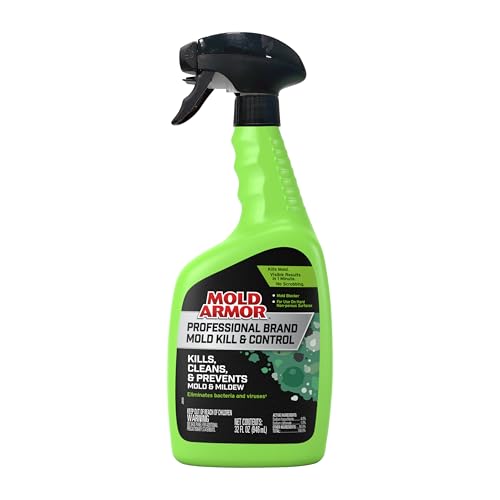
MOLD ARMOR Professional Brand Mold Kill & Control Spray, 32 oz., Hard Surface Mold and Mildew Remover, Visible Results i
Are these alternatives safe to use around pets and children?
Concrobium Mold Control is non-toxic, odor-free, and contains no bleach, ammonia, or VOCs, making it a very safe option for use around children and pets once dry. RMR-141 Disinfectant is a stronger antimicrobial and while effective, it’s always best to ensure good ventilation and keep children and pets away from the treated area until it’s dry, as with any disinfectant. Always read and follow specific product safety instructions.
When should I call a professional for mold remediation?
You should consider calling a professional mold remediator if the mold covers an area larger than 10 square feet, if you suspect hidden mold behind walls or under flooring, if you have health concerns related to mold, or if the mold returns repeatedly despite your efforts. Professionals have specialized equipment and expertise to safely and thoroughly remove extensive mold growth.
- EPA-registered: Confirmed effective against mold, mildew, bacteria, and viruses.
- Kills mold and mildew on contact: Provides immediate action against existing growth.
- Prevents regrowth: Leaves a residual barrier to inhibit future mold and mildew formation.
- Versatile disinfectant: Can be used for general disinfection in many areas of the home.
- Helps eliminate odors: Tackles the source of musty smells.
- Effective on hard surfaces: Strong performance on non-porous materials.
Cons:
These statements have not been evaluated by the Food and Drug Administration. This information is not intended to diagnose, treat, cure, or prevent any disease. Content is for informational purposes only and is not medical advice; consult a qualified healthcare provider before starting any supplement. As an Amazon Associate we earn from qualifying purchases.
Found this useful? Send it to someone who needs it.
Found this useful? Send it to someone who needs it.