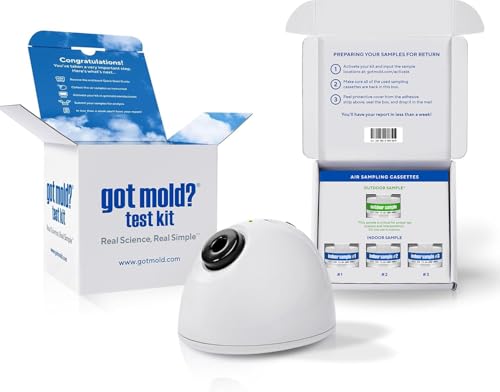
Mold Behind Wallpaper: Detection, Removal, and Prevention
Disclosure: As an Amazon Associate, MoldActionPlan earns from qualifying purchases through affiliate links in this article. We only recommend products we have researched and verified for this specific use case. Your purchase at no extra cost to you supports our independent testing.
Is It Dangerous and Can You Handle It Yourself?
Mold growing behind wallpaper is a serious problem, but most cases can be handled by a careful homeowner. The bigger risk is what you cannot see. Wallpaper traps moisture against the wall, creating a hidden environment where mold spreads before you notice it. By the time you see stains, peeling edges, or smell a musty odor, the colony has likely been growing for weeks.
Health risks depend on the type of mold, the extent of growth, and your sensitivity. Common household molds behind wallpaper include Cladosporium, Penicillium, and Aspergillus, which can trigger allergies, asthma attacks, and respiratory irritation. Black mold (Stachybotrys chartarum) is less common but more hazardous, especially in homes with chronic moisture problems. If anyone in your household has asthma, a compromised immune system, or a mold allergy, wear a respirator during removal or call a professional.
You can DIY this job if the affected area is smaller than a 3×3 foot patch and the wallboard underneath is still structurally sound. If the drywall behind the wallpaper is soft, crumbling, or covered in thick black growth, you need professional remediation. This guide covers both scenarios so you know which path to take.
Why Mold Is So Common Behind Wallpaper
Wallpaper creates a near-perfect mold habitat. The adhesive traps moisture between the paper and the wall surface. When humidity in the room rises (from showers, cooking, or seasonal changes), moisture migrates through tiny gaps in the wallpaper and gets trapped behind it. Unlike painted walls that can breathe and release moisture, wallpaper holds that moisture against the substrate for extended periods.
The most common moisture sources behind wallpaper mold are:
- Steam and humidity from bathrooms and kitchens where wallpaper was installed without adequate ventilation.
- Condensation on exterior walls in cold climates. When warm indoor air hits a cold exterior wall behind wallpaper, condensation forms daily.
- Leaking pipes inside walls that go unnoticed because the wallpaper hides the evidence.
- Improper installation where wallpaper was applied over damp or unprepared walls, sealing moisture in from day one.
- Roof or window leaks that travel down inside wall cavities before the wallpaper reveals a stain.
Once mold takes hold behind wallpaper, it spreads rapidly because the conditions are stable: constant humidity, no light, and a food source in the organic wallpaper adhesive and paper fibers.
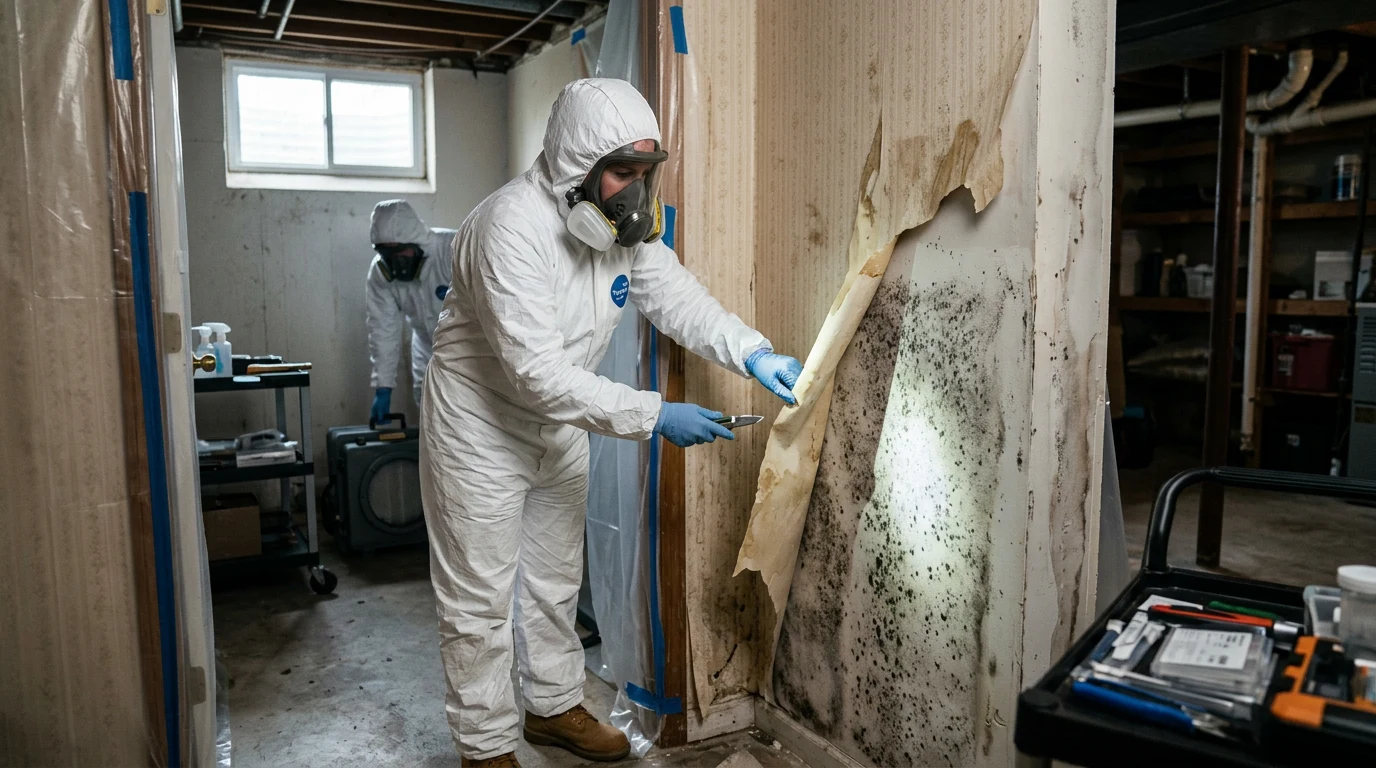
How to Detect Mold Behind Wallpaper Before Stripping
You do not need to tear off every inch of wallpaper to find mold. Look for these warning signs first:
- Peeling or bubbling wallpaper. The adhesive breaks down as mold consumes it, causing the paper to lift from the wall.
- Dark stains or discoloration bleeding through the paper surface, especially near baseboards, ceiling lines, and around windows.
- A musty, earthy smell in the room that gets stronger near the wall, even when the wallpaper looks intact.
- Warped or soft drywall detected by pressing gently on the wall with your palm. Soft spots mean the wallboard has absorbed moisture.
- Visible mold at edges where wallpaper meets trim, outlets, or light switches.
A pinless moisture meter can confirm hidden moisture behind papered walls without damaging them. Readings above 15% moisture content indicate conditions favorable for mold growth and should prompt you to strip the wallpaper and inspect. An infrared thermometer can also identify cold spots where condensation may be occurring behind the paper.
What You Will Need
PPE (Personal Protective Equipment)
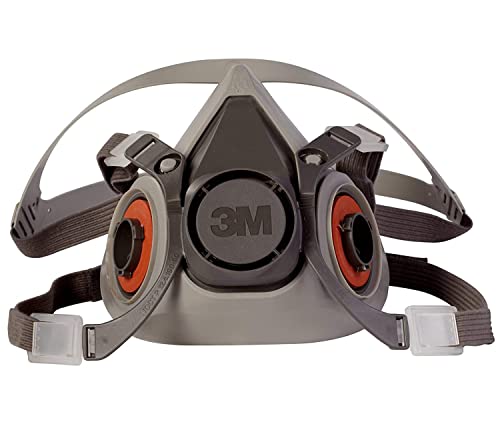
- N95 respirator or 3M Half Facepiece Respirator 6200 with P100 filters for larger jobs or suspected black mold.
- Safety goggles to protect eyes from mold spores and cleaning chemicals.
- Rubber or nitrile gloves, long enough to cover your wrists.
- Disposable coveralls or clothing you can wash in hot water immediately after.
Tools
- Wallpaper scorer (Paper Tiger or similar) to perforate the paper for steam penetration.
- Wallpaper steamer (rental or purchase) for large rooms.
- Putty knives and scrapers in various widths.
- Spray bottle or garden sprayer for applying mold treatment.
- Bucket, sponges, and clean rags.
- Plastic sheeting and painter’s tape to seal off the work area.
- HEPA vacuum for cleanup of loose spores.
- Dehumidifier or fans for drying after treatment.
Mold Treatment Products
| Product | Amazon Price (approx.) | Active Ingredient | Best For | EPA Reg. |
|---|---|---|---|---|
| Concrobium Mold Control B084CNTQX2 (32 oz spray) |
$15-$20 | Sodium carbonate, sodium bicarbonate, trisodium phosphate | Porous surfaces (drywall, wood). Safe, odorless, leaves antimicrobial barrier. | 82552-1 |
| RMR-86 Instant Mold Stain Remover B01N3Y22K4 (32 oz) |
$20-$25 | Sodium hypochlorite (bleach blend) | Non-porous surfaces (tile, glass). Fast stain removal, no scrub. | Not registered as fungicide |
| Mold Armor FG502 Mold Cleaner B00JHH4LGE (32 oz) |
$10-$15 | Sodium hypochlorite (bleach) | Quick spray-and-rinse on hard surfaces. Budget option. | Not specified |
| 3M Half Facepiece Respirator 6200 B0002ILN9O |
$20-$30 | N/A (PPE) | Respiratory protection during mold removal. Reusable with replaceable filters. | N/A |
Step-by-Step Removal Process
This process assumes you have already identified the affected area and confirmed that the drywall behind the wallpaper is still sound. If the drywall is soft or visibly damaged by mold, skip to the section on when to replace versus clean.
Step 1: Prepare the Work Area
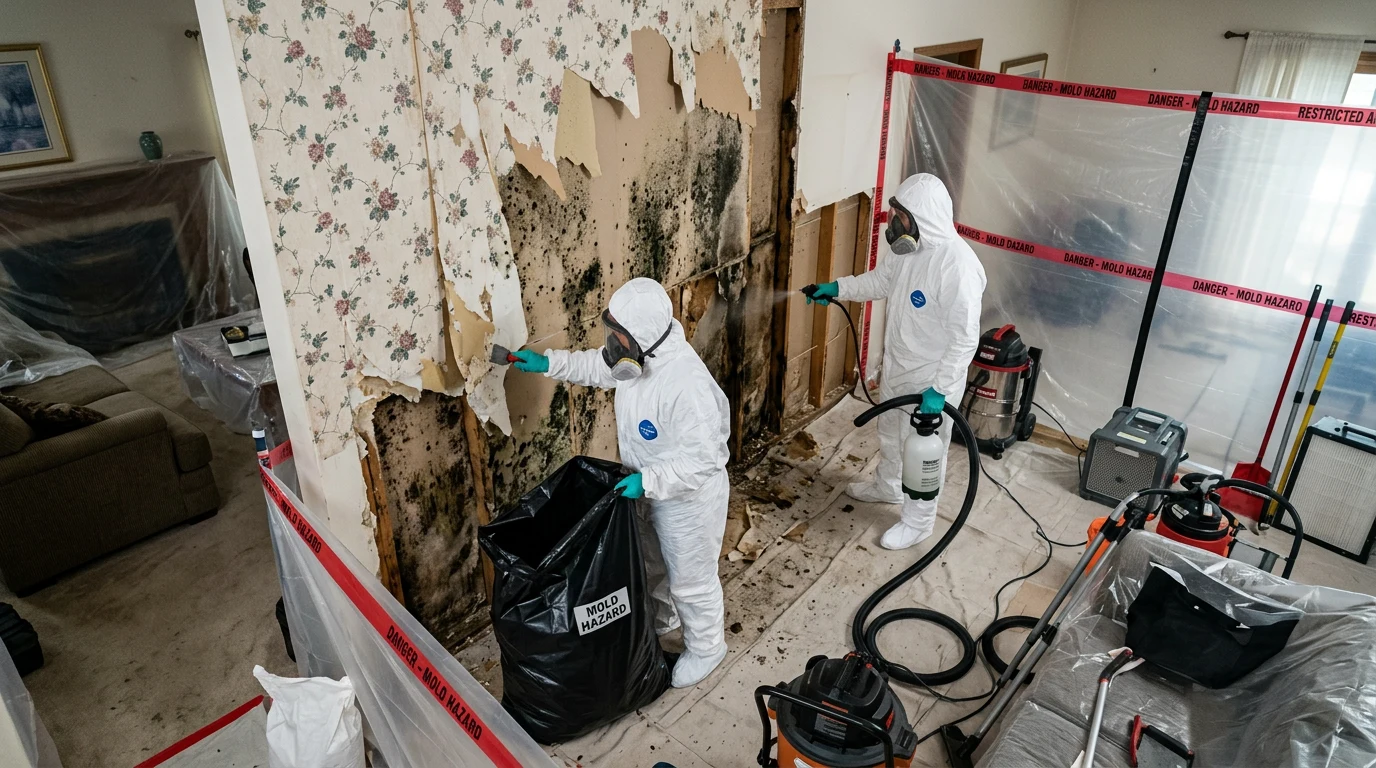
Mold removal sends spores into the air. Seal the room with plastic sheeting over doorways. Cover floors and furniture. Turn off HVAC systems to prevent spreading spores through the ductwork. Open a window and run a box fan blowing outward for negative air pressure. Put on your full PPE before starting.
Step 2: Remove the Wallpaper
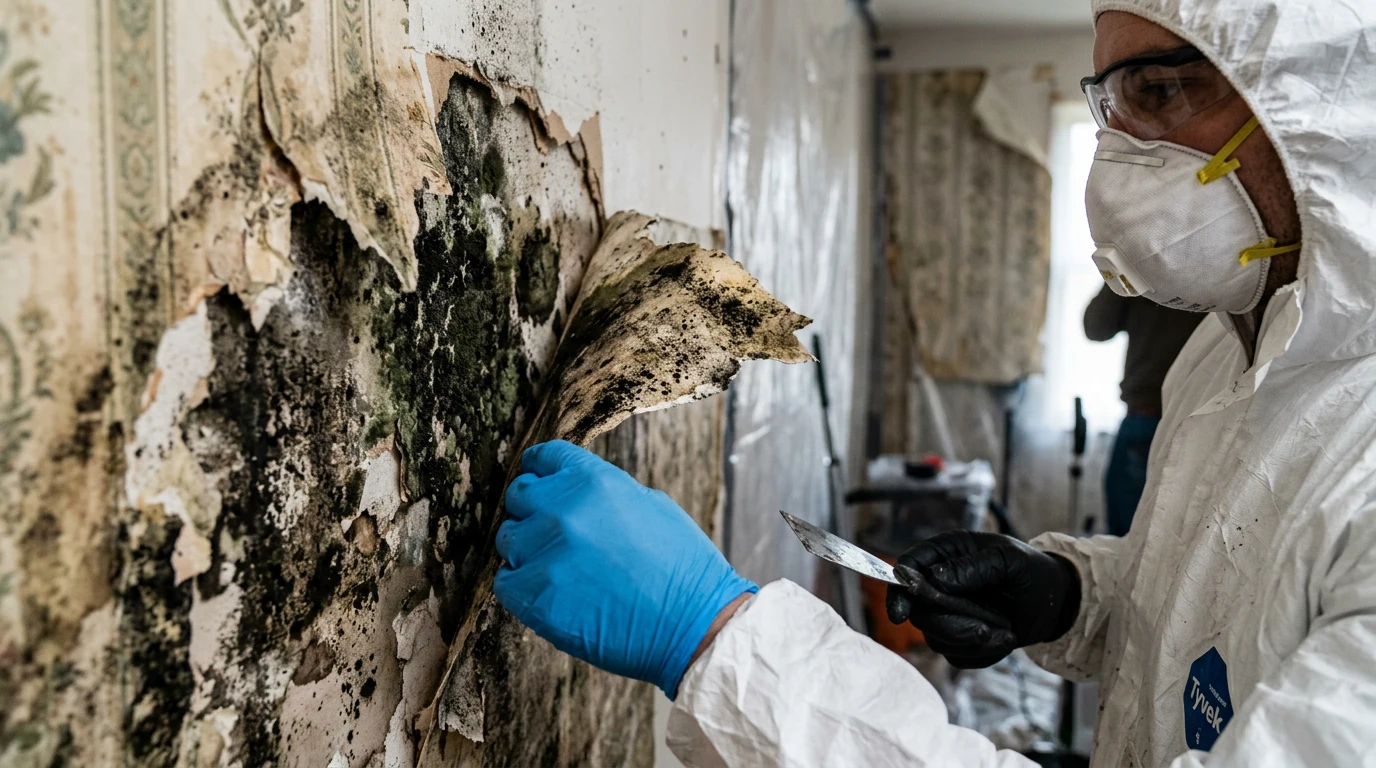
Dry-stripping wallpaper releases fewer spores than wet removal, but most wallpapers require steam or liquid stripper. Score the wallpaper with a Paper Tiger or similar scorer to allow steam to penetrate. Apply a wallpaper steamer in sections, holding the plate against the paper for 30-45 seconds per square foot. Scrape the loosened paper into a trash bag using a wide putty knife. Double-bag all removed wallpaper and seal immediately. A HEPA vacuum after stripping collects loose spores before you begin treatment.
Do not use a liquid wallpaper stripper with bleach or harsh chemicals. Stick to plain steam or a cellulose-based stripper. Harsh chemicals can react unpredictably with the mold colony.
Step 3: Inspect the Exposed Wall
With the wallpaper removed, assess the condition of the wallboard. Surface mold on the paper facing can often be cleaned. If the drywall is soft, crumbly, or the paper facing is peeling away from the gypsum core, the material has been compromised and needs replacement. Mark these areas with painter’s tape for cutting out later.
Step 4: Apply Mold Treatment
For porous drywall surfaces, use Concrobium Mold Control. Spray the affected area until the surface is wet but not dripping. Allow it to dwell for 15-30 minutes, keeping the surface damp by reapplying if it dries out. After the dwell period, scrub lightly with a brush to loosen embedded mold from the paper fibers. Do not oversaturate the drywall, especially if you plan to keep it. Allow it to dry completely with fans and a dehumidifier.
For non-porous surfaces like tile backsplashes or vinyl wallpaper on bathroom walls, use RMR-86 for faster stain removal. Spray directly on the stain and watch it fade within 30-60 seconds. Rinse with clean water and dry thoroughly.
Step 5: Dry Completely
After treatment, run fans and a dehumidifier for 48-72 hours. The wall must be fully dry before you repaint, re-paper, or seal it. Use a moisture meter to confirm readings below 12% before proceeding. Any residual moisture will trap new mold against the surface.
Step 6: Apply a Mold Inhibitor
Before painting or installing new wallpaper, apply a mold-inhibiting primer such as Zinsser Mold Killing Primer or Kilz Mold and Mildew Primer. These primers contain fungicides that prevent future growth on the wall surface. For new wallpaper installation, use a mold-resistant adhesive and consider a vapor-permeable wallpaper that allows the wall to breathe.
When to Replace Versus Clean
Not every moldy wall can be saved. Here is the decision framework:
| Situation | Action | Why |
|---|---|---|
| Surface mold on intact drywall, no soft spots | Clean with Concrobium, dry, prime | The drywall structure is sound; the treatment can reach the mold. |
| Soft or crumbling drywall behind wallpaper | Cut out and replace the affected section | The gypsum core has absorbed moisture and is structurally compromised. Mold has penetrated beyond surface treatment. |
| Mold extends more than 24 inches up from baseboard | Inspect for hidden leak, cut out affected drywall | Vertical spread suggests rising damp or a plumbing leak. The source must be addressed or it will return. |
| Thick black mold, fuzzy texture | Professional remediation recommended | May be Stachybotrys (black mold). Requires containment, HEPA filtration, and professional handling. |
| Vinyl wallpaper over tile or sealed surface | Clean with RMR-86, no replacement needed | Non-porous surface underneath; mold cannot penetrate the tile or sealed material. |
| Paper-faced drywall with peeling facing paper | Replace the section | The paper facing is the food source. Once it is damaged, cleaning cannot restore the surface integrity. |
When replacing drywall, cut 12 inches beyond the visible mold boundary to ensure you remove all affected material. Use a drywall saw and cut along the center of a stud if possible for easier patching. Vacuum the wall cavity with a HEPA vacuum before installing new drywall, and treat the exposed studs and framing with Concrobium as a preventive measure.
Preventing Mold From Returning Behind Wallpaper
Treating the mold is only half the solution. Without addressing the moisture source, the mold will return, often faster than before because the wall surface has been disturbed and may have microscopic damage.
- Fix the moisture source first. A leaking pipe, a roof leak, or chronic condensation must be repaired before you install new wallpaper. No mold treatment survives a persistent water source.
- Reduce indoor humidity. Keep relative humidity below 50% year-round. A dehumidifier in basements and bathrooms is essential in humid climates. Monitor with a hygrometer and run the dehumidifier whenever humidity crosses 55%.
- Improve ventilation. Use exhaust fans during showers and cooking. Leave bathroom doors open after showers so interior moisture can mix with drier house air.
- Choose breathable wall coverings. Vinyl wallpaper is waterproof but traps moisture. If you must wallpaper a bathroom or exterior wall, choose a permeable wallpaper labeled vapor-open, and use mold-resistant adhesive. Paint remains the most breathable wall finish and is a better choice for moisture-prone rooms.
- Apply a mold-inhibiting primer before any new wallpaper installation. Zinsser Mold Killing Primer contains a registered fungicide that remains active in the paint film for years.
- Maintain gutters and grading. Exterior moisture seeping through foundation walls is a common cause of wall mold in basements. Ensure gutters drain at least 4 feet from the foundation and the ground slopes away from the house.
- Install a vapor barrier on exterior walls in cold climates before wallpapering. This prevents warm indoor air from condensing against the cold wall surface inside the papered area.
When to Call a Professional
While most wallpaper-mold situations are DIY-able for a careful homeowner, some scenarios require a licensed mold remediation contractor:
- The affected area exceeds 10 square feet. Industry guidelines recommend professional remediation for areas larger than a 3×3 foot section. Larger jobs require containment, negative air pressure, and commercial HEPA filtration that most homeowners do not have.
- You suspect black mold (Stachybotrys). Black mold has a slimy, dark green-black appearance and requires professional testing and removal. Disturbing it without proper containment can spread toxic spores throughout your home.
- Mold returns after cleaning. If you treat the wall, fix the moisture, and mold comes back within weeks, there may be mold growing inside the wall cavity that requires opening the wall to inspect.
- HVAC ducts or insulation are involved. Mold in wall cavities that connect to the HVAC system can spread spores through the entire house. Professional cleaning of the ductwork may be necessary.
- Someone in the home has chronic health symptoms. If allergies, asthma, or respiratory problems started around the time the wallpaper was installed or the musty smell appeared, hire a professional to handle the removal safely and test the air quality afterward.
- The source of moisture is unknown. If you cannot find and fix the water source, the mold will return regardless of how thoroughly you clean. A professional can use moisture meters, borescopes, and thermal imaging to locate hidden leaks inside walls.
Professional remediation costs $500 to $4,000 depending on the size of the area and whether wall replacement is needed. An inspection alone (moisture mapping, air sampling, lab testing) typically runs $300 to $600. The cost of a professional job is usually worth it if the alternative is cleaning a returning mold problem every few months.
Frequently Asked Questions
Can I paint over wallpaper that has mold?
No. Painting over moldy wallpaper seals the mold alive under paint. The mold will continue to grow, eventually pushing through the paint or causing it to bubble and peel. Mold must be fully removed and the wall treated before any coating is applied. If you want to avoid stripping wallpaper, at minimum cut out the affected section and patch it. Do not paint over it.
Does vinegar kill mold behind wallpaper?
White vinegar (undiluted, 5% acetic acid) can kill some surface mold species on non-porous surfaces, but it is not effective enough for the conditions behind wallpaper. The mold is embedded in the adhesive layer and paper fibers, and vinegar does not penetrate deeply or leave a lasting barrier. Concrobium or an EPA-registered fungicide delivers better penetration and prevents regrowth.
How do I know if mold is growing behind wallpaper without removing it?
Look for peeling edges, bubbling paper, dark stains bleeding through, a musty smell near the wall, and soft spots when pressing on the wall. A moisture meter can detect elevated moisture content behind the paper without damaging it. Readings above 15% indicate a high risk of active mold growth. An infrared thermometer can show cold spots on exterior walls where condensation may be happening behind the paper.
What happens if I ignore mold behind wallpaper?
The mold colony continues to grow, consuming the wallpaper adhesive and paper fibers. Over time, it can weaken the drywall, cause structural damage to the framing if moisture is persistent, and release increasing numbers of spores into the room air. Health effects can escalate from mild allergy symptoms to chronic respiratory issues. The cost and difficulty of removal increase dramatically the longer it is left untreated.
Should I use bleach to kill mold behind wallpaper?
No. Bleach is mostly water (over 90%) and the water soaks into the drywall, feeding the mold deeper in the material while the chlorine evaporates at the surface. Bleach can also damage the drywall paper facing and react unpredictably with wallpaper adhesive chemicals. Use a dedicated mold treatment product like Concrobium or RMR-86 formulated for the specific surface you are treating. Bleach-based products (like RMR-86) are acceptable on sealed, non-porous surfaces where the wall covering protects the substrate, but never use straight bleach on drywall or wood.
Frequently Asked Questions
Can I paint over wallpaper that has mold?
No. Painting over moldy wallpaper seals the mold alive under paint. The mold will continue to grow, eventually pushing through the paint or causing it to bubble and peel. Mold must be fully removed and the wall treated before any coating is applied.
Does vinegar kill mold behind wallpaper?
White vinegar (undiluted, 5% acetic acid) can kill some surface mold species on non-porous surfaces, but it is not effective enough for the conditions behind wallpaper. The mold is embedded in the adhesive layer and paper fibers. Concrobium or an EPA-registered fungicide delivers better penetration and prevents regrowth.

How do I know if mold is growing behind wallpaper without removing it?
Look for peeling edges, bubbling paper, dark stains bleeding through, a musty smell near the wall, and soft spots when pressing on the wall. A moisture meter can detect elevated moisture content behind the paper without damaging it. Readings above 15% indicate high risk of active mold growth.
What happens if I ignore mold behind wallpaper?
The mold colony continues to grow, consuming the wallpaper adhesive and paper fibers. Over time, it can weaken the drywall, cause structural damage to the framing if moisture is persistent, and release increasing numbers of spores into the room air. Health effects can escalate from mild allergy symptoms to chronic respiratory issues.
Should I use bleach to kill mold behind wallpaper?
No. Bleach is mostly water (over 90%) and the water soaks into the drywall, feeding the mold deeper in the material while the chlorine evaporates at the surface. Use a dedicated mold treatment product like Concrobium or RMR-86 formulated for the specific surface. Bleach-based products are acceptable on sealed, non-porous surfaces but never use straight bleach on drywall or wood.

What are the common health risks associated with mold behind wallpaper?
Exposure to mold behind wallpaper can trigger allergic reactions, respiratory issues like asthma attacks, and skin irritation in sensitive individuals. Prolonged exposure may also lead to more severe health problems, particularly for those with compromised immune systems or pre-existing respiratory conditions.
For authoritative background, see the EPA’s guidance on mold and health.

These statements have not been evaluated by the Food and Drug Administration. This information is not intended to diagnose, treat, cure, or prevent any disease. Content is for informational purposes only and is not medical advice; consult a qualified healthcare provider before starting any supplement. As an Amazon Associate we earn from qualifying purchases.