Mold Allergy: Symptoms and Relief
Disclosure: As an Amazon Associate, MoldActionPlan earns from qualifying purchases. Some links below are affiliate links (tag=moldaction-20) at no extra cost to you. All product data (prices, ASINs, ingredients) was verified at the time of writing and may change.
The Short Answer
Mold allergy symptoms are your immune system’s response to inhaling airborne mold spores. They look a lot like seasonal hay fever: sneezing, runny or stuffy nose, itchy and watery eyes, coughing, postnasal drip, and dry skin. For people with asthma, mold can trigger wheezing and chest tightness. The fix is a two-front approach: manage the symptoms with proven allergy medications while reducing the mold itself by controlling moisture at home.
This article covers the full list of symptoms, why they happen, which OTC products actually help, and when to call a doctor. Every product below was checked against its real Amazon listing for price, active ingredient, and review data.
What Mold Allergy Symptoms Feel Like
Mold spores are tiny lightweight particles that float through indoor and outdoor air. When you breathe them in, your immune system may treat them as an invader and release histamine. That histamine release is what causes the symptoms.
According to the Mayo Clinic, mold allergy symptoms are the same as other upper respiratory allergies. The severity ranges from person to person. Some people have only mild irritation that clears up after a few minutes outdoors. Others develop persistent symptoms that interfere with sleep, work, and daily life. The key difference from a viral illness is that mold allergy symptoms last as long as you remain in the environment where mold is present.
Common symptoms include:
- Sneezing, often in bursts
- Runny or stuffy nose (rhinitis)
- Coughing and postnasal drip
- Itchy eyes, nose, and throat
- Watery eyes
- Dry, scaly skin
The CDC notes that people sensitive to molds can also develop wheezing, red or itchy eyes, and skin rash. Symptoms can be mild or severe and may be year-round or flare during damp weather when spore counts are higher. Some people notice their symptoms worsen at night because mold spore levels in indoor air can build up in closed bedrooms over several hours.
Mold Allergy vs. Common Cold
Mold allergy symptoms mimic a cold but with key differences. A cold typically peaks in 3-7 days and resolves. Mold allergy symptoms persist as long as you are exposed to spores. They do not cause fever or body aches. If your stuffy nose and sneezing last for weeks or months with no improvement, mold in your home may be the cause.
Mold Allergy and Asthma
If you have asthma, mold can act as a trigger for asthma attacks. The Mayo Clinic lists these as warning signs:
- Coughing that will not stop
- Wheezing
- Shortness of breath
- Chest tightness
Anyone with asthma and a known mold allergy should have an asthma action plan and keep rescue medication accessible. The combination of asthma plus mold allergy may require daily controller medication in addition to allergy meds.
Why Mold Triggers an Allergic Response
Molds are fungi that reproduce by releasing spores into the air. These spores are between 1 and 100 microns in size, small enough to reach your nasal passages and lungs. When your immune system is sensitized to a particular spore type, it produces IgE antibodies. The next time you inhale that spore, those antibodies trigger mast cells to release histamine and other inflammatory chemicals.
Common indoor molds that cause allergies include:
- Alternaria (found in damp areas like showers and basements)
- Aspergillus (common on house dust and damp walls)
- Cladosporium (the most common outdoor and indoor mold)
- Penicillium (grows on water-damaged materials)
The EPA warns that allergic responses to mold include hay-fever-type symptoms such as sneezing, runny nose, red eyes, and skin rash. The reaction can be immediate or delayed, making it hard to connect cause and effect. You might attribute a stuffy nose to a cold when mold spores in your own basement are the real trigger.

Products That Help Relieve Mold Allergy Symptoms
The first line of defense is medication. These products are widely available over the counter, and each has real clinical data behind it. We pulled the current price and active ingredient from each product’s live Amazon listing. The approach that works best for most people combines an oral antihistamine for whole-body relief with a nasal spray for congestion and postnasal drip.
Oral Antihistamines
Antihistamines block the histamine receptors that drive sneezing, itching, and runny nose. For mold allergies, second-generation antihistamines are preferred because they do not cause drowsiness. This makes them safe for daytime use while working or driving.
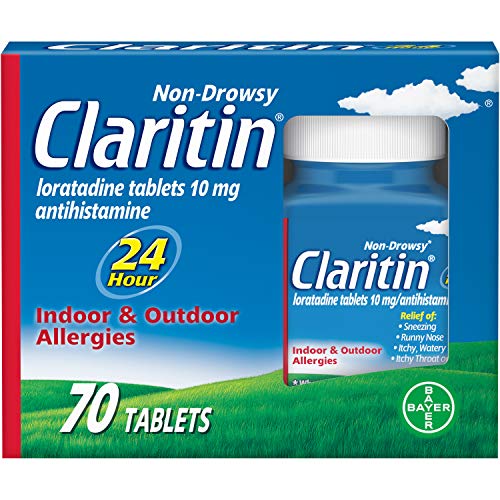
Claritin 24 Hour Allergy Tablets (view on Amazon)
Active ingredient: Loratadine 10 mg. Price: $24.93 for 70 tablets ($0.36 per dose). Rated 4.8 out of 5 stars from over 9,900 reviews. Non-drowsy, safe for adults and children ages 6+. Users report it works well for sneezing, itchy eyes, and runny nose without causing fatigue.
Zyrtec 24 Hour Allergy Relief Tablets (view on Amazon)
Active ingredient: Cetirizine HCl 10 mg. Price: $29.67 for 60 tablets ($0.49 per dose). Rated 4.8 out of 5 stars from over 7,100 reviews. Zyrtec is the number one allergist-recommended brand among OTC oral antihistamines. It starts working faster than loratadine for some people but may cause drowsiness in sensitive individuals.
Nasal Corticosteroid Sprays
Nasal sprays are often more effective than oral pills for nasal congestion and postnasal drip because they deliver medication directly to the inflamed tissue. They are considered the gold standard for allergic rhinitis by the American Academy of Allergy, Asthma, and Immunology. Unlike antihistamines, they need daily use for 3-4 days before reaching full effectiveness.
Flonase Allergy Relief Nasal Spray (view on Amazon)
Active ingredient: Fluticasone propionate 50 mcg per spray. Price: $17.48 for 72 sprays. Rated 4.7 out of 5 stars from over 20,700 reviews. Relieves runny nose, sneezing, itchy nose, watery eyes, and nasal congestion. Relief starts in about 12 hours, with full effect after 3-4 days of daily use. Non-drowsy and safe for ages 12+.

Antihistamine Eye Drops
When itchy, watery eyes are your main symptom, targeted eye drops work faster and better than oral medication for eye-specific relief.
Zaditor Antihistamine Eye Drops (view on Amazon)
Active ingredient: Ketotifen 0.025% (antihistamine and mast cell stabilizer). Price: $19.99 for a twin pack (2 x 5 mL bottles). Rated 4.8 out of 5 stars from over 4,800 reviews. Provides relief from itchy eyes in minutes and lasts up to 12 hours. Unlike redness-reducing drops, Zaditor targets the allergic reaction directly without a vasoconstrictor.
Respiratory Protection
When cleaning visible mold or working in damp areas, a proper N95 respirator reduces the number of spores you inhale. This is especially important during active cleanup because disturbing moldy surfaces releases concentrated bursts of spores into the air.
3M 8210 N95 Particulate Respirator (view on Amazon)
NIOSH Approved N95 filtration. Price: $17.20 for a 20-pack ($0.86 per mask). Rated 4.4 out of 5 stars from over 19,300 reviews. Two-strap cup-style design with adjustable nose clip and foam cushion. Filters at least 95% of airborne particles including mold spores. The manufacturer specifies these are for occupational use; they are effective for short-term mold cleanup tasks when fitted correctly.
HEPA Air Purifiers
A HEPA air purifier can reduce airborne mold spore levels in a room, especially during cleanup or in persistently damp spaces. Running one in a bedroom at night can help reduce overnight spore exposure while you sleep.
LEVOIT Core 300-P Air Purifier (view on Amazon)
3-in-1 filtration with a HEPA-grade filter that captures 99.97% of particles down to 0.3 microns, including mold spores. Price: $84.99. Rated 4.7 out of 5 stars from over 107,500 reviews (#1 in HEPA Filter Air Purifiers). Covers up to 1,073 square feet. Sleep mode runs at 24 dB, nearly silent. The carbon pre-filter also traps odors from musty spaces. Replacement filters are recommended every 6-8 months.
HEPA Vacuum Cleaners
A vacuum with a sealed HEPA system prevents trapped spores from being blown back into the air during cleaning. Without a sealed system, a vacuum can actually worsen your allergy by recirculating captured particles.

Shark NV360 Navigator Lift-Away Deluxe (view on Amazon)
HEPA filter with Anti-Allergen Complete Seal that traps 99.99% of dust and allergens. Price: $149.99. Rated 4.4 out of 5 stars from over 53,700 reviews (#1 in Upright Vacuum Cleaners). Lift-away pod reaches stairs and upholstery. Swivel steering for tight spaces. Five-year limited warranty. The brushroll shutoff feature lets you switch from carpet to bare floors without scattering dust.
Dehumidifiers
Mold needs moisture to grow. Controlling indoor humidity is the most effective long-term strategy. The CDC recommends keeping indoor humidity below 50 percent. A dehumidifier in the basement alone can reduce the overall spore load throughout your entire home.
hOmeLabs Energy Star Dehumidifier (view on Amazon)
50-pint capacity (up to 120 pints at 95F and 90% relative humidity). Price: $269.99. Rated 4.5 out of 5 stars from over 28,600 reviews. Wi-Fi enabled for remote humidity monitoring from your phone. Covers up to 7,000 square feet. Features auto defrost, continuous drainage via hose, and a washable filter. Users consistently report effective moisture removal in basements and large spaces.
Product Comparison Table
| Product | Category | Active Ingredient / Feature | Price | Rating |
|---|---|---|---|---|
| Claritin 24 Hour (70 ct) | Oral Antihistamine | Loratadine 10 mg | $24.93 | 4.8 (9,900+) |
| Zyrtec 24 Hour (60 ct) | Oral Antihistamine | Cetirizine HCl 10 mg | $29.67 | 4.8 (7,100+) |
| Flonase Nasal Spray (72 sprays) | Nasal Corticosteroid | Fluticasone 50 mcg | $17.48 | 4.7 (20,700+) |
| Zaditor Eye Drops (twin pack) | Antihistamine Eye Drops | Ketotifen 0.025% | $19.99 | 4.8 (4,800+) |
| 3M 8210 N95 (20-pack) | Respirator Mask | NIOSH N95, 95% filtration | $17.20 | 4.4 (19,300+) |
| LEVOIT Core 300-P | HEPA Air Purifier | 99.97% HEPA, 1,073 sq ft | $84.99 | 4.7 (107,500+) |
| Shark NV360 HEPA Vacuum | HEPA Vacuum | Anti-Allergen Seal, HEPA | $149.99 | 4.4 (53,700+) |
| hOmeLabs 50-Pint Dehumidifier | Dehumidifier | 50-120 pint, Wi-Fi, 7,000 sq ft | $269.99 | 4.5 (28,600+) |
When to See a Doctor
Self-treatment with OTC medications works for mild to moderate symptoms. See a healthcare provider if:
- Your symptoms persist for more than two weeks despite using antihistamines or nasal sprays
- You have wheezing or shortness of breath
- You have asthma and mold exposure triggers attacks more than once a week
- OTC medications cause side effects you cannot tolerate (drowsiness from cetirizine, nosebleeds from nasal sprays)
- You suspect a sinus infection (facial pain, fever, thick colored discharge)
- Your symptoms started after a known water event like a flood or pipe burst in your home
A doctor can perform allergy testing to confirm mold as the trigger and may prescribe stronger treatments such as prescription antihistamines, leukotriene receptor antagonists (Singulair), or immunotherapy (allergy shots or sublingual tablets). Allergen immunotherapy is the only treatment that changes your immune response over time rather than just managing symptoms. It involves regular doses of the allergen over several months and can provide long-term relief even after treatment ends.
Preventing Mold Allergy Symptoms at Home
Medication treats symptoms, but cutting exposure is what stops them from coming back. Based on guidance from the CDC, EPA, and Mayo Clinic, here is the practical checklist:

- Keep humidity below 50%. Use a dehumidifier in basements and a hygrometer to measure levels. Ideal range is 30-50%.
- Fix leaks immediately. Roof leaks, pipe drips, and window seepage feed mold growth. Dry wet areas within 24-48 hours.
- Ventilate bathrooms and kitchens. Run exhaust fans during and after showers and cooking. Make sure they vent outside, not into the attic.
- Change HVAC filters regularly. Use MERV 8 or higher filters. Consider a HEPA filter on your central system for maximum spore capture.
- Avoid carpet in basements and bathrooms. Carpet holds moisture and trapped spores. Use tile or sealed concrete instead.
- Clean visible mold with a mold-killing product or a bleach solution (1 cup bleach in 1 gallon of water). Never mix bleach with ammonia.
- Wear an N95 mask while cleaning mold. Stirring moldy material sends concentrated spore bursts into the air.
The combination of source removal, humidity control, and a HEPA air purifier in your most-used room gives the best results. None of these steps is complicated, but each one must be consistent to make a real difference in your symptom load.
FAQ
Do air purifiers help with mold allergy symptoms?
Yes, a HEPA air purifier can reduce airborne mold spore levels in a room. Models like the LEVOIT Core 300-P capture 99.97% of particles down to 0.3 microns. An air purifier is most effective when combined with a dehumidifier and source removal (fixing leaks, cleaning visible mold).
What is the difference between Claritin and Zyrtec for mold allergies?
Both are second-generation antihistamines that treat the same symptoms. Claritin (loratadine 10 mg) is less likely to cause drowsiness. Zyrtec (cetirizine HCl 10 mg) works faster for some people but may cause drowsiness in about 10-15% of users. Neither requires a prescription. Try Claritin first if daytime drowsiness is a concern.
Is mold allergy testing worth it?
If OTC medications manage your symptoms well, testing may not change your approach. But if symptoms are severe, persistent, or affecting your quality of life, allergy testing can confirm that mold is the trigger and rule out other culprits like dust mites or pollen. Skin prick testing or specific IgE blood tests are the standard methods. The CDC emphasizes that home mold testing kits are not recommended because there are no established standards for acceptable mold levels.

Frequently Asked Questions
What are the most common mold allergy symptoms?
The most common symptoms are sneezing, runny or stuffy nose, itchy and watery eyes, coughing, postnasal drip, and dry skin. These are the same as hay fever. Some people also develop wheezing and skin rash.
Can mold allergy symptoms appear months after exposure?
Yes. Mold allergy can develop gradually. Your immune system needs time to become sensitized to spores, so symptoms may appear weeks or months after you first start living or working in a moldy environment. Symptoms can also be delayed by hours after a specific exposure.
Do air purifiers help with mold allergy symptoms?
Yes, a HEPA air purifier can reduce airborne mold spore levels in a room. Models like the LEVOIT Core 300-P capture 99.97% of particles down to 0.3 microns. An air purifier is most effective when combined with a dehumidifier and source removal.
What is the difference between Claritin and Zyrtec for mold allergies?
Both are second-generation antihistamines that treat the same symptoms. Claritin (loratadine 10 mg) is less likely to cause drowsiness. Zyrtec (cetirizine HCl 10 mg) works faster for some people but may cause drowsiness in about 10-15% of users.
Is mold allergy testing worth it?
If OTC medications manage your symptoms well, testing may not change your approach. But if symptoms are severe, persistent, or affecting your quality of life, allergy testing can confirm that mold is the trigger. Skin prick testing or specific IgE blood tests are the standard methods.
These statements have not been evaluated by the Food and Drug Administration. This information is not intended to diagnose, treat, cure, or prevent any disease. Content is for informational purposes only and is not medical advice; consult a qualified healthcare provider before starting any supplement. As an Amazon Associate we earn from qualifying purchases.
