Bleach vs Concrobium for Mold Removal: Which Actually Works?
Disclosure: As an Amazon Associate, MoldActionPlan earns from qualifying purchases through affiliate links at no extra cost to you.
Quick Verdict
For porous surfaces like drywall, wood, and fabric, Concrobium Mold Control is the clear winner. Bleach works only on nonporous surfaces (tile, glass, sealed countertops) but can actually make mold worse on porous materials because its high water content feeds the roots below the surface. If you need a fast disinfectant on hard surfaces, bleach diluted 1:10 is cheap and effective. For lasting mold control on most household surfaces, choose Concrobium. This article covers how each product works, where each one fails, and which scenarios call for which solution, and how to apply each one safely for best results.
At-a-Glance Comparison
| Spec | Concrobium Mold Control (32 oz) | Clorox Disinfecting Bleach (81 oz) |
|---|---|---|
| Price | $13.48 ($0.42/fl oz) | $6.18 ($0.08/fl oz) |
| Active Ingredient | Sodium Carbonate 0.95% | Sodium Hypochlorite 7.5% |
| EPA Reg No. | 82552-1 | 5813-1 |
| Safe on Porous Surfaces | Yes (drywall, wood, fabric) | No (feeds mold roots) |
| Safe on Nonporous Surfaces | Yes | Yes |
| Dwell Time | Let dry completely | 10 minutes (diluted) |
| Odor | Odorless | Strong chlorine |
| VOCs | None | Chlorine vapors |
| Leaves Protective Barrier | Yes | No |
| Rating | 4.1/5 (2,065 ratings) | 4.8/5 (4,852 ratings) |
Concrobium Mold Control: What It Is and How It Works
Concrobium Mold Control is an EPA-registered mold treatment made by Rust-Oleum (formerly Siamons International). Its active ingredient is sodium carbonate at 0.95%, with sodium bicarbonate and trisodium phosphate as secondary ingredients. The EPA registration number is 82552-1.
Unlike bleach, which only kills surface mold, Concrobium uses a patented mechanism: as the solution dries, it forms a crystalline structure that physically encapsulates and crushes mold spores. It does not just kill them on contact. It leaves an invisible antimicrobial barrier on the treated surface that prevents new spores from taking root.
Strengths
- Works on porous surfaces. Safe on drywall, wood, fabric, upholstery, concrete, tile, grout, and most building materials.
- Odorless and zero VOCs. No strong chemical smell. You can use it indoors without gas masks or evacuating the room.
- No scrubbing required. Spray it on, let it dry. The formula does the work as it dries.
- Leaves a protective barrier. Treated surfaces resist regrowth for months, with some reviewers reporting 8-10 months of prevention before reapplication is needed.
- EPA Safer Choice certified. Uses ingredients considered safer for human health and the environment.
Weaknesses
- Does not remove stains. Concrobium kills and prevents mold, but the discoloration stays. You need a separate stain remover for that.
- Sprayer quality issues. Many customer reviews report the trigger sprayer leaks or fails after a few uses. The 1-gallon refill avoids this problem since you supply your own sprayer.
- Higher upfront cost. At $13.48 for 32 oz, it costs more per use than diluted bleach.
- Mixed results on heavy infestations. Some reviewers report it works well for light to moderate mold but struggles with heavy growth without multiple applications.
- Leaves white residue on some surfaces. A minority of reviewers report a visible film on glass or dark surfaces.
Best Uses for Concrobium
- Drywall and wallboard with mold spots
- Wood beams, subfloors, and framing
- Fabric, upholstery, curtains, and leather
- Basements, attics, and crawlspaces where ventilation is poor
- Boat interiors, RVs, and campers
- Front-loading washing machine rubber gaskets
Check current price of Concrobium Mold Control 32 oz on Amazon
Bleach (Clorox): What It Is and How It Works
Bleach, specifically Clorox Disinfecting Bleach, uses sodium hypochlorite at 7.5% concentration (yields 7.1% available chlorine) as its active ingredient. Its EPA registration number is 5813-1. For mold use, the EPA label directs a dilution of 1 part bleach to 10 parts water (or up to equal parts for tougher jobs), with a 10-minute wet contact time on nonporous surfaces.
Bleach works by oxidizing organic material, which effectively kills surface mold and bacteria on contact. It is a broad-spectrum disinfectant that kills 99.9% of viruses and bacteria, including MRSA, norovirus, and influenza. At a cost of roughly $0.08 per fluid ounce, it is the cheapest option by far. However, its mechanism has a fundamental limitation for mold: the chlorine component reacts and neutralizes quickly on contact with organic material, while the remaining water soaks into porous surfaces and can actually feed the mold roots (hyphae) that the bleach never reached.
Strengths
- Proven disinfectant. Kills 99.9% of germs, viruses, and bacteria on hard surfaces. EPA-registered with decades of testing.
- Extremely cheap. A full gallon of diluted bleach costs pennies compared to any specialty product.
- Removes stains. The oxidizing action of sodium hypochlorite whitens and removes visible mold stains from hard surfaces.
- Fast acting. With proper dilution and 10-minute contact time, surface mold is dead on nonporous materials.
- Widely available. Found at every grocery store, drugstore, and big box retailer.
Weaknesses
- Useless on porous surfaces. This is the critical limitation that most homeowners discover the hard way. Bleach is approximately 90% water. When you apply it to drywall or wood, the chlorine reacts and neutralizes quickly, but the leftover moisture soaks into the porous material, feeding the mold roots that remain below the surface. The mold often grows back worse within weeks. Multiple sources, including EPA guidelines and mold remediation professionals, advise against using bleach on porous surfaces.
- Strong chlorine odor. The smell is overpowering and requires good ventilation. It can irritate lungs, eyes, and skin. Using bleach in a poorly ventilated basement or bathroom can create uncomfortable and potentially harmful conditions.
- Must be diluted fresh. Bleach and water solutions degrade within 24 hours. You cannot store a diluted batch for future use. This means you must mix a fresh batch each time you plan to clean.
- Corrosive and damaging. Bleach can damage metal fixtures, discolor fabrics and carpet, degrade caulking and window seals over time, and etch certain stone surfaces. Rinsing thoroughly after use is essential to limit damage.
- No residual protection. Once dry, bleach leaves nothing behind to prevent regrowth. As soon as moisture returns, new mold spores can colonize the same area.
- Cannot be mixed. Mixing bleach with ammonia or other cleaners produces toxic chloramine gas. Even vinegar mixed with bleach creates chlorine gas. Bleach accidents are a common cause of household hazardous material incidents.
Best Uses for Bleach
- Tile and grout in showers and bathrooms
- Glass shower doors
- Sealed countertops and sinks
- Toilet bowls and urinals
- Plastic shower curtains and liners
- Outdoor concrete patios and driveway algae
- Garbage cans and recycling bins
Check current price of Clorox Disinfecting Bleach 81 oz on Amazon
Head-to-Head Comparison
Effectiveness Against Mold
Winner: Concrobium (on porous surfaces), Bleach (on nonporous surfaces). On tile and glass, both kill surface mold effectively. On drywall, wood, and fabric, Concrobium is the only effective choice. Bleach on porous surfaces can worsen the problem by feeding the roots.
Safety
Winner: Concrobium. Concrobium is odorless, VOC-free, and made from ingredients on the EPA Safer Choice list. Bleach produces chlorine vapors, is a skin and eye irritant, and requires gloves, ventilation, and careful handling. Ingesting bleach is a poisoning risk. Concrobium is the safer choice for indoor use, especially in bedrooms, basements, and spaces occupied by children or pets.
Smell
Winner: Concrobium. This is not close. Concrobium has no smell. Bleach has a strong chlorine odor that lingers for hours and can trigger asthma or respiratory irritation. For anyone sensitive to chemical smells, or for treating mold in occupied living areas, this difference alone makes the decision straightforward.
Cost Per Use
Winner: Bleach. At $0.08 per fluid ounce for a concentrate that gets diluted 1:10, bleach costs a fraction of Concrobium at $0.42 per fluid ounce ready to use. For large areas of tile or outdoor concrete where bleach is appropriate, the savings add up. That said, if bleach makes the problem worse on the wrong surface, you are paying less for a worse result. On porous surfaces where bleach is not appropriate, Concrobium is actually the cheaper option because you would waste bleach on a treatment that does not work.
Ease of Use
Winner: Concrobium. Spray on, let dry, done. No mixing, no waiting 10 minutes, no rinsing. Bleach requires dilution, measured dwell time, ventilation, protective gear, and thorough rinsing after disinfection. For a homeowner who wants a simple solution, Concrobium is much easier to apply correctly.
Which to Choose by Scenario
Bathroom Mold on Tile and Grout
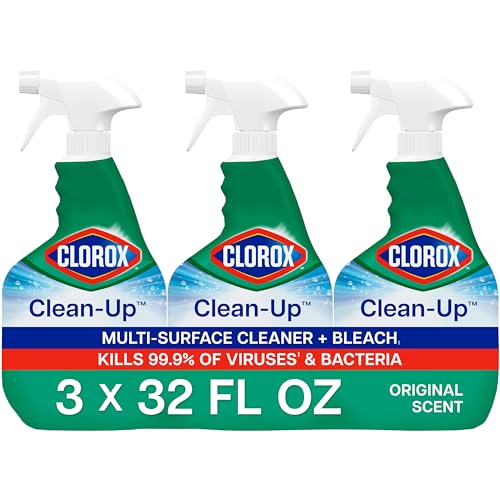
Use bleach. The tile and grout are nonporous enough for bleach to work effectively. Apply a 1:10 bleach solution, let it sit 10 minutes, scrub, and rinse. For ongoing prevention, follow with a Concrobium application to leave a protective barrier. Clorox Clean-Up Bleach Spray is a convenient spray format for this job.
Mold on Drywall and Wallboard
Use Concrobium. Bleach will make this worse. Spray Concrobium on the affected area and let it dry fully. The mold is dead, but the stain remains. If the drywall is structurally compromised (soft, crumbling, or bubbling paint), cut it out and replace it. Treat the new patch with Concrobium before painting.
Outdoor Mold on Concrete, Siding, or Decking
Use bleach. Outside, ventilation is not a concern, and nonporous pressure-treated wood or concrete handles bleach well. A pump sprayer with a 1:10 bleach solution is fast and cheap for large outdoor areas. Clorox Disinfecting Bleach is the most cost-effective option here.
Mold on Porous Surfaces (Wood, Fabric, Upholstery)
Use Concrobium. This is its intended use case. It will not damage the material, leaves no bleach stains, and has no lingering smell. The Concrobium Mold Control Aerosol is ideal for fabrics and upholstery because the fine mist penetrates fibers without soaking them. Multiple positive reviews report success on leather, sporting goods, and upholstery where bleach would cause permanent damage.
Large Area or Whole Room Remediation
Use Concrobium in a pump sprayer or cold fogger. The 1-gallon refill covers up to 1,440 square feet. It is odorless, so you can treat a basement or attic without needing to vacate the house. Bleach is impractical for whole-room fogging because the chlorine vapors would be overwhelming and unsafe. Professional mold remediators often use Concrobium or similar sodium carbonate based treatments for large-scale applications.
How to Use Concrobium Correctly
For most household mold situations, Concrobium Mold Control is the better choice because it works on the widest range of surfaces and does not risk making the problem worse. Here is how to use it for best results.
Safety First
- Wear gloves, eye protection, and an N95 respirator. Even though Concrobium is low-toxicity, you do not want to breathe mold spores that the spraying disturbs.
- Isolate the area. Close doors and tape plastic sheeting over vents to prevent spore spread during treatment. For small spots, a simple containment is usually enough.
Application Steps
- Spray evenly over the affected area until the surface is visibly wet but not running. For large areas, use a pump sprayer or cold fogger rather than the trigger bottle.
- Allow to dry completely. This is the critical step. The formula works as it dries, forming crystals that crush and encapsulate the spores. Do not wipe, scrub, or rinse while wet. Drying time depends on humidity and surface type, typically 30 minutes to several hours. Use fans or a dehumidifier to speed drying in damp spaces.
- Scrub if needed after the surface is fully dry. Use a Concrobium-dampened cloth or brush to remove dead mold residue and staining. Concrobium does not remove stains on its own, so some manual agitation may be needed for appearance.
- Reapply on vulnerable surfaces every 8-12 months or after heavy cleaning that might disturb the barrier. Customers report the barrier holds for 8-10 months in most conditions.
When to Use Bleach Instead
If the surface is hard, nonporous tile, glass, or sealed countertop, bleach is faster and cheaper. Mix 1 part Clorox bleach with 10 parts water in a spray bottle. Apply and let sit 10 minutes. Rinse thoroughly with water. Use only in well-ventilated areas and wear gloves. Never mix bleach with any other cleaner. A 10-minute dwell time is essential for the disinfectant to work. Rinsing is also essential to prevent the bleach residue from degrading surfaces over time.
What Not to Do
- Do not mix bleach with any other cleaner. It creates toxic gas.
- Do not use bleach on drywall, wood, or fabric. It will not fix the problem.
- Do not skip dwell time. Both products need time to work. Spraying and immediately wiping defeats the purpose and wastes the product.
- Do not assume that killing the mold is enough. You must also fix the moisture source, or the mold will return regardless of which product you use. Mold requires moisture to grow. If a leak, condensation issue, or humidity problem is not addressed, no treatment will provide a permanent solution.
Frequently Asked Questions
Does Concrobium really work for mold?
Yes. It is EPA-registered (82552-1) and rated 4.1 out of 5 stars across over 2,000 customer reviews on Amazon. It works by physically encapsulating and crushing mold spores as the solution dries, leaving an antimicrobial barrier that prevents regrowth. The most common complaints are about the sprayer quality, not the formula itself.
Can I use bleach to remove mold from drywall?
No. Do not use bleach on drywall. The water in bleach soaks into the drywall paper and gypsum, feeding the mold roots that remain after the chlorine evaporates. The mold often returns worse than before. Use Concrobium or cut out and replace severely affected drywall.
How long does Concrobium take to kill mold?
Concrobium works as it dries. The active ingredient (sodium carbonate) crystallizes during the drying process, and those crystals physically crush the mold spores. Surface mold is typically dead within a few hours as the treated area dries fully. For best results, do not wipe or rinse the surface while it is still wet.
What kills mold better, bleach or vinegar?
Neither is ideal for porous surfaces. Vinegar (acetic acid at 5-10%) kills some mold species but not all, and it has no residual protection. Bleach kills surface mold on nonporous surfaces but fails on porous materials. For a one-product solution that works on both surface types, Concrobium is a better choice than either.
Final Take
If you are treating mold on drywall, wood, fabric, or any porous surface, buy Concrobium. If everything you need to treat is tile, glass, or sealed hard surface, use diluted bleach and save money. Many homeowners benefit from having both on hand: bleach for the bathroom and kitchen hard surfaces, Concrobium for walls, basements, and anything absorbent. Fix the moisture problem either way, or the mold will return.
Shop Concrobium Mold Control 32 oz on Amazon | Shop Clorox Disinfecting Bleach 81 oz on Amazon | Shop Concrobium 1-Gallon Refill on Amazon
Frequently Asked Questions
Is bleach or Concrobium better for killing mold?
It depends on the surface. On nonporous surfaces like tile and glass, bleach is effective and cheaper. On porous surfaces like drywall and wood, Concrobium is the only correct choice. Bleach on porous surfaces can make mold worse because the water soaks in and feeds the mold roots below the surface.
Does Concrobium really work for mold?
Yes. It is EPA-registered (82552-1) and rated 4.1 out of 5 stars across over 2,000 customer reviews on Amazon. It works by physically encapsulating and crushing mold spores as the solution dries, leaving an antimicrobial barrier that prevents regrowth.

Can I use bleach to remove mold from drywall?
No. Do not use bleach on drywall. The water in bleach soaks into the drywall paper and gypsum, feeding the mold roots that remain after the chlorine evaporates. The mold often returns worse than before.

How long does Concrobium take to kill mold?
Concrobium works as it dries. The active ingredient (sodium carbonate) crystallizes during the drying process, and those crystals physically crush the mold spores. Surface mold is typically dead within a few hours as the treated area dries fully.
What kills mold better, bleach or vinegar?
Neither is ideal for porous surfaces. Vinegar kills some mold species but not all, and it has no residual protection. Bleach kills surface mold on nonporous surfaces but fails on porous materials. For a one-product solution that works on both surface types, Concrobium is a better choice than either.

These statements have not been evaluated by the Food and Drug Administration. This information is not intended to diagnose, treat, cure, or prevent any disease. Content is for informational purposes only and is not medical advice; consult a qualified healthcare provider before starting any supplement. As an Amazon Associate we earn from qualifying purchases.