A dehumidifier is the single most effective tool for preventing mold in areas prone to excess moisture — basements, crawl spaces, bathrooms, and laundry rooms. But simply plugging one in and walking away is not enough. Setting the wrong humidity target, placing the unit in the wrong location, or using an undersized dehumidifier can leave your home vulnerable to mold despite your investment.
This guide covers the exact dehumidifier settings for mold prevention, how to size a unit for your space, where to position it for maximum effectiveness, and how to adjust settings throughout the year.
The Ideal Humidity Setting for Mold Prevention
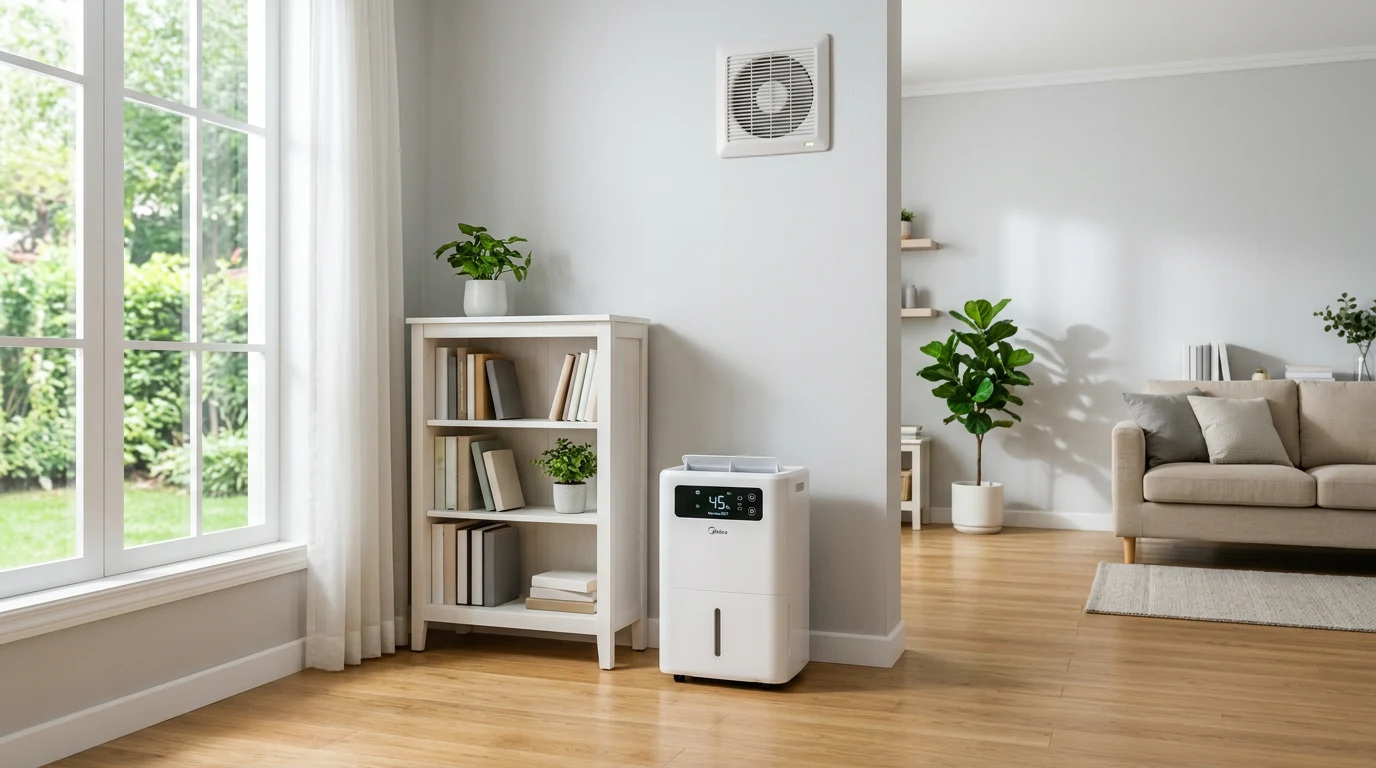
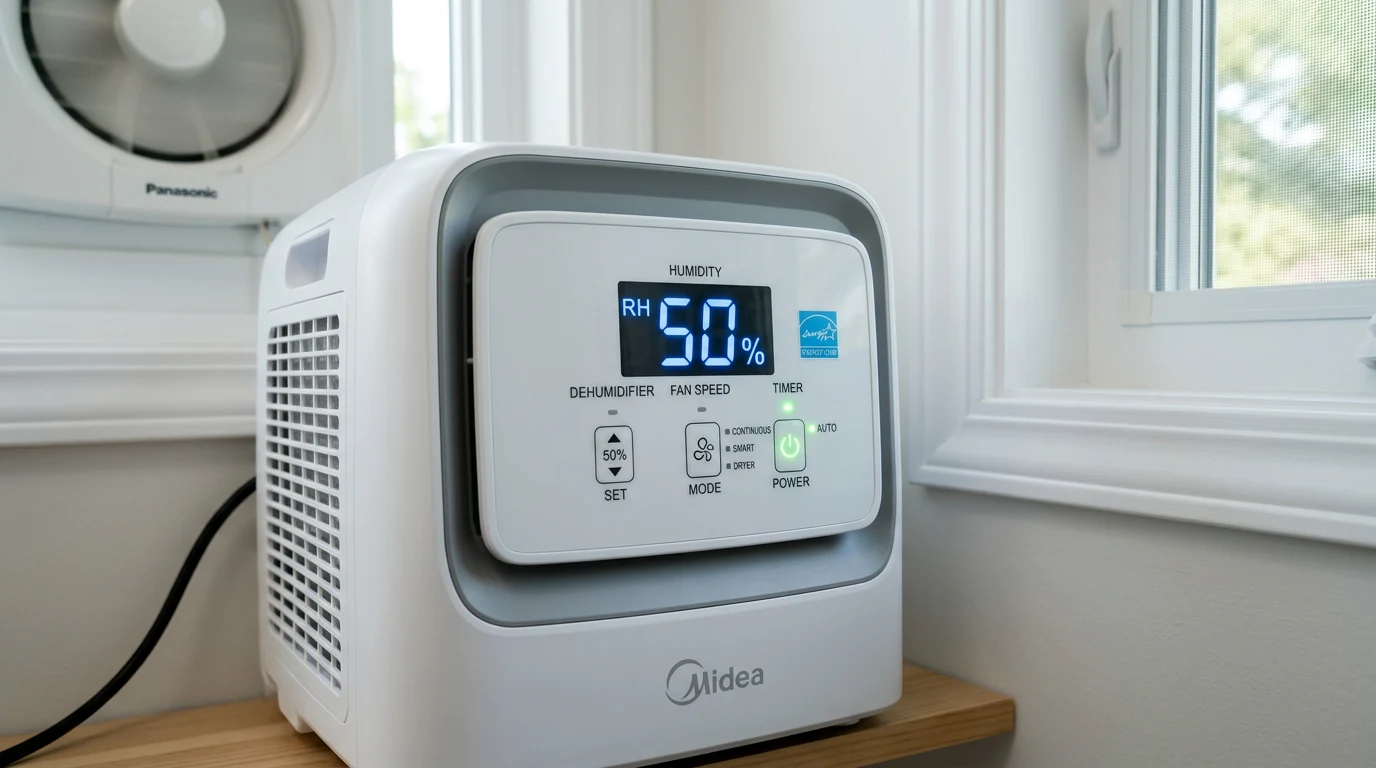
The short answer: set your dehumidifier to maintain 45% to 50% relative humidity.
Here is why that range works:
- Below 30% — too dry. Causes cracked wood furniture, peeling paint, static electricity, and respiratory irritation from dry air. Not necessary for mold prevention and creates other problems
- 30% to 50% — the ideal range recommended by the EPA for mold prevention. Mold cannot establish colonies on materials at these humidity levels
- 50% to 60% — the danger zone. Some mold species, particularly Aspergillus and Cladosporium, can begin growing at relative humidity levels as low as 55%. Condensation may form on cool surfaces like exterior walls and windows
- Above 60% — active mold risk. Most indoor mold species can grow and thrive. Musty odors develop. Materials absorb enough atmospheric moisture to support mold colonization
Setting your target at 45% to 50% gives you a safety margin. Minor humidity fluctuations from cooking, showering, or weather changes will not push your home into mold-supporting territory.
Why 50% Is the Maximum, Not the Target
Many homeowners set their dehumidifier to 50% and consider the job done. The problem: 50% is the upper boundary of the safe zone, not the middle. A dehumidifier set to 50% will cycle off when room humidity reaches that level, but localized conditions near walls, floors, and corners will be higher. Cold spots — exterior walls in winter, uninsulated basement walls — can have surface humidity 10% to 20% higher than the room average.
This is why targeting 45% provides better protection. It accounts for the variation between the room center (where the dehumidifier’s sensor reads) and the colder, damper microenvironments where mold actually starts growing.
Dehumidifier Sizing: Getting the Right Capacity
An undersized dehumidifier runs continuously without reaching target humidity. An oversized unit short-cycles, wasting energy. Proper sizing depends on the room’s square footage and how wet the conditions are.
Sizing Guidelines by Room Condition
- Slightly damp (50-60% humidity, feels clammy, occasional musty smell) — 30-pint unit for 500-1,500 square feet, 50-pint for 1,500-2,500 square feet
- Moderately damp (60-70% humidity, visible condensation on windows, constant musty smell) — 50-pint unit for 500-1,500 square feet, 70-pint for 1,500-2,500 square feet
- Very wet (70%+ humidity, standing water or seepage, visible mold growth) — 70-pint unit for 500-1,500 square feet, two units or a commercial dehumidifier for larger spaces
The pint rating refers to how many pints of water the unit can extract from the air in 24 hours under standard test conditions. Note that real-world performance varies with temperature — most residential dehumidifiers lose efficiency below 60 degrees Fahrenheit and may not function below 41 degrees Fahrenheit.
Special Considerations
- Basements — size up by one category. Basement concrete walls and floors continuously release moisture even when dry to the touch. A basement that reads “slightly damp” on a hygrometer may need a unit rated for “moderately damp” conditions
- Crawl spaces — use commercial or crawl-space-specific dehumidifiers rated for low temperatures. Standard residential units struggle in the cooler temperatures typical of crawl spaces
- Open floor plans — measure the total connected space, not individual rooms. A 50-pint unit in a 400 square foot basement that opens to a 600 square foot family room needs to handle the combined 1,000 square feet
Optimal Dehumidifier Placement
Where you place your dehumidifier matters as much as the settings:
Positioning Rules
- Center of the room when possible — provides the best air circulation and most accurate humidity readings. If this is not practical, place it at least 6 to 12 inches from walls
- Near the moisture source — if one wall is wetter than others (a leaking foundation wall, for example), position the unit on that side of the room
- Away from obstructions — keep the intake and exhaust grilles unblocked. Furniture, boxes, and stored items restrict airflow and reduce efficiency by 20% to 40%
- Level surface — dehumidifiers use gravity-fed drain pans and float switches. An unlevel unit may overflow or shut off prematurely
- Near a drain (ideal) — most dehumidifiers have a continuous drain option. Running a hose to a floor drain or condensate pump eliminates the need to empty the bucket and allows uninterrupted operation
Room-Specific Placement
- Basement — center of the space, elevated slightly if the floor tends to flood. Connect to a floor drain with a gravity hose or use a condensate pump
- Crawl space — on a stable, level platform off the ground. Use continuous drainage. The unit must be rated for low-temperature operation (below 60 degrees Fahrenheit)
- Bathroom — a smaller unit (20 to 30 pints) works for bathrooms lacking adequate exhaust fans. Place away from the shower splash zone
- Bedroom — choose a unit rated under 50 decibels for sleep. Place near the warmest exterior wall to target condensation-prone surfaces
Seasonal Adjustments
Humidity patterns change with the seasons, and your dehumidifier settings should adapt:
Spring (March through May)
Outdoor humidity rises as temperatures increase. Ground thaws and releases moisture into basements and crawl spaces. This is the season to start running your dehumidifier if it was off during winter. Set to 45% and monitor for the first 2 weeks. Spring is the highest-risk period for basement mold growth because rising humidity meets materials that were dry all winter.

Summer (June through August)
The highest humidity season in most of the U.S. Your dehumidifier will run the most during summer, potentially extracting 30 to 70 pints per day. Keep the setting at 45%. Empty the bucket daily (or use continuous drainage). This is also when air conditioning creates cold surfaces that attract condensation — check around AC vents and exterior walls for moisture accumulation.
Fall (September through November)
Outdoor humidity gradually decreases. The dehumidifier will run less frequently but should remain active until indoor humidity stays below 50% consistently without it. Transition months (September and October) can have significant humidity swings — continue monitoring daily.
Winter (December through February)
In cold climates, heating systems dry indoor air naturally. You may not need the dehumidifier at all. However, basements and crawl spaces often retain higher humidity even in winter. If your basement hygrometer reads above 50% during winter, keep the dehumidifier running at a lower setting (50%) to prevent mold on cold foundation walls where condensation forms.
Using a Hygrometer to Verify Your Settings
Do not rely solely on the dehumidifier’s built-in humidity sensor. These sensors measure air temperature and humidity at the unit’s intake — often the driest spot in the room because the dehumidifier preferentially processes nearby air first.
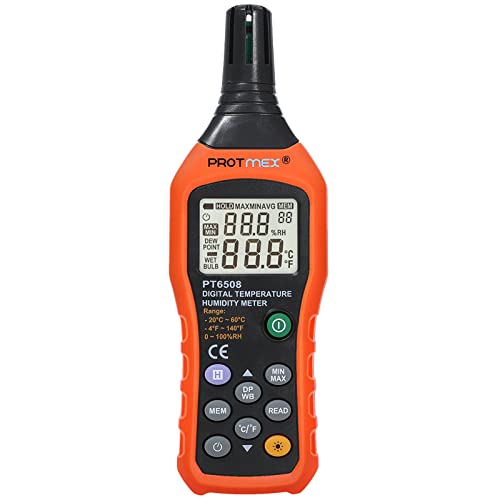
Place an independent hygrometer ($10 to $20 at any hardware store) at the most vulnerable location in the room — against an exterior wall, near the floor, or in the corner farthest from the dehumidifier. This reading represents the worst-case humidity in the room and is the number that matters for mold prevention.
If your dehumidifier displays 45% but the wall hygrometer reads 58%, your dehumidifier is undersized, poorly placed, or there is an active moisture source that needs repair. Explore the differences between air purifiers and dehumidifiers for mold prevention to understand which tool serves which purpose.
Dehumidifier Maintenance for Optimal Performance
A poorly maintained dehumidifier loses efficiency and can itself become a mold source:
- Clean the filter every 2 weeks — rinse the air intake filter under running water and let it dry completely before reinstalling. A clogged filter reduces airflow and extraction capacity by up to 50%
- Empty and clean the water bucket weekly — standing water in the bucket grows mold within 48 hours. Wash with diluted vinegar monthly
- Inspect the coils annually — the evaporator coils can accumulate dust and mold. Turn off and unplug the unit, remove the cover, and gently clean coils with a soft brush
- Check the drain hose — if using continuous drainage, verify the hose is not kinked, clogged, or growing biofilm. Flush with vinegar quarterly
- Verify the humidistat accuracy — compare the dehumidifier’s reading to an independent hygrometer. If they differ by more than 5%, rely on the independent unit and adjust the dehumidifier setting accordingly
When a Dehumidifier Alone Is Not Enough
A dehumidifier manages atmospheric moisture but cannot solve active water intrusion problems. You need additional action if:
- The dehumidifier runs continuously without reaching target humidity — this indicates a moisture source exceeding the unit’s capacity. Check for plumbing leaks, foundation seepage, or inadequate exterior drainage
- Standing water appears after rain — a dehumidifier cannot keep up with water intrusion. Grading, gutter repairs, or foundation waterproofing are needed
- Mold keeps returning after cleaning — if mold removal does not last, the moisture source has not been eliminated. The dehumidifier is treating a symptom, not the cause
- Structural moisture sources — concrete basement walls that wick moisture from soil, crawl spaces without vapor barriers, and uninsulated cold water pipes create moisture that dehumidification alone cannot overcome efficiently
In these situations, fix the structural moisture problem first, then use the dehumidifier to manage residual humidity. Think of the dehumidifier as a maintenance tool, not a remediation tool.
Energy Costs and Efficiency Tips
Running a dehumidifier 24 hours a day can add $30 to $60 per month to your electric bill depending on the unit size and local energy rates. Here is how to minimize costs while maintaining mold protection:
- Buy an Energy Star rated model — they use 15% to 20% less energy than standard units while delivering the same moisture removal
- Use the built-in timer — if your home only gets humid during afternoon hours, program the unit to run during peak humidity periods rather than continuously
- Seal the space — a dehumidifier in a leaky basement fights a losing battle against outdoor humidity entering through cracks and gaps. Seal foundation cracks, close basement windows, and insulate cold water pipes to reduce the workload
- Close off unused spaces — a dehumidifier servicing a 2,000 square foot basement uses far more energy than one maintaining a 500 square foot sealed section
- Use continuous drainage — when the bucket fills and the unit shuts off, humidity rebounds. Hours of progress are lost. Continuous drainage keeps the unit running efficiently without interruption
Frequently Asked Questions
What humidity level kills mold?
Dehumidification does not kill existing mold — it prevents new growth and stops active colonies from spreading. Mold spores survive in dormant states at very low humidity levels and reactivate when moisture returns. Existing mold must be physically removed. Maintaining humidity below 50% prevents new mold from establishing on previously clean surfaces.
Should I leave my dehumidifier running 24/7?
In humid climates and during summer, yes — at least in basements and crawl spaces. Modern units with auto-shutoff and humidistat controls only run when humidity exceeds your set target, so they self-regulate even when left “on” continuously. The cost of running a dehumidifier ($30-60 per month) is far less than the cost of mold remediation ($10,000-$30,000 for a typical basement).
Can I use a dehumidifier and air purifier at the same time?
Yes, and the combination provides comprehensive mold protection. The dehumidifier removes moisture (preventing growth) while a HEPA air purifier captures airborne spores (reducing exposure). They serve different functions and do not interfere with each other. Place them on opposite sides of the room for best air circulation.
My dehumidifier is icing up — what is wrong?
Ice forming on the coils means the room temperature is too low for the unit to operate properly. Most residential dehumidifiers need ambient temperatures above 60 degrees Fahrenheit. Below that, the evaporator coils drop below freezing and ice over. If you need dehumidification in cold spaces (crawl spaces, garages, unheated basements), invest in a unit specifically designed for low-temperature operation with a hot-gas defrost cycle.
Where should I put the dehumidifier in my basement?
Place it in the center of the space with at least 12 inches of clearance on all sides for airflow. If the basement has a known wet wall, position the unit closer to that side. Elevate slightly if the floor is prone to flooding. The most important factor is connecting to continuous drainage — a dehumidifier that shuts off when its bucket fills loses hours of progress while humidity rebounds.
What is the ideal humidity level to prevent mold growth?
The ideal indoor humidity level to prevent mold growth is generally between 30% and 50%. Maintaining this range with your dehumidifier settings significantly reduces the moisture available for mold spores to germinate and spread.
Can setting my dehumidifier too low cause problems?
Yes, setting your dehumidifier too low, below 30% relative humidity, can cause problems like dry skin, irritated respiratory passages, and damage to wooden furniture or musical instruments. It’s important to balance mold prevention with comfort and preservation.
How quickly should a dehumidifier reduce humidity to safe levels after a water event?
After a water event, a dehumidifier should aim to reduce humidity to safe levels (below 50%) within 24-48 hours to effectively inhibit mold growth. Prompt and aggressive dehumidification is crucial in preventing a mold infestation.

Should I run my dehumidifier continuously or only when humidity is high?
For mold prevention, it’s generally recommended to run your dehumidifier continuously with its humidistat set to your desired level (e.g., 45%). This allows the unit to automatically cycle on and off as needed, maintaining consistent humidity control without constant manual adjustment.
What’s the difference between a portable and a whole-house dehumidifier for mold prevention?
Portable dehumidifiers are suitable for specific damp areas like basements or bathrooms, offering targeted moisture removal. Whole-house dehumidifiers integrate with your HVAC system to control humidity throughout the entire home, providing more comprehensive and consistent mold prevention.
How often should I check my dehumidifier’s water reservoir to prevent it from overflowing?
You should check your dehumidifier’s water reservoir at least once a day, or more frequently in very humid conditions, to prevent overflowing. Many modern units have an automatic shut-off feature when the reservoir is full, but regular emptying ensures continuous operation and effective mold prevention.
These statements have not been evaluated by the Food and Drug Administration. This information is not intended to diagnose, treat, cure, or prevent any disease. Content is for informational purposes only and is not medical advice; consult a qualified healthcare provider before starting any supplement. As an Amazon Associate we earn from qualifying purchases.
