You walk through the front door and there it is — that damp, earthy, stale odor you cannot quite place. It is not strong enough to hit you like garbage or smoke, but it lingers in the background of every room. You have tried air fresheners, opened windows, and deep-cleaned the carpet. Nothing eliminates it. That persistent musty smell in your house is not a minor annoyance. It is your home telling you that mold is actively growing somewhere inside it.
Understanding what causes that smell, where to look for its source, and how to eliminate it is essential to protecting both your home and your health.
The Science Behind That Musty Odor
A musty smell is not caused by mold spores themselves. It is produced by microbial volatile organic compounds — mVOCs — which are chemical byproducts of mold metabolism. When mold digests organic material (drywall paper, wood, carpet fibers, dust), it releases these gas-phase compounds into the air.
The most common mVOCs responsible for musty odors include 1-octen-3-ol (often called “mushroom alcohol”), geosmin (the same compound that gives fresh earth its distinctive smell), 2-methylisoborneol, and various aldehydes and ketones. Each mold species produces a slightly different blend of mVOCs, which is why musty smells vary from earthy to sour to stale depending on the mold involved.
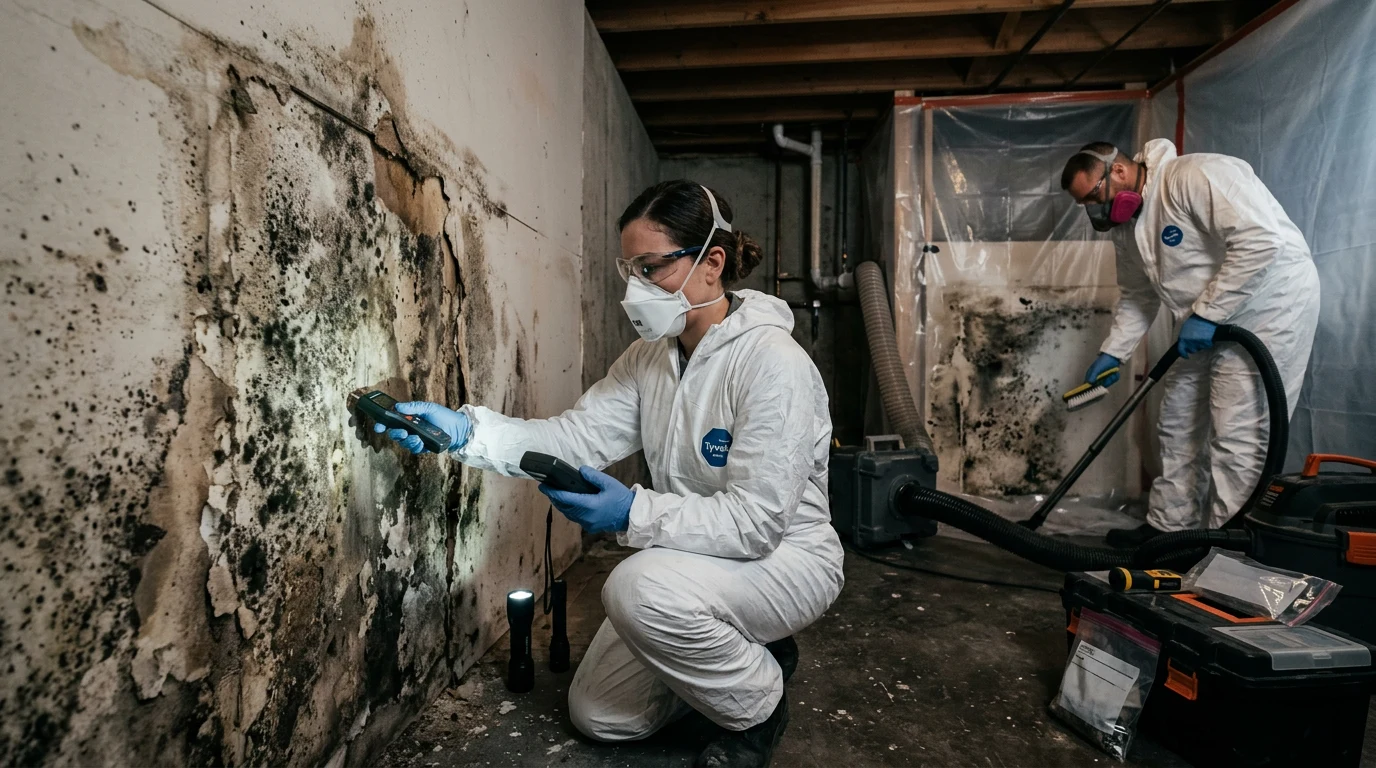
According to the EPA’s mold guide, if you can smell a musty or moldy odor, that is enough reason to investigate and take corrective action, even if no mold is visible.
What a Musty Smell Tells You About Your Home
A musty odor is a reliable indicator of several important conditions:
- Active mold growth — mVOCs are produced during active metabolism, not by dormant spores. A musty smell means mold is currently growing and feeding, not just present from a past event
- Sufficient moisture — mold only grows actively when moisture levels support it. A musty smell confirms an ongoing moisture problem, even if you cannot see water damage
- Established colonies — enough mold must be present to produce detectable levels of mVOCs. By the time you smell mustiness, the mold has had time to colonize a meaningful area of material
- Potential health risk — mVOCs themselves can cause irritation to the eyes, nose, and throat. More importantly, if mold is actively growing, it is also releasing spores and potentially mycotoxins into the air you breathe
Where to Check First When You Smell Mustiness
Mold grows where moisture accumulates. Start your investigation in these areas:
Bathrooms
The number one location for mold growth due to daily exposure to steam, splashing, and condensation. Check the ceiling above the shower, behind the toilet where condensation forms on the tank, under the vanity sink, around the bathtub caulk line, and the exhaust fan housing. Tile grout that has turned dark is often harboring mold. If the exhaust fan does not vent to the exterior (some simply recirculate into the attic), moisture is being trapped rather than removed.
Under Sinks (Kitchen and Bathroom)
Slow drips from supply lines, drain connections, or garbage disposals create a constantly damp environment inside the cabinet. Open every under-sink cabinet and look for water stains on the cabinet floor, swollen or delaminating particleboard, and any visible mold on surfaces or stored items. A drip as small as one drop per minute produces over 1,400 gallons of water per year.
Basement
Basements combine below-grade moisture intrusion with limited air circulation. Check the perimeter walls for efflorescence (white mineral deposits indicating water seepage), the floor-wall joint where water commonly enters, around the water heater and furnace, and any finished walls or carpet installed directly against foundation concrete. Basement humidity above 60% supports mold growth even without visible water.
Crawl Space
If your home has a crawl space, it may be the source of mustiness that permeates the entire house. Ground moisture, inadequate vapor barriers, and poor ventilation make crawl spaces one of the most common hidden mold locations. Musty air from the crawl space migrates upward through floor penetrations, outlets, and gaps — a phenomenon called the stack effect — contaminating the living space above.
Attic
Attic mold develops from roof leaks, insufficient insulation (causing condensation), bathroom fans vented into the attic space, and blocked soffit vents. Because attics are rarely visited, mold can grow extensively before anyone notices. If the musty smell is strongest on the upper floor, the attic is a prime suspect.
HVAC System
Mold in the HVAC ductwork, on the evaporator coil, or in the drip pan creates a musty smell that the system distributes throughout the house every time it runs. If the musty smell gets stronger when the heating or cooling system kicks on, the HVAC is likely contaminated. Check around supply vents for visible mold or dark discoloration.
Behind Walls
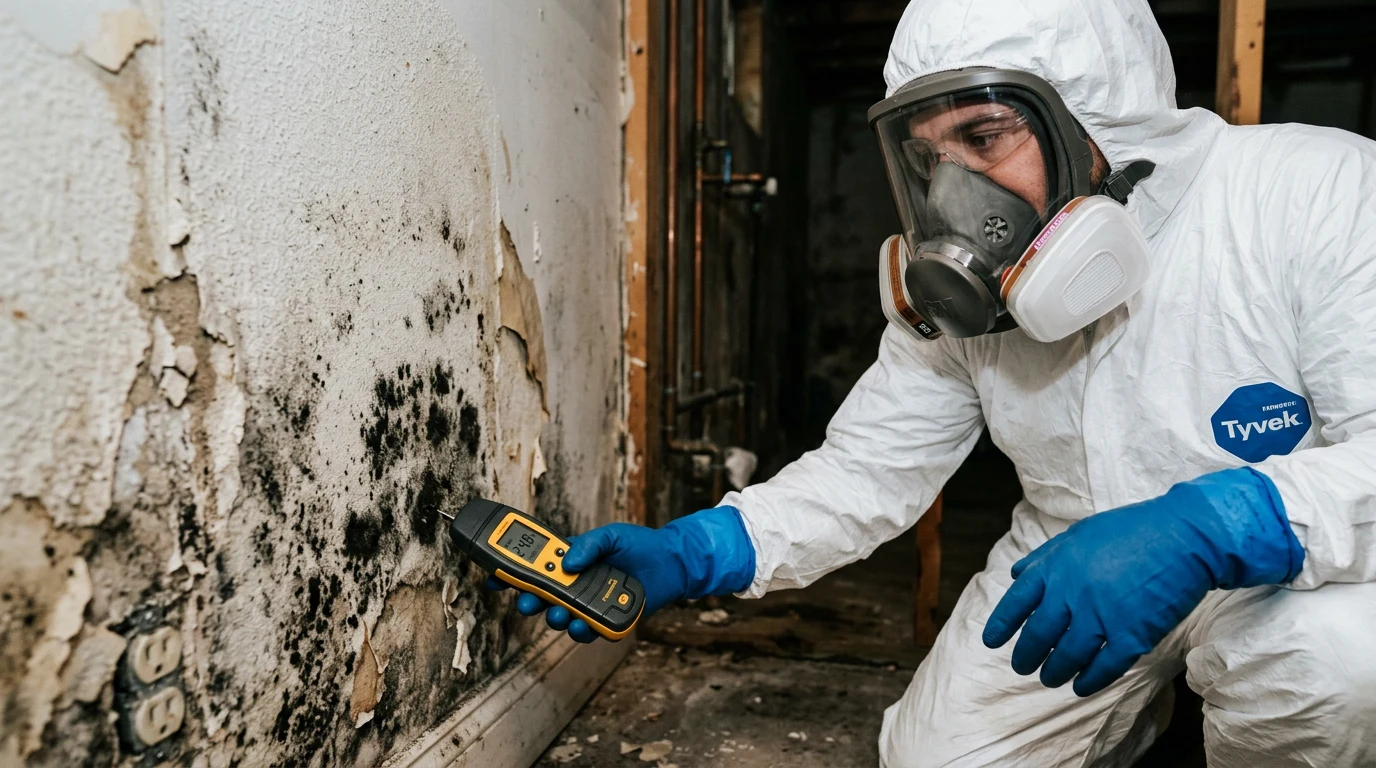
Plumbing leaks inside wall cavities produce mold growth on the back side of drywall and on framing lumber. Signs include localized musty odor near a specific wall section, paint bubbling or peeling, and walls that feel damp or cool to the touch. A moisture meter (available for $30 to $100) can detect elevated moisture in walls without opening them.
How to Investigate a Musty Smell You Cannot Find
When a visual inspection does not reveal the source, try these investigative techniques:
The Nose Test
Walk slowly through your home, paying attention to where the smell intensifies. Get low — smell along baseboards where mold at floor level is most concentrated. Smell around electrical outlets and switch plates on exterior walls (air leaks around these openings can carry mold odors from inside wall cavities). Close all windows and doors for 2 hours before testing to let mVOCs accumulate to detectable levels.
The Moisture Meter Method
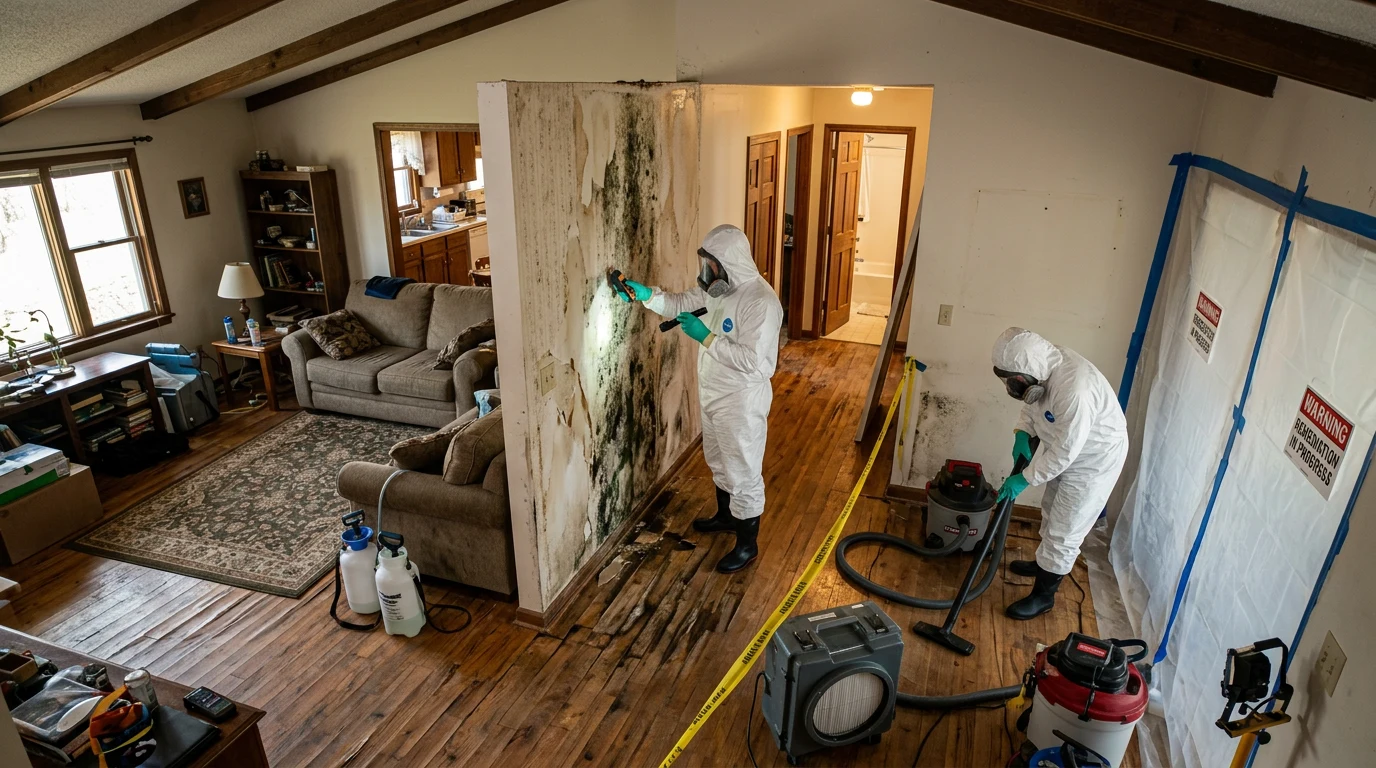
Scan walls, floors, and ceilings with a pinless moisture meter. Normal drywall reads under 1% moisture content. Readings above 1% indicate moisture intrusion and likely mold growth behind the surface. Focus on exterior walls, areas below bathrooms, and walls shared with kitchens or laundry rooms.
Professional Mold Testing
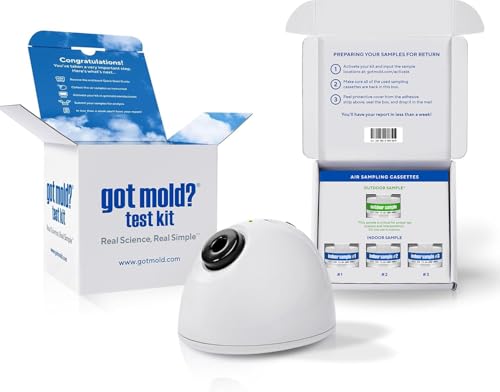
A professional mold inspector uses calibrated air sampling equipment, thermal imaging cameras, and borescopes (thin cameras that can see inside wall cavities through small holes) to locate hidden mold. Air sampling compares indoor spore counts to outdoor baseline levels — indoor counts higher than outdoor indicate an active indoor mold source. Testing costs typically range from $300 to $600.
Common Musty Smell Sources That Are Not Mold
While mold is the most common cause, some other conditions produce similar odors:
- Stagnant water in drain traps — unused floor drains, guest bathroom sinks, and basement drains can lose their water seal, allowing sewer gas to enter. Pour water down unused drains monthly
- Wet insulation — fiberglass insulation that got wet but did not develop mold can smell musty as it slowly deteriorates
- Old carpet padding — decades-old padding breaks down and produces musty odors even without mold. If the carpet is over 15 years old, consider replacement
- Dead animals — a decomposing animal in the wall, attic, or crawl space produces a progressively stronger smell that is distinct from mold but sometimes confused with it initially
- AC condensation issues — a clogged condensate drain line causes standing water in the drain pan, producing a musty smell circulated through the ductwork
How to Eliminate the Musty Smell for Good
Air fresheners, scented candles, and odor absorbers do not solve the problem — they mask it while the mold continues growing. Permanent elimination requires addressing the source:
Step 1: Find and Fix the Moisture Source
Every musty smell has a moisture source. Find it. Fix it. This may mean repairing a plumbing leak, improving bathroom ventilation, waterproofing a basement wall, installing a vapor barrier in the crawl space, or replacing a leaking roof section. Without eliminating the moisture, any mold removal is temporary.
Step 2: Remove the Mold
Once the moisture source is controlled, remove the mold. For small areas (under 10 square feet), follow proper removal procedures using appropriate cleaning agents. For larger areas, hire a professional for full remediation. Remove and discard porous materials (drywall, carpet, insulation) that are mold-contaminated — cleaning them is insufficient because mold hyphae penetrate deep into porous surfaces.
Step 3: Dry Thoroughly
After removal, dry the area aggressively with dehumidifiers and fans. Use a moisture meter to confirm materials reach safe moisture levels before closing up walls or installing new materials. Rebuilding over damp framing guarantees mold will return.
Step 4: Maintain Low Humidity
Keep indoor humidity between 30% and 50% year-round. Use a dehumidifier in basements, crawl spaces, and any room that tends toward dampness. Monitor with a hygrometer ($10 to $20) and respond if readings exceed 50%.
Step 5: Improve Ventilation
Ensure bathroom exhaust fans vent to the exterior (not the attic) and run for 30 minutes after showers. Use kitchen range hoods during cooking. Open windows periodically for fresh air exchange when outdoor humidity permits. Good ventilation prevents the stagnant, humid conditions that mold requires.
Frequently Asked Questions
Is a musty smell always mold?
Not always, but it is the most common cause. Other sources include stagnant drain water, deteriorating carpet padding, wet insulation, and condensation issues in HVAC systems. However, all of these conditions also create environments where mold can grow. If you smell mustiness, investigating for mold should be your first step regardless.
Can a musty smell make you sick?
The mVOCs that cause musty odors can irritate the eyes, nose, and throat even at low concentrations. More importantly, a musty smell indicates active mold growth, which means mold spores and potentially mycotoxins are also in the air. These are the primary health threats — the smell itself is the warning signal for a broader exposure problem.
Why does my house smell musty only when it rains?
Rain increases outdoor humidity, raises the water table (pushing moisture through basement walls and floors), and can expose roof or window leaks that only activate during heavy rainfall. The increased moisture reactivates dormant mold colonies and increases mVOC production. If mustiness correlates with rain, look for water intrusion points: basement wall seepage, window leaks, and roof vulnerabilities.
Why does my musty smell come and go?
Musty odors fluctuate based on humidity, temperature, and HVAC operation. Higher humidity increases mold activity and mVOC production. Running the HVAC can circulate contaminated air from a hidden source. You may also develop “nose blindness” — adaptation to a constant smell that makes it undetectable until you leave and return. Ask a friend or neighbor if they notice an odor when entering your home.
Will an ozone generator eliminate musty smell?
Ozone generators can temporarily reduce musty odors by oxidizing mVOCs in the air. However, they do not kill mold or address the moisture source. Once the ozone dissipates (typically within 24 to 48 hours), the mold continues producing mVOCs and the smell returns. Ozone is also a respiratory irritant that can harm occupants and pets. It is a temporary treatment that does not solve the underlying problem.
What exactly causes that musty smell in my house?
The musty smell in your house is primarily caused by microbial volatile organic compounds (MVOCs) produced by mold and other fungi as they grow and metabolize organic matter. These compounds are released into the air and are detectable by the human nose even at very low concentrations, signaling the presence of mold growth.
Can I have mold even if I don’t see it, but I smell the musty odor?
Absolutely. Mold often grows in hidden areas, such as behind drywall, under flooring, in attics, or within HVAC systems, where it’s out of sight but still producing MVOCs. The musty smell is often the first and most reliable indicator of a hidden mold problem.
Is the musty smell itself harmful to my health?
While the smell itself is not directly harmful, it is a strong indicator of mold presence, and mold exposure can lead to various health issues. Prolonged exposure to mold spores and their byproducts can trigger allergies, asthma symptoms, respiratory problems, and other sensitivities in susceptible individuals.
If I air out my house, will the musty smell and potential mold go away?
Airing out your house might temporarily dissipate the smell, but it will not eliminate the underlying mold growth or its source of moisture. To effectively remove the musty odor, the mold itself must be located, contained, and properly remediated, along with addressing the moisture issue that allowed it to thrive.

What should I do immediately if I detect a musty smell in my home?
If you detect a persistent musty smell, your immediate action should be to investigate for potential moisture sources and visible mold growth. If you cannot locate the source or if the area is extensive, it is advisable to contact a professional mold remediation specialist for inspection and assessment.
Can a musty smell indicate other problems besides mold?
While a musty smell is most commonly associated with mold, it can sometimes indicate other issues like decaying organic matter, stagnant water in crawl spaces, or even certain pest infestations. However, given the health risks, it’s always prudent to assume mold until proven otherwise and investigate thoroughly.
These statements have not been evaluated by the Food and Drug Administration. This information is not intended to diagnose, treat, cure, or prevent any disease. Content is for informational purposes only and is not medical advice; consult a qualified healthcare provider before starting any supplement. As an Amazon Associate we earn from qualifying purchases.