Every winter, millions of homeowners watch water droplets form on their windows and assume it is harmless. By spring, many of those same homeowners discover mold growing on window frames, sills, and the surrounding drywall. The connection between winter window condensation and spring mold is direct, predictable, and preventable.
Window condensation is not just a cosmetic nuisance. It is a daily deposit of water onto surfaces that stay wet for hours — creating the sustained moisture that mold colonies need to establish and spread.
Why Windows Collect Condensation in Winter
The physics behind window condensation is straightforward. Warm indoor air holds moisture. When that warm, moist air contacts a cold surface — like a window pane — it cools below its dew point, and the moisture transitions from invisible vapor to visible liquid water. This is the same process that puts dew on grass in the morning.
According to the EPA’s guide to mold and moisture, condensation on cold surfaces is a primary moisture source for indoor mold. The colder the window and the more humid the indoor air, the more condensation forms.
Factors That Increase Window Condensation
- Single-pane windows: Single-pane glass has an R-value of approximately 1, meaning it offers almost no insulation. The interior surface temperature of a single-pane window can drop to within 5 to 10 degrees of the outdoor temperature, guaranteeing heavy condensation.
- Poor weatherstripping: Gaps around window frames allow cold air to infiltrate, further cooling the window assembly and surrounding surfaces.
- High indoor humidity: The higher the moisture content of indoor air, the less cooling is needed to reach the dew point. At 70 degrees Fahrenheit and 50% relative humidity, condensation begins forming on any surface below 50 degrees Fahrenheit.
- Closed window coverings: Heavy curtains or blinds trap cold air between the covering and the glass, dropping the glass temperature further while blocking warm room air from reaching the window. This increases condensation significantly.
- North-facing windows: Windows that never receive direct sunlight stay colder throughout the day, producing more condensation than south or west-facing windows.
How Daily Condensation Becomes Spring Mold
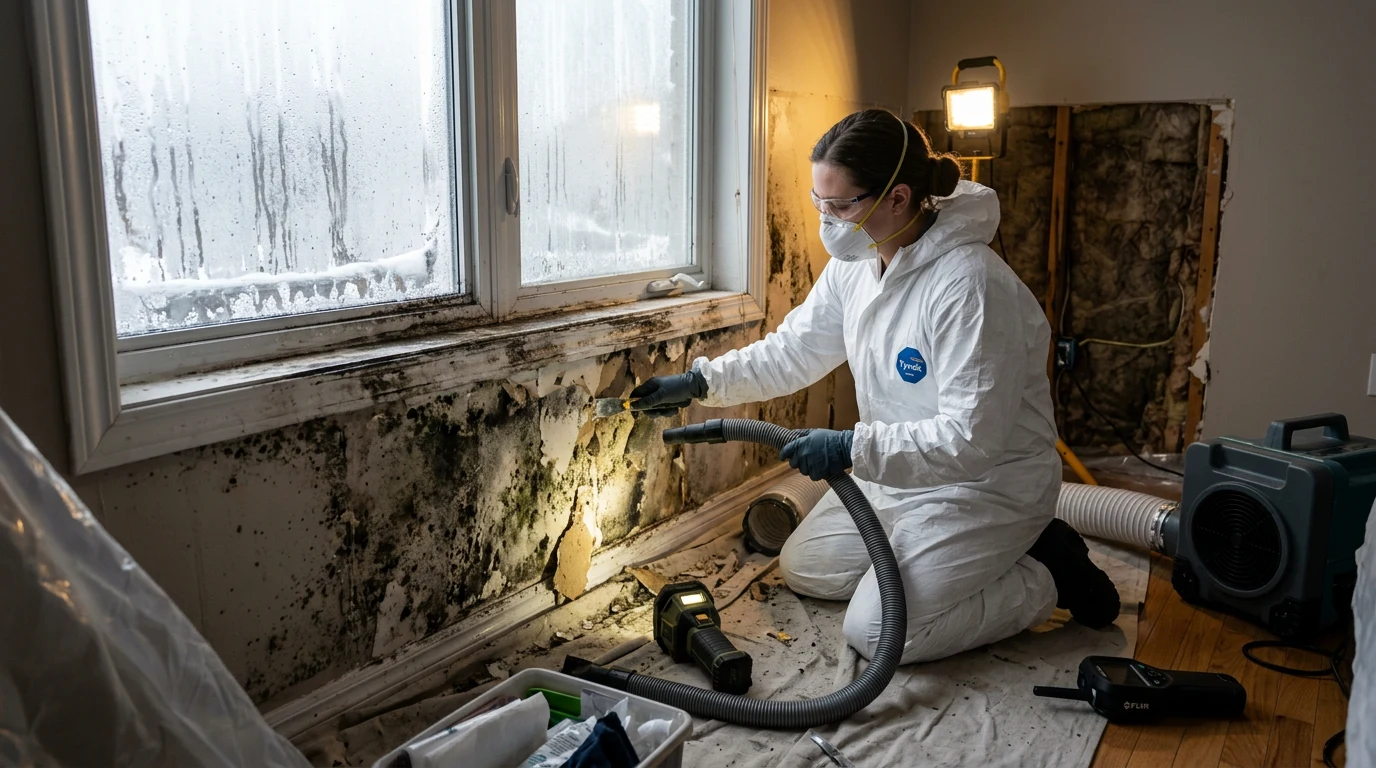
A single night of condensation is not enough to cause mold. But winter lasts 3 to 5 months in most of the country, and condensation forms every night during that period. Here is how the accumulation leads to mold:
The Daily Cycle
- Evening: Indoor heating runs. Cooking, showers, and breathing add moisture to the air. Windows cool as outdoor temperatures drop.
- Overnight: Condensation forms on glass and runs down to the sill. Some water pools on the sill, some wicks into the wood frame, and some absorbs into the drywall below the window.
- Morning: Some condensation evaporates as the house warms. But wood frames, drywall paper, and caulking that absorbed water overnight do not fully dry before the cycle repeats the following evening.
- Accumulation: Each day, a little more moisture is absorbed and a little less dries. Over weeks, the wood frame and surrounding materials reach a moisture content above 20% — the threshold where mold begins growing.
The Spring Reveal
When spring arrives, homeowners open curtains wider, spend more time near windows, and start spring cleaning. That is when they discover black, green, or gray mold on window frames, sills, and the drywall beneath windows. The mold was growing for weeks or months, hidden behind curtains and below sight lines.
Where Condensation Mold Appears
Window condensation mold follows predictable patterns based on where water accumulates:
- Window sills: The most common location. Water pools on the sill and stays wet for hours. Wood sills are particularly vulnerable because they absorb moisture.
- Bottom corners of window frames: Water runs down the glass and collects at the lowest points of the frame assembly.
- Caulk lines: The caulking between the window frame and wall absorbs moisture and provides an organic surface for mold growth. Silicone caulk resists mold better than latex caulk.
- Drywall below windows: Condensation that overflows the sill runs down the wall beneath the window. Mold on drywall below windows is a strong indicator of condensation problems.
- Inside the wall cavity: In severe cases, moisture migrates past the window frame into the wall cavity, where it can cause hidden mold on studs and insulation — problems that are not visible without removing the drywall.
How to Prevent Window Condensation Mold
Reduce Indoor Humidity
The most effective approach is reducing the amount of moisture available to condense. In winter, indoor humidity should be kept between 30% and 40% — lower than the 30% to 50% summer target because cold window surfaces are more prone to condensation.
- Run bathroom exhaust fans for 30 minutes after showers — this is the largest controllable moisture source in most homes
- Use range hood fans when cooking — boiling water, simmering soup, and running the dishwasher all add significant moisture
- Vent the dryer outside — a properly connected dryer vent prevents a major moisture source from entering the house
- Monitor with a hygrometer: A digital hygrometer in the bedroom and main living area shows exactly where you stand. If readings exceed 40% in winter, increase ventilation or reduce moisture sources.
Improve Air Circulation at Windows
- Leave curtains partially open: Allow warm room air to reach the window surface. Fully closed curtains create a cold pocket between the fabric and glass, maximizing condensation.
- Open blinds during the day: Solar gain warms the glass, reducing condensation and drying overnight accumulation.
- Use a small fan: Directing gentle airflow toward problem windows can reduce condensation significantly by keeping the glass surface slightly warmer.
- Avoid blocking heat registers under windows: Furniture, long curtains, or shelving that blocks warm air from rising over the window surface eliminates your primary defense against condensation.
Upgrade Window Insulation
- Interior window insulation film: A clear plastic film kit ($10 to $15 per window) creates a dead-air space between the glass and the room, raising the surface temperature and reducing condensation. This is the most cost-effective solution for renters or homeowners who cannot replace windows.
- Double or triple-pane windows: Modern double-pane windows have interior surface temperatures 15 to 20 degrees warmer than single-pane windows at the same outdoor temperature. If you are replacing windows, select units with a U-factor of 0.30 or lower for the best condensation resistance.
- Window replacement weatherstripping: Replace worn weatherstripping to prevent cold air infiltration around the frame. New weatherstripping costs $3 to $10 per window and installs in minutes.
Wipe Condensation Daily
When condensation forms despite your prevention efforts, wiping it away before it accumulates prevents the daily moisture cycle that leads to mold. Keep a microfiber cloth or squeegee near problem windows and wipe them each morning. This takes 30 seconds per window and breaks the moisture accumulation chain.
Pay special attention to wiping the sill and the bottom of the frame where water collects. These are the areas where mold appears first.
What to Do If You Already Have Window Mold
If you discover mold on or around your windows, the good news is that window mold is usually surface-level and manageable if caught early.
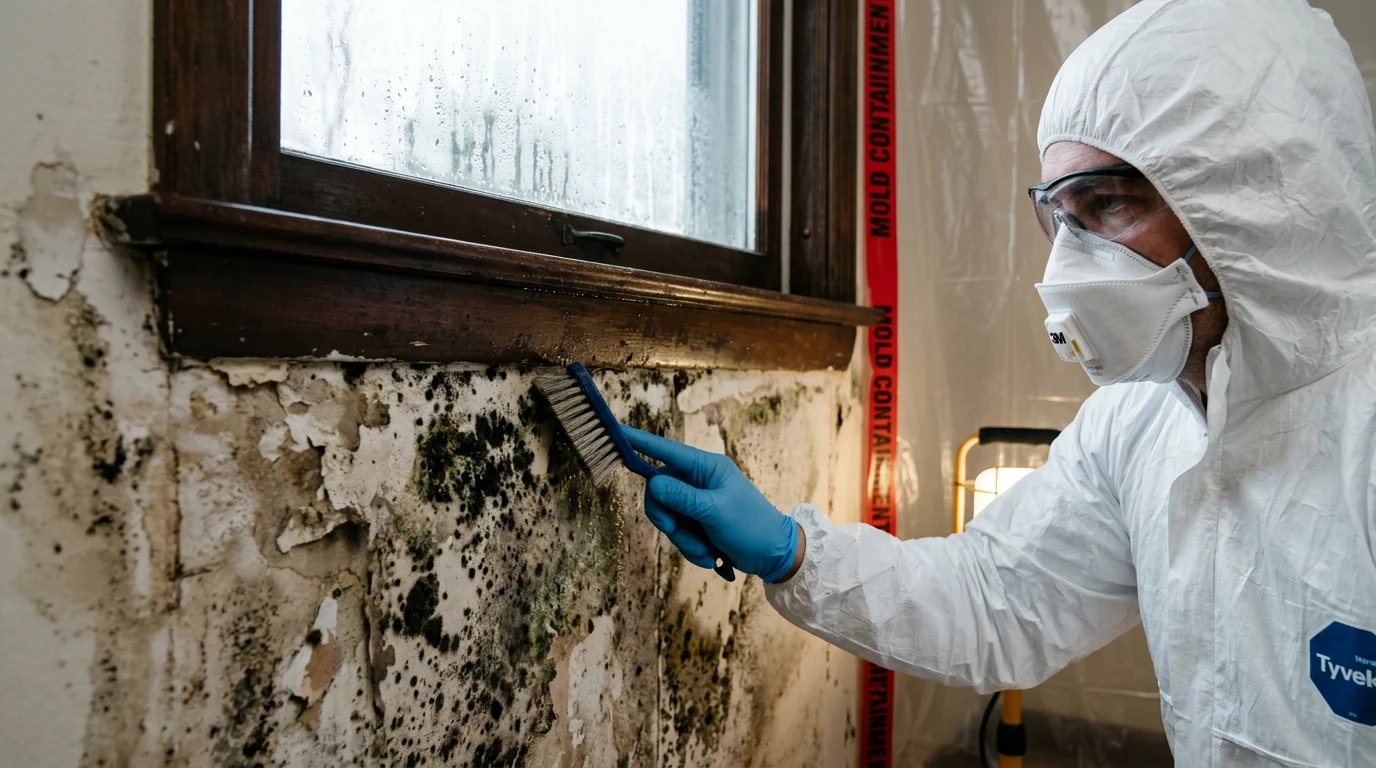
- Surface mold on painted wood or vinyl frames: Clean with a solution of 1 cup white vinegar per 1 cup water. Spray, let sit 15 minutes, scrub with a stiff brush, and dry thoroughly. Vinegar is more effective than bleach on porous surfaces like wood.
- Mold on caulking: If mold has penetrated the caulk, remove and replace it. Scrape out the old caulk, clean the surface with vinegar, let it dry completely, and apply mold-resistant silicone caulk.
- Mold on drywall below windows: Surface mold on painted drywall can be cleaned with vinegar. If the drywall is soft, crumbling, or the mold returns within weeks, the moisture has penetrated deeper and the affected drywall should be cut out and replaced.
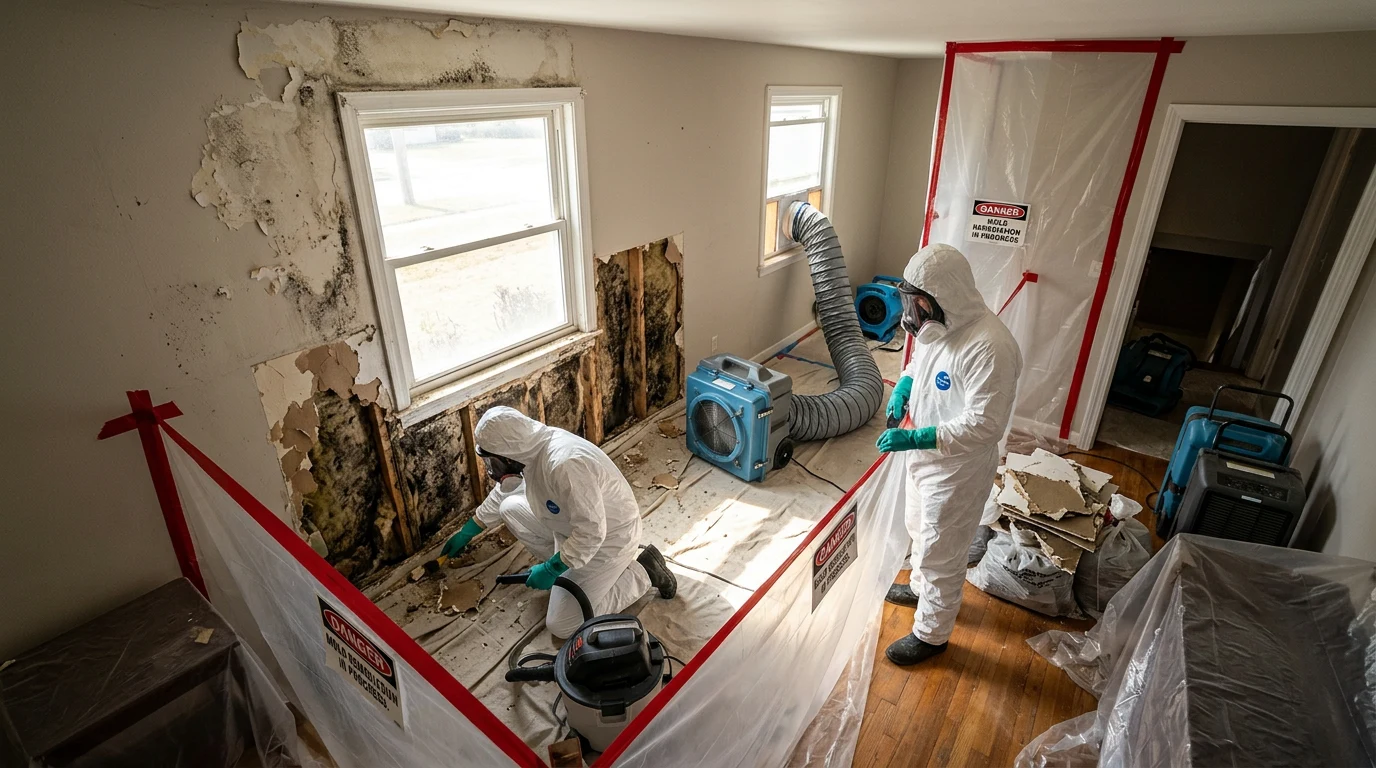
- Mold inside the wall cavity: If you suspect mold has entered the wall space (musty smell, staining that extends beyond the window frame, mold returning despite cleaning), consult a professional mold remediation service. Hidden mold in wall cavities requires proper containment and removal.
Window Types and Condensation Risk
Not all windows are equal when it comes to condensation mold risk:
- Single-pane (highest risk): R-value of 1. Interior surface temperature closely tracks outdoor temperature. Heavy condensation in any cold climate.
- Double-pane, clear glass (moderate risk): R-value of 2. Better than single-pane, but still prone to condensation when outdoor temperatures drop below 20 degrees Fahrenheit.
- Double-pane, Low-E coated (lower risk): R-value of 3 to 4. Low-E coating reflects interior heat back toward the glass, keeping the inner surface warmer. Significant condensation reduction.
- Triple-pane, Low-E with argon fill (lowest risk): R-value of 5 to 8. Interior surface temperature stays within 5 to 10 degrees of room temperature even in extreme cold. Condensation is rare.
Bedroom Windows: The Overnight Problem
Bedrooms deserve special attention because sleeping adults exhale approximately 200 milliliters of water vapor per night. In a closed bedroom with a cold window, this moisture has nowhere to go but onto the glass.
- Crack the bedroom door open overnight to improve air circulation and allow moisture to disperse through the house
- If the bedroom has an HVAC supply register, keep it open and unblocked to provide warm, dry air circulation
- Consider a small oscillating fan on low aimed toward the window to maintain air movement
- Keep bedroom humidity below 40% using a compact dehumidifier if needed
Frequently Asked Questions
Is window condensation dangerous?
Occasional light condensation is not dangerous. However, heavy condensation that pools on sills and runs down walls creates conditions for mold growth within weeks to months. The mold itself can trigger allergic reactions and respiratory symptoms. The condensation also damages wood frames, paint, and drywall over time.
Why do some windows have condensation and others do not?
Windows that face north get no solar warming and condense more. Windows near heat registers stay warmer and condense less. Bathrooms and kitchens have higher humidity and produce more condensation. Bedrooms with closed doors and sleeping occupants build up moisture overnight. The combination of cold glass temperature and local humidity determines condensation at each window.
Does condensation between double-pane windows mean they are broken?
Yes. Condensation between the two panes of a double-pane window means the seal has failed and the insulating gas (argon or krypton) has escaped. The window has lost its insulating value and should be replaced. A failed double-pane window performs only slightly better than a single-pane for condensation resistance.
Will a dehumidifier eliminate window condensation?
A dehumidifier can significantly reduce condensation by lowering indoor humidity to 30% to 35% in winter. However, if you have single-pane windows in a cold climate, some condensation may persist even at low humidity levels because the glass surface temperature is so far below the room temperature. Window insulation film or window replacement may be necessary in addition to dehumidification.
How do I know if window condensation has caused hidden mold?
Signs of hidden mold from window condensation include: musty odor near windows even when no surface mold is visible, paint bubbling or peeling below windows, dark staining on the wall extending beyond the window frame, and mold that returns within days of cleaning. A professional mold test can confirm whether mold is present behind the wall surface.
Frequently Asked Questions
Why does condensation appear on my windows in winter?
Winter window condensation forms when warm, humid indoor air comes into contact with cold window surfaces. This temperature difference causes the water vapor in the air to cool and condense into liquid water, much like dew forming on grass.
How does winter window condensation lead to spring mold growth?
The consistent presence of moisture from winter window condensation creates an ideal environment for mold spores to germinate and grow. As temperatures rise in spring, this trapped moisture, combined with warmer conditions, accelerates mold proliferation on window sills, frames, and nearby walls.
What types of mold commonly grow due to window condensation?
Common types of mold found in these damp conditions include Cladosporium, Aspergillus, and Penicillium. These molds thrive in high-humidity environments and often appear as black, green, or white fuzzy patches.

Can I prevent winter window condensation to avoid spring mold?
Yes, reducing indoor humidity levels is key to preventing condensation. Using exhaust fans, opening windows briefly for ventilation, and ensuring proper insulation can significantly mitigate condensation formation.
What should I do if I find mold growing around my windows in spring?
For small mold patches, you can clean them with a mixture of water and detergent, ensuring you wear gloves and eye protection. For larger or persistent mold growth, it’s advisable to consult a professional mold remediation service to ensure complete removal and address underlying moisture issues.

Are there long-term solutions to prevent recurring window condensation and mold?
Long-term solutions include improving window insulation with energy-efficient windows, ensuring proper ventilation in your home, and maintaining consistent indoor humidity levels, ideally between 30-50%. A dehumidifier can also be effective in particularly humid areas.
These statements have not been evaluated by the Food and Drug Administration. This information is not intended to diagnose, treat, cure, or prevent any disease. Content is for informational purposes only and is not medical advice; consult a qualified healthcare provider before starting any supplement. As an Amazon Associate we earn from qualifying purchases.
