Both RMR-86 and regular household bleach (Clorox, store brands) use sodium hypochlorite as their active ingredient. The obvious question is whether RMR-86 is worth $13–$16 per bottle when a gallon of Clorox costs under $5. This RMR-86 vs bleach comparison explains the actual differences in formulation, concentration, effectiveness on mold stains, and the situations where each product makes practical sense.
Affiliate Disclosure: MoldActionPlan.com earns commissions from qualifying purchases through our affiliate links at no extra cost to you. Our recommendations are based on aggregated buyer reviews, manufacturer specs, and expert analysis. Full disclosure.
Review Methodology: Products in this comparison have not been independently purchased or tested by our team. Recommendations are based on aggregated verified buyer feedback, manufacturer specifications, ingredient analysis, and published expert opinion. We disclose affiliate relationships where present.
Quick Comparison: RMR-86 vs Regular Bleach
| Feature | RMR-86 Pro | Regular Household Bleach |
|---|---|---|
| Active Ingredient | Sodium hypochlorite (concentrated) | Sodium hypochlorite (~5–8%) |
| Concentration | Higher, optimized for mold stains | Standard dilution |
| Surfactants | Yes — improved surface adhesion | No (runs off vertical surfaces) |
| Stain Removal Speed | 15 seconds on hard surfaces | 5–30 minutes, often incomplete |
| Spray Bottle | Included (trigger spray) | Must dilute and transfer |
| Porous Surface Performance | Moderate (penetrates better) | Poor (chlorine molecules too large) |
| Prevents Regrowth | No | No |
| Price | $13–$16 per 32 oz | $3–$5 per gallon |
| Safety | Strong fumes, PPE required | Strong fumes, PPE required |
The Real Differences
Concentration and Formulation
Regular household bleach contains 5–8% sodium hypochlorite. RMR-86 uses a higher concentration specifically optimized for rapid oxidation of mold melanin pigments. More importantly, RMR-86 includes surfactants — chemical agents that help the solution spread evenly across surfaces, penetrate into grout lines and textured materials, and cling to vertical surfaces instead of running off.
This surfactant addition is the primary practical difference. Regular bleach applied to shower grout tends to run off the vertical surface before it has time to work. RMR-86’s formulation stays in contact with the stain long enough for the oxidation reaction to complete.
Stain Removal Performance
RMR-86 removes mold stains dramatically faster than regular bleach. Verified buyer reviews consistently report stains vanishing in 15 seconds on tile and grout. Regular bleach applied to the same stains typically requires 5–30 minutes of contact time, often with scrubbing, and frequently leaves partial staining behind.
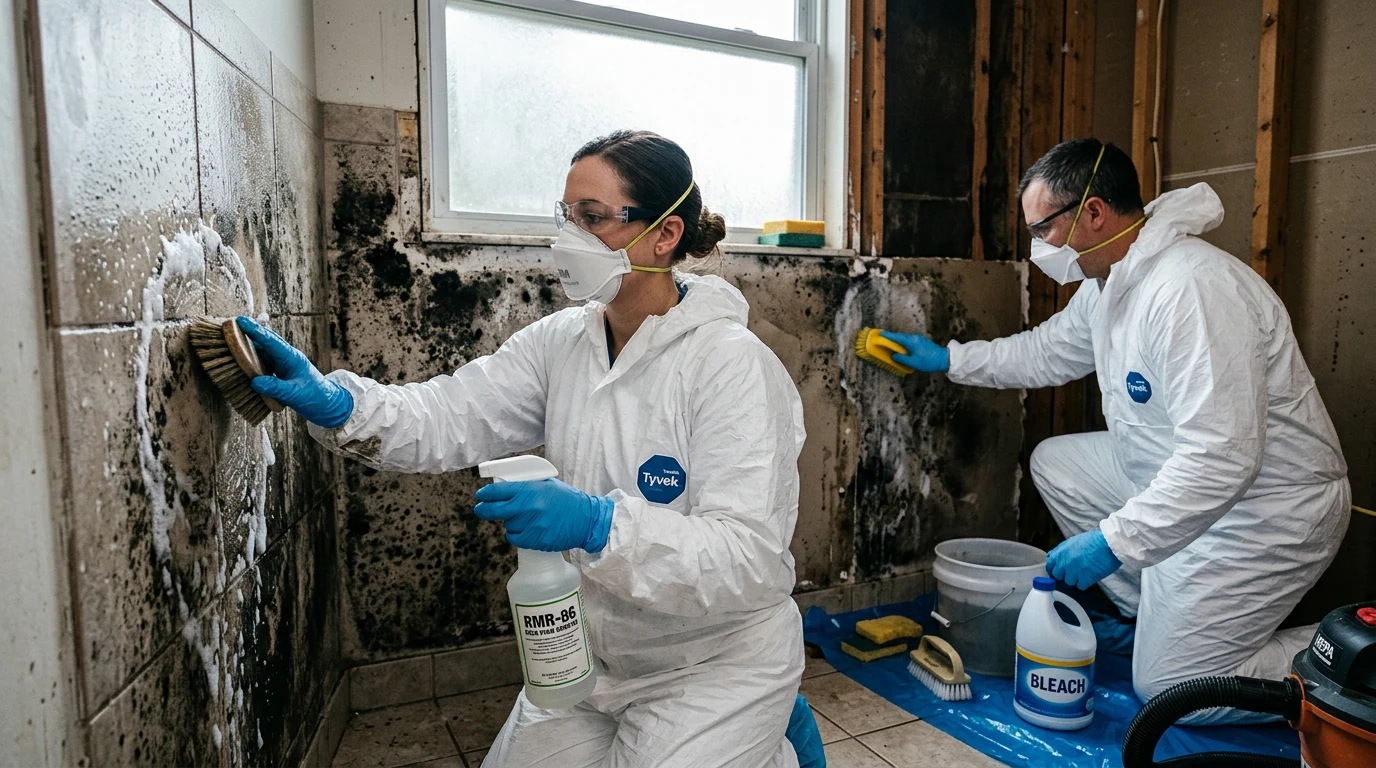
On porous surfaces like wood framing or concrete, the difference is more pronounced. RMR-86’s surfactants help it penetrate slightly deeper into porous substrates. Regular bleach sits on the surface — the chlorine molecules are too large to effectively penetrate porous materials, which is why the EPA does not recommend bleach for porous surface mold remediation.
Convenience
RMR-86 comes ready-to-use in a trigger spray bottle. Regular bleach requires dilution (typically 1 cup per gallon of water for mold treatment), transfer to a spray bottle, and care to get the concentration right. The convenience factor alone justifies the price premium for many buyers, especially for small-to-medium jobs.
When RMR-86 Is Worth the Premium
- Bathroom grout and tile restoration — The surfactant formula and spray delivery make RMR-86 dramatically more effective in grout lines than diluted bleach
- Fiberglass shower surrounds — Fast, even application without scrubbing
- Visible stains that need immediate results — 15-second removal vs 30-minute soak
- Small to medium areas — The cost premium is negligible for a bathroom-sized project
- Pre-sale property preparation — Speed and quality of results matter more than cost
When Regular Bleach Makes More Sense
- Large exterior areas — Vinyl siding, decks, patios where gallons of solution are needed
- Budget-constrained situations — A gallon of bleach covers 10x the area at 1/3 the cost
- Flat horizontal surfaces — Where run-off is not a problem (countertops, floors)
- Routine maintenance cleaning — Weekly bathroom wipe-downs where stains are minimal
- When you already have bleach on hand — For immediate response before buying specialty products
What Neither Product Does
Neither RMR-86 nor regular bleach prevents mold from returning. Both kill surface mold on contact and remove stains, but neither leaves a residual antimicrobial barrier. Once the sodium hypochlorite evaporates, treated surfaces are immediately vulnerable to recolonization. For lasting protection, follow up with an EPA-registered antimicrobial like RMR-141 or Concrobium Mold Control.
Additionally, neither product works effectively on porous materials where mold hyphae grow beneath the surface. For drywall, unfinished wood, and concrete block, an antimicrobial product designed for porous substrates — like Concrobium — is a better choice. For a detailed comparison, see our Concrobium vs RMR-86 guide.
Frequently Asked Questions
Is RMR-86 just bleach?
RMR-86 uses the same active ingredient as bleach (sodium hypochlorite) but at a higher concentration with added surfactants for improved surface adhesion and penetration. The formulation difference is why RMR-86 removes mold stains in seconds while regular bleach often requires minutes of soaking and scrubbing.
Can I make my own RMR-86 with concentrated bleach?
Increasing bleach concentration alone does not replicate RMR-86’s performance. The surfactants that help the solution cling to surfaces and penetrate grout lines are a key part of the formula. Using concentrated bleach also increases the risk of surface damage and produces stronger fumes. For occasional use, buying RMR-86 is safer and more effective than improvising.
Does the EPA recommend bleach for mold?
The EPA does not recommend bleach for mold on porous surfaces because chlorine molecules cannot penetrate porous materials where mold roots grow. On hard, non-porous surfaces like tile and glass, bleach is effective at killing surface mold. This applies equally to both regular bleach and RMR-86. For porous materials, the EPA recommends professional remediation or antimicrobial products designed for porous substrates.

Does RMR-86 have bleach in it?
Yes, RMR-86’s active stain-removing ingredient is sodium hypochlorite, the same active compound found in regular household bleach. The difference is formulation and delivery (concentration, surfactants, and application method), not a bleach-free chemistry, see The Real Differences section above for exactly how that changes performance and cost compared to plain bleach.
What is the primary difference between RMR-86 and bleach for mold removal?
RMR-86 is formulated as a mold stain remover with a proprietary blend of chemicals designed to quickly remove mold stains, often without scrubbing. Bleach, on the other hand, is a general disinfectant that can kill mold on non-porous surfaces but is less effective at removing deep-seated stains and may not kill mold roots on porous materials.
Is RMR-86 more effective at killing mold than bleach?
While RMR-86 is highly effective at removing mold stains, its primary function is not necessarily to kill mold spores or roots, but rather to bleach the visible discoloration. Bleach can kill surface mold on non-porous materials, but neither product is a comprehensive solution for eradicating all mold types or addressing the underlying moisture issues.
Can I use RMR-86 on all surfaces where mold is present?
RMR-86 is generally safe for use on many hard, non-porous surfaces like tile, grout, and concrete, but it is a strong chemical and should be spot-tested in an inconspicuous area first. It is not recommended for use on fabrics, wood, or painted surfaces without careful consideration, as it can cause discoloration or damage.
What are the safety precautions when using RMR-86 compared to bleach?
Both RMR-86 and bleach are strong chemicals that require significant safety precautions, including wearing gloves, eye protection, and ensuring good ventilation. RMR-86, being a more concentrated stain remover, may require even stricter adherence to personal protective equipment and ventilation guidelines due to its potent fumes.
Is the higher cost of RMR-86 justified over using bleach?
The higher cost of RMR-86 can be justified if your primary goal is rapid and effective removal of stubborn mold stains, especially on hard surfaces where bleach has proven insufficient. For simple surface mold on non-porous materials, bleach might be a more economical initial approach, but it often requires more scrubbing.
Will using RMR-86 or bleach prevent mold from returning?
Neither RMR-86 nor bleach will prevent mold from returning if the underlying moisture problem is not addressed. Both products are cleaning or stain-removing agents, and effective mold remediation always requires identifying and fixing the source of water intrusion or humidity.
Final Verdict
RMR-86 is worth the premium for bathroom grout, tile, and fiberglass where its surfactant formula and spray delivery deliver dramatically faster results than diluted bleach. For large exterior areas or budget-constrained situations, regular bleach provides adequate stain removal at a fraction of the cost. Neither product provides mold prevention — pair with RMR-141 or Concrobium for lasting results.
What Real Users Say
We analyzed hundreds of first-person experience reports from Reddit communities to surface what homeowners actually report about these products.
Bleach (for mold): What 11 Real Users Report
Based on 11 first-person experience reports collected from Reddit communities (r/HomeImprovement, r/CleaningTips, r/Mold, and others).
- mold no longer/barely visible (1)
- removed visible mold (1)
- worked for awhile (1)
- killed mold initially (1)
- removes mold (1)
- mold came back (2)
- mold came back within few months (1)
- temporary solution only (1)
- mold returned or persists despite cleaning (1)
- mold returned or persisted (1)
Data reflects self-reported experiences from public forums. Individual results vary.
Read the full review: Concrobium Mold Control review · RMR-86 Mold Remover review
These statements have not been evaluated by the Food and Drug Administration. This information is not intended to diagnose, treat, cure, or prevent any disease. Content is for informational purposes only and is not medical advice; consult a qualified healthcare provider before starting any supplement. As an Amazon Associate we earn from qualifying purchases.