Mold on Carpet: When to Clean vs Replace
Disclosure: Some links below are Amazon affiliate links. If you buy through them, MoldActionPlan earns a small commission at no extra cost to you. We only recommend products we have verified through research and testing.
Is Mold on Carpet Dangerous? Can You DIY It?
Yes, mold on carpet is a health concern. Carpet is porous, absorbent, and traps organic debris that mold feeds on. When mold takes hold in carpet fibers, backing, and padding, it releases spores into the air you breathe. Common symptoms include sneezing, runny nose, red eyes, skin rash, and worsened asthma. People with compromised immune systems, allergies, or respiratory conditions face higher risks.
The short answer on whether you can handle it yourself: it depends on how much mold there is and how long it has been growing. The EPA says you can DIY if the affected area is smaller than about 10 square feet (roughly a 3×3 foot patch) and the water source was clean. Anything larger, or any mold from sewage or flood water, calls for a professional remediator.
This guide covers small to moderate mold problems on carpet. If your carpet has been wet longer than 48 hours or the mold covers more than one room, skip to Section 5 and prepare to replace the material.
Why Mold Grows on Carpet
Mold needs three things: moisture, food, and warmth. Carpet provides all three in abundance.
Moisture is the trigger. The most common sources are:
- Spills and pet accidents that soak through to the pad below
- Leaks from pipes, windows, or roofs that wet carpet and subfloor
- Flooding from storms, burst appliances, or sewer backup
- High humidity (above 60%) in basements or ground-level rooms
- HVAC condensation dripping onto carpet near vents or AC units
The carpet padding underneath is like a sponge. Once it gets wet, it dries slowly and stays damp long enough for mold spores to germinate. Carpet fibers collect dust, skin cells, and dirt that feed mold growth once moisture is present.
The EPA states that materials should be dried within 24 to 48 hours to prevent mold growth. If your carpet stays wet past that window, assume mold is already developing even if you cannot see it.
What You Will Need
Before you start, gather the right products and protective gear. Using the wrong cleaner on carpet can damage fibers or fail to kill the mold at the root.
Mold Killers (Fungicides)
A mold killer kills the actual organism. A stain remover only bleaches the discoloration. You need both for a complete cleanup.
RMR-141 EPA Registered Mold and Mildew Killer is the top recommendation for carpet. It is EPA-registered (No. 61178-2) as a fungicide and disinfectant. Its active ingredient is alkyl dimethyl benzyl ammonium chloride (a quaternary ammonium compound). It kills 99.9% of household bacteria and over 140 microorganisms. It is safe on porous surfaces like carpet, but you must leave it wet for 10 minutes for the kill to work. Cost: $32.99 per gallon. View on Amazon.
Concrobium Mold Control is a bleach-free, odorless alternative. It is EPA-registered (No. 82552-3) with sodium carbonate as the active ingredient. It works by encapsulating and crushing mold spores rather than bleaching them. It leaves an invisible barrier that resists future growth. The 32-ounce trigger spray costs $13.48 and covers 80 to 110 square feet. The 1-gallon refill costs $39.98 and covers up to 1,440 square feet when used with a garden sprayer. 32 oz spray on Amazon | 1 Gal refill on Amazon.
Stain Removers
After killing the mold, you may still see dark stains. That is where a stain remover comes in.
RMR-86 Instant Mold and Mildew Stain Remover is a sodium hypochlorite (8.0%) formula, similar to bleach but much stronger. It works in about 15 seconds and requires no scrubbing. Note: RMR-86 is NOT EPA-registered as a fungicide. It removes stains left behind by mold but does not kill the mold itself. Always use a mold killer first, then RMR-86 for stain removal. It has over 66,000 ratings at 4.4 stars. Cost: $25.99 for a 2-pack of 32-ounce bottles. View on Amazon.
Safety warning: RMR-86 is potent. It can cause chemical burns on skin. You must wear full PPE when using it. The fumes are strong and require ventilation. Do not store it with the spray nozzle attached because the chemical can leak and damage surfaces.
Personal Protective Equipment (PPE)
Do not clean moldy carpet without protection. You need:
- N95 respirator. Standard dust masks are not enough. A NIOSH-approved N95 respirator filters 95% of airborne particles including mold spores. The 3M N95 Respirator 8511 with Cool Flow valve costs $24.99 for 10 masks. View on Amazon.
- Safety goggles to protect eyes from spores and cleaning chemicals
- Nitrile gloves (not latex, which some people react to)
- Long sleeves and pants that you can wash or discard after
HEPA Vacuum
Standard vacuums blow mold spores back into the air through their exhaust. A HEPA vacuum traps 99.97% of particles at 0.3 microns, including mold spores. The Kenmore Intuition Bagged Upright Vacuum (BU4022) is a strong budget-friendly option. It has a sealed HEPA filtration system, bagged design (no dust cloud when emptying), 2-motor power suction, and a lift-away canister for stairs and above-floor cleaning. It weighs 14 pounds and costs $158.39. View on Amazon.
Comparison Table
| Product | Kills Mold | Removes Stains | EPA Reg | Price | Best For |
|---|---|---|---|---|---|
| RMR-141 | Yes | No | 61178-2 | $32.99 / gal | Killing mold on carpet |
| Concrobium 32oz | Yes | No | 82552-3 | $13.48 | Odorless, bleach-free kill |
| RMR-86 | No | Yes | None | $25.99 / 2-pk | Removing stains after kill |
| 3M N95 8511 | PPE | PPE | NIOSH | $24.99 / 10 | Respiratory protection |
| Kenmore Intuition | HEPA vac | HEPA vac | N/A | $158.39 | Spore containment |
Step-by-Step Mold Removal for Carpet
Follow this order. Do not skip steps. Do not reverse them.
Step 1: Isolate the Area
Close doors to the room. Turn off your HVAC system so mold spores do not circulate through the house. Open a window and use a box fan blowing outward for ventilation.
Step 2: Put on Your PPE
N95 respirator, goggles, gloves, long sleeves. If you are using RMR-86 (bleach-based), upgrade to a full-face respirator and chemical-resistant gloves.
Step 3: Dry the Carpet
If the carpet is wet, extract as much water as possible with a wet-dry vacuum or shop vac. Do not use a household vacuum on wet carpet. Run a dehumidifier and fans for 24 to 48 hours until the carpet feels dry to the touch. If the padding underneath is wet, pull the carpet back to dry the pad or replace it.
Step 4: HEPA Vacuum the Area
Vacuum the entire affected area and about 3 feet beyond it. This removes loose spores, dust, and debris before you apply chemicals. Empty the vacuum outside and seal the bag in plastic.
Step 5: Apply Mold Killer
Spray your chosen fungicide (RMR-141 or Concrobium) onto the affected carpet. Saturate the area thoroughly. For RMR-141, let it sit for 10 minutes on porous surfaces like carpet. The dwell time is critical. If you wipe or extract before the full dwell time, the mold may survive. For Concrobium, let it dry completely (no scrubbing or rinsing).
Step 6: Apply Stain Remover (If Needed)
If dark mold stains remain after the carpet dries, apply RMR-86. Spray onto the stain. Wait 15 seconds. Blot with a clean cloth. Do not scrub, because that can push the stain deeper. Rinse with water and blot dry. Repeat if necessary.
Step 7: Extract and Dry Again
Use a wet-dry vacuum to extract the cleaning solution from the carpet. Then run fans and a dehumidifier for another 24 hours. The carpet must be completely dry before you move on.
Step 8: HEPA Vacuum Again
One final pass with the HEPA vacuum captures any spores that were lifted during cleaning.
When the Carpet Must Be Replaced vs Cleaned
This is the most important decision in the process. Cleaning only works when mold is on the surface and caught early. In many cases, the carpet must be removed.
Always Replace If:
- The carpet has been wet for more than 48 hours
- The padding is soaked or visibly moldy (padding is almost impossible to clean)
- The mold covers more than 10 square feet
- The water source was sewage, flood water, or gray water
- The carpet smells musty after drying and cleaning
- You see mold on the BACKING of the carpet (peel back a corner to check)
- Someone in the home has a mold allergy or respiratory condition
The EPA’s guidance is clear: absorbent materials like carpet may need to be thrown away when they become moldy. The industry standard (IICRC S500) agrees that carpet with visible mold growth should be removed and replaced.
You Can Try Cleaning If All of These Are True:
- The carpet was wet for less than 24 hours
- The water was clean (not sewage or flood water)
- The mold is only on the surface, no visible growth on backing or padding
- The area is smaller than 3×3 feet
- The carpet dried completely within 48 hours
- No musty odor remains after cleaning
How to Remove and Replace Carpet Safely
If replacement is the right call, do it safely:
- Mist the carpet lightly with water (using a spray bottle) to keep spores from becoming airborne
- Cut the carpet into 3 to 4 foot wide strips
- Roll each strip inward (contaminated side facing in)
- Seal immediately in heavy-duty plastic bags
- Remove the padding separately and bag it
- HEPA vacuum the subfloor thoroughly
- Inspect the subfloor for mold, rot, or water damage and treat or replace as needed
- Install new padding and carpet only after the subfloor is completely dry
Preventing Mold from Coming Back
Cleaning or replacing the carpet is only half the job. If the moisture problem is not fixed, the mold will return.
- Fix the water source first. Repair the leaking pipe, seal the window, fix the roof, or address the grading outside that sends water toward the foundation.
- Keep indoor humidity below 50%. A basement dehumidifier running during humid months is one of the best investments for preventing carpet mold. Aim for 30-50% relative humidity.
- Improve ventilation. Use exhaust fans in bathrooms and kitchens. Open windows on dry days. Consider an HRV or ERV for basements and tight homes.
- Use carpet protectors. Furniture coasters, area rugs in high-traffic zones, and plastic carpet protectors under plant pots or pet areas reduce moisture trapping.
- Avoid carpet in high-moisture areas. Basements, bathrooms, and laundry rooms are better with tile, vinyl plank, or sealed concrete.
- Respond to spills and leaks immediately. Any standing water on carpet should be extracted within hours. Do not let it sit overnight.
- Replace sponge-like carpet padding with moisture-resistant options like rubber padding in below-grade rooms.
When to Call a Professional
Some situations are not safe or practical to handle on your own. Call a licensed mold remediation company if:
- The affected area is larger than 10 square feet (roughly 3×3 feet)
- The mold is behind walls, under flooring, or inside HVAC ducts
- The water source was sewage, flood water, or contaminated gray water
- You have health conditions (asthma, allergies, immune suppression) that would make exposure dangerous
- You have already tried cleaning and the mold returned
- There is a musty smell you cannot find the source of
A professional remediator will seal the work area, use negative air pressure, remove contaminated materials properly, treat the subfloor, and test that the space is clean afterward. The EPA recommends verifying that a contractor has mold cleanup experience and follows industry standards like the IICRC S520 or EPA guidelines.
FAQ: Mold on Carpet
Can mold in carpet make you sick?
Yes. Mold spores are respiratory irritants. Exposure can cause sneezing, coughing, watery eyes, nasal congestion, and skin irritation. People with asthma or mold allergies may have more severe reactions. Prolonged exposure to toxigenic mold species like Stachybotrys chartarum (black mold) can cause more serious health effects, though this is rare in carpet scenarios.
Can you save carpet that has mold?
Only if the mold is caught very early (within 24 to 48 hours), the area is small, the water was clean, and the padding is dry. In most cases where visible mold has grown, the carpet and padding should be replaced. The carpet backing and padding are porous and nearly impossible to clean completely.
Does bleach kill mold on carpet?
Bleach (sodium hypochlorite) can kill surface mold on non-porous surfaces, but it is not effective on carpet. Carpet fibers and padding are porous. Bleach cannot reach mold growing deep inside the material. The water in bleach also soaks into the padding, adding more moisture and potentially feeding further growth. Use an EPA-registered fungicide like RMR-141 or Concrobium instead.
How do you know if mold in carpet is dangerous?
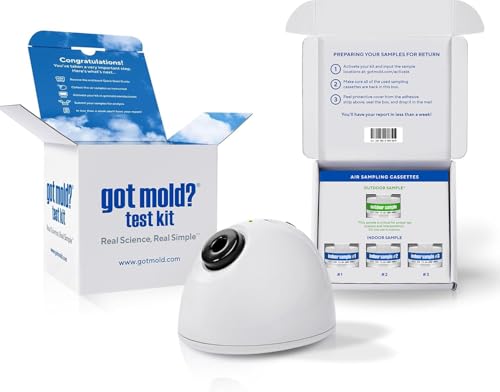
Any mold growth indoors is a problem and should be addressed. The color (black, green, white) does not reliably tell you how dangerous it is. What matters is the quantity (more than 10 square feet is a major concern), the duration (longer than 48 hours), and the water source (sewage or flood water carries bacteria along with mold). If you are unsure, test with an at-home mold test kit or hire a professional for an inspection.
Can you use vinegar to kill mold on carpet?
White vinegar can kill some mold species on hard, non-porous surfaces at concentrations above 5% acidity. However, vinegar is not effective on porous materials like carpet. It does not have the dwell time or penetration needed to kill mold deep in carpet fibers and padding. For carpet, use an EPA-registered product that is tested and labeled for use on porous surfaces.
Frequently Asked Questions
Can mold in carpet make you sick?
Yes. Mold spores are respiratory irritants. Exposure can cause sneezing, coughing, watery eyes, nasal congestion, and skin irritation. People with asthma or mold allergies may have more severe reactions.
Can you save carpet that has mold?
Only if the mold is caught very early (within 24 to 48 hours), the area is small, the water was clean, and the padding is dry. In most cases where visible mold has grown, the carpet and padding should be replaced.

Does bleach kill mold on carpet?
Bleach (sodium hypochlorite) can kill surface mold on non-porous surfaces but is not effective on carpet. Carpet fibers and padding are porous. Bleach cannot reach mold growing deep inside the material. Use an EPA-registered fungicide like RMR-141 or Concrobium instead.

How do you know if mold in carpet is dangerous?
Any mold growth indoors is a problem. The color does not reliably tell you how dangerous it is. What matters is the quantity (more than 10 square feet is a major concern), the duration (longer than 48 hours), and the water source. If unsure, hire a professional for an inspection.

Can you use vinegar to kill mold on carpet?
White vinegar can kill some mold species on hard, non-porous surfaces at concentrations above 5% acidity. However, vinegar is not effective on porous materials like carpet. Use an EPA-registered product tested for porous surfaces.

These statements have not been evaluated by the Food and Drug Administration. This information is not intended to diagnose, treat, cure, or prevent any disease. Content is for informational purposes only and is not medical advice; consult a qualified healthcare provider before starting any supplement. As an Amazon Associate we earn from qualifying purchases.