How to Remove Black Mold Safely
Disclosure: Some links below are affiliate links. If you buy through them, MoldActionPlan may earn a small commission at no extra cost to you. This article is based on verified product data from Amazon and EPA-registered product facts.
TL;DR: How to Remove Black Mold in 4 Steps
- Protect yourself first. Put on an N95 respirator (or half-face respirator), chemical splash goggles, and long chemical-resistant gloves. Open windows and run a fan to exhaust air outdoors.
- Kill the mold. Spray an EPA-registered mold killer like Concrobium Mold Control or Mold Armor Professional. Let it dry completely. This stops active growth and makes spores harmless.
- Remove stains (optional). If dark stains remain after killing the mold, apply a stain remover such as RMR-86. It works in seconds but has strong fumes. Use full PPE.
- Fix the moisture source. Mold needs moisture to grow back. Repair leaks, improve ventilation, and keep humidity below 50%. Apply a preventive spray like Microban 24 Hour for ongoing protection.
For small patches (under 10 sq ft or roughly the size of a standard poster board), you can do this yourself safely. Larger infestations or mold inside HVAC ducts require a professional remediator with containment equipment.
What You Will Need
Personal Protective Equipment (PPE)
Black mold is a respiratory hazard. Cleaning it stirs up spores, and most mold-killing chemicals produce strong fumes. Skimping on PPE is the most common mistake homeowners make.
- N95 respirator: The 3M 8511 N95 respirator (10-pack, $24.99 on Amazon) has a Cool Flow valve that makes breathing easier during extended work. NIOSH-approved and rated for mold and dust. Buy on Amazon
- Chemical splash goggles: 3M Chemical Splash Goggles ($4.49 each) have indirect ventilation to keep liquids out and block 99.9% of UV rays. They fit over prescription glasses. Buy on Amazon
- Chemical-resistant gloves: Extended-length nitrile or neoprene gloves. Standard latex gloves are not enough if you are using bleach-based products.
- Ventilation: At least one box fan in a window blowing air out. Never clean mold in an enclosed space.
Products for Killing Mold
Use an EPA-registered fungicide to kill mold at the root. Stain removers do not kill mold; they only bleach the discoloration away.

- Concrobium Mold Control (32 oz, $13.48): EPA-registered, bleach-free, odorless, and VOC-free. It encapsulates and crushes mold spores instead of just bleaching the surface. Leaves an invisible barrier that resists regrowth. Rated 4.1/5 from 2,065 reviews. Best for homeowners who want zero chemical fumes. Buy on Amazon
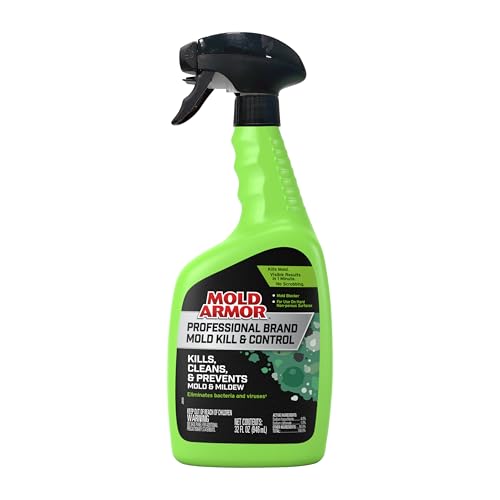
- Mold Armor Professional Mold Kill & Control (32 oz, $22.98): Amazon’s Choice with a 4.6/5 rating from 827 reviews. Kills mold, removes stains, and eliminates bacteria and viruses in minutes. No scrubbing required. Fumes are strong, so use with good ventilation. Buy on Amazon
Products for Removing Mold Stains
After killing the mold, you may still see dark stains. These are cosmetic discolorations left by dead mold. Use a dedicated stain remover for this step.
- RMR-86 Instant Mold and Mildew Stain Remover (2-pack 32 oz, $25.99): The best-selling stain remover on Amazon with 66,364 ratings and a 4.4/5 score. Active ingredient is sodium hypochlorite (bleach-based). Works in 15 seconds with no scrubbing. Extremely strong fumes. Requires full PPE. Rated #3 in Household Mold & Mildew Removers. Buy on Amazon
- CLR Mold & Mildew Bleach-Free Stain Remover (26 oz, $13.99): EPA Safer Choice certified, fragrance-free, and contains no dyes or ammonia. A bleach-free alternative that works well on light to moderate stains on painted walls and fabrics. Rated 4.2/5. Requires some scrubbing on tougher stains compared to bleach-based options. Buy on Amazon
Prevention Products
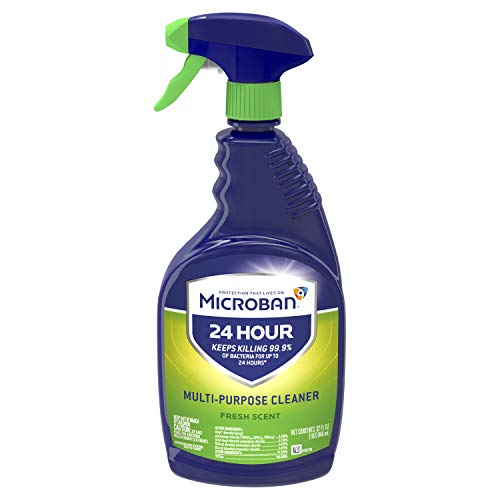
- Microban 24 Hour Bathroom Cleaner (32 oz 2-pack, $59.99): EPA-registered disinfectant that keeps killing 99.9% of bacteria and prevents mold regrowth for 24 hours on hard surfaces. Rated 4.7/5 from 9,447 reviews. Best used as a weekly maintenance spray. Buy on Amazon
Product Comparison Table
| Product | Best For | Price | Rating | Active Ingredient | EPA Registered | Bleach-Free |
|---|---|---|---|---|---|---|
| Concrobium Mold Control | Killing mold | $13.48 | 4.1/5 | Encapsulation polymer | Yes | Yes |
| Mold Armor Professional | Kill + stain removal | $22.98 | 4.6/5 | Sodium hypochlorite blend | Yes | No |
| RMR-86 Instant Stain Remover | Heavy stain removal | $25.99 | 4.4/5 | Sodium hypochlorite | No | No |
| CLR Bleach-Free Remover | Light stains, sensitive users | $13.99 | 4.2/5 | Surfactant blend | No (Safer Choice) | Yes |
| Microban 24 Hour | Prevention / maintenance | $59.99 (2-pack) | 4.7/5 | Alkyl dimethyl benzyl ammonium chloride | Yes | Yes |
Step-by-Step: How to Remove Black Mold
Step 1: Prepare the Area
Close doors to unaffected rooms. Open windows in the work area. Place a box fan in the window blowing outward to create negative air pressure. Remove rugs, towels, curtains, and any porous items that could trap spores. Cover electronics and furniture with plastic sheeting.
Step 2: Suit Up
Put on your N95 respirator (or a half-face respirator with organic vapor cartridges for bleach-based products), chemical splash goggles, long nitrile or neoprene gloves extending past the wrist, and long sleeves. If you are using RMR-86 or any bleach-based product, upgrade to a full-face respirator rated for organic vapors. Customer reviews on RMR-86 document chemical burns from skin contact.
Step 3: Kill the Mold (Critical First Pass)
Spray Concrobium Mold Control or Mold Armor Professional directly onto the affected area until thoroughly wet. Do not scrub. Let it dry completely, which takes 30 minutes to 2 hours depending on humidity. Concrobium works by encapsulating and crushing mold spores at the structural level, which prevents regrowth. Bleach-based alternatives like Mold Armor also kill on contact but leave residual fumes.

Step 4: Remove Stains (If Needed)
If dark or black stains remain after the mold killer dries, spray RMR-86 onto the stained area. It reacts within 15 to 30 seconds. The stain lifts and runs off. Wipe with a damp cloth or rinse with water. For stubborn stains on vertical surfaces, apply and let sit for 1 to 2 minutes before wiping.
Important: RMR-86 is a stain remover, not a mold killer. Using it before killing the mold will bleach the color away while leaving live mold underneath. Always kill first, then remove stains.
Step 5: Dry and Inspect
Once the area is clean, dry it thoroughly with a clean cloth or let it air dry. Inspect for any remaining mold growth. If you see regrowth within a week, the mold may be growing inside the wall or behind the surface. This typically requires cutting out and replacing the affected drywall.
Step 6: Dispose of Materials
Place all used rags, paper towels, gloves, and disposable respirators in a sealed plastic bag before throwing them away. Wash reusable goggles with soap and water. If you used bleach-based products, rinse tools and bottles outdoors before storing.
Tips for Stubborn Mold Cases
- Mold on drywall: If the drywall is soft, crumbly, or the mold covers more than a small patch, cut it out and replace it. Surface cleaning cannot fix mold growing inside wallboard. Cut at least 12 inches beyond the visible mold.
- Mold on wood studs or joists: Sand the surface lightly to remove the top layer, then treat with Concrobium. For deep penetration, drill small holes and inject the solution with a sprayer tip.
- Mold in grout or tile: Use a grout brush with Mold Armor and let it sit for 10 minutes before scrubbing. For grout that remains stained after three treatments, remove and re-grout.
- Mold on painted walls: Test a small spot first. Bleach-based products can strip paint. Use CLR bleach-free remover on painted surfaces to avoid damage.
- Mold behind furniture: Pull furniture away from walls by at least 6 inches to allow airflow. Treat the wall, then clean the furniture. If the mold is on the back of the furniture itself, discard it if porous (upholstered) or clean with Concrobium if non-porous.
- Musty smell that remains: After the visible mold is gone, set up a dehumidifier at 45% relative humidity for 48 hours. The smell is often from moisture trapped behind the surface.
What NOT to Do
- Do not use bleach on porous surfaces. Bleach kills surface mold but its water content soaks into drywall and wood, feeding mold growth below the surface. This is the most common mistake in DIY mold removal. Bleach only works on non-porous surfaces like tile, glass, or sealed countertops.
- Do not dry-brush or sand mold without a respirator. This launches millions of spores into the air. Always wet the surface first with a mold-killing spray before any scrubbing.
- Do not mix cleaning products. Mixing bleach with ammonia or other cleaners produces toxic chlorine gas. Stick to one product at a time.
- Do not ignore the moisture source. Killing mold without fixing the underlying moisture problem is wasted effort. The mold will return within weeks. Common causes: pipe leaks, roof leaks, poor bathroom ventilation, clogged gutters, high humidity.
- Do not use RMR-86 as a mold killer. RMR-86 is explicitly a stain remover, not a registered fungicide. Customers who skip the kill step report stains returning within days because the mold was never killed.
- Do not paint over mold. Paint will peel and bubble within months as the mold grows underneath. You must kill and remove the mold before painting. Use a mold-resistant primer like Kilz if you plan to repaint.
- Do not attempt DIY on large infestations. If the affected area is larger than a 3 ft x 3 ft square (about 10 sq ft), hire a professional mold remediator. The EPA recommends professional remediation for larger areas.
How to Prevent Black Mold from Coming Back
- Control humidity. Keep indoor humidity between 30% and 50%. Use a dehumidifier in basements and crawl spaces. A hygrometer costs under $10 and tells you when humidity is too high.
- Fix leaks fast. Any water leak should be dried within 24 to 48 hours to prevent mold growth. This includes small pipe drips, roof leaks, and condensation on windows.
- Ventilate bathrooms and kitchens. Run the exhaust fan for at least 20 minutes after showering or cooking. If your bathroom has no fan, open the window and leave the door open to circulate air. Use a squeegee on shower walls after each use to remove standing moisture.
- Use a preventive spray weekly. Apply Microban 24 Hour Bathroom Cleaner to showers, sinks, and tile once a week. It leaves a protective barrier that kills 99.9% of bacteria and prevents mold regrowth for 24 hours per application.
- Keep gutters clean. Clogged gutters allow water to pool near the foundation, which can seep into basements and crawl spaces. Clean gutters at least twice a year.
- Inspect plumbing fixtures. Check under sinks, around toilets, and behind washing machines for slow drips every few months. A slow drip can sustain hidden mold growth for months before you see it. Listen for running toilets and watch for sudden water bill increases as early warning signs.
- Use mold-resistant building materials. When renovating, use mold-resistant drywall (purple board) in bathrooms and basements, and apply mold-resistant primer before painting.
Frequently Asked Questions
Is black mold really that dangerous?

What is the difference between killing mold and removing mold stains?

Last updated: June 2026. Prices and availability verified at time of writing and may change. Always follow the safety instructions on the product label.
Frequently Asked Questions
Can I use vinegar to kill black mold?
White vinegar (5% acetic acid) can kill some mold species on non-porous surfaces, but it is not EPA-registered for mold killing and may not kill all types of black mold. Use vinegar only for very small spots on tile, and follow up with a proper fungicide for any visible regrowth.
Is black mold really that dangerous?
Stachybotrys chartarum (the species most commonly called toxic black mold) produces mycotoxins that can cause respiratory symptoms, headaches, and allergic reactions in sensitive individuals. The CDC states that all indoor mold growth should be removed promptly regardless of species, because any mold can trigger health problems in people with asthma, allergies, or compromised immune systems.
How long does it take for black mold to grow back after cleaning?
If the moisture source is not fixed, black mold can start growing again within 24 to 48 hours. If you properly killed the mold and fixed the moisture issue, it should not return. If you only removed stains without killing the mold, visible growth can reappear in 3 to 7 days.
Do I need a professional mold test before removing black mold?
No. Visible mold should be removed regardless of species. Mold testing is rarely necessary for small, visible patches. Consider testing only if you have unexplained health symptoms and no visible mold, or if you need documentation for a real estate transaction or legal case.
What is the difference between killing mold and removing mold stains?
Killing mold means destroying the live spores and hyphae so the mold can no longer grow or spread. Removing stains is cosmetic. It only bleaches or lifts the discoloration left behind by dead (or still living) mold. Both steps are needed for a complete job: kill first, then remove stains.
These statements have not been evaluated by the Food and Drug Administration. This information is not intended to diagnose, treat, cure, or prevent any disease. Content is for informational purposes only and is not medical advice; consult a qualified healthcare provider before starting any supplement. As an Amazon Associate we earn from qualifying purchases.
