Hydrogen Peroxide vs Vinegar for Mold: Which One Actually Works?
Disclosure: As an Amazon Associate, I earn from qualifying purchases. Some links below are affiliate links (tag=moldaction-20).
Quick Verdict
Hydrogen peroxide wins for killing mold on non-porous surfaces. It is an EPA-registered disinfectant that kills mold spores on contact with a 10-minute dwell time. Vinegar is a decent cleaner for light surface mold on non-porous materials, but it is not an EPA-registered fungicide and does not reliably kill mold at the root. For bathroom tile, glass shower doors, and sealed countertops, use 3% hydrogen peroxide. For porous surfaces like drywall or unsealed wood, neither product works well; you need to replace the material or call a professional if the area exceeds 10 square feet.
At-a-Glance Comparison Table
| Factor | Hydrogen Peroxide (3%) | White Vinegar (5% Acetic Acid) |
|---|---|---|
| Active Ingredient | Hydrogen peroxide (H₂O₂) | Acetic acid (CH₃COOH) |
| Kills Mold Spores? | Yes (antimicrobial, breaks down proteins and DNA) | Partially (disrupts pH, but not EPA-registered as fungicide) |
| EPA Registered as Disinfectant? | Yes (e.g., Clorox Healthcare Peroxide Cleaner, EPA #67619-17) | No (vinegar is not EPA-registered for mold killing) |
| Recommended Dwell Time | 10 minutes (until bubbling stops) | 10-60 minutes (varies; no standard established) |
| Safe on Porous Surfaces? | No (ineffective on wood, drywall, fabric, ceiling tiles) | No (can damage unsealed wood, may not reach mold roots) |
| Safe on Non-Porous Surfaces? | Yes (tile, glass, metal, sealed countertops, stainless steel) | Yes (but may etch natural stone like marble and limestone) |
| Smell | Mild, odorless after drying within minutes | Strong vinegar odor that lingers for hours |
| Cost per Use (approx.) | $0.05-$0.10 per application | $0.03-$0.08 per application |
| Safety Warning | NEVER mix with vinegar (creates toxic peracetic acid) | NEVER mix with hydrogen peroxide or bleach |
Hydrogen Peroxide: What It Is, Strengths, Weaknesses
What It Is
Hydrogen peroxide (H₂O₂) is a reactive oxygen compound that kills microorganisms by breaking down their proteins and DNA. At the standard 3% concentration sold in drugstores, it is a mild antiseptic and disinfectant. Research published in 2013 tested hydrogen peroxide against six common household fungi and concluded it effectively inhibits fungal growth on solid, non-porous surfaces. The CDC notes that 3% hydrogen peroxide requires 6-8 minutes to inactivate most organisms, which aligns with standard dwell time recommendations.
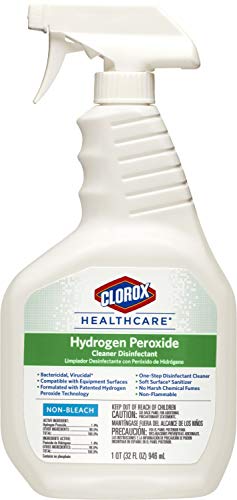
Several EPA-registered disinfectants use hydrogen peroxide as their active ingredient. For example, Clorox Healthcare Hydrogen Peroxide Cleaner Disinfectant (EPA Reg #67619-17) contains 1.4% hydrogen peroxide and is registered to kill over 40 microorganisms, including mold and mildew, with a 1-minute contact time for most pathogens. The Clorox Healthcare Hydrogen Peroxide Cleaner Disinfectant spray (32 oz, $7.99, 4.6 stars) is a practical ready-to-use option for homeowners who want an EPA-registered product.
Strengths
- Kills mold spores on contact by breaking down cellular proteins and DNA, not just removing surface stains
- Breaks down into water and oxygen after use, leaving no toxic residue behind
- Mild, clean scent that dissipates within minutes
- Safe on most non-porous surfaces including tile, glass, stainless steel, and sealed granite
- Available in concentrated forms (6%, 12%) that you can dilute for better long-term value
- EPA-registered products are available with verified, lab-tested kill claims
- Bubbling action provides visual confirmation that it is actively working
Weaknesses
- Ineffective on porous surfaces like wood, drywall, ceiling tiles, and fabrics; the liquid cannot reach mold roots inside these materials
- Can bleach dark fabrics, carpets, and natural materials like wool if left in contact too long
- Requires a full 10-minute dwell time for best results; shorter contact reduces effectiveness
- Higher concentrations (above 3%) require careful handling with gloves, eye protection, and ventilation
- Not a long-term preventive treatment; mold can return if the underlying moisture problem is not fixed
- Decomposes when exposed to light and heat; must be stored in a cool, dark place and replaced regularly
Best Use Cases
Hydrogen peroxide is best for bathroom tile and grout, shower curtains, glass shower doors, sealed countertops, and any hard non-porous surface where mold appears as surface growth. The Fiberlock Advanced Peroxide Cleaner (1 quart, $14.39, 4.4 stars) is formulated specifically for mold and mildew on porous and non-porous surfaces with a 10-minute dwell time and ECOLOGO certification. For homeowners who want bulk value, the MAXTITE 12% Hydrogen Peroxide Solution (1 gallon, $20.95, 4.7 stars from 1,548 ratings) dilutes to make 4 gallons of 3% solution, bringing the cost down to about $0.05 per gallon of ready-to-use cleaner. This is the most economical option for regular mold treatment around the house.
White Vinegar: What It Is, Strengths, Weaknesses
What It Is
White vinegar is a 5% solution of acetic acid in water. The acetic acid disrupts the pH balance of mold cells, which can kill some surface mold species when applied correctly. Vinegar is widely recommended in DIY cleaning guides as a natural, non-toxic alternative to bleach. However, it is important to understand that vinegar is not an EPA-registered fungicide or disinfectant for mold remediation. The EPA does not list standard white vinegar as a registered antimicrobial pesticide for killing mold.
Scientific evidence on vinegar’s effectiveness against mold is mixed. A 2015 study found that tea tree oil outperformed vinegar against several common mold species. Vinegar can kill some surface mold, particularly on non-porous materials, but it does not penetrate into porous substrates to reach mold roots (hyphae). For homeowners dealing with visible mold, this means vinegar may clean the surface appearance without fully addressing the colony.
Strengths
- Very inexpensive: a gallon costs roughly $0.09-$0.10 per fluid ounce, making it one of the cheapest household cleaners available
- Non-toxic and food-safe at the standard 5% concentration
- Effective as a surface cleaner and deodorizer for light, superficial mold growth
- Readily available at any grocery store, drugstore, or big-box retailer
- Safe on most non-porous surfaces, though you should avoid natural stone
- Can help prevent mold when sprayed regularly on clean, dry surfaces in damp areas
- Naturally biodegradable and environmentally friendly
Weaknesses
- Not EPA-registered as a fungicide or mold disinfectant; no verified kill claims exist
- Does not kill all mold species; some molds tolerate acidic conditions down to pH 2.5
- Strong, pungent vinegar odor that can linger for hours after application
- Ineffective on porous surfaces (wood, drywall, fabric, ceiling tiles)
- Can etch and damage natural stone surfaces like marble, limestone, and travertine
- No standardized dwell time; online recommendations range from 10 minutes to overnight, creating confusion
- May only remove surface discoloration without killing the underlying mold colony
- Can damage rubber seals, gaskets, and certain plastics with repeated use
Best Use Cases
Vinegar works well for light surface mold on non-porous surfaces like tile, glass shower doors, and sealed countertops where you want a non-toxic cleaner. It is also useful as a preventive spray in damp areas after thorough cleaning. The Iberia All Natural Distilled White Vinegar (1 gallon, $12.99, 4.8 stars from 7,258 ratings) is the top-rated option on Amazon and the #1 best seller in White Vinegars. For households that go through vinegar quickly, the Member’s Mark Distilled White Vinegar (2 gallons, $16.02, 4.7 stars) provides better value at roughly $0.06 per use for cleaning applications.
Head-to-Head: Hydrogen Peroxide vs Vinegar for Mold
Effectiveness at Killing Mold
Hydrogen peroxide is the clear winner. It kills mold spores by breaking down their essential cellular components, and multiple EPA-registered hydrogen peroxide products have verified, lab-tested kill claims against fungi and mold. A 2013 study published in the Journal of Occupational and Environmental Hygiene confirmed hydrogen peroxide’s antifungal properties on solid surfaces against six common household fungi. Vinegar can kill some surface mold, but it is not EPA-registered for this purpose and does not reliably kill all species. Its effectiveness varies depending on the mold type, surface material, and contact time.
Safety Profile
Both products are safer than bleach, but each has specific risks. Hydrogen peroxide at 3% is generally safe for household use but can cause mild eye and skin irritation. Higher concentrations (6% and above) require gloves, eye protection, and good ventilation. Vinegar is food-safe at 5% acetic acid but can irritate the lungs and throat if inhaled as a concentrated spray in enclosed spaces. The most critical safety rule for this comparison: never mix hydrogen peroxide with vinegar. The combination creates peracetic acid, a corrosive toxic irritant that can damage your eyes, skin, and respiratory system.
Smell and Residue
Hydrogen peroxide wins decisively. It has a very mild, clean scent that dissipates within minutes as it breaks down into water and oxygen. It leaves no chemical residue, making it ideal for kitchens and bathrooms. Vinegar has a strong, pungent odor that can linger for hours after application, even after the surface dries. Many users find this smell unpleasant in enclosed spaces like bathrooms and laundry rooms. The smell fades eventually, but it is a real downside for regular use.
Cost per Use
Vinegar is slightly cheaper by volume, but the difference is negligible for most homeowners. A gallon of white vinegar at $12.99 provides roughly 128 one-ounce applications, costing about $0.10 per use. A gallon of 3% hydrogen peroxide, or 12% concentrate diluted to make 4 gallons of 3% solution, costs roughly $0.05-$0.10 per use. When you factor in that hydrogen peroxide is more effective at killing mold, the small price difference favors hydrogen peroxide for actual mold treatment rather than general cleaning.
Ease of Use
Both are straightforward to use: pour into a spray bottle, spray the affected area until wet, let it sit, scrub, and wipe clean. Hydrogen peroxide requires a measured 10-minute dwell time for best results. Vinegar recommendations vary widely from 10 minutes to overnight, which creates confusion for homeowners. Hydrogen peroxide also provides a useful visual cue: the bubbling action shows it is actively working, so you know the dwell time is sufficient. With vinegar, there is no such feedback.
Which to Choose by Scenario
Bathroom Tile, Grout, and Shower Areas
Winner: Hydrogen peroxide. Spray 3% hydrogen peroxide on moldy grout lines and tile, let it sit for 10 minutes, scrub with a stiff nylon brush, and rinse. The bubbling action lifts mold from grout pores effectively. Vinegar can work on very light surface mold but is less effective on established growth in grout lines and leaves a strong smell in the enclosed bathroom environment. For tough bathroom mold, the Fiberlock Advanced Peroxide Cleaner is formulated specifically for this use case.
Outdoor Surfaces (Patio, Deck, Concrete, Siding)
Winner: Hydrogen peroxide. For outdoor mold, mildew, and algae on concrete patios, brick walls, vinyl siding, or composite decking, hydrogen peroxide is the more effective choice. Outdoor mold tends to be tougher and more established. Use a 6-12% concentration diluted to the right strength for the job. Vinegar at 5% acetic acid is too dilute for outdoor use and washes away too quickly when exposed to rain or hose water.
Porous Surfaces (Wood, Drywall, Fabric, Ceiling Tiles)
Winner: Neither. This is the most important limitation of both products. Neither hydrogen peroxide nor vinegar can effectively kill mold that has penetrated inside porous materials. The mold roots (hyphae) grow below the surface where liquid cleaners cannot reach. For mold on drywall, ceiling tiles, or unsealed wood, the EPA recommends removing and replacing the affected material if it cannot be fully cleaned and dried. For small areas, sanding the surface and applying a mold-inhibiting primer may work, but replacement is the definitive solution.
Large Area Mold (Over 10 Square Feet)
Winner: Neither. The EPA explicitly recommends calling a licensed professional mold remediation service for areas larger than 10 square feet (roughly 3 feet by 3 feet). DIY treatments with hydrogen peroxide or vinegar are not sufficient for large infestations, especially if mold is growing inside wall cavities, under flooring, or in HVAC systems. Attempting DIY remediation on large areas can actually spread mold spores to unaffected parts of the home.
Preventive Maintenance in Damp Areas
Winner: Vinegar (for light weekly use). For weekly preventive spraying in shower stalls, around sinks, and in other damp areas, vinegar is a good non-toxic option. Spray undiluted white vinegar, let it sit for 10 minutes, and rinse. It helps maintain a clean surface and discourages new mold growth between deep cleanings. Hydrogen peroxide is better reserved for active mold treatment rather than weekly prevention, since it decomposes faster and costs slightly more per use.
Kitchen Surfaces and Food Prep Areas
Winner: Hydrogen peroxide. Because hydrogen peroxide breaks down into water and oxygen with no toxic residue, it is the safer choice for kitchen counters, sinks, and cutting boards where food is prepared. Its clean scent does not linger and affect food smells. Vinegar’s strong odor can transfer to food preparation surfaces and absorb into porous cutting boards.
How to Use the Winner (Hydrogen Peroxide) Correctly
What You Need
- 3% hydrogen peroxide (or 12% concentrate diluted 1:3 with water)
- Spray bottle (opaque or dark glass; hydrogen peroxide degrades in UV light)
- Protective gloves and safety glasses
- Stiff nylon brush or non-abrasive scrub sponge
- Clean microfiber cloth for drying
- Fan or open window for ventilation
Step-by-Step Instructions
- Ventilate the area. Open windows and turn on exhaust fans. While 3% hydrogen peroxide is safe to breathe, good airflow prevents any concentrated fumes from building up in enclosed spaces.
- Put on protective gear. Wear rubber gloves and safety glasses to prevent skin and eye irritation. This is especially important if you are using a concentration above 3%.
- Prepare your solution. If using standard 3% drugstore hydrogen peroxide, pour it directly into a spray bottle with no dilution. If using 12% concentrate, mix 1 part concentrate with 3 parts water to create a 3% solution.
- Spray the moldy surface thoroughly. Apply enough solution to completely saturate the affected area. The surface should be visibly wet across the entire mold patch.
- Let it sit for a full 10 minutes. The bubbling action means the hydrogen peroxide is actively breaking down mold cells. Do not wipe or rinse during this dwell time. For stubborn, thick mold, let it sit for up to 15 minutes, but do not let the surface dry completely before scrubbing.
- Scrub with a stiff nylon brush. Use moderate pressure on grout and tile surfaces. For delicate surfaces like sealed marble, use a soft sponge instead. The combination of hydrogen peroxide and mechanical scrubbing lifts both mold stains and dead mold cells.
- Wipe dry with a clean microfiber cloth. Removing all moisture is critical. Mold needs moisture to grow, so a dry surface prevents immediate regrowth.
- Repeat if needed. Stubborn or long-established mold may require 2-3 treatments on consecutive days. Check the area after 24 hours and re-treat if any discoloration remains.
- Fix the moisture problem. This is the most important step. Mold will return if the underlying moisture issue is not addressed. Repair plumbing leaks, improve bathroom ventilation, use a dehumidifier in damp basements, and keep indoor humidity below 50% (measured with a hygrometer).
Critical Safety Warnings
- Never mix hydrogen peroxide with vinegar. This creates peracetic acid, a corrosive and toxic chemical that can cause permanent eye damage and severe respiratory irritation.
- Never mix hydrogen peroxide with bleach. This creates toxic chlorine gas, which can cause severe lung damage or death in enclosed spaces.
- Always test on a small hidden area first. Hydrogen peroxide can bleach some dyed fabrics, grout colors, and dark surface finishes. Test in an inconspicuous spot before treating the full area.
- Store hydrogen peroxide properly. Keep it in a cool, dark place away from direct sunlight. The original brown bottle or an opaque spray bottle works best. Replace any bottle that no longer bubbles on contact with a surface; this means it has degraded to water and is no longer effective.
- Keep out of reach of children and pets. While 3% hydrogen peroxide is relatively safe, higher concentrations can cause chemical burns to skin and mucous membranes.
Frequently Asked Questions
Can I mix hydrogen peroxide and vinegar for mold?
No. Never mix hydrogen peroxide and vinegar. The chemical reaction creates peracetic acid, a toxic substance that can cause severe irritation or chemical burns to your eyes, skin, and lungs. Use one product or the other for mold treatment, never both at the same time. If you have used one, rinse the surface thoroughly and let it dry completely before switching to the other.
Does vinegar kill black mold?
Vinegar can kill some types of surface mold, including certain strains of black mold (Stachybotrys chartarum), but it is not EPA-registered as a fungicide and there are no standardized efficacy tests. It may remove surface discoloration without killing the mold colony at the root. For black mold, especially in areas larger than 10 square feet, hydrogen peroxide or an EPA-registered mold killer is a more reliable choice. If you suspect toxic black mold, consider hiring a professional remediation service.
How long should I leave hydrogen peroxide on mold?
Leave 3% hydrogen peroxide on mold for at least 10 minutes. The bubbling action indicates it is actively breaking down mold cells. For stubborn mold on grout or textured surfaces, you can extend the dwell time to 15 minutes. Do not let the solution dry on the surface during the dwell period; if it dries prematurely, reapply to keep the area wet. After 10-15 minutes, scrub and wipe dry.
Is hydrogen peroxide or vinegar better for mold in the bathroom?
Hydrogen peroxide is the better choice for bathroom mold. It kills mold spores on contact, works effectively on tile and grout, leaves no strong odor in the enclosed bathroom space, and breaks down into harmless water and oxygen. Vinegar can work for very light surface mold but is less effective on established growth and leaves a strong vinegar smell that can linger in a bathroom for hours after use.
What kills mold better: hydrogen peroxide, vinegar, or bleach?
Hydrogen peroxide is the best all-around choice for non-porous surfaces. It kills mold spores effectively, is safer than bleach (no chlorine fumes, no toxic residue), and leaves behind only water and oxygen. Bleach kills mold on non-porous surfaces but produces harsh, irritating fumes and does not penetrate porous surfaces at all. Vinegar is the least effective of the three for killing mold and is not EPA-registered for this purpose. For most household mold situations, 3% hydrogen peroxide provides the best balance of effectiveness, safety, and ease of use.
Does hydrogen peroxide damage grout or tile?
Hydrogen peroxide at 3% concentration is safe for most ceramic, porcelain, and glass tile. It can actually help brighten white grout by removing embedded mold and mildew stains. However, it may bleach colored grout or natural stone tiles. Always test on an inconspicuous area first. Do not use hydrogen peroxide on unsealed natural stone like marble, travertine, or slate, as it can etch the surface.
Can I use hydrogen peroxide in a spray bottle for regular mold prevention?
Yes, but with caveats. Hydrogen peroxide degrades quickly when exposed to light, so use an opaque or dark-colored spray bottle and store it in a cabinet. Make only as much as you will use within a week or two. For regular prevention, many homeowners prefer vinegar for weekly spraying because it is cheaper and more stable in storage. Reserve hydrogen peroxide for active mold treatment rather than routine prevention.
Frequently Asked Questions
Can I mix hydrogen peroxide and vinegar for mold?
No. Never mix hydrogen peroxide and vinegar. The chemical reaction creates peracetic acid, a toxic substance that can cause severe irritation or chemical burns to your eyes, skin, and lungs. Use one product or the other for mold treatment, never both at the same time.
Does vinegar kill black mold?
Vinegar can kill some types of surface mold, including certain strains of black mold (Stachybotrys chartarum), but it is not EPA-registered as a fungicide and there are no standardized efficacy tests. For black mold, hydrogen peroxide or an EPA-registered mold killer is a more reliable choice.
How long should I leave hydrogen peroxide on mold?
Leave 3% hydrogen peroxide on mold for at least 10 minutes. The bubbling action indicates it is actively breaking down mold cells. For stubborn mold, extend the dwell time to 15 minutes. Do not let the solution dry on the surface during the dwell period.

Is hydrogen peroxide or vinegar better for mold in the bathroom?
Hydrogen peroxide is the better choice for bathroom mold. It kills mold spores on contact, works effectively on tile and grout, leaves no strong odor, and breaks down into harmless water and oxygen.

What kills mold better: hydrogen peroxide, vinegar, or bleach?
Hydrogen peroxide is the best all-around choice for non-porous surfaces. It kills mold spores effectively, is safer than bleach, and leaves no toxic residue. Bleach kills mold on non-porous surfaces but produces harsh fumes. Vinegar is the least effective of the three for killing mold.

These statements have not been evaluated by the Food and Drug Administration. This information is not intended to diagnose, treat, cure, or prevent any disease. Content is for informational purposes only and is not medical advice; consult a qualified healthcare provider before starting any supplement. As an Amazon Associate we earn from qualifying purchases.