Ozone generators are one of the most aggressively marketed products in the mold removal space. Sellers claim they can “kill mold,” “destroy spores,” and “eliminate musty odors” simply by running a machine in a closed room. The prices are tempting — $100-$400 for a unit that supposedly replaces professional remediation costing $3,000-$15,000. The problem is the science does not support these claims, and the EPA has explicitly warned consumers against using ozone generators indoors.
This article examines what ozone actually does to mold, why the concentrations needed to affect mold are dangerous to humans, and what alternatives actually work.
What Is Ozone and How Do Ozone Generators Work
Ozone (O3) is a molecule consisting of three oxygen atoms. In the upper atmosphere, ozone protects the Earth from ultraviolet radiation. At ground level, it is a potent oxidizer and a primary component of smog. Ozone generators produce this gas intentionally and release it into indoor air.
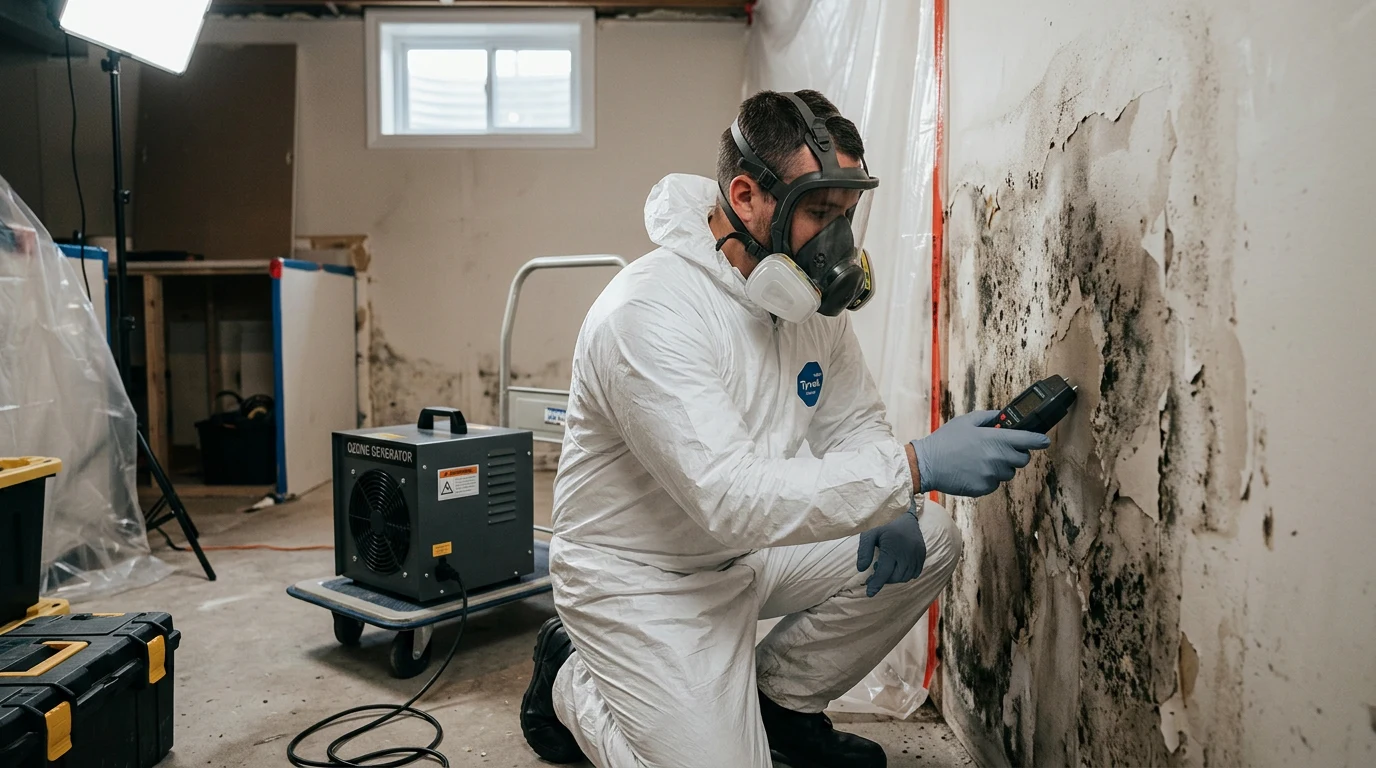
Most consumer ozone generators use one of two methods:
- Corona discharge: Electrical current passes through air, splitting O2 molecules which recombine as O3. These units produce higher ozone concentrations and are the type most commonly marketed for mold.
- Ultraviolet radiation: UV light splits oxygen molecules at specific wavelengths. These units produce lower ozone concentrations and are less commonly marketed for mold treatment.
The marketing pitch is straightforward: ozone is a powerful oxidizer, mold is organic, therefore ozone destroys mold. This logic sounds reasonable on the surface but breaks down when you examine the actual concentrations required and the health consequences of achieving them.
The EPA’s Position: Clear and Unambiguous
The EPA’s official guidance on ozone generators sold as air cleaners states that ozone concentrations that would be effective at eliminating biological contaminants are well above levels that are safe for human occupancy. The agency’s key findings include:
- Available evidence shows that at concentrations that do not exceed public health standards, ozone has little potential to remove indoor air contaminants.
- Ozone does not remove particles such as mold spores from the air.
- Chemical reactions between ozone and common household materials can produce harmful byproducts including formaldehyde and other aldehydes.
- Ozone is not effective at removing biological contaminants embedded in porous materials at safe concentrations.
This is not a nuanced position. The EPA is stating plainly that ozone generators do not work for mold at safe levels and are dangerous at levels that might have some effect.
The Concentration Problem: Safe vs. Effective
This is the core issue with ozone generators and mold. There is a massive gap between the ozone concentration that is safe for humans and the concentration needed to affect mold organisms.
Safe Ozone Levels
- FDA limit for medical devices: 0.05 ppm (parts per million)
- OSHA workplace limit (8-hour exposure): 0.10 ppm
- EPA outdoor air quality standard: 0.070 ppm (8-hour average)
- Most consumer ozone generators at “low” setting: 0.05-0.10 ppm in a typical room
Ozone Levels That Affect Mold (In Laboratory Conditions)
- Surface mold reduction on non-porous surfaces: 1-5 ppm for 4-8 hours (10-100x above safe limits)
- Airborne spore reduction: 3-10 ppm for sustained periods (30-200x above safe limits)
- Mold embedded in porous materials (drywall, wood): Even extremely high concentrations show limited penetration into the material
The gap is not small. To achieve concentrations that laboratory studies show have some effect on surface mold, you need ozone levels that are 10 to 200 times higher than what is considered safe for human exposure. And even at those dangerous levels, the ozone cannot reach mold growing inside porous materials where it actually causes structural damage.
Health Risks of Ozone Exposure
Ozone is a respiratory irritant. At concentrations well below what would be needed to affect mold, ozone causes measurable health effects:
- At 0.10-0.30 ppm: Throat irritation, coughing, chest tightness, shortness of breath, reduced lung function
- At 0.30-0.50 ppm: Significant airway inflammation, worsening of asthma, decreased exercise capacity
- At 0.50+ ppm: Pulmonary edema risk, severe respiratory distress, potential for permanent lung damage with prolonged exposure
- At 1.0+ ppm (the minimum to affect surface mold): Dangerous to life and health with extended exposure
People with asthma, allergies, or respiratory conditions — precisely the people most likely to be seeking mold solutions — are the most vulnerable to ozone’s harmful effects. Children, elderly individuals, and pets are also at heightened risk.
What About “Shock Treatment” Ozone
Some companies and product sellers advocate for “shock treatment” protocols: running a high-output ozone generator in a sealed, unoccupied space for 24-48 hours at concentrations of 5-20 ppm or higher. The space is then ventilated before anyone re-enters.
This approach has several serious problems:
- Incomplete mold treatment: Even at extreme concentrations, ozone cannot penetrate deeply into porous building materials. Mold hyphae (root structures) embedded 1/8 to 1/4 inch into drywall paper or wood grain remain unaffected. The surface may appear cleaner, but the living colony survives.
- Material damage: High ozone concentrations degrade rubber gaskets, electrical wire insulation, fabric, leather, artwork, and certain plastics. HVAC system seals, appliance components, and electronics can sustain permanent damage.
- Harmful byproducts: Ozone reacts with common household materials to produce secondary pollutants including formaldehyde, acetaldehyde, and ultrafine particles. These byproducts persist after the ozone itself has dissipated.
- False sense of security: Ozone can temporarily reduce musty odor, leading homeowners to believe the mold problem is solved when it is not. The odor returns as the surviving mold continues growing.
- Re-entry risk: Ozone half-life in an indoor environment is 30 minutes to 2 hours. However, concentrations can remain above safe levels for 6-12 hours or more in poorly ventilated spaces. Re-entering too early causes acute respiratory exposure.
Why Ozone Cannot Replace Physical Removal
The fundamental misunderstanding behind ozone generator marketing is that mold is an air quality problem. It is not. Mold is a materials problem. The visible growth you see on a surface is the reproductive structure (the colony producing spores). The actual organism — the mycelium network — lives inside the material.
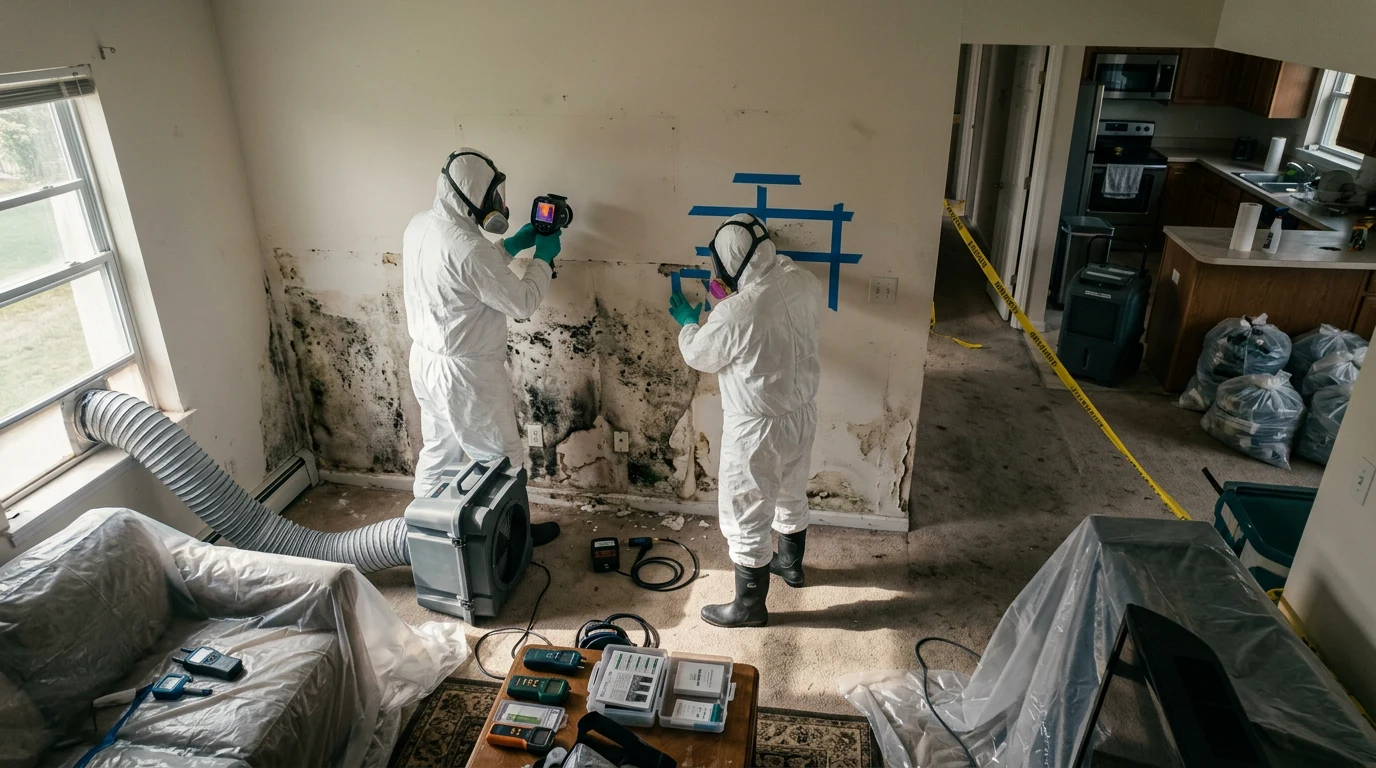
Effective mold remediation requires physical removal of contaminated materials. You cannot gas mold out of drywall any more than you can gas termites out of a foundation. The organisms are embedded in the material itself. For a clear explanation of what proper remediation involves, see our guide on the mold remediation process.
Even dead mold is allergenic. Mold spores and fragments that have been killed by any method — ozone, bleach, or heat — still trigger allergic and respiratory reactions. The IICRC S520 Standard for Professional Mold Remediation requires physical removal of contaminated materials, not just killing the organisms. Dead mold on a surface is still a health concern.
What Actually Works for Mold Removal
If ozone generators are not the answer, what is? The proven approach to mold removal follows a consistent pattern:
- Identify and fix the moisture source. Mold cannot grow without moisture. Until the water problem is resolved, any treatment is temporary. This is the most important step and the one most often skipped.
- Contain the affected area. Plastic sheeting and negative air pressure prevent spores from spreading to unaffected areas during removal.
- Physically remove contaminated materials. Porous materials with mold growth (drywall, insulation, carpet pad) are cut out and disposed of. Non-porous materials (metal, glass, hard plastic) are cleaned with appropriate solutions.
- HEPA vacuum all surfaces. HEPA filtration captures particles as small as 0.3 microns, including mold spores. Standard vacuums blow spores back into the air.
- Dry the area thoroughly. Before any replacement materials are installed, the structure must be dried to normal moisture levels (below 15% for wood, below 1% for drywall).
- Verify with testing. Post-remediation air sampling by an independent testing company confirms that spore counts have returned to acceptable levels. Learn more about this process in our guide on DIY mold testing vs professional testing.
For small areas (under 10 square feet on non-porous surfaces), our guide on how to get rid of mold covers the DIY approach. For larger areas or mold on porous materials like drywall and wood, professional remediation is recommended. See our guides on mold on drywall and mold on wood for material-specific advice.
Addressing Musty Odors Without Ozone
Many people turn to ozone generators specifically for musty odor elimination. Musty odor is caused by microbial volatile organic compounds (MVOCs) produced by actively growing mold. The odor is a symptom, not the disease.
Effective odor elimination requires:
- Removing the mold source. Once active growth is eliminated, MVOC production stops and the odor dissipates naturally.
- Ventilation: Fresh air exchange accelerates odor dissipation. Open windows and run exhaust fans.
- HEPA air purifiers: Units with activated carbon filters capture both spores and VOCs without producing harmful byproducts.
- Dehumidification: Maintaining relative humidity below 50% prevents regrowth and keeps MVOC production at zero.
If the musty odor persists after visible mold has been removed, there is likely hidden mold in wall cavities, behind cabinets, or in other concealed areas. The solution is finding and removing that hidden source, not masking it with ozone. For understanding hidden mold dangers, our guide on crawl space mold removal covers one of the most common hidden mold locations.
Frequently Asked Questions
Can ozone kill mold on surfaces?
In laboratory conditions, ozone at concentrations of 1-5 ppm sustained for several hours can reduce mold growth on non-porous surfaces. However, these concentrations are 10-100 times higher than safe human exposure limits. Even then, ozone does not penetrate porous materials where mold roots grow, meaning the colony survives and regrows. The EPA’s position is clear: at safe concentrations, ozone is ineffective against mold.
Are ozone generators safe to use in unoccupied rooms?
Running an ozone generator in a sealed, unoccupied room avoids direct respiratory exposure during operation. However, high ozone concentrations damage rubber, plastic, fabric, and electronics in the space. Ozone also reacts with household materials to produce formaldehyde and other harmful byproducts that persist after the ozone dissipates. Re-entry too early (before ozone levels drop below 0.05 ppm, which can take 6-12 hours) poses respiratory risks.
Why do some restoration companies use ozone generators?
Some restoration companies use ozone as a supplementary odor treatment after physical mold removal is complete — not as a substitute for removal. In this context, low-concentration ozone in an unoccupied space can help break down residual MVOCs. Reputable companies never use ozone as their primary mold removal method. If a company says they can treat your mold problem with ozone alone, without physical removal, find a different company.
What is the best alternative to ozone generators for mold?
HEPA air purifiers with activated carbon filters are the safest and most effective air-cleaning devices for mold-affected spaces. They capture spores, fragments, and odor-causing VOCs without producing harmful byproducts. However, air purifiers only address airborne contamination — they do not remove mold from surfaces or materials. The only reliable mold solution is fixing the moisture source and physically removing contaminated materials.
Frequently Asked Questions
Can ozone generators effectively kill mold and remove its odor?
No, scientific evidence indicates that ozone generators are ineffective at killing mold spores on surfaces or removing the musty odor associated with mold. While ozone may mask odors temporarily, it does not eliminate the source of the problem, and mold will continue to grow.
Is using an ozone generator a safe alternative to professional mold remediation?
Absolutely not. The EPA explicitly states that ozone generators are not a safe or effective alternative to professional mold remediation. Attempting to use ozone can create a false sense of security while mold continues to spread, potentially leading to more extensive and costly damage.
What are the health risks associated with using ozone generators for mold?
Ozone is a powerful lung irritant, and exposure can cause a range of respiratory problems, including coughing, chest pain, shortness of breath, and throat irritation. These risks are present even at levels considered safe by manufacturers, as effective mold removal requires concentrations far exceeding safe human exposure.
Does the EPA recommend ozone generators for mold remediation?
No, the EPA strongly advises against the use of ozone generators for mold remediation. Their stance is based on a lack of evidence for effectiveness and significant health risks associated with ozone exposure.

Why do some companies still market ozone generators for mold removal?
Despite scientific consensus and EPA warnings, some companies continue to market ozone generators due to a lack of regulation and consumer misunderstanding. These claims are often misleading and not supported by credible research or health organizations.
What is the recommended approach for dealing with mold in a home?
The recommended approach for mold involves identifying and fixing the moisture source, thoroughly cleaning and drying affected areas, and, for larger infestations, hiring a qualified mold remediation professional. The EPA emphasizes that proper ventilation and moisture control are key to preventing mold growth.
These statements have not been evaluated by the Food and Drug Administration. This information is not intended to diagnose, treat, cure, or prevent any disease. Content is for informational purposes only and is not medical advice; consult a qualified healthcare provider before starting any supplement. As an Amazon Associate we earn from qualifying purchases.
