Mold can begin colonizing wet materials in as little as 24-48 hours. That means the actions you take in the first day after discovering a leak determine whether you are dealing with a simple cleanup or a full-scale remediation project costing $3,000-$15,000 or more. Every hour of delay increases the scope of damage exponentially.
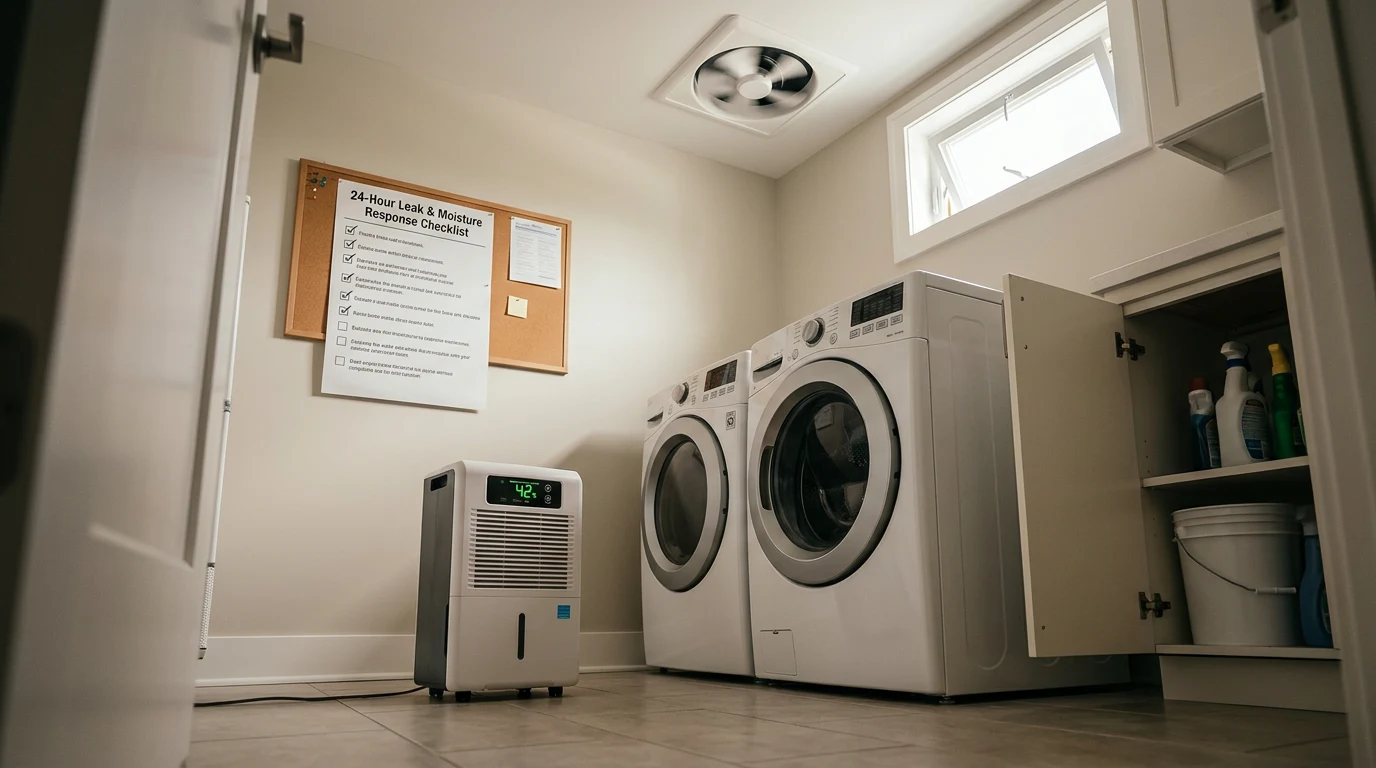
This checklist walks you through exactly what to do — step by step, hour by hour — after discovering a water leak in your home. Print it, bookmark it, and share it with anyone who owns property. The difference between a $200 fix and a $10,000 problem often comes down to how quickly and methodically you respond.
Why 24 Hours Is the Critical Window
Mold spores are everywhere — in the air inside and outside your home, on surfaces, in dust. They are dormant and harmless until they encounter three conditions simultaneously: moisture, an organic food source (drywall, wood, carpet backing), and temperatures between 60-80 degrees Fahrenheit. A leak provides that moisture trigger.
Here is the timeline of what happens after water saturates a building material:
- 0-12 hours: Water wicks into drywall, insulation, carpet pad, and wood framing. Materials absorb moisture and expand.
- 12-24 hours: Drywall paper begins to soften. Carpet pad reaches full saturation. Relative humidity in the affected area climbs above 60%.
- 24-48 hours: Mold spores germinate on wet organic surfaces. Invisible hyphae (root structures) begin penetrating drywall paper and wood grain.
- 48-72 hours: Visible mold colonies appear. Musty odor becomes detectable. At this point, professional remediation may already be necessary.
- 72+ hours: Mold spreads to adjacent materials. Structural integrity of saturated wood begins to decline. Spore counts in the air rise significantly.
The message is clear: you have approximately 24 hours to prevent a leak from becoming a mold problem. Here is exactly how to use that time.
Hour 0-1: Stop the Water Source
Nothing else matters until you stop active water intrusion. Every minute water continues flowing increases the volume of saturated material you will need to address.
Immediate Actions
- Locate and shut off the water source. For a burst pipe, turn off the main water shutoff valve. For a supply line leak (toilet, dishwasher, washing machine), close the local shutoff valve behind the appliance.
- Turn off electricity to any area with standing water. Water and electrical outlets are a lethal combination. Use your breaker panel — never wade through standing water to reach an outlet.
- Contain the spread. Use towels, plastic sheeting, or buckets to prevent water from migrating to additional rooms. Gravity moves water, so check the floors below the leak immediately.
- Open a window or turn on exhaust fans to begin air circulation in the affected area. Do not run central HVAC yet if the leak is near ductwork — you could spread moisture through the system.
If the leak source is your roof or an external wall, apply a temporary patch or tarp. For slab leaks or foundation seepage, you will need professional plumbing help — but still proceed with the extraction steps below for the water already present.
Hours 1-4: Extract Standing Water
Once the source is controlled, your priority is removing as much water as possible. Standing water is the single biggest accelerator of mold growth.
Extraction Checklist
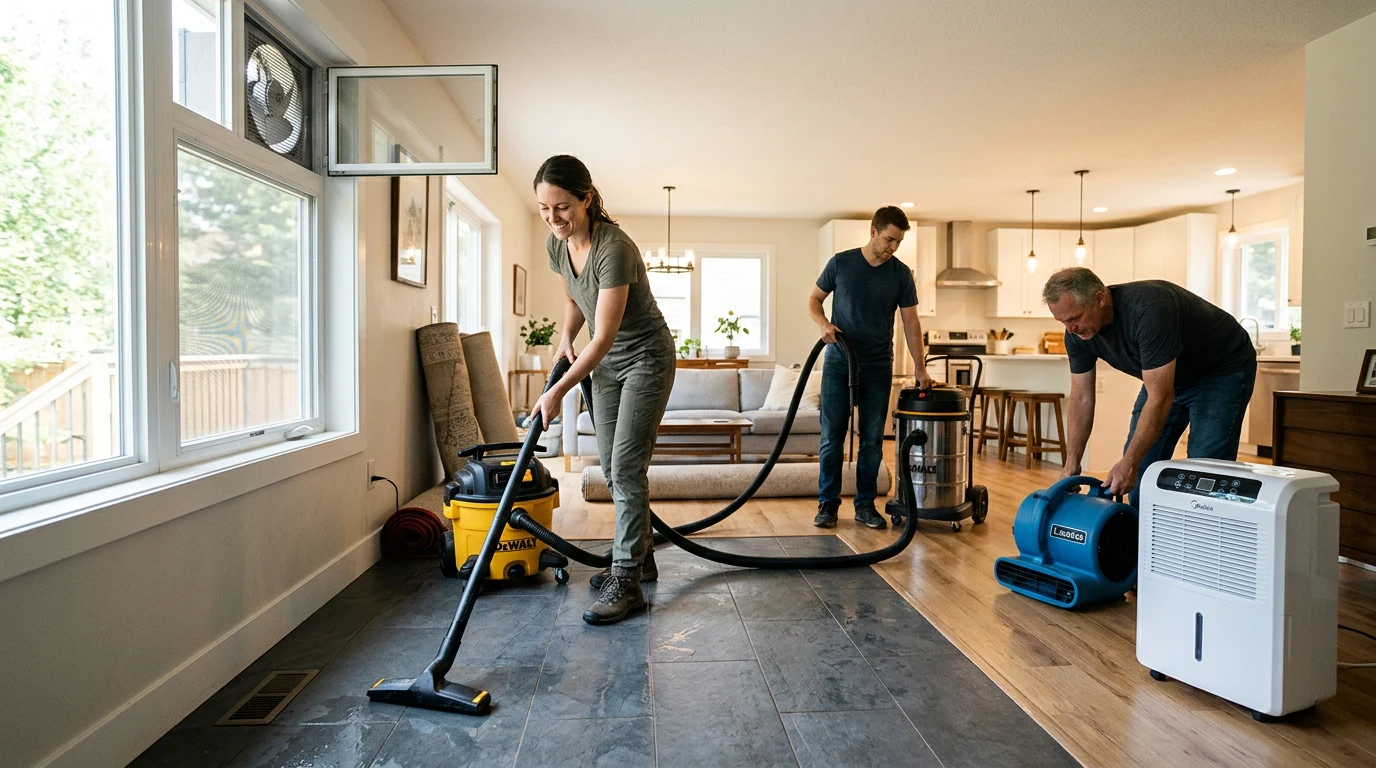
- For small leaks (under 10 sq ft): Use towels, mops, and a wet/dry shop vacuum. A standard shop vac removes approximately 5-10 gallons per pass.
- For moderate leaks (10-50 sq ft): Rent a portable water extractor from a hardware store ($40-$75/day). These units pull 10-20 gallons per hour from carpet and hard surfaces.
- For large leaks (50+ sq ft or any standing water): Call a water damage restoration company immediately. Professional truck-mounted extractors remove hundreds of gallons per hour.
- Lift furniture off wet carpet. Place aluminum foil or plastic under wood furniture legs to prevent staining and moisture transfer.
- Pull back carpet edges from tack strips to expose the pad beneath. Carpet pad holds 5-7 times its weight in water and is the primary incubator for post-leak mold.
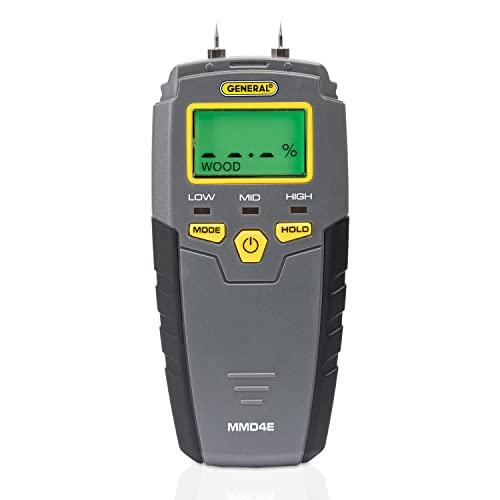
Do not assume that because the surface feels dry, the problem is solved. Water wicks into wall cavities, under baseboards, and into subfloor materials where you cannot see it. Use a moisture meter (available at hardware stores for $25-$40) to check moisture content in walls and flooring. Normal drywall reads below 1% moisture. Anything above 1% requires active drying.
Hours 4-8: Remove Wet Materials
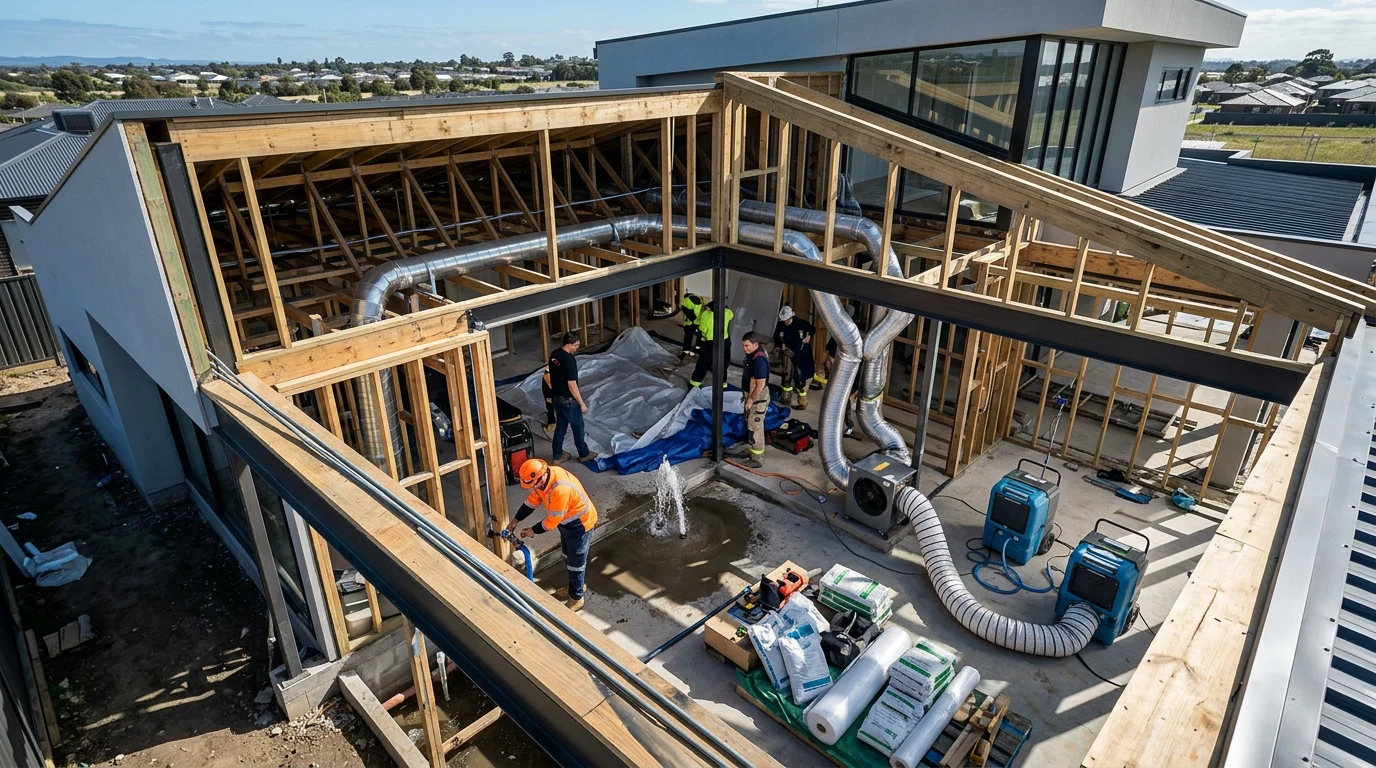
Some materials can be dried in place. Others must be removed because they will never dry fast enough to prevent mold colonization.
Materials That Must Be Removed
- Carpet pad: Always remove and discard wet carpet pad. It cannot be effectively dried in place and costs only $0.50-$1.00 per square foot to replace. This is non-negotiable.
- Wet insulation: Fiberglass batt insulation that has been saturated loses its R-value and traps moisture against framing. Remove it from walls and cavities.
- Drywall wet above 24 inches: If water has wicked more than 24 inches up a wall, cut and remove the affected drywall. Standard practice is to cut 12-18 inches above the visible water line to account for wicking.
- Ceiling tiles: Saturated ceiling tiles (both drop ceiling and drywall) sag, stain, and grow mold rapidly. Remove them.
- Cardboard boxes, papers, fabric: Anything porous and replaceable that got wet should be discarded.
Materials You Can Dry in Place
- Carpet (without pad): If the carpet itself is clean water-wet (not sewage), it can be cleaned and dried with proper equipment.
- Hardwood floors: Can often be dried with specialized mat systems, but may cup or buckle temporarily.
- Drywall wet below 24 inches: If caught within 24 hours and actively dried, lower wall sections can sometimes be saved.
- Wood framing: Structural lumber can be dried in place with proper airflow and dehumidification.
When removing drywall, cut along studs so replacement pieces have framing to attach to. Wear an N95 respirator and gloves — even if you do not see mold, disturbing wet materials releases particles and potential spores. For guidance on handling affected drywall, see our guide on mold on drywall.
Hours 4-12: Set Up Active Drying
Extraction removes free water. Active drying removes the moisture absorbed into materials. You need both air movement and dehumidification running simultaneously.
Drying Equipment Guide
- Air movers (fans): Position high-velocity fans to blow across wet surfaces, not directly at walls. Aim for 1 air mover per 10-15 linear feet of wet wall. Rental cost: $25-$50/day per unit.
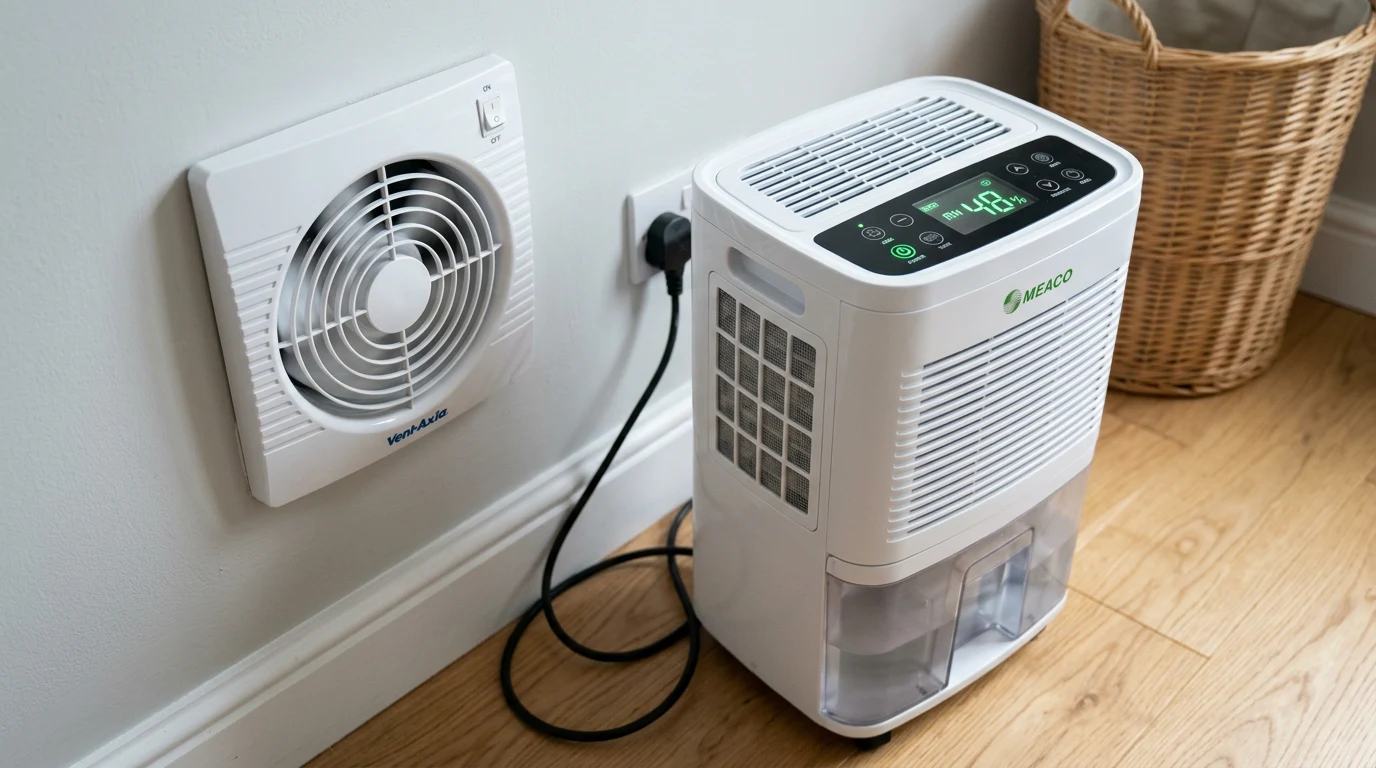
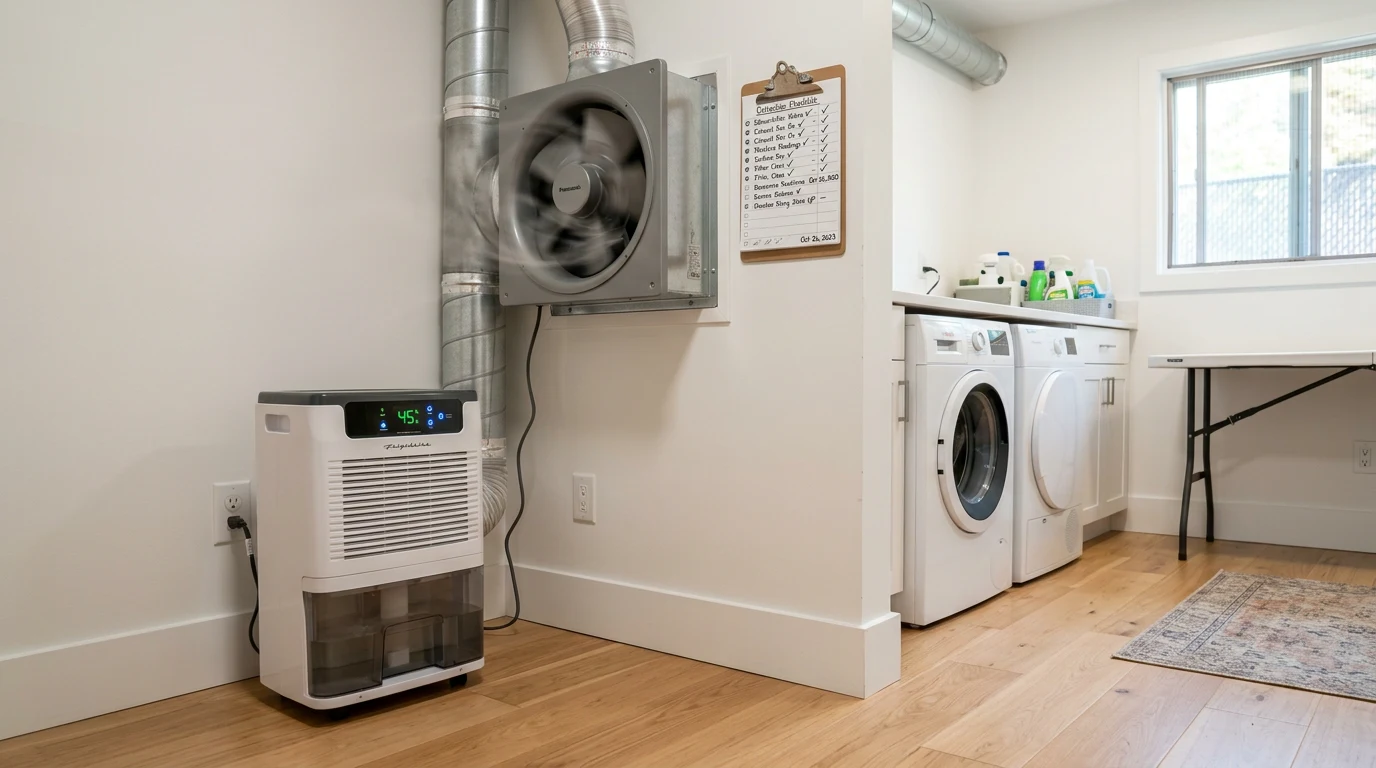
- Dehumidifiers: A residential dehumidifier removes 30-50 pints per day. For areas over 200 sq ft, rent a commercial dehumidifier ($75-$150/day) that pulls 100-200 pints per day. Empty the collection tank regularly or run a hose to a drain.
- Open wall cavities: If drywall has been removed, point air movers into the open cavities to dry framing and insulation behind the walls.
- Monitor humidity: Use a hygrometer ($10-$20 at hardware stores) to track relative humidity in the affected area. Your target is below 50% relative humidity. Below 40% is ideal for rapid drying.
Keep drying equipment running 24 hours a day until moisture readings normalize. For a moderate leak, this typically takes 3-5 days. For larger events, 5-7 days is common. Do not stop drying based on how the area looks — use your moisture meter to confirm materials have returned to normal levels. Understanding the role of humidity monitoring is essential; our guide on mold prevention products covers the tools that help you maintain safe levels long-term.
Hours 6-24: Document Everything
If you plan to file an insurance claim — and for any leak causing more than $500 in damage, you should — documentation is critical. Insurance adjusters want evidence of three things: the source, the extent, and your response.
Documentation Checklist
- Photograph the source of the leak before and after repair. Include wide shots showing the affected area and close-ups of the damage.
- Photograph all affected materials — wet carpet, stained walls, saturated insulation, buckled flooring.
- Video walkthrough: Record a narrated video walking through the entire affected area. Describe what happened, when you discovered it, and what you see.
- Save all receipts: Equipment rental, materials purchased, professional services hired. Insurance reimburses reasonable mitigation expenses.
- Log your timeline: Write down when you discovered the leak, when you shut off water, when extraction began, and when drying equipment was deployed. A written timeline strengthens your claim.
- Moisture meter readings: Document initial moisture readings and daily readings during the drying process. This proves you responded appropriately.
Call your insurance company within 24 hours of discovery. Most homeowner policies cover sudden and accidental water damage (a burst pipe) but exclude gradual leaks (a slow drip over months). Filing promptly protects your rights under the policy. For more on insurance coverage specifics, the EPA’s guide to mold and moisture provides authoritative background on moisture damage and prevention.
Day 2-5: Monitor and Verify
The leak is stopped, water is extracted, wet materials are removed, and drying equipment is running. Now you monitor.
- Check moisture readings daily. Drywall should read below 1%. Wood framing should read below 15%. Concrete can take longer — below 4% is the target.
- Inspect for mold visually. Check behind removed drywall, under carpet edges, around baseboards, and on the backside of any remaining materials. Mold appears as dark spots, fuzzy growth, or discoloration. See our guide on black mold vs regular mold for identification help.
- Smell test: A musty or earthy odor indicates active mold growth even when you cannot see it. If you detect this smell after 48 hours of drying, mold may already be established in hidden areas.
- Do not rebuild prematurely. Replacing drywall, carpet, or insulation before the structure is fully dry traps moisture and guarantees mold. Wait until moisture readings confirm the area is dry.
When to Call a Professional
Not every leak requires professional intervention. Here is how to decide:
Handle It Yourself If:
- The affected area is under 10 square feet
- Water is clean (supply line, not sewage)
- You discovered the leak within 12 hours
- No water reached wall cavities or subfloor
- You have access to a shop vac, fans, and a dehumidifier
Call a Professional If:
- The affected area exceeds 10 square feet
- Water has been standing for more than 24 hours
- The water source is contaminated (sewage backup, flooding)
- Multiple rooms or floors are affected
- You detect musty odor within 48 hours of the leak
- Moisture readings are not improving after 48 hours of active drying
For a clear understanding of the professional cleanup process and what to expect, read our detailed breakdown of the mold remediation process. If you are curious about potential expenses, our mold removal cost guide provides realistic pricing for common scenarios.
The Printable 24-Hour Checklist
Here is the condensed version you can reference during an emergency:
Hour 0-1
- Shut off the water source (main valve or local shutoff)
- Turn off electricity to the affected area
- Contain water spread with towels and barriers
- Open windows for ventilation
Hours 1-4
- Extract standing water (shop vac, extractor, or call pros)
- Lift furniture off wet surfaces
- Pull back carpet to expose pad
- Take initial photos and video
Hours 4-8
- Remove and discard carpet pad
- Remove wet insulation from walls
- Cut out saturated drywall (12-18 inches above water line)
- Bag and dispose of unsalvageable materials
Hours 8-24
- Set up air movers and dehumidifier
- Take moisture meter readings and record them
- Call insurance company and file a claim
- Save all receipts for equipment and materials
Days 2-5
- Check moisture readings daily
- Inspect for visible mold or musty odor
- Keep drying equipment running 24/7
- Do not rebuild until readings normalize
Common Mistakes That Lead to Mold After a Leak
Even homeowners who respond quickly make errors that allow mold to establish. Avoid these:
- Leaving carpet pad in place. This is the number one mistake. Carpet pad is cheap to replace and impossible to dry effectively in place. Remove it every time.
- Using fans without a dehumidifier. Fans move moisture into the air. Without a dehumidifier pulling that moisture out of the air, you are just redistributing the problem.
- Painting over water stains. Paint does not seal moisture. It traps it, and mold grows behind the painted surface where you cannot see it.
- Turning off drying equipment too early. “It looks dry” is not the same as “it measures dry.” Trust your moisture meter, not your eyes.
- Not checking behind baseboards. Water wicks behind baseboards and into wall cavities. Always remove baseboards in the affected area to inspect and dry behind them.
- Ignoring the floor below. Water follows gravity. A second-floor leak frequently causes damage to the first-floor ceiling. Always check the level below.
Prevention: Reducing Future Leak Risk
After you have handled the immediate emergency, take steps to reduce the likelihood of a repeat event. The most common residential leaks come from predictable sources:
- Water heater: Average lifespan is 8-12 years. If yours is older than 10, inspect it annually and budget for replacement. Place a drain pan underneath it.
- Washing machine hoses: Replace rubber hoses with braided stainless steel every 5 years. These burst without warning and can dump 400+ gallons per hour.
- Toilet supply lines: Replace every 5-7 years. A failed toilet supply line is one of the most common causes of residential water damage.
- Roof: Inspect twice a year and after major storms. Replace damaged or missing shingles immediately.
- HVAC condensate line: Clear the drain line annually with vinegar or a wet/dry vac. Clogged condensate lines cause slow, hidden leaks that often go undetected for weeks. Learn more about HVAC-related moisture problems in our guide on mold in HVAC ducts.
Consider installing water leak sensors ($15-$30 each) near water heaters, washing machines, dishwashers, and under sinks. Smart sensors can send alerts to your phone, giving you early warning before a small drip becomes a major event. For a comprehensive prevention strategy, see our complete mold removal guide.
Frequently Asked Questions
How long does it take for mold to grow after a leak?
Mold spores can begin germinating on wet organic materials within 24-48 hours. Visible mold colonies typically appear within 48-72 hours in warm, humid conditions. This is why the 24-hour response window is so critical — acting within the first day can prevent colonization entirely.
Do I need to remove drywall after a leak?
It depends on how high the water wicked. If water staining extends more than 24 inches up the wall, the drywall should be cut and removed at least 12-18 inches above the visible water line. Drywall below 24 inches that is dried within 24 hours using professional-grade equipment can sometimes be saved. When in doubt, removing is always safer than leaving saturated drywall in place.
Will my homeowner’s insurance cover leak damage?
Most homeowner policies cover sudden and accidental water damage, such as a burst pipe or failed appliance. They typically exclude gradual damage from slow leaks, poor maintenance, or flooding from external sources. Document everything, call your insurer within 24 hours, and keep all receipts. Filing quickly and showing that you took immediate mitigation steps strengthens your claim significantly.
Can I just use bleach to prevent mold after a leak?
Bleach is not an effective mold prevention strategy after a leak. It works on non-porous surfaces like tile but does not penetrate porous materials like drywall or wood where mold roots grow. The real solution is removing moisture through extraction and active drying. If mold has already appeared, physical removal of the affected material is the most reliable approach. For more on cleaning products, see our comparison of vinegar vs bleach for mold.
Should I hire a water damage company or a mold remediation company?
If you are within the first 24-48 hours and there is no visible mold, call a water damage restoration company. Their focus is drying the structure to prevent mold. If mold is already visible or it has been more than 48 hours since the leak, call a mold remediation company. Many companies offer both services, but the key difference is whether you are preventing mold (restoration) or removing existing mold (remediation).
Why is 24 hours such a critical timeframe for mold prevention after a leak?
Mold spores are ubiquitous in the environment and require moisture to grow. Within 24 to 48 hours of water exposure, mold can begin to colonize surfaces, making early intervention crucial for preventing widespread growth and potential health issues.
What if I can’t completely dry everything within the 24-hour window?
While complete drying is the ideal, prioritizing the removal of standing water and maximizing air circulation within 24 hours significantly reduces the risk. If complete drying isn’t possible, professional water damage restoration within 48-72 hours becomes even more critical to prevent significant mold development.
Can I use a regular household fan to dry the area, or do I need special equipment?
For small leaks and minimal saturation, a regular household fan can help increase air circulation and aid in drying. However, for larger areas or significant water intrusion, industrial-strength air movers and dehumidifiers are far more effective at removing moisture quickly and preventing mold growth.
Should I use bleach to clean the affected area after a leak to prevent mold?
While bleach can kill some surface mold, it is not recommended for porous materials and doesn’t effectively penetrate to kill mold roots. For effective mold prevention and remediation, focus on thorough drying and, if necessary, use a detergent solution or a specialized antimicrobial cleaner designed for water damage.
What kind of materials are most susceptible to mold growth after a leak?
Porous materials like drywall, insulation, carpet, upholstery, and wood are highly susceptible to mold growth due to their ability to absorb and retain moisture. Non-porous surfaces like tile or metal are less prone but can still harbor mold if not dried properly.
When should I call a professional mold remediation service, even if I follow the 24-hour checklist?
You should call a professional if the leak affects a large area (more than 10 square feet), involves contaminated water, or if you suspect mold growth despite your efforts. Professionals have specialized equipment and expertise to safely and effectively remove mold and prevent its recurrence.
These statements have not been evaluated by the Food and Drug Administration. This information is not intended to diagnose, treat, cure, or prevent any disease. Content is for informational purposes only and is not medical advice; consult a qualified healthcare provider before starting any supplement. As an Amazon Associate we earn from qualifying purchases.
