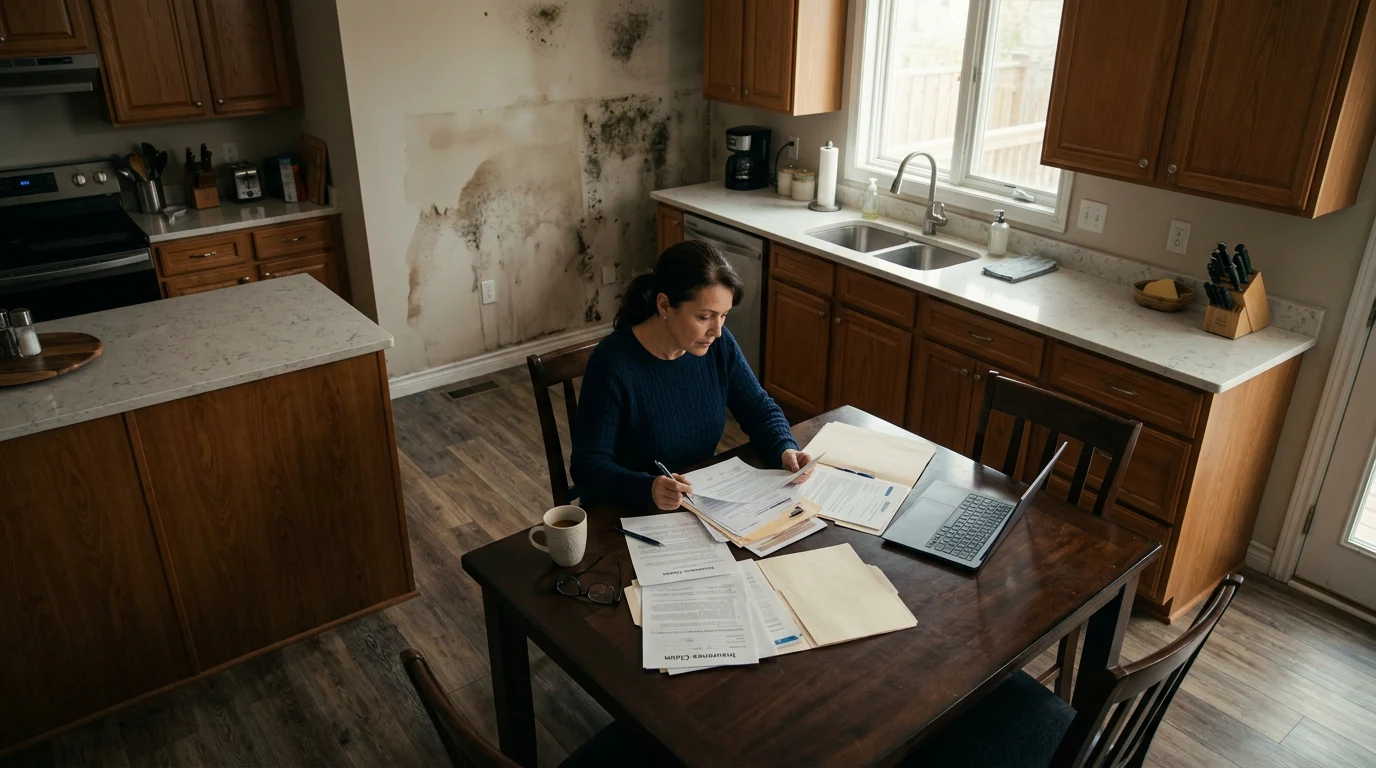
Mold remediation costs between $1,500 and $9,000 for most homes, with severe cases exceeding $30,000. Whether your homeowners insurance covers any of that depends on one critical question: what caused the mold in the first place?
The short answer is that insurance covers mold when it results from a “covered peril” — a sudden, accidental event like a burst pipe. It typically does not cover mold from long-term neglect, poor maintenance, or flooding. Here is exactly how to determine whether your situation qualifies.
When Homeowners Insurance Covers Mold
Standard homeowners policies (HO-3) cover mold damage when it is the direct result of a covered peril. The key word is “sudden and accidental.” If the water event happened quickly and unexpectedly, the resulting mold damage is typically covered.
Covered Scenarios
- Burst pipe: A water supply line in your wall suddenly breaks, soaking the drywall. You discover mold 2 weeks later behind the damaged wall. Covered — the pipe burst was sudden and accidental.
- Appliance malfunction: Your washing machine hose fails and floods the laundry room. Mold grows under the flooring before you discover the full extent of damage. Covered.
- Ice dam damage: Ice dams cause water to back up under your roof shingles, leading to attic mold. Covered in most policies.
- Fire suppression: Firefighters soak your home to extinguish a kitchen fire. Mold develops in water-damaged areas. Covered — fire damage is a named peril.
- Accidental overflow: A bathtub overflows due to a faulty drain stopper, damaging the ceiling below. Mold appears within weeks. Covered.
When Insurance Does NOT Cover Mold
Insurance companies deny mold claims far more often than they approve them. The most common exclusions involve gradual damage, negligence, and flooding.

Excluded Scenarios
- Long-term leaks: A slow drip under your bathroom sink goes unnoticed for 6 months and causes extensive mold on drywall. Denied — gradual damage from maintenance neglect.
- High humidity without water event: Poor ventilation in your bathroom leads to persistent mold on the ceiling. Denied — no covered peril caused the moisture.
- Flooding: External floodwater enters your home and causes mold. Standard homeowners insurance explicitly excludes flood damage. You need a separate flood insurance policy.
- Foundation seepage: Groundwater slowly migrates through your basement walls. Denied — considered a maintenance and waterproofing issue.
- Construction defects: Improper grading or flashing installation causes water intrusion and mold. Denied — your recourse is against the builder, not your insurance.
Mold Coverage Caps: The $5,000 to $10,000 Reality
Even when mold is covered, most policies limit mold remediation payouts. These caps exist because insurers consider mold a high-risk, high-cost claim category.
Typical mold coverage limits by insurer type:
- Standard policies: $5,000 to $10,000 cap for mold remediation, regardless of actual cost
- Premium policies: Some carriers offer $25,000 to $50,000 in mold coverage as an add-on endorsement
- Bare-bones policies: Some budget insurers exclude mold entirely unless you purchase a separate mold endorsement ($500 to $1,500 per year)
The average mold removal cost for a moderate problem runs $3,000 to $7,000. For widespread contamination requiring structural work, costs can reach $15,000 to $30,000. If your policy caps mold at $10,000 and your remediation costs $20,000, you pay the $10,000 difference out of pocket.
Flood Insurance and Mold
Standard homeowners insurance never covers flood damage, and that includes mold caused by flooding. If you live in a flood-prone area, you need a separate National Flood Insurance Program (NFIP) policy or private flood insurance.
NFIP policies cover mold removal only if:
- The mold resulted directly from a covered flood event
- You took reasonable steps to dry and clean affected areas promptly
- The mold is on items and surfaces that are otherwise covered by the policy
NFIP coverage limits are $250,000 for the building and $100,000 for contents. Mold remediation costs come out of these overall limits — there is no separate mold cap, but there is also no additional mold allowance.
How to File a Mold Insurance Claim
If you believe your mold problem qualifies for coverage, follow these steps to maximize your chances of approval.
Step 1: Document the Water Event
Identify and document the covered peril that caused the moisture. Take photos of the broken pipe, failed appliance, or ice dam damage. Note the date you discovered the problem. The connection between the water event and the mold must be clear.
Step 2: Mitigate Immediately
Your policy requires you to take reasonable steps to prevent further damage. This means stopping the water source, drying the area, and setting up fans or a dehumidifier. If you do nothing and let mold spread for weeks, the insurer can reduce or deny your claim for failure to mitigate.
Step 3: Call Your Insurance Company Promptly
Report the water damage and resulting mold within 48 to 72 hours of discovery. Delayed reporting is one of the most common reasons for claim denial. When you call, use the phrase “sudden and accidental water damage resulting in mold growth.”
Step 4: Get a Professional Mold Assessment
Hire an independent mold inspector — not one recommended by your insurance company. A professional mold assessment costs $300 to $600 and provides laboratory analysis of mold species and concentration levels. This report supports your claim with objective evidence.
Step 5: Get Multiple Remediation Estimates
Obtain 2 to 3 written estimates from licensed mold remediation companies. Insurance adjusters compare your estimates against their own, and having multiple professional quotes strengthens your position. Make sure estimates include the full mold remediation process — containment, removal, treatment, and reconstruction.
What to Do If Your Mold Claim Is Denied
Mold claims are denied frequently, but denial is not always the final word.
- Request a written explanation: Your insurer must explain the specific reason for denial
- Review your policy language: Check the exact wording of mold exclusions and coverage limits
- File an appeal: Submit additional documentation — independent inspection reports, contractor assessments, and photos of the covered peril
- Contact your state insurance commissioner: If you believe the denial is unjust, file a complaint with your state’s department of insurance
- Hire a public adjuster: Public adjusters work on your behalf (typically for 10% to 15% of the claim payout) and can often negotiate higher settlements
- Consult an insurance attorney: For claims over $10,000, legal representation may be worthwhile, especially in bad faith denial cases
How to Increase Your Mold Coverage
If you live in a humid climate or an older home, consider these options to improve your mold coverage:
- Mold endorsement: Many insurers offer add-on mold coverage for $500 to $1,500 per year, increasing your cap to $25,000 or $50,000
- Umbrella policy: While umbrella policies primarily cover liability, some include property damage extensions
- Upgrade your base policy: HO-5 (comprehensive) policies often include higher mold limits than HO-3 (special form) policies
- Shop carriers: Mold coverage varies dramatically between insurers. When renewing, compare mold-specific terms
According to the EPA’s mold information page, the best strategy remains prevention. Addressing moisture problems immediately and maintaining your home’s drainage and ventilation systems costs far less than remediation — and avoids the insurance claim process entirely.
Prevention Is Cheaper Than Any Insurance Claim
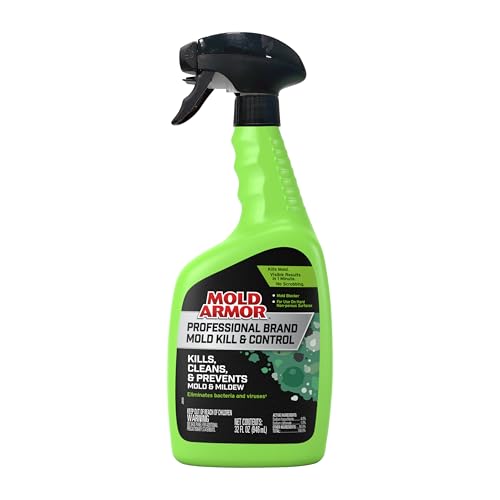
Even with good coverage, a mold insurance claim raises your premiums by 5% to 15% annually and stays on your claims history for 5 to 7 years. Investing in mold prevention products and regular home maintenance costs a fraction of what you would spend on deductibles, out-of-pocket remediation, and increased premiums.
Fix leaks within 24 hours, maintain indoor humidity below 55%, and inspect high-risk areas like basements, crawl spaces, and attics seasonally. These simple actions can prevent the vast majority of mold problems before they become insurance claims.
Frequently Asked Questions
Does insurance cover mold behind walls?
Yes, if the mold resulted from a covered peril like a burst pipe. Hidden mold behind walls is actually a stronger claim than surface mold because it demonstrates that the damage was not visible and therefore could not have been prevented through routine cleaning.
Will filing a mold claim increase my premiums?
In most cases, yes. Water and mold claims typically increase premiums by 5% to 15% and remain on your claims history for 5 to 7 years. For smaller mold problems costing under $3,000, it may be more economical to pay out of pocket than to file a claim.
Is mold testing covered by insurance?
If your claim is approved, the cost of mold testing is typically included in the overall claim payout. However, upfront testing costs are your responsibility. If the claim is denied, you will not be reimbursed for testing expenses.
Does renters insurance cover mold?
Renters insurance covers mold damage to your personal belongings if the mold resulted from a covered peril. It does not cover the building structure — that is the landlord’s responsibility. Coverage limits for mold in renters policies are typically $1,000 to $5,000.
Can I be dropped by my insurance for a mold claim?
Insurers can choose not to renew your policy after a mold claim, though they typically cannot cancel mid-term. Multiple water or mold claims within a 3 to 5 year period significantly increase the risk of non-renewal. Some carriers specifically flag mold claims as higher risk than other property damage claims.
Does standard homeowners insurance typically cover mold removal?
Standard homeowners insurance policies often provide limited coverage for mold remediation. Coverage is usually contingent on the mold being a direct result of a covered peril, such as a sudden burst pipe or storm damage, rather than a gradual issue like chronic leaks.
What kind of mold damage is usually excluded from homeowners insurance coverage?
Mold damage resulting from neglect, poor maintenance, or long-term issues like persistent humidity or unaddressed leaks is generally excluded. Insurers typically do not cover mold that could have been prevented by the homeowner.
Are there specific policy limits for mold remediation even if it’s covered?
Yes, even when mold remediation is covered, most homeowners insurance policies include specific sub-limits for mold-related claims. These limits are often significantly lower than the overall dwelling coverage and can range from a few thousand dollars up to $10,000 or $20,000, depending on your policy.

Can I add an endorsement to my policy for broader mold coverage?
Some insurance carriers offer endorsements or riders that can be added to your homeowners policy to expand mold coverage. These endorsements typically increase the sub-limits for mold remediation or broaden the circumstances under which mold damage is covered, often for an additional premium.
What steps should I take if I discover mold and believe it might be covered by my insurance?
Immediately document the mold with photos and videos, and identify the source of the moisture. Then, contact your insurance provider as soon as possible to report the claim and understand your specific policy’s coverage and requirements for mold remediation.

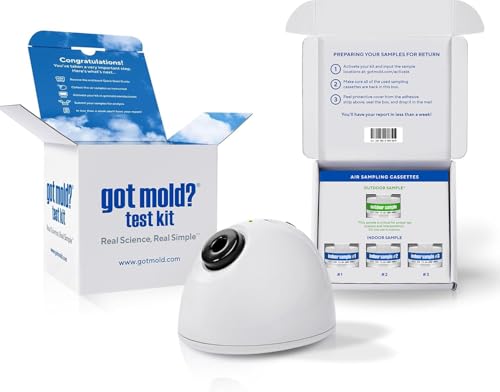
Will my homeowners insurance cover the cost of testing for mold?
Coverage for mold testing can vary; some policies might cover testing if it’s deemed a necessary part of assessing a covered mold claim. However, if the mold is not linked to a covered peril, or if testing is done proactively without an underlying claim, it’s less likely to be covered.
These statements have not been evaluated by the Food and Drug Administration. This information is not intended to diagnose, treat, cure, or prevent any disease. Content is for informational purposes only and is not medical advice; consult a qualified healthcare provider before starting any supplement. As an Amazon Associate we earn from qualifying purchases.