RMR-86 and RMR-141 are companion products from the same manufacturer, but they solve fundamentally different problems. RMR-86 is a stain remover that eliminates visible black mold discoloration in seconds. RMR-141 is an EPA-registered disinfectant and fungicide that kills mold, bacteria, and viruses on contact. Understanding the RMR-86 vs RMR-141 distinction prevents the most common mistake buyers make: purchasing one product when they actually need both.
Affiliate Disclosure: MoldActionPlan.com earns commissions from qualifying purchases through our affiliate links at no extra cost to you. Our recommendations are based on aggregated buyer reviews, manufacturer specs, and expert analysis. Full disclosure.
Review Methodology: Products in this comparison have not been independently purchased or tested by our team. Recommendations are based on aggregated verified buyer feedback, manufacturer specifications, ingredient analysis, and published expert opinion. We disclose affiliate relationships where present.
Quick Comparison: RMR-86 vs RMR-141 at a Glance
| Feature | RMR-86 Pro | RMR-141 RTU |
|---|---|---|
| Primary Function | Remove mold stains | Kill mold, bacteria, viruses |
| Active Ingredient | Sodium hypochlorite (bleach-based) | Quaternary ammonium compound |
| EPA Registered | No (stain remover only) | Yes (EPA Reg. No. 6836-349-87742) |
| Kills Mold | Surface contact kill only | Yes, kills 140+ microorganisms |
| Removes Stains | Excellent — 15 seconds on hard surfaces | Minimal stain removal |
| Prevents Regrowth | No residual protection | Residual antimicrobial layer |
| Odor | Strong bleach fumes | Mild, pleasant scent |
| Safe Indoors | Requires heavy ventilation | Safe with normal ventilation |
| Best Surfaces | Hard, non-porous | All surfaces (porous + non-porous) |
| Price (32 oz) | ~$13–$16 | ~$10–$13 |
| Buyer Rating | 4.4/5 (8,000+ reviews) | 4.6/5 (490+ reviews) |
How Each Product Works
RMR-86: The Stain Eraser
RMR-86 Pro Instant Mold Stain Remover uses concentrated sodium hypochlorite to oxidize the melanin pigments that give mold its dark coloring. When sprayed on mold-stained grout, tile, or concrete, the active bleaching agents break down the pigment molecules within seconds. Buyers consistently report watching black mold stains vanish in 15 seconds on hard surfaces.
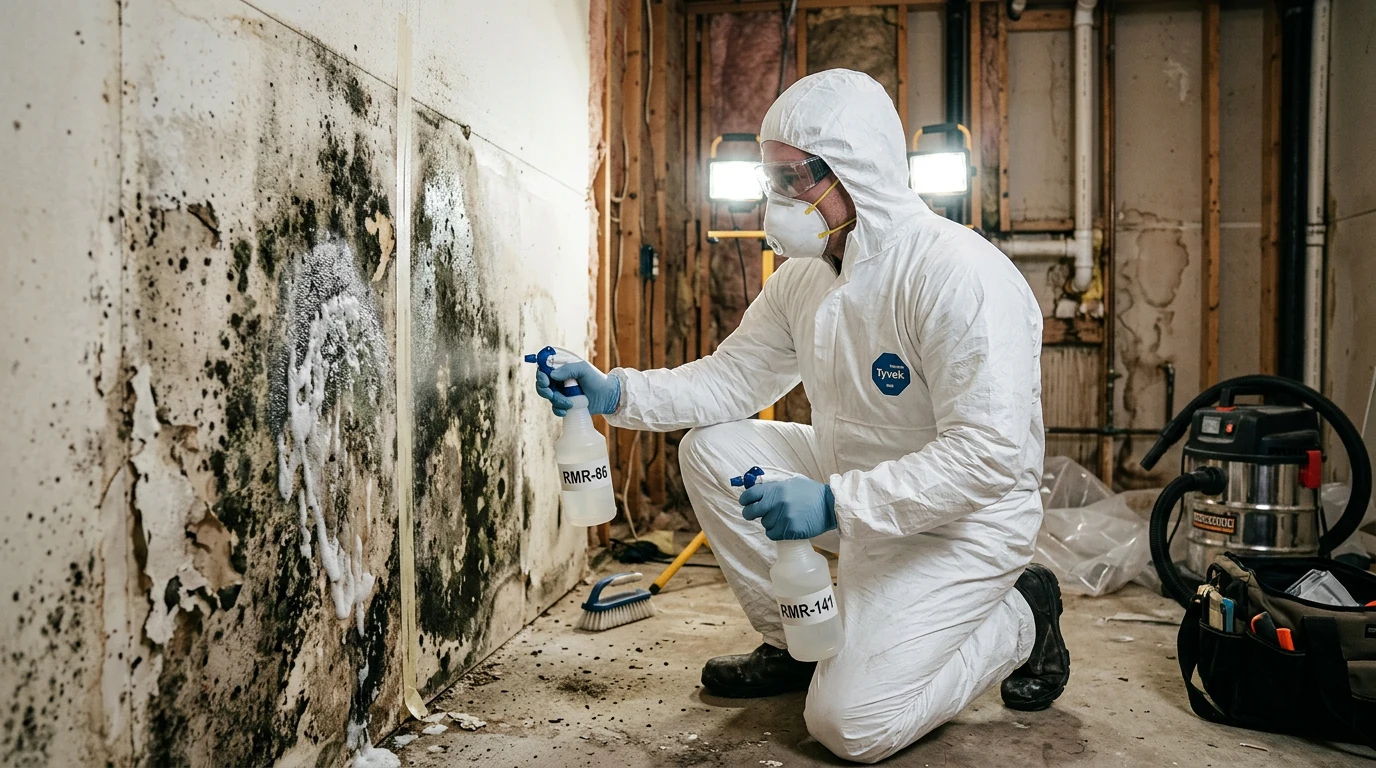
The critical limitation: RMR-86 is classified as a stain remover, not a disinfectant or fungicide. While sodium hypochlorite does kill mold on contact, the product leaves no residual antimicrobial barrier. Treated surfaces are immediately vulnerable to recolonization if the underlying moisture source remains.
RMR-141: The Mold Killer
RMR-141 RTU Disinfectant is an EPA-registered antimicrobial product that kills more than 140 microorganisms including mold, mildew, bacteria (including MRSA), and viruses (including SARS-CoV-2). The active ingredient is a quaternary ammonium compound — a positively charged disinfectant that bonds to negatively charged microbial cell walls, destroying them on contact.
Unlike bleach-based products, quaternary ammonium compounds leave a residual antimicrobial film on treated surfaces. This means RMR-141 continues to inhibit microbial growth after the initial application dries. The ready-to-use formula requires no dilution and works on both porous and non-porous surfaces.
The limitation: RMR-141 does not meaningfully remove dark mold stains. It kills the organism but leaves the discoloration intact, requiring a separate stain removal step for cosmetic restoration.
Effectiveness Comparison
Stain Removal
RMR-86 dominates stain removal. Verified buyer reviews consistently describe stains disappearing within seconds on bathroom tile, shower grout, fiberglass, and concrete. On porous surfaces like wood framing or drywall, the process takes longer (several minutes) and may require multiple applications for deeply embedded staining.
RMR-141 provides negligible stain removal. The quaternary ammonium formula is not designed to oxidize pigments, so dark mold discoloration remains visible after treatment even though the mold itself has been killed.
Mold Killing and Prevention
RMR-141 is the superior mold killer. Its EPA registration confirms laboratory-tested efficacy against common household mold species. The residual antimicrobial barrier provides ongoing protection that bleach-based products cannot match.
RMR-86 kills surface mold through its sodium hypochlorite content, but multiple buyers report mold returning within 2 to 4 weeks because no protective barrier remains. This is the fundamental reason the manufacturer designed these as companion products.
Surface Compatibility
RMR-141 works safely on virtually all surfaces: drywall, wood, concrete, tile, fabric, carpet, and sealed surfaces. The mild quaternary ammonium formula does not bleach colors or damage finishes.
RMR-86 requires caution. The concentrated bleach formula can discolor fabrics, damage painted surfaces, corrode metals, and lighten natural wood. It performs best on hard, non-porous surfaces like bathroom tile, grout, fiberglass, and concrete.
Safety Comparison
RMR-141 has a significantly better safety profile. The quaternary ammonium formula produces a mild, pleasant scent with no harsh chemical fumes. Normal indoor ventilation is sufficient, and the product is safe to use around most building materials without risk of damage.
RMR-86 produces strong chlorine fumes that require heavy ventilation, chemical-resistant gloves, eye protection, and ideally respiratory protection. Many buyers describe the fumes as overwhelming even with windows open. Never mix RMR-86 with ammonia-based cleaners, as this produces toxic chloramine gas. For any project involving chemical mold products, a mold safety kit is recommended.
The Recommended Two-Step Protocol
RMR Solutions designed RMR-86 and RMR-141 to work as a system. The manufacturer-recommended protocol is:
- Apply RMR-86 first to remove visible mold stains. Spray liberally and wait 15–60 seconds for stains to disappear.
- Rinse thoroughly with clean water. Remove all bleach residue.
- Allow complete drying — wait at least 24 hours.
- Apply RMR-141 over the treated area. Spray until thoroughly wet, allow 10 minutes of contact time, then wipe clean or allow to air dry.
- Fix the moisture source — neither product provides a permanent solution without addressing the underlying cause of mold growth.
This two-step approach provides immediate cosmetic improvement plus EPA-registered antimicrobial protection. Total cost is approximately $25–$30 for both products. For a comparison with a non-bleach alternative to RMR-141, see our Concrobium vs RMR-86 guide, which covers a similar two-product strategy using Concrobium Mold Control.
Price and Value Analysis
| Cost Factor | RMR-86 | RMR-141 |
|---|---|---|
| 32 oz spray bottle | $13–$16 | $10–$13 |
| 1 gallon jug | $30–$40 | $25–$35 |
| Coverage per 32 oz | ~50–75 sq ft | ~100 sq ft |
| Reapplication needed | As stains reappear | Every 3–6 months (preventive) |
| Additional products needed | Antimicrobial for prevention | Stain remover for cosmetics |
RMR-141 delivers better per-square-foot value and longer-lasting results due to its residual protection. RMR-86 requires heavier application and more frequent retreatment. The most cost-effective approach is purchasing both products together — RMR Solutions sells a bundle at a discount compared to buying individually.
What Buyers Say: Aggregated Review Analysis
RMR-86: Common Praise and Complaints
Recurring positive themes from 8,000+ reviews:
- Stains disappear “like magic” within seconds on tile and grout
- Most effective over-the-counter mold stain remover available
- Works on stubborn stains that household bleach cannot remove
- Restores bathroom surfaces to near-original appearance
- Effective on both indoor and outdoor surfaces
Recurring complaints:
- Extremely strong bleach fumes, even with ventilation
- Mold stains return within weeks without preventive follow-up
- Can bleach colored materials, damage paint, and corrode metals
- Less effective on deeply embedded stains in porous materials
- Spray nozzle prone to clogging
RMR-141: Common Praise and Complaints
Recurring positive themes from 490+ reviews:
- EPA-registered effectiveness gives confidence in mold killing claims
- Pleasant scent compared to bleach-based products
- Safe on virtually all surfaces including fabric and wood
- Ready-to-use formula with no dilution needed
- Effective at preventing mold regrowth in treated areas
Recurring complaints:
- Does not remove existing mold stains
- Less widely available than RMR-86 at retail stores
- Some buyers expected stain removal and were disappointed
- Higher price per ounce than generic quaternary ammonium products
When to Use RMR-86 Alone
- Exterior surfaces where regrowth prevention is less critical
- Pre-sale cosmetic cleanup where appearance matters most
- Quick bathroom grout restoration before a deeper cleaning
- Well-ventilated areas with easy access for retreatment
When to Use RMR-141 Alone
- Preventive treatment of high-risk areas (basements, crawl spaces, attics)
- Post-flood or water damage disinfection
- Areas where staining is not a cosmetic concern (behind walls, under floors)
- Situations requiring EPA-registered antimicrobial documentation
- Homes with children, pets, or residents with respiratory sensitivities
Frequently Asked Questions
Is RMR-141 the same as RMR-86?
No. RMR-86 is a bleach-based stain remover designed to eliminate visible mold discoloration. RMR-141 is an EPA-registered disinfectant and fungicide designed to kill mold, bacteria, and viruses. They use completely different active ingredients and serve different purposes. RMR Solutions manufactures them as companion products intended to be used together.
Can RMR-86 and RMR-141 be used together?
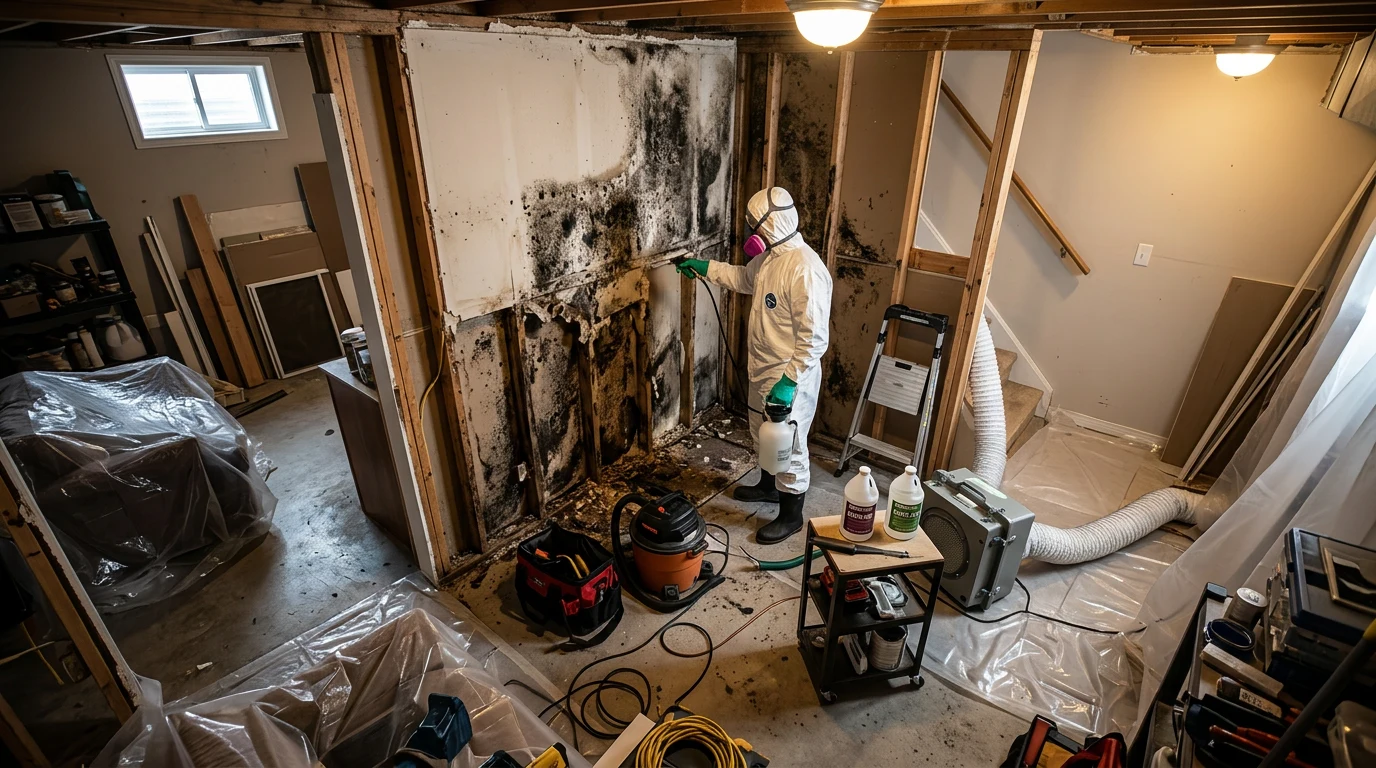
Yes, and this is the manufacturer-recommended approach. Apply RMR-86 first to remove stains, rinse thoroughly and allow 24 hours of drying, then apply RMR-141 to kill remaining mold and create a preventive antimicrobial barrier. Never mix the two products in the same container or apply them simultaneously.
Does RMR-141 remove black mold stains?
No. RMR-141 kills mold organisms but does not remove the dark staining left behind by dead mold colonies. For stain removal, use RMR-86 or another bleach-based mold remover spray before applying RMR-141 for antimicrobial protection.
Is RMR-141 better than Concrobium?
Both are EPA-registered antimicrobial products that kill mold and prevent regrowth, but they use different mechanisms. RMR-141 uses a quaternary ammonium compound while Concrobium uses inorganic salts (trisodium phosphate and sodium carbonate). RMR-141 provides broader antimicrobial coverage (140+ organisms including viruses) while Concrobium is better known for its physical crushing mechanism and fogger compatibility. Both are effective choices for mold prevention.
Where can I buy RMR-141?
RMR-141 RTU Disinfectant is available on Amazon, Home Depot, directly from rmrsolutions.com, and at select hardware stores. It is less widely stocked at retail locations than RMR-86, so online purchasing is often the most reliable option. The 32 oz spray bottle typically costs $10–$13.
Final Verdict
Buy RMR-86 if visible mold stains on hard surfaces are the primary concern and the application area has good ventilation.
Buy RMR-141 if killing mold and preventing regrowth matters more than cosmetic stain removal, or if the treatment area involves porous surfaces, limited ventilation, or sensitive occupants.
Buy both together if the goal is complete mold remediation — stain-free surfaces plus lasting antimicrobial protection. The two-product approach costs approximately $25–$30 and addresses both the cosmetic and biological aspects of mold problems. For an alternative antimicrobial option, see our full Concrobium vs RMR-86 comparison.
Read the full review: Concrobium Mold Control review · RMR-86 Mold Remover review
Frequently Asked Questions
What is the primary difference between RMR-86 and RMR-141?
RMR-86 is a powerful mold stain remover designed to quickly eliminate black mold stains on contact, often within seconds. RMR-141, on the other hand, is an antimicrobial cleaner and disinfectant that kills mold, mildew, and bacteria, preventing future growth.
Can I use RMR-86 and RMR-141 together, or do I need to choose one?
It is generally recommended to use RMR-86 first to remove visible mold stains, followed by RMR-141 to kill any remaining mold spores and disinfect the surface. This two-step process ensures both aesthetic improvement and long-term mold prevention.
Which product should I use if I only see black mold stains but no active growth?
If you only observe black mold stains and are confident there is no active, fuzzy growth, RMR-86 is the appropriate product to quickly and effectively remove these cosmetic blemishes. However, it’s often wise to follow up with RMR-141 to ensure any underlying spores are addressed.
When is RMR-141 the better choice over RMR-86?
RMR-141 is the superior choice when you need to kill mold, mildew, or bacteria, or to disinfect a surface to prevent future microbial growth. It’s essential for areas where active mold is present or where sanitization is critical, such as after water damage.

Is RMR-86 safe to use on all surfaces where mold stains appear?
While RMR-86 is highly effective on many surfaces, it contains bleach and can lighten or damage certain materials like fabrics, painted surfaces, or unfinished wood. Always perform a spot test in an inconspicuous area before full application to ensure compatibility.
Do I still need to address the moisture source if I use RMR-141 to kill the mold?
Absolutely, addressing the underlying moisture source is crucial for long-term mold prevention, even after using RMR-141. RMR-141 kills existing mold, but if the moisture problem persists, mold will inevitably return.
These statements have not been evaluated by the Food and Drug Administration. This information is not intended to diagnose, treat, cure, or prevent any disease. Content is for informational purposes only and is not medical advice; consult a qualified healthcare provider before starting any supplement. As an Amazon Associate we earn from qualifying purchases.