What Kills Mold Permanently?
Affiliate Disclosure: MoldActionPlan earns a small commission from purchases made through links on this page at no extra cost to you. We only recommend products we have verified through research and real user data.
The Short Answer
Nothing kills mold permanently unless you fix the moisture problem feeding it. The right approach uses an EPA-registered fungicide applied correctly, combined with moisture control and a preventive barrier. That combination comes as close to permanent as you can get. Bleach will not do this. Vinegar alone will not either. You need a product registered by the EPA as a fungicide, applied with proper technique, on a surface that stays dry afterward.
This guide covers exactly which products work, which do not, and the step-by-step system that kills mold and keeps it gone.
Why Bleach Fails at Permanent Mold Removal
The EPA explicitly advises against using bleach as a routine mold cleanup method. The EPA’s official position states that biocides like chlorine bleach are not recommended for routine mold remediation. This is not a safety warning, it is an effectiveness warning. Bleach simply does not solve the problem on the surfaces where mold actually grows.
Bleach (sodium hypochlorite) kills mold on hard, non-porous surfaces like glass or glazed tile. The problem is that most mold grows on porous surfaces: drywall, wood, grout, concrete. On these surfaces, bleach cannot penetrate below the surface level. It kills the visible mold on top, but it may not reach the roots (hyphae) growing inside the material, and treated spores can recover and regrow. Removing the porous material is the reliable fix.

Studies have shown that chlorine bleach loses efficacy rapidly on porous surfaces because the organic material neutralizes the chlorine before it can reach the mold roots. What looks like a fix may only be a surface treatment. The surface looks clean, but growth inside the material can survive and the stain can return.
For permanent mold control, you need a product that penetrates porous surfaces, kills the full spore and root structure, and leaves an antimicrobial residue that prevents regrowth. None of these properties describe household bleach.
The 3-Step System for Permanent Mold Control
Step 1: Kill the Mold with an EPA-Registered Fungicide
This is the only step that actually kills mold. Look for products registered with the EPA as fungicides or disinfectants for mold. The EPA registration number on the label means the product has been tested for efficacy against specific organisms, including mold and mildew. You can verify any EPA registration number on the EPA’s public database at esearch.epa.gov to confirm the product’s approved uses.
These products contain active ingredients formulated to penetrate porous surfaces and kill mold at the root, not just on the surface. Apply according to the label instructions. Allow the required contact time, typically 10 minutes. Let the surface dry completely before moving to the next step. Do not wipe or rinse before the contact time has elapsed, or you will reduce the effectiveness significantly.
Our top recommendation for this step is RMR-141 EPA Registered Mold and Mildew Killer (1 gallon). This product is an EPA-registered fungicide, mildewstat, and disinfectant that kills 141 different microorganisms, including all common household molds. It uses a positively charged formula that attracts to negatively charged bacteria and mold spores, penetrating deep into porous surfaces. It has a mild citrus scent rather than the overpowering bleach smell of competing products. User reviews on Amazon consistently note that it kills mold that bleach and other products left behind. The required contact time is 10 minutes on porous surfaces.

A budget-friendly alternative is Moldex 5010 Mold Killer Trigger Sprayer (32 oz). This product is also EPA-registered as a disinfectant, sanitizer, and cleaner designed specifically for mold remediation and flood damage restoration. It is non-hazardous and non-corrosive, with a floral scent that users find much more tolerable than bleach-based products. User reviews highlight its effectiveness on black mold and flood-damaged materials. It also carries EPA Safer Choice certification, meaning it is formulated with safer chemical ingredients.
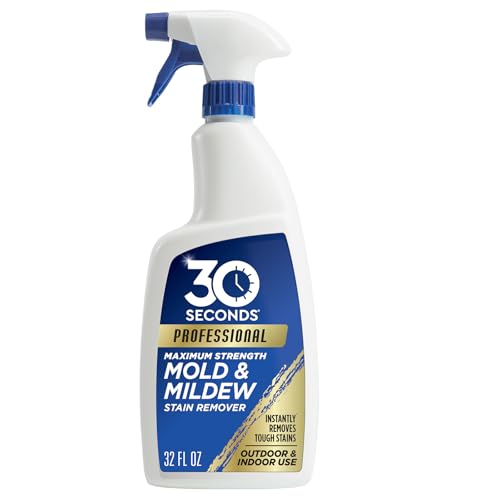
Another strong option is Concrobium Mold Control Spray (32 oz). Instead of bleach or harsh chemicals, Concrobium uses a sodium carbonate-based formula that crushes mold spores on the surface as it dries and leaves an invisible barrier meant to resist regrowth. It is not shown to reach growth deep inside drywall or wood, so remove badly affected porous material. It is EPA-registered, bleach-free, odorless, and VOC-free. Reviews consistently praise it for killing mold without any chemical smell and for preventing regrowth over time. It is safe for use on drywall, wood, tile, grout, concrete, fabric, and stone. The tradeoff is that it does not remove mold stains, so you may need a separate stain remover afterward if appearance matters.
Step 2: Remove Mold Stains (Optional but Recommended)
After you kill the mold, you may still see dark stains where the colony was. These are dead mold remnants and discoloration embedded in the surface material. Removing them is cosmetic rather than a health necessity, but most homeowners want the stains gone for a clean finished look.
The top choice here is RMR-86 Instant Mold and Mildew Stain Remover (2-pack of 32 oz). This is the best-selling mold stain remover on Amazon. It works in about 15 seconds with no scrubbing required. The active ingredient is sodium hypochlorite (bleach) combined with specialized surfactants that make it far more effective than household bleach. Important: RMR-86 is a stain remover, not a mold killer. You must kill the mold first with an EPA-registered fungicide (Step 1) before using this product. The fumes from RMR-86 are extremely strong. You need a respirator, chemical-resistant goggles, gloves, and a fan blowing air out the window.
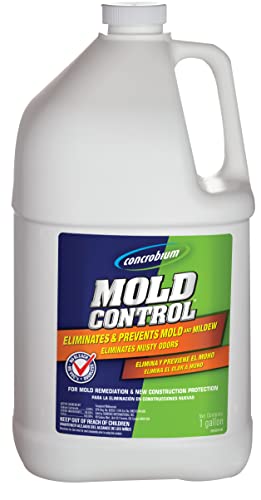
For smaller jobs, 30 SECONDS Pro Mold and Mildew Stain Remover (32 oz) is a strong alternative. It is described as 2x stronger than standard outdoor mold cleaners. It requires no scrubbing and works on both indoor and outdoor surfaces including tile, drywall, concrete, wood, and vinyl. It carries EPA Safer Choice certification. Like RMR-86, the odor is strong and requires ventilation.
Step 3: Prevent Regrowth with a Fungicidal Primer or Barrier
This is the step most homeowners skip, and it is the primary reason mold returns after treatment. If the underlying surface remains porous and moisture conditions persist, airborne mold spores will recolonize the area quickly. Sealing the surface with a mold-inhibiting primer creates a physical and chemical barrier that stops this cycle.
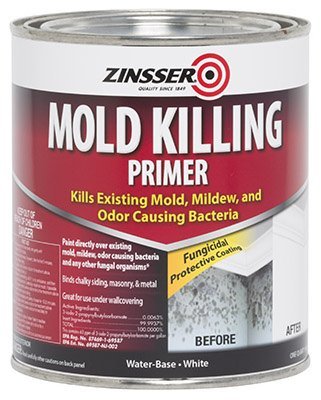
Zinsser Mold Killing Primer (quart) is the recommended product for this job. It is EPA-registered (Reg. No. 87469-1-69587) and contains an antimicrobial agent that kills existing mold and prevents regrowth on the paint film. You can paint it directly over mold without extensive pre-cleaning, though you should still kill active growth first using Step 1. It covers 160 square feet per quart, dries to the touch in one hour, and works on wood, drywall, plaster, concrete, tile, and metal. The primer can be painted over with any standard latex or oil-based paint, making it an invisible safeguard under your finished wall color.
Comparison Table: Best Mold-Killing Products
| Product | Type | EPA Registered | Best For |
|---|---|---|---|
| RMR-141 (1 gallon) | Fungicide / Disinfectant | Yes | Killing mold on all surfaces |
| Moldex 5010 (32 oz) | Fungicide / Disinfectant | Yes | Budget-friendly mold killing |
| Concrobium Mold Control (32 oz) | Mold eliminator + barrier | Yes | Odorless, bleach-free killing |
| Tilex Mold & Mildew Remover (2-pack) | Bleach disinfectant | No (not labeled fungicide) | Non-porous surfaces (tile, glass) |
| RMR-86 Stain Remover (2-pack) | Stain remover only | No | Removing stains after killing |
| 30 SECONDS Pro (32 oz) | Stain remover | No (Safer Choice) | Stain removal, indoor/outdoor |
| Zinsser Mold Killing Primer (qt) | Fungicidal primer | Yes (87469-1-69587) | Preventing regrowth on walls |
Prices are as of June 2026 and may vary. Check Amazon for current pricing.
When to Call a Professional
DIY mold treatment is appropriate when the affected area is small, specifically less than 10 square feet, or about a 3×3 foot patch. The mold should be clearly caused by a manageable moisture source such as a bathroom fan problem, a small roof leak that has been repaired, or condensation on a window. If you can identify the moisture source and fix it yourself, DIY treatment with the products listed above will work well.

You should call a professional mold remediator when any of these conditions apply:
- The affected area is larger than 10 square feet.
- You suspect mold inside walls, above ceiling tiles, or inside HVAC ducts where you cannot reach it.
- The mold returned after a previous cleanup attempt, indicating a deeper problem.
- Someone in the household has asthma, allergies, a weakened immune system, or chronic respiratory issues.
- The mold is the result of sewage backup or flood water classified as Category 2 or Category 3 water damage.
- You cannot identify or fix the moisture source yourself, or the problem involves a plumbing leak inside a wall.
A professional remediator will contain the affected area with negative air pressure, use HEPA filtration to capture airborne spores, remove contaminated building materials safely, treat the space with commercial-grade fungicides, and perform clearance testing through air sampling to confirm the mold is gone at a level safe for reoccupancy. This level of work cannot be replicated with store-bought sprays. Expect costs to range from $500 for a small contained job to several thousand dollars for whole-room remediation, depending on the extent of contamination and the amount of material that must be removed.
If you hire a professional, verify that they follow the ANSI/IICRC S520 standard for mold remediation, carry general liability and pollution liability insurance, and provide a written scope of work before starting. Avoid companies that offer a quick bleach-based treatment or do not perform moisture mapping and air testing.
FAQ
Does vinegar kill mold permanently?
White vinegar (acetic acid) can kill some mold species on hard, non-porous surfaces. Lab results are mixed, though: in a 2015 study, household vinegar stopped Penicillium but had no effect on Aspergillus fumigatus, and a 2020 study concluded acetic acid does not reliably disinfect at household-cleaning strength. However, it does not penetrate porous materials effectively, and it leaves no preventive residue behind. Vinegar is a reasonable temporary measure for a small patch of surface mold on tile or glass, but it is not a permanent solution. For lasting results, use an EPA-registered fungicide.
Can you ever permanently get rid of black mold?
You can permanently kill black mold (Stachybotrys chartarum) on treated surfaces, but mold spores are present in virtually all indoor and outdoor air. The key is making the environment inhospitable to regrowth. This means using an EPA-registered fungicide to kill the active colony, sealing the surface with a mold-resistant primer, and fixing the moisture problem. Keep indoor humidity below 50%, fix all leaks, and ensure proper ventilation. If the moisture returns, the mold will too. The mold itself can be killed permanently, but the prevention is an ongoing practice.
Is bleach or hydrogen peroxide better for killing mold?
Hydrogen peroxide (3% concentration) is milder than bleach and breaks down into water and oxygen, leaving no toxic residue. In pine wood tests, though, hydrogen peroxide and bleach both only held spores in check rather than killing them. Bleach works best on non-porous surfaces; on drywall and wood it may not reach growth inside the material. On porous materials, removing the affected material is the reliable fix.
Should I throw away clothes exposed to mold?
Not necessarily. Most clothing can be saved by washing with hot water and a detergent that contains an oxygen bleach, such as Color-Safe Bleach or OxiClean. Add one cup of white vinegar to the rinse cycle for extra antimicrobial action. For heavy mold contamination, soak the clothing in a solution of oxygen bleach and hot water for 8 hours before washing it normally. If mold stains remain after washing, the fabric may be permanently discolored, but the bacterial and fungal spores are generally killed by the heat and detergent combination. Discard heavily mold-damaged fabrics that cannot be fully cleaned.
How long does it take for an EPA-registered fungicide to kill mold?
Most EPA-registered mold killers require a contact time of 5 to 10 minutes to fully kill mold. This means the surface must remain visibly wet with the product for the full duration. RMR-141 specifies 10 minutes on porous surfaces. Moldex requires 5 to 10 minutes depending on surface. Concrobium kills on contact as it dries, but the residual barrier continues working after the surface is dry. Always follow the label directions and do not wipe or rinse before the required contact time has passed.
The Missing Piece: Moisture Control
Even the most powerful EPA-registered fungicide cannot keep mold away if moisture conditions remain favorable. Mold needs three things to grow: a food source (almost any organic building material), temperatures between 40 and 100 F, and moisture. You can only control one of these easily. Moisture is the lever you pull.
Keep indoor humidity below 50%, measured with a hygrometer. Fix plumbing leaks immediately. Ensure bathrooms have working exhaust fans that vent outside, not into the attic. Use a dehumidifier in basements and crawl spaces. Redirect downspouts and grade soil away from the foundation. These basic preventive measures cost far less than repeated mold remediation and address the root cause rather than the symptom.
Bottom Line
Killing mold permanently requires three things: an EPA-registered fungicide applied correctly, a stain removal step if needed, and a moisture-proof barrier to prevent regrowth. Skip any of these three steps, or skip fixing the underlying moisture problem, and the mold will always return.
Start with the full 3-step system using the products above. If the area is large, hidden inside walls, or recurring despite your best efforts, call a professional. Your health and your home are worth the investment.
These statements have not been evaluated by the Food and Drug Administration. This information is not intended to diagnose, treat, cure, or prevent any disease. Content is for informational purposes only and is not medical advice; consult a qualified healthcare provider before starting any supplement. As an Amazon Associate we earn from qualifying purchases.