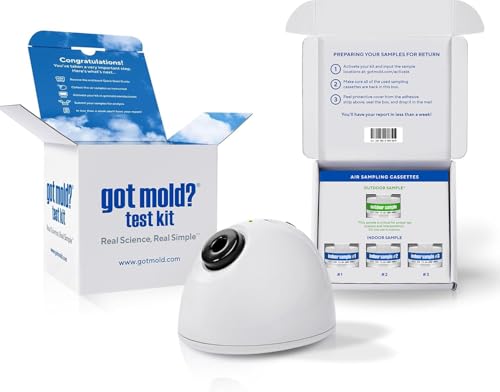
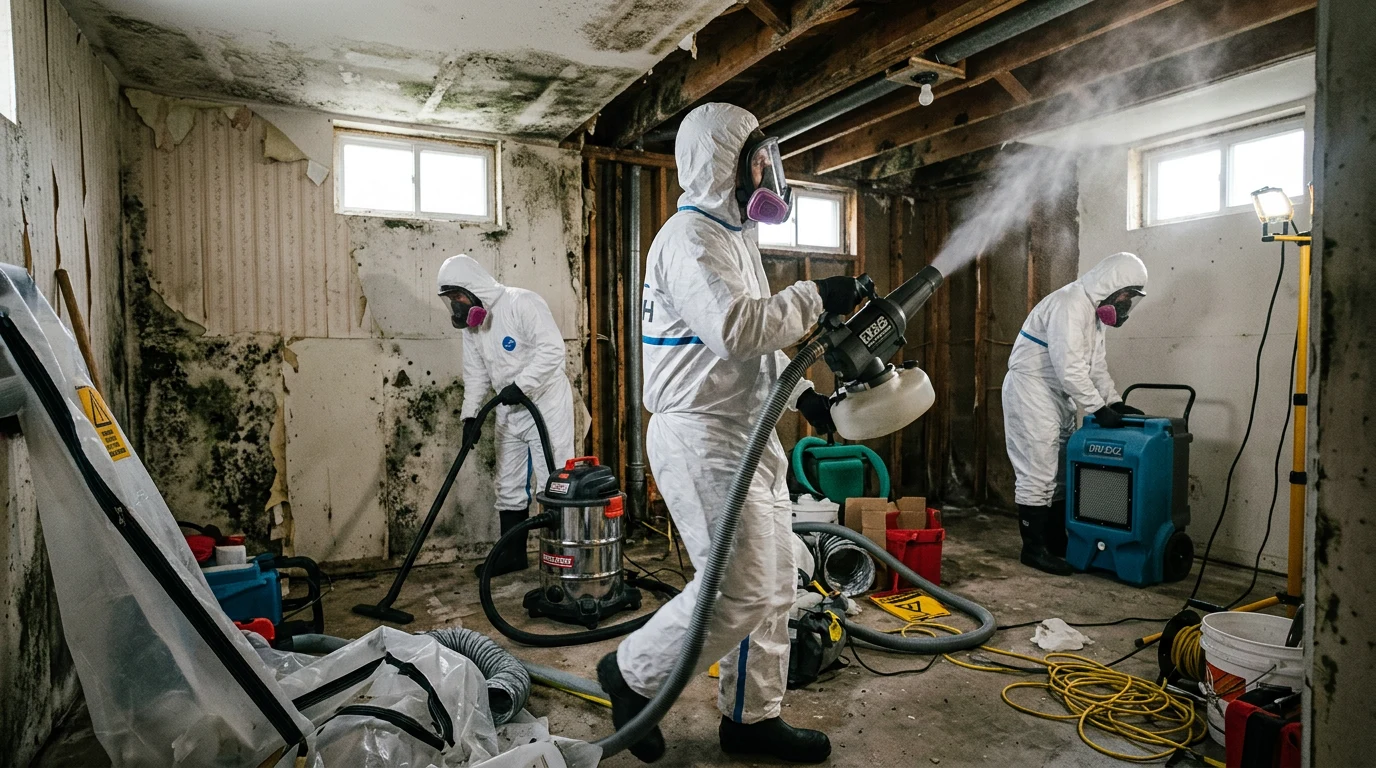
You get the quote — $4,500 for a bedroom with mold on one wall — and your first thought is: “That is insane. I could buy the cleaning supplies at Home Depot for $50.” You are not wrong about the cleaning supplies. But mold remediation is not a cleaning project. It is a controlled demolition, environmental containment, and air quality restoration project performed by certified technicians using equipment that costs more than most cars. Understanding what goes into the pricing explains why the numbers are what they are.
This article breaks down where your remediation dollars actually go — from the equipment in the truck to the insurance policy that protects you if something goes wrong.
The Equipment Nobody Sees
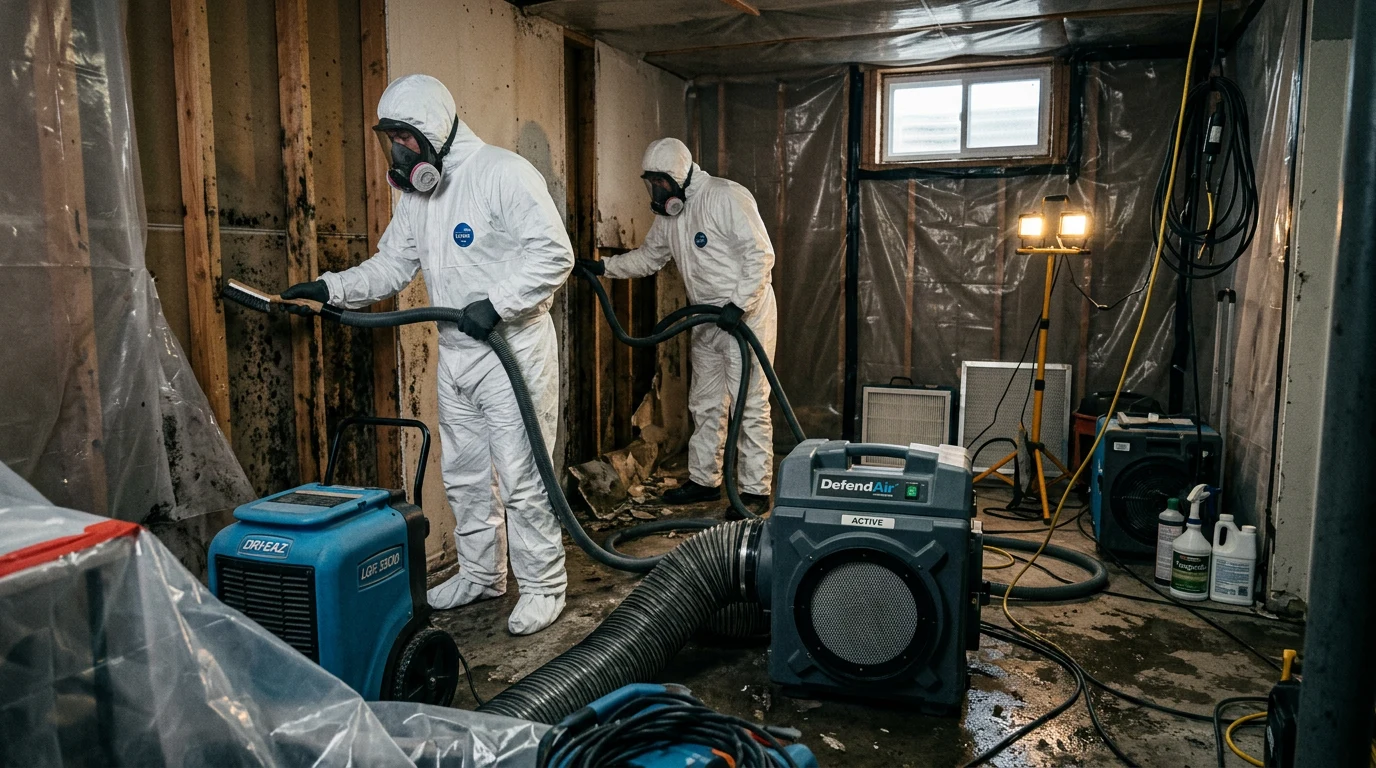
A legitimate mold remediation company arrives with a truck (or trailer) loaded with specialized equipment. Here is what that equipment actually costs:
Air Quality Equipment
- HEPA air scrubbers: $1,500-$3,500 per unit. A typical company owns 4-8 units. These machines filter air down to 0.3 microns, capturing mold spores during demolition. They run continuously for the duration of the project.
- Negative air machines: $2,000-$5,000 per unit. These create negative pressure inside the containment zone, ensuring contaminated air flows into the filtration system rather than into the rest of your home.
- HEPA vacuums (commercial grade): $800-$2,500 per unit. Not the $200 shop vac from the hardware store. These are certified HEPA units that capture particles rather than exhausting them back into the air.
- Air monitoring equipment: $2,000-$8,000 for particle counters and sampling pumps used to verify containment integrity during work.
Moisture Detection and Drying
- Commercial dehumidifiers: $1,500-$4,000 per unit. These pull 100-200+ pints per day, compared to the 30-50 pints of a residential unit. A company typically owns 6-12 units.
- High-velocity air movers: $200-$500 each. A company needs 10-30 units for a large project. These create the airflow that accelerates drying.
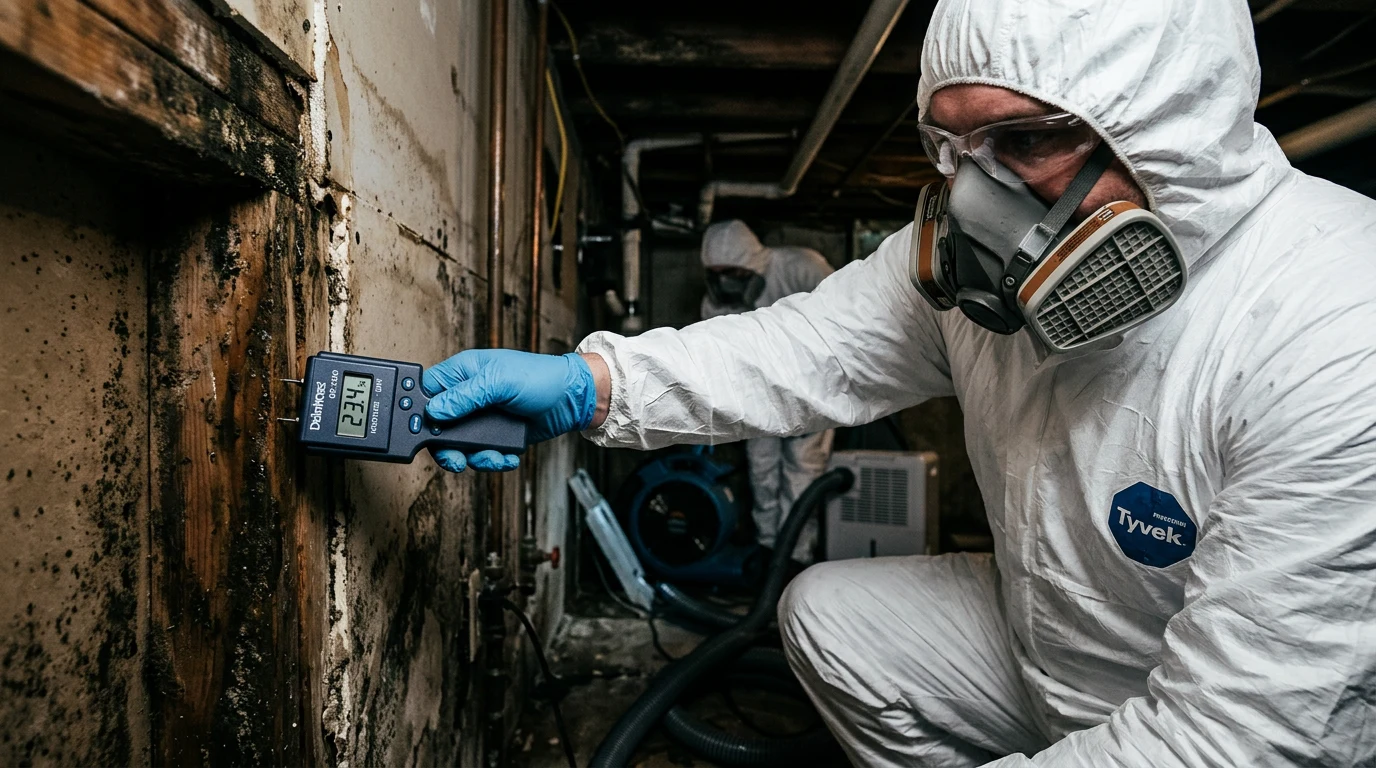
- Thermal imaging cameras: $2,000-$10,000. Used to find hidden moisture behind walls and under floors without destructive investigation.
- Moisture meters (pin and pinless): $300-$1,500 for professional-grade units. Used to document moisture levels before, during, and after remediation.
Application Equipment
- Fogging machines: $500-$2,000. Used to apply antimicrobial treatments in enclosed spaces.
- Sprayers and pumps: $200-$800. For applying treatments to surfaces.
- Media blasting equipment (for wood treatment): $3,000-$8,000. Soda blasting or dry ice blasting systems that remove mold from wood framing without damaging the structural material.
Total equipment investment for a well-equipped mold remediation company: $50,000-$150,000. Equipment has a useful life of 5-10 years and requires regular maintenance and HEPA filter replacements ($100-$400 per filter, replaced every 500-1,000 hours of use).
Insurance: The Cost of Protecting You
Mold remediation is a liability-intensive business. If a company’s containment fails and contaminates the rest of your home, or if a worker is injured, or if the remediation does not resolve the problem, someone is responsible. Insurance is what separates a legitimate company from a guy with a truck.
- General liability insurance: $2,000-$5,000 per year. Covers property damage and bodily injury claims.
- Pollution liability insurance: $3,000-$8,000 per year. Specific to environmental contractors. Covers claims arising from the release of contaminants during remediation. This is the expensive one and the one most homeowners do not think to verify.
- Workers’ compensation: $3,000-$10,000+ per year depending on crew size and state. Mold remediation is classified as a hazardous occupation, which means higher premiums than standard construction.
- Commercial auto insurance: $2,000-$5,000 per year for service vehicles and trailers.
- Professional liability (errors and omissions): $1,500-$4,000 per year. Covers claims that the work was performed incorrectly.
Total annual insurance costs: $11,500-$32,000. This is baked into every project’s pricing. When an unlicensed contractor offers to do the work for half the price, they are almost certainly carrying none of this coverage — which means you have zero protection if something goes wrong.
Certified Technicians Are Not Cheap
Mold remediation is not unskilled labor. Certified technicians hold credentials from organizations like the IICRC (Institute of Inspection, Cleaning and Restoration Certification) and undergo specialized training in microbial remediation, water damage restoration, and applied structural drying.
- IICRC WRT (Water Restoration Technician) certification: $500-$800 for the course, plus exam fees. Required as a prerequisite for mold remediation work.
- IICRC AMRT (Applied Microbial Remediation Technician) certification: $600-$1,000 for the course. This is the primary mold remediation credential.
- Continuing education: Certifications require renewal every 3-5 years with continuing education credits costing $200-$500 per cycle.
- Wage rates: Certified remediation technicians earn $20-$35 per hour in most markets. Crew leads and project managers earn $30-$50 per hour. A two-person crew costs the company $50-$85 per hour in wages alone, before benefits, payroll taxes (approximately 15-20% on top of wages), and overhead.
A company with 4-6 technicians faces annual payroll of $200,000-$400,000 including benefits and taxes. Training and certification for the team adds $3,000-$8,000 per year.
Disposal: The Unglamorous Expense
Everything removed during remediation must be properly disposed of. Contaminated drywall, insulation, carpet, and other materials cannot simply go in your curbside trash.
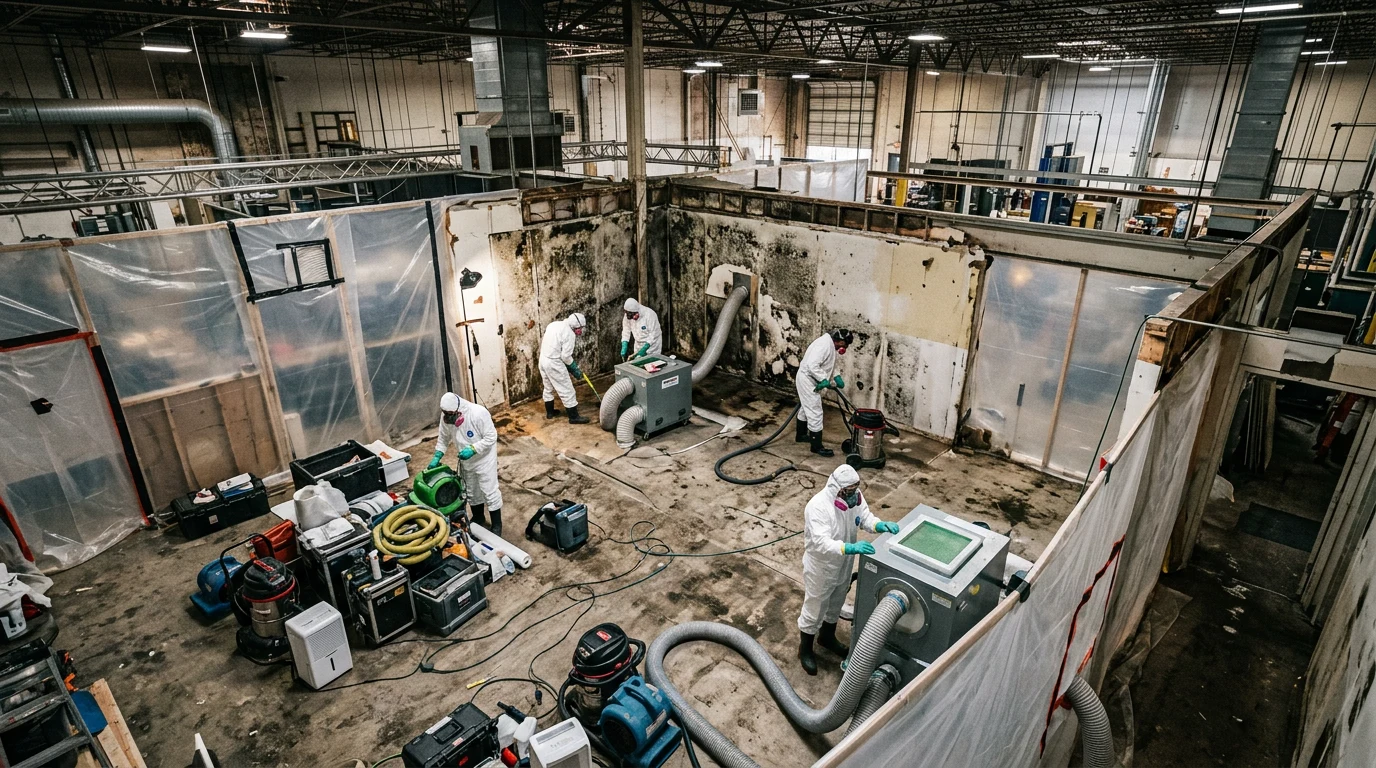
- Containment bags: Contaminated materials are double-bagged in 6-mil poly bags. Cost: $2-$5 per bag, with a typical project using 20-50 bags.
- Dumpster rental: $300-$600 for a 10-20 yard roll-off container. Larger projects may require multiple dumpsters.
- Landfill fees: $40-$100 per ton depending on location and material type.
- Transport: Fuel and vehicle wear for hauling contaminated materials. Disposal sites may be 15-30 miles from the job site.
- Regulated materials: If asbestos or lead is present (common in homes built before 1980), disposal becomes significantly more expensive and requires specialized handling. Asbestos disposal adds $1,000-$5,000+ depending on quantity.
Disposal typically represents 5-10% of the total project cost. It is not glamorous, but it is a real expense that companies cannot avoid.
Overhead: Running the Business
Beyond the direct costs of equipment, labor, and materials, remediation companies carry standard business overhead:
- Office/warehouse space: Equipment storage, administration, and customer service. $1,500-$5,000 per month depending on market.
- Vehicles: Service trucks or vans ($30,000-$60,000 each) plus fuel, maintenance, and commercial auto insurance. A typical company operates 2-5 vehicles.
- Marketing and advertising: Google Ads, website, directory listings. Mold remediation is a competitive keyword market with cost-per-click rates of $15-$50.
- Administrative staff: Office manager, scheduler, bookkeeper. $40,000-$60,000 per year per position.
- Software and technology: Job management, CRM, accounting, estimating software. $200-$1,000 per month.
- Licensing and permits: State contractor licenses, business permits, EPA certifications. $500-$3,000 per year depending on state requirements.
Combined overhead for a small remediation company (5-10 employees) typically runs $150,000-$300,000 per year. This overhead is distributed across all projects the company completes in a year.
The Math: What a $4,500 Job Actually Looks Like
Here is a realistic cost breakdown for a moderate bedroom remediation project quoted at $4,500:
- Labor (2 techs, 2 days): $1,280-$1,600 (including payroll burden)
- Equipment usage/depreciation: $400-$600
- Consumables (containment, bags, antimicrobials, PPE, HEPA filters): $250-$400
- Disposal (dumpster + landfill): $300-$500
- Insurance allocation: $150-$300
- Overhead allocation: $500-$800
- Total direct cost: $2,880-$4,200
- Profit margin (10-20%): $300-$700
The net profit on a $4,500 job is typically $300-$700 after all costs. Remediation companies operate on thinner margins than most homeowners assume. The apparent high price reflects the genuine cost of doing the work correctly with proper equipment, training, insurance, and disposal.
Red Flags: When Low Pricing Means Low Quality
If a company quotes significantly below market rate, they are cutting costs somewhere. Common shortcuts that lower the price but compromise the result:
- No containment: Skipping plastic sheeting and negative air pressure saves 2-3 hours of labor and $200-$400 in materials. It also allows spores to spread throughout your home during demolition.
- No HEPA filtration: Running cheap fans instead of HEPA air scrubbers saves $100-$200 per day in equipment costs. It also means mold spores are circulating freely in your air.
- Uncertified workers: Hiring day laborers instead of IICRC-certified technicians saves $10-$15 per hour per worker. It also means the people removing your mold may not know how to do it properly.
- No insurance: Dropping pollution liability and workers comp saves $8,000-$15,000 per year. It also means you have zero recourse if something goes wrong.
- Surface treatment instead of removal: Spraying bleach or encapsulant over moldy drywall instead of removing it saves hours of labor. It also means the mold is still there, growing behind the coating. Our guide on vinegar vs bleach for mold explains why surface treatments are insufficient for porous materials.
- No post-remediation testing: Skipping clearance testing saves $300-$600. It also means there is no verification that the job was done correctly.
The IICRC S520 Standard for Professional Mold Remediation defines the minimum standards for proper remediation work. Any company operating below these standards is not performing legitimate remediation regardless of what they call it.
How to Get Fair Pricing
You do not have to accept the first quote you receive. Here is how to ensure fair pricing:
- Get three quotes minimum. Compare scope, not just price. The cheapest quote missing containment is not comparable to a higher quote that includes it.
- Verify credentials. Check IICRC certification, state licensing, and insurance coverage. Ask for a certificate of insurance — legitimate companies provide this readily.
- Ask for an itemized quote. A lump sum of “$6,000 for mold remediation” tells you nothing. An itemized quote listing containment, labor hours, equipment, materials, disposal, and testing lets you see where the money goes.
- Separate testing from remediation. The company that tests should not be the company that remediates. If a remediation company insists on using their own tester, get an independent second opinion.
- Check reviews and references. Online reviews specific to mold remediation work. Ask for references from past mold projects, not just general construction or cleaning work.
- Understand the scope. Make sure you know whether the quote includes only remediation or also reconstruction. Many companies remediate only — you hire a separate contractor to rebuild.
For a complete understanding of what the remediation process should involve, review our step-by-step guide to the mold remediation process. For specific cost ranges by room type, see our mold removal cost guide.
Frequently Asked Questions
Why is mold remediation more expensive than water damage restoration?
Water damage restoration focuses on drying — extracting water and running dehumidifiers. Mold remediation involves demolition, containment, air filtration, surface treatment, and disposal of contaminated materials. It requires more specialized equipment (HEPA air scrubbers, negative air machines), additional certifications (AMRT on top of WRT), higher insurance costs (pollution liability), and more labor hours. The containment setup alone adds 2-4 hours of labor that water restoration does not require.
Can I save money by doing demolition myself before the remediation company arrives?
This usually makes the problem worse and more expensive. Removing mold-contaminated materials without proper containment and HEPA filtration releases millions of spores into the air, potentially contaminating areas that were previously clean. The remediation company then has a larger scope to address. If you want to reduce costs, discuss a partial DIY approach with the remediation company — some will let you handle reconstruction (rebuilding drywall, painting) after they complete and clear the remediation.
Do mold remediation companies make large profit margins?
Net profit margins in mold remediation typically range from 8-15% after all costs. A $5,000 project might yield $400-$750 in net profit. The high gross revenue per project is misleading because direct costs (labor, equipment, materials, disposal) consume 60-70% and overhead consumes another 15-25%. Companies that appear to charge high prices are often operating on margins comparable to or thinner than other skilled trades.
Should I choose the company with the lowest quote?
Not necessarily. If one company quotes $2,500 and two others quote $4,000-$5,000 for the same scope, the low bidder is likely cutting corners on containment, equipment, insurance, or disposal. Request itemized quotes and compare line by line. The best value is usually the mid-range quote from a company with verified certifications, insurance, and positive reviews specific to mold work.
Are there financing options for mold remediation?
Some remediation companies offer payment plans or partner with financing companies. Home equity lines of credit (HELOCs) and personal loans are common financing methods. If the mold resulted from a covered water damage event, your homeowner’s insurance may cover part or all of the remediation cost, though many policies cap mold coverage at $5,000-$10,000. Always file the insurance claim before committing to out-of-pocket payment.
Why is mold remediation so expensive compared to regular cleaning services?
Mold remediation requires specialized knowledge, equipment, and safety protocols that go beyond typical cleaning. Technicians must identify the mold source, contain the affected area, and use specific methods to remove mold spores and prevent recurrence, all of which contribute to higher costs. This expertise ensures the mold is thoroughly eradicated and doesn’t pose further health risks or property damage.
What factors contribute to the high cost of mold remediation?
Several factors drive up the cost, including the extent of the mold growth, the type of mold, the materials affected, and the need for structural repairs. Additionally, specialized equipment like HEPA vacuums, air scrubbers, and personal protective equipment (PPE) are essential for safe and effective remediation, adding to the overall expense. The labor involved in meticulous containment, removal, and post-remediation verification also plays a significant role.
Are the costs associated with mold testing and assessment included in the remediation price?
Often, initial mold testing and detailed assessments are separate services, though some companies may bundle them or offer a credit if they perform the remediation. These assessments are crucial for accurately determining the scope of the problem and developing an effective remediation plan, which directly impacts the final cost. Thorough testing ensures that the remediation targets all affected areas and prevents hidden mold issues from resurfacing.

Why is containment so important and how does it impact the overall cost?
Containment is critical to prevent mold spores from spreading to unaffected areas during remediation, which can significantly increase the scope and cost of the project if not properly managed. This involves setting up physical barriers, negative air pressure systems, and decontamination zones, all requiring specialized equipment and labor. Proper containment ensures the mold is isolated and eradicated efficiently, protecting the rest of your property.
Does the type of mold affect the remediation cost?
While all mold should be treated seriously, the type of mold can influence the complexity and cost of remediation, especially if it’s a more aggressive or toxic variety. Certain molds may require more stringent safety measures and disposal protocols, which can increase labor and material costs. However, the primary cost driver is usually the extent of the contamination and the materials affected, rather than just the specific mold species.
Why is it important to hire a professional mold remediation company despite the high cost?
Hiring a professional mold remediation company, despite the cost, is crucial for ensuring the mold is completely and safely removed, preventing health issues and further property damage. Professionals have the expertise, specialized equipment, and adherence to industry standards to properly identify, contain, and eliminate mold, which DIY attempts often fail to achieve. This investment protects your health and the long-term integrity of your property.
These statements have not been evaluated by the Food and Drug Administration. This information is not intended to diagnose, treat, cure, or prevent any disease. Content is for informational purposes only and is not medical advice; consult a qualified healthcare provider before starting any supplement. As an Amazon Associate we earn from qualifying purchases.