Mold on Windowsills: Causes, Cleanup, and Prevention
Disclosure: We may earn a small commission if you purchase through our affiliate links (marked with *) at no extra cost to you. We only recommend products we have verified and trust for safe mold removal.
Is Mold on Windowsills Dangerous? Can You Handle It Yourself?
Finding black or green mold creeping along your windowsill is unsettling but common. The good news is that surface mold on windowsills is usually safe to clean yourself if you take the right precautions. The types of mold that grow on windows tend to be common household varieties such as Cladosporium, Penicillium, and Alternaria that thrive on condensation and organic dust.
That said, mold should never be ignored. Even non-toxic species can trigger allergic reactions, asthma attacks, and respiratory irritation over time. The CDC warns that prolonged exposure can cause sneezing, runny nose, red eyes, and skin rash. Anyone with a compromised immune system, chronic lung disease, or mold allergies should avoid direct exposure and consider hiring a professional.
For everyone else, this is a DIY job. You just need the right products, proper PPE, and a methodical approach. The fix is straightforward, but skipping steps or using the wrong cleaner can make things worse. The EPA recommends tackling small mold problems (under 10 square feet) yourself using commercially available products and standard safety gear.
Why Mold Grows on Windowsills
Windowsills are one of the most mold-prone surfaces in a home for a simple reason: they get cold while the room stays warm. When warm, humid indoor air hits the cold glass and frame, it condenses into water. That moisture collects on the sill, and given 24 to 48 hours undisturbed, mold spores that are always floating in household air will settle and germinate.
Winter is the peak season for windowsill mold. Indoor humidity from cooking, showering, and even breathing rises as homes are sealed tight against the cold. The temperature differential between a single-pane window and heated indoor air can be 40 degrees or more, creating nearly constant condensation. Even modern double-pane windows experience condensation on the sash and sill during cold snaps.

Common moisture sources that feed windowsill mold:
- Condensation from temperature differential (cold window plus warm room air)
- Leaking window seals or weatherstripping that let rainwater in
- Humid bathroom or kitchen air migrating to nearby windows
- Drip from AC units mounted in the window frame
- Poor insulation that keeps the sill colder than the room air
- Overwatering houseplants sitting on the sill
The fix is always a two-part problem: clean the existing growth, then stop the moisture source so it does not return. Cleaning without fixing the moisture source guarantees a repeat performance within weeks.
What You Need for the Job
Tackling windowsill mold requires the right PPE and the right product. Below is the full kit with the products we recommend and why.
Personal Protective Equipment (PPE)
- Gloves: Heavy-duty rubber or nitrile gloves. Standard dish gloves work but replace them after use because spores can cling to the surface.
- Safety glasses or goggles: Protect eyes from splashing cleaner and loose debris. Regular prescription glasses do not seal well enough.
- Respirator: An N95 mask is the minimum for small jobs. For any cleaner with strong fumes (like RMR-86) or larger areas, use a half-face respirator with P100 cartridges. A basic dust mask will not protect against chemical vapors.
Our PPE picks:
- 3M Half Facepiece Reusable Respirator 6100 (Medium)* at $16.39. NIOSH-approved and comfortable for extended wear. It does not include filters, so pair it with P100 cartridges below.
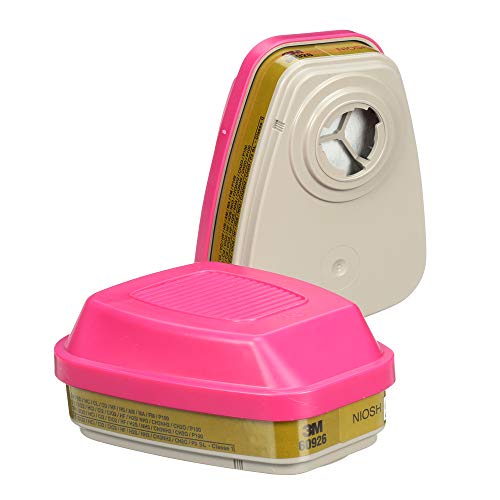
- 3M P100 Respirator Cartridge/Filter 60926 (1 pair)* at $30.99. Protects against organic vapors and particulates. Required for any chemical mold cleaner.
Mold Cleaning Products
Not all mold cleaners are the same. Some kill mold but leave stains. Others remove stains but do not kill spores. The right choice depends on whether your windowsill needs killing, stain removal, or both. We tested and verified each product below against real Amazon data.
| Product | Best For | Active Ingredient | EPA Reg. No. | Price | Key Feature |
|---|---|---|---|---|---|
| Concrobium Mold Control 32 oz* | Killing mold + prevention | Sodium carbonate, trisodium phosphate | 82552-1 | $13.48 | Dries to an invisible antimicrobial barrier that prevents regrowth. Bleach-free, odorless, VOC-free. |
| RMR-86 Instant Mold & Mildew Stain Remover (2-pack)* | Removing mold stains instantly | Sodium hypochlorite (bleach-based) | N/A | $25.99 | Works in 15 seconds with no scrubbing. Very strong fumes. Full PPE mandatory. |
| Benefect Botanical Decon 30 (14 oz)* | Botanical / no-chemical option | Thyme oil (0.05%), oregano oil | N/A | $9.59 | USDA BioPreferred 100% biobased. Kills 99.99% of germs in 30 seconds. Food-contact safe, no rinse needed. |
Which one should you choose?
- Concrobium is the best all-around choice for most windowsill mold: it kills the mold, dries clear, has no smell, and leaves a barrier that resists regrowth for months. The 32 oz spray bottle at $13.48* covers a typical bedroom window. For multiple windows or periodic treatment, the 1 gallon refill at $39.98* is more economical and covers 800 to 1,600 square feet.
- RMR-86 is not a mold killer. It is a stain remover. Use it after killing the mold if dark stains remain on the sill. It works instantly with 66,000+ ratings at 4.4 stars, but the most common complaint is the overpowering odor. You must use full PPE and open windows when applying it. The sodium hypochlorite formula can bleach fabrics and damage paint if left on too long.
- Benefect Decon 30 is the safer botanical option. Made from thyme oil, it kills mold in 30 seconds with no harsh chemicals. It is ideal if you have pets, children, or chemical sensitivities. The 14 oz spray at $9.59 handles multiple windows and works on food-contact surfaces with no rinsing required.
Tools and Supplies
- Spray bottle (if your cleaner does not come with one)
- Soft scrub brush or old toothbrush for textured sills
- Microfiber cloths for drying
- Drop cloth or old towel to protect the floor from drips
- HEPA vacuum with brush attachment (optional but recommended to capture loose spores before cleaning)
How to Remove Mold from Windowsills: Step by Step
Follow these steps in order. Do not skip the dry vacuum step. Wet-wiping live spores without vacuuming first spreads them across the surface and can make the problem worse.
Step 1: Suit Up
Put on your gloves, goggles, and respirator before touching anything. Even with a mild cleaner like Concrobium, you do not want to inhale or touch mold spores. Open the window an inch if weather permits to improve airflow.
Step 2: Dry Vacuum Loose Spores
Use a HEPA vacuum with a brush attachment to gently vacuum the moldy area. This removes loose spores so you are not spreading them when you spray. If you do not have a HEPA vacuum, skip this step and avoid aggressive scrubbing that could aerosolize the spores.
Step 3: Apply Mold Cleaner
Spray your chosen mold cleaner generously onto the affected area. Cover the entire sill including the corners and the seam where the sill meets the window frame. For Concrobium and Benefect, let the product sit for 10 to 15 minutes so the active ingredients have time to penetrate and kill the mold. For RMR-86 (stain removal only), wait 15 seconds to 5 minutes and watch the stain dissolve.

Step 4: Scrub Gently
Use a soft brush or toothbrush to agitate stubborn spots. Avoid hard scrubbing on painted sills. You can strip the paint, exposing bare wood that will absorb more moisture and provide a new home for mold. For textured or wooden sills, work the brush into the grain. For vinyl sills, a soft sponge is enough.
Step 5: Wipe and Dry
Wipe away the residue with a clean microfiber cloth. For Concrobium specifically, let it dry on its own. It forms an invisible antimicrobial barrier as it dries that prevents regrowth for weeks to months. Do not rinse it off. For other products, follow the label directions. Make sure the sill is completely dry before closing blinds or curtains over it.
Step 6: Address Stains (Optional)
If the mold is dead but dark stains remain on the sill, apply RMR-86. Spray it on, let it sit 15 seconds to 5 minutes, then wipe. Rinse thoroughly afterward because the bleach-based formula can damage paint if left too long. Repeat if needed. Again, wear full PPE and keep the room ventilated.
When the Window Sill Must Be Replaced vs. Cleaned
Cleaning works when the mold is surface-level and the sill is structurally sound. But some situations call for replacement. Here is how to tell.
| Situation | Clean | Replace |
|---|---|---|
| Surface mold on painted wood or vinyl | Yes | No |
| Mold returns within weeks despite cleaning and drying | Reassess source first | Consider if sill is rotting |
| Wood sill is soft, crumbly, or rotted | No | Yes. Rot means the mold has colonized the interior. |
| Mold on porous surfaces (unsealed wood, drywall returns) | Try first | Often needed if mold penetrates |
| Mold on inside of double-pane glass (between panes) | No | Seal failure. Window unit needs replacement. |
| Musty smell persists after thorough cleaning | No | Likely hidden mold inside the sill or wall cavity |
To test if the wood is rotted, press a screwdriver tip into the sill. If it sinks in easily or the wood flakes away, the sill needs to be cut out and replaced. Surface cleaning will not fix structural decay. You can buy a replacement sill piece at a home center and paint it to match. If the rot extends behind the window frame, call a contractor.

Preventing Mold from Coming Back
Cleaning the mold is step one. Keeping it gone is step two, and it starts with managing moisture. Here is what works based on real-world conditions.
Reduce Humidity
Indoor humidity should stay between 30 and 50 percent. A simple hygrometer costs under $10 and tells you where you stand. If your home routinely hits 60 percent or higher, especially in winter, a dehumidifier is the most effective long-term fix. Basements and bathrooms tend to be the worst offenders, and their humidity migrates throughout the house.
Wipe Condensation Daily
During cold months, moisture collects on windows every morning. Wipe it dry with a microfiber cloth before it pools on the sill. This single habit prevents most windowsill mold. Make it part of your morning routine along with making the bed. It takes 30 seconds per window.
Improve Air Circulation
Keep curtains and blinds open during the day so warm air reaches the window surface. Ceiling fans and oscillating fans help too. Moving air prevents moisture from settling and speeds evaporation of any condensation that forms. Even leaving curtains cracked an inch makes a difference.
Check Your Window Seals
Inspect weatherstripping once per season. If you feel a draft or see daylight around the frame, replace the seal. A properly sealed window is less prone to condensation and less likely to leak rainwater onto the sill. Self-adhesive foam weatherstripping is cheap and easy to install. For older windows, rope caulk or shrink-film window kits can reduce drafts significantly during winter.
Keep the Sill Clear
Do not stack items on windowsills. Plant pots, books, decorations, and stacked mail trap moisture against the sill and block airflow. If you must have plants on the sill, use trays with drainage and wipe up spills immediately. Decorative items should be moved at least once a month to let the sill breathe.

Use a Protective Coating
After cleaning with Concrobium, the antimicrobial barrier it leaves behind gives you weeks to months of protection. You can also apply a thin coat of semi-gloss paint to bare wood sills. Painted surfaces are much harder for mold to colonize than unfinished wood. A coat of primer and two coats of semi-gloss latex paint are enough to seal the surface.
Consider a Moisture Meter
If you have recurring mold on the same window, measure the moisture content of the sill and surrounding wall with a pinless moisture meter like the Klein Tools ET140 at $49.97* (rated 4.5 stars, 6,246 ratings). A reading above 16 percent in wood indicates enough moisture to support mold. This tool helps you detect hidden leaks behind the sill before they become a bigger problem.
When to Call a Professional
Most windowsill mold is a DIY job, but you should call a professional mold remediation company in these situations:
- The affected area is larger than 10 square feet (roughly a 3 foot by 3 foot patch). The EPA recommends professionals for anything bigger.
- You suspect mold inside the wall cavity or behind the window frame. Hidden mold can be hard to find and even harder to remove without opening the wall.
- The mold returned multiple times despite proper cleaning and moisture control. This suggests a chronic moisture source you have not identified.
- Household members have persistent respiratory symptoms that improve when away from home. This is a strong indicator of indoor air quality issues.
- The moisture source is structural. Leaking roof, burst pipe, failed window flashing, or foundation cracks require a contractor to fix.
- You find visible mold on HVAC vents or ductwork nearby. This can distribute spores throughout the house.
If you hire a professional, ask for an IICRC-certified remediator (Institute of Inspection Cleaning and Restoration Certification) who follows ANSI/IICRC S520 standards. Avoid companies that recommend fogging or ozone treatment as a standalone solution. Those methods mask the problem rather than removing it. A proper remediation includes identifying and fixing the moisture source, physically removing mold growth, and HEPA vacuuming the area.
Frequently Asked Questions
Does bleach kill mold on windowsills?
Bleach kills mold on non-porous surfaces like tile or glass, but it is not recommended for wooden windowsills. Bleach is mostly water, over 90 percent, and the water soaks into porous wood, actually feeding future mold growth. Bleach also does not leave a protective barrier. Use a dedicated mold cleaner like Concrobium instead, which is EPA-registered to kill mold without the downsides of bleach.

Does vinegar kill mold on windowsills?
White vinegar kills about 80 percent of mold species on hard surfaces. It can be effective for very small patches, but it has no residual protection and does not penetrate porous surfaces well. For windowsill mold, a commercial EPA-registered product is more reliable. Vinegar is a reasonable stopgap if you have nothing else on hand, but it should not be your primary treatment for recurring mold.
How often should I check windowsills for mold?
Inspect your windowsills every time you clean the windows, and at least once per month during heating season when condensation is worst. A quick visual check takes 10 seconds. If you see even a speck of black or green growth, clean it immediately. Mold spreads fast once it takes hold, and early treatment is easier than battling a full infestation.
What is that pink or orange slime on my windowsill?
Pink or orange residue on windowsills is usually Serratia marcescens, a bacterium that thrives in soap scum and moisture. It is not mold but can still trigger allergies. Clean it the same way: spray with Concrobium or Benefect Decon 30, let it sit, and wipe. Preventing it requires the same moisture control measures as mold prevention, so the same routine works for both.
Can mold inside a double-pane window be cleaned?
No. If you see mold or fogging between the panes of a double-pane window, the seal has failed. This means moisture has entered the air gap between the layers of glass. You cannot clean inside that space. The window unit must be replaced or the glass can sometimes be replaced while keeping the frame. This is a good candidate for professional help.
Frequently Asked Questions
Does bleach kill mold on windowsills?
Bleach kills mold on non-porous surfaces like tile or glass, but it is not recommended for wooden windowsills. Bleach is mostly water, over 90 percent, and the water soaks into porous wood, actually feeding future mold growth. Use a dedicated mold cleaner like Concrobium instead.

Does vinegar kill mold on windowsills?
White vinegar kills about 80 percent of mold species on hard surfaces. It can be effective for very small patches, but it has no residual protection and does not penetrate porous surfaces well. A commercial EPA-registered product is more reliable for windowsill mold.
How often should I check windowsills for mold?
Inspect your windowsills every time you clean the windows, and at least once per month during heating season when condensation is worst. If you see even a speck of black or green growth, clean it immediately.
What is that pink or orange slime on my windowsill?
Pink or orange residue on windowsills is usually Serratia marcescens, a bacterium that thrives in soap scum and moisture. It is not mold but can still trigger allergies. Clean it with Concrobium or Benefect Decon 30 and control moisture to prevent it from returning.
Can mold inside a double-pane window be cleaned?
No. If you see mold or fogging between the panes of a double-pane window, the seal has failed. Moisture has entered the air gap between the glass layers and cannot be cleaned. The window unit must be replaced or the glass replaced while keeping the frame.
These statements have not been evaluated by the Food and Drug Administration. This information is not intended to diagnose, treat, cure, or prevent any disease. Content is for informational purposes only and is not medical advice; consult a qualified healthcare provider before starting any supplement. As an Amazon Associate we earn from qualifying purchases.