Mold in the Basement: A Homeowner’s Guide
Affiliate Disclosure: Some links on this page are affiliate links. If you buy a product through them, we may earn a small commission at no extra cost to you. We only recommend products we have verified through real data.
1. Is Basement Mold Dangerous? Can You Handle It Yourself?
Mold in your basement is not an automatic health emergency, but it is a problem that should not be ignored. The CDC and EPA classify most indoor mold as an allergen and irritant. For healthy adults, short-term exposure typically causes mild symptoms like sneezing, stuffy nose, or itchy eyes. For people with asthma, allergies, or a weakened immune system, the effects can be more serious.
The real risk depends on three things: how much mold there is, what kind it is, and how long you are exposed to it. The common black mold you see in basements (often Stachybotrys chartarum or Aspergillus) can produce allergens and, in some cases, mycotoxins. That sounds alarming, but the CDC states that the link between “toxic mold syndrome” and severe illness is not well established. The practical takeaway: treat basement mold with respect but not panic.
Can you DIY it? Yes, for patches under 10 square feet (roughly a 3ft x 3ft area). The EPA’s own remediation guidelines say homeowners can handle small, contained areas. If the mold covers a larger area, if it keeps coming back after you clean it, or if the material is heavily rotted, you need a professional. This article covers the small-to-medium DIY job safely and effectively.
2. Why Mold Grows in Basements
Mold needs three things to grow: a food source (wood, drywall paper, dust), a temperature between 60-80F, and moisture. Basements provide all three, but moisture is the variable you can control. The most common moisture sources in a basement are:
- High humidity (over 60% relative humidity) that condenses on cool concrete or pipes
- Leaky foundation walls or floor cracks
- Poorly sealed basement windows
- Dryer vents that exhaust indoors
- Plumbing leaks from water heaters, washing machines, or supply lines
- Inadequate gutters or grading that sends rainwater against the foundation
Mold spores are everywhere in the air. They are not the problem. Standing moisture is the problem. If you clean the mold without fixing the moisture, it will return within weeks.
3. What You Will Need: Products and PPE
Before you touch any mold, gather your gear. Using the right products and protecting yourself properly are both essential.
Personal Protective Equipment (PPE)
- N95 respirator: Standard dust masks do not seal well enough. Use a NIOSH-approved N95 like the 3M 8511 N95 Respirator (10-pack) at $24.99. It filters at least 95% of airborne particles including mold spores. The Cool Flow valve makes breathing easier during long sessions.
- Safety goggles: Mold spores can irritate your eyes. Use splash-resistant goggles, not glasses.
- Gloves: Nitrile or rubber gloves long enough to cover your wrists. Do not use latex (some people develop allergies with repeated exposure).
- Old clothes and shoes: You will throw these away or wash them separately afterward.
Cleaning Products (with Real Data)
Not all mold removers are the same. Some kill mold. Some only remove stains. Some do both. Here are the products we verified by scraping their Amazon product pages for active ingredients, EPA registration numbers, and real prices.
| Product | Best For | Active Ingredient | EPA Reg? | Price | Rating |
|---|---|---|---|---|---|
| Concrobium Mold Control (32 oz) | Daily cleaning and prevention, bleach-free areas | Sodium carbonate 1% | Yes (82552-3) | $13.48 | 4.1 stars (2,065) |
| RMR-141 EPA Registered (1 gal) | Killing mold on porous surfaces | Ammonium compounds | Yes (61178-2) | $32.99 | 4.4 stars (18,194) |
| RMR-86 Pro (1 gal) | Removing mold stains after killing | Sodium hypochlorite | No (stain remover only) | $34.99 | 4.6 stars (7,126) |
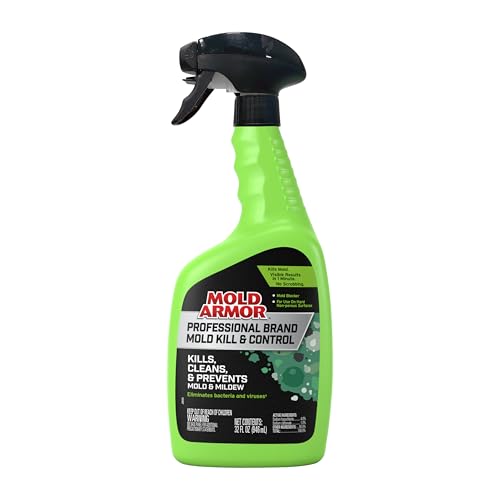
| Mold Armor Mold Kill & Control (32 oz) | Fast visible results on hard surfaces | Sodium hypochlorite 4% | Yes (4091-23) | $22.98 | 4.6 stars (827) |
Important distinction: RMR-86 Pro removes stains but does NOT kill mold. RMR-141 kills mold but does NOT remove stains. Use them as a pair: kill first with RMR-141 (10-minute contact time on porous surfaces), then remove stains with RMR-86 Pro. Concrobium is a gentler option that kills mold without bleach or fumes, which makes it better for finished basement walls or areas with poor ventilation. Mold Armor is a solid one-step product that kills and removes in one application, but its fumes are strong.
Tools
- Scrub brush: Medium-bristle for concrete, soft-bristle for finished surfaces.
- Spray bottle or garden pump sprayer: For applying products to large areas.
- Plastic sheeting and tape: To seal off the work area from the rest of the house.
- Shop vacuum with HEPA filter: To remove loose spores before cleaning. Never use a regular vacuum without a HEPA filter (it blows spores everywhere).
4. Step-by-Step Mold Removal
This process is for small patches of mold on concrete, drywall, wood, or block walls. If the mold covers more than 10 square feet, skip to section 7.
Step 1: Set up containment
Close the basement door. Cover any HVAC vents with plastic sheeting and tape. Open a window if you have one (most basements do not). Run a fan pointing outward to create negative air pressure that pulls spores outside. Wear your N95, goggles, and gloves before entering the work area.
Step 2: Vacuum loose spores
Use a HEPA-filter shop vacuum to gently remove loose mold and dust from the affected area. Do not scrub dry mold. You will release spores into the air. Vacuuming first captures them.
Step 3: Apply mold killer
Spray the moldy surface with an EPA-registered mold killer. For porous surfaces like wood or concrete, use RMR-141. It requires 10 minutes of contact time to kill mold. Apply it liberally and let it sit. Do not wipe it off early. For non-porous surfaces or lighter growth, Mold Armor works in 1-5 minutes with visible results.
Step 4: Scrub (if needed)
After the contact time, scrub the area gently with a brush. On concrete, you can use a stiffer brush. On painted drywall or finished wood, use a soft sponge. Rinse with clean water and wipe dry with a rag.
Step 5: Remove stains (optional)
If the mold left dark stains that bother you, apply RMR-86 Pro. Spray it on and watch the stain disappear within 15 seconds. No scrubbing needed. Rinse thoroughly. Warning: the fumes are very strong (sodium hypochlorite concentrate). Use full PPE and ventilate well.
Step 6: Apply preventer
For areas that stay damp, spray Concrobium after cleaning and let it dry. It leaves an invisible antimicrobial barrier that resists new mold growth. Reapply every 7 days in high-humidity areas.
Step 7: Dry the area completely
Run a dehumidifier and fans for at least 24 hours after cleaning. Mold cannot grow on dry surfaces. Check your work with a moisture meter. Wood should read below 16%. Concrete should read below 5% on the building materials scale.
5. When To Replace vs. Clean
Some materials can be cleaned. Some must be cut out and replaced. Here is how to decide.
| Material | Can Clean? | When To Replace |
|---|---|---|
| Concrete or block walls | Yes | Never (clean and seal) |
| Painted drywall | Maybe | If the paper is peeling or mold is behind the paint |
| Unpainted drywall | No | Always. The paper face is food for mold and cannot be fully cleaned. |
| Solid wood (beams, studs) | Yes | Only if the wood is structurally soft or rotted |
| Plywood or OSB | Maybe | If it feels soft or has deep mold penetration (beyond surface) |
| Carpet and pad | No | Always. Mold in carpet padding is impossible to fully remove. |
| Tile and grout | Yes | If grout is crumbling or tile is loose |
| Insulation | No | Always. Fiberglass and foam hold moisture and mold. |
The rule of thumb: if the material is porous and the mold has penetrated past the surface, replace it. If the material is non-porous (concrete, tile, sealed wood) or the mold is purely on the surface, cleaning works.
6. Preventing Mold From Coming Back
Cleaning mold without fixing the moisture problem guarantees you will do this again in 3-6 months. Here is the real prevention strategy.
Control Humidity
Keep your basement relative humidity below 50%. The EPA recommends 30-50%. Buy a humidity monitor (many are under $10) to track it. If your basement stays above 55% humidity, you need a dehumidifier. The hOmeLabs 50-Pint Dehumidifier ($309.99, 4.5 stars from 28,622 ratings) is the highest-rated large-unit option we found. It covers up to 7,500 sq ft, includes a built-in pump for continuous drainage, and is WiFi-enabled so you can monitor humidity from your phone. Set it to drain into a floor drain or run a hose to a sink so you do not have to empty the bucket every day.
Use a Moisture Meter
Before mold appears, use a General Tools MMD4E Digital Moisture Meter ($38.06, #1 best seller in Moisture Meters) to check basement walls, framing, and floors after rainy weather. It uses two pins that measure moisture content. If wood reads over 16% or concrete reads over 5%, you have a moisture problem to fix. The meter has an audible alert for high moisture, so you can scan a wall quickly without watching the display.
Fix the Source
- Extend downspouts at least 6 feet from the foundation.
- Regrade the soil around your house so it slopes away from the foundation.
- Seal basement wall cracks with hydraulic cement.
- Insulate cold water pipes to prevent condensation.
- Make sure your dryer vents outside, not into the basement.
- Run the bathroom exhaust fan during and after showers (if your basement has a bathroom).
Keep Air Moving
Stagnant air creates microclimates where moisture settles. A simple box fan running on low in the basement for a few hours a day can make a measurable difference. Better yet, install a small exhaust fan that vents outside and runs on a humidistat.
7. When To Call a Professional
Some jobs go beyond what a homeowner should handle. Call a licensed mold remediation contractor if:
- The mold covers more than 10 square feet (about a 3×3 area).
- You suspect mold inside HVAC ducts or behind walls.
- The basement flooded with sewage-contaminated water.
- You or a household member has a respiratory condition, asthma, or a weakened immune system.
- The mold returns after you have cleaned it and fixed the moisture source.
- You smell a musty odor but cannot find visible mold (it may be inside walls or under flooring).
A professional will use air scrubbers, negative air pressure containment, and commercial-grade fungicides. They will also test the air after remediation to confirm the mold spore count has returned to normal levels. Expect to pay $500-$3,000 depending on the size of the job. For the 10-square-foot DIY jobs this article covers, that money is better spent on a good dehumidifier and the right cleaning products.
8. Frequently Asked Questions
Can bleach kill basement mold?
Bleach kills mold on non-porous surfaces like tile or glass. On porous surfaces like wood, drywall, or concrete (which are the typical basement materials), bleach only bleaches the stain on the surface and leaves the mold roots alive deeper in the material. The water in bleach also adds moisture to porous materials, which can feed the mold. Use an EPA-registered fungicide like RMR-141 or Concrobium instead.
How do I know if my basement mold is toxic black mold?
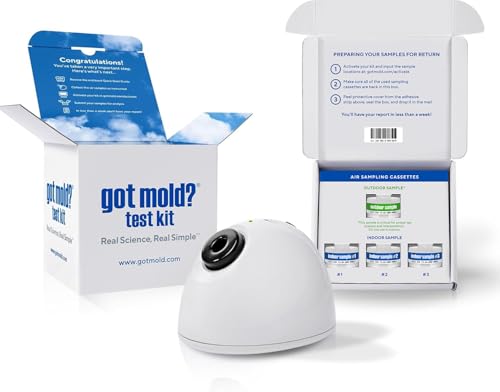
You cannot tell by looking. The term “toxic black mold” usually refers to Stachybotrys chartarum, which needs a specific type of wet cellulose material (like wet drywall or paper) to grow. But many molds are black and most are not Stachybotrys. Regardless of the species, the CDC recommends the same treatment: remove the mold and fix the moisture. Unless you have a lab test (which costs $40-$100), assume all mold deserves the same cautious approach.
Do I need to test the mold before cleaning it?
No. The EPA explicitly advises against testing in most cases. The agency states: “Regardless of what type of mold is present, you should remove it.” Testing does not change what you need to do. The only time testing is useful is for medical documentation or post-remediation verification by a professional.
Will a dehumidifier alone solve my basement mold problem?
A dehumidifier helps, but it is not a complete solution. If mold already exists, a dehumidifier will not kill it. You must clean the existing mold first. After cleaning, a dehumidifier will keep the humidity low enough to prevent regrowth. But if the moisture source is a leaky foundation or a plumbing problem, the dehumidifier is just treating the symptom. Fix the leak first, then use the dehumidifier to maintain conditions.
Can I paint over basement mold?
Painting over mold does not fix the problem. The mold will continue growing under the paint and will eventually push through, causing the paint to bubble and peel. Worse, mold-killing paint (like Kilz or Zinsser) only works if applied to a clean, dry surface. You must kill and remove the mold, fix the moisture source, and let the surface dry completely before painting. Only then will the paint stay on.


These statements have not been evaluated by the Food and Drug Administration. This information is not intended to diagnose, treat, cure, or prevent any disease. Content is for informational purposes only and is not medical advice; consult a qualified healthcare provider before starting any supplement. As an Amazon Associate we earn from qualifying purchases.