How to Kill Mold Spores in the Air
Disclosure: As an Amazon Associate, I earn from qualifying purchases. This page contains affiliate links. If you buy something through these links, I may earn a small commission at no extra cost to you.
TL;DR: The Fast Answer
You cannot kill airborne mold spores with a spray alone. Spores float. To remove them from the air, use a True HEPA air purifier running continuously. To kill the source of those spores, treat the mold colony with an EPA-registered mold killer like Concrobium or Vital Oxide. For large areas, fog the space with a registered fungicide using a fogger machine. Wear an N95 respirator, gloves, and eye protection during any remediation. Keep indoor humidity below 50% to prevent regrowth. No single product does both jobs. You need a three-part approach: capture what is floating in the air, kill the colony at the source, and dry out the environment so it cannot return. Skip any one of these and the problem will come back.
What You Need
PPE (Non-Negotiable)
- N95 respirator. A 3M 8511 N95 respirator ($24.99 for 10 on Amazon) filters at least 95% of airborne particles, including mold spores. Do not use a dust mask. It must be NIOSH-approved and fit snugly around your nose and chin.
- Gloves. Nitrile or rubber, extended cuff to protect your wrists.
- Safety goggles. Prevent spores and chemical splashes from reaching your eyes.
- Coveralls (optional). For large remediation jobs, disposable coveralls prevent spores from clinging to your clothing and spreading to other rooms.
Air Purifier (Captures Airborne Spores)
A True HEPA air purifier does not kill mold spores, but it captures them before they settle or get inhaled. Run it 24/7 in the affected room. The filter traps particles as small as 0.3 microns with 99.97% efficiency, which covers nearly every mold spore size. Some models include a washable pre-filter that catches larger particles first, extending the life of the main HEPA filter. Below are two top-rated models verified with current market data.
| Feature | Winix 5510 | Levoit Core 400S-P |
|---|---|---|
| Price | $129.99 (Prime: $123.49) | $189.99 |
| ASIN | B0DJG1731C | B08R794ZMX |
| Filter Type | True HEPA + Pre-Filter + Carbon + PlasmaWave | 3-in-1 Pre-Filter + HEPA + Activated Carbon |
| Particle Capture | 99.99% at 0.01 microns | 99.97% at 0.3 microns |
| Room Coverage | Up to 1,881 sq ft | Up to 1,733 sq ft |
| Noise Level | 23.5 dB (lowest speed) | 24 dB (sleep mode) |
| Smart Features | WiFi + App (Alexa/Google) | WiFi + VeSync App (Alexa/Google) |
| CADR (Smoke) | Not specified | 231 CFM (AHAM Verified) |
| Rating | 4.6 stars (31,463 ratings) | 4.7 stars (16,471 ratings) |
| Replacement Filter Cost | ~$50/yr | $49.99 |
Buy the Winix 5510 on Amazon (best value at $129.99 with True HEPA plus PlasmaWave technology that helps reduce airborne pollutants). Buy the Levoit Core 400S-P on Amazon (quieter, AHAM-verified, with slightly better ratings for allergy sufferers).
Dehumidifier (Dries the Environment)
Mold spores cannot grow without moisture. A dehumidifier pulls water from the air and keeps humidity below the mold-friendly threshold of 50%. In basements and crawl spaces, a dedicated dehumidifier is often the single most effective prevention tool. Look for one rated for the square footage of your space with a built-in humidistat and continuous drainage option.
EPA-Registered Mold Killer (Kills Mold at the Source)
| Product | Price | ASIN | EPA Reg. | Key Feature |
|---|---|---|---|---|
| Concrobium Mold Control 32 oz | $13.48 | B084CNTQX2 | EPA registered | Odorless, bleach-free, leaves antimicrobial barrier |
| Vital Oxide 1 Gallon | $30.00 | B002UER44E | #82972-1 | Hospital grade, kills 99.999% bacteria, safe on food surfaces |
| RMR-86 Stain Remover 2-Pack | $25.99 | B0858LDFBW | N/A (stain remover) | Scrub-free, visible stains disappear in 15 seconds |
Use Concrobium for general mold treatment on drywall, wood, tile, and concrete. It encapsulates and crushes the entire spore, then leaves an invisible barrier that resists future growth. It is odorless and VOC-free, making it suitable for occupied spaces. Use Vital Oxide when you need a hospital-grade disinfectant that is safe around pets and food surfaces. It uses chlorine dioxide to oxidize mold rather than bleach it, and it carries the lowest EPA toxicity rating. Use RMR-86 after killing the mold if you need to remove the dark stains (it is a stain remover, not a mold killer, and requires full PPE due to its strong formulation).
Fogger (For Large or Enclosed Areas)
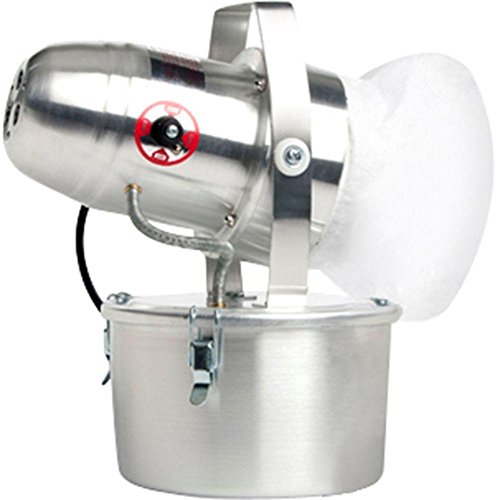
If mold has spread across a basement, attic, or crawl space, spot spraying every surface is impractical. A fogger atomizes an EPA-registered solution into a fine mist that reaches cracks, joists, and ductwork. The Concrobium Mold Control Fogger (4.4 stars, Amazon’s Choice) works with standard Concrobium solution to treat large enclosed spaces. Set the flow rate to match the room size and allow the mist to settle for several hours before re-entering.
Step-by-Step: How to Clear Airborne Mold Spores
Step 1: Find and Fix the Moisture Source
Mold needs moisture. Without fixing the leak, the humidity problem, or the condensation, you are treating symptoms, not the cause. Check for plumbing leaks, roof damage, poor ventilation in bathrooms, and high indoor humidity (keep it below 50%). Common moisture sources include dripping pipes behind walls, a leaking water heater, clogged gutters pushing water against the foundation, and unvented bathroom fans. Use a dehumidifier in damp basements and crawl spaces. If the moisture issue is structural, repair it before moving forward. If you cannot find the source yourself, call a plumber or a home inspector.
Step 2: Suit Up
Before you disturb any mold colony, put on your N95 respirator, gloves, and goggles. Disturbing mold releases a burst of spores into the air. The respirator is your last line of defense. For large jobs involving fogging or RMR-86, upgrade to a half-face or full-face respirator with P100 cartridges. Open windows for cross-ventilation if weather permits.
Step 3: Set Up the Air Purifier
Place the True HEPA air purifier in the affected room. Position it near the mold source but not directly against a wall; give it at least 6 inches of clearance on all sides for proper airflow. Run it on high for the first hour, then switch to auto or continuous low. Keep it running 24/7 during and after remediation. The Winix 5510 covers up to 1,881 sq ft in one hour, making it a strong choice for whole-room spore capture. If the affected area is behind a closed door, place the unit inside that room. For open floor plans, position the purifier centrally.
Step 4: Apply EPA-Registered Mold Killer
Spray Concrobium Mold Control directly onto visible mold growth. It encapsulates and crushes the spore structure and leaves an invisible barrier that prevents regrowth. No scrubbing or rinsing needed. For porous surfaces like drywall, saturate the area and let it dry completely. For HVAC or food-contact areas, use Vital Oxide instead. Allow the treated surface to air dry for at least 24 hours before painting or covering. If the mold covers an area larger than 10 square feet, consider hiring a professional remediation contractor.
Step 5: Fog Large Areas (If Needed)
For basements, crawl spaces, attics, or rooms with widespread mold, use the Concrobium Fogger filled with undiluted Concrobium solution. Set it to a fine mist, run it for 10 to 15 minutes per 1,000 sq ft, and let the fog settle for several hours. The mist reaches surfaces that a spray bottle cannot, including joist cavities, duct interiors, and wall crevices. Seal the room during fogging and do not re-enter until the mist has fully settled and the area has been ventilated for at least one hour.
Step 6: Remove Stains (Optional)
If black stains remain after the mold is dead, apply RMR-86. Spray it on, wait 15 seconds, and watch the stain dissolve. No scrubbing required. Warning: RMR-86 is potent. Wear full PPE (respirator, goggles, gloves, coveralls) and ventilate the room. Do not store the bottle with the spray nozzle on; the chemical eats through the plastic over time. Use the original screw cap for storage.
Step 7: Run the Air Purifier for 48 Hours After Treatment
Fogging and spraying disturb settled spores and may kick some back into the air. Keep the HEPA purifier running for at least two full days after treatment to catch these re-suspended particles. Replace the pre-filter afterward if it is washable; check the HEPA filter for heavy loading. If the filter appears dark or clogged, replace it rather than trying to clean it. Consider running the purifier on high for the first 24 hours after treatment, then stepping down to auto mode for the remainder.
Tips for Stubborn Cases
- Multiply your air purifiers. One unit per 1,000 sq ft is a good guideline. A single purifier cannot pull air from behind walls or through closed doors.
- Treat HVAC ducts. Mold in the ductwork spreads spores throughout the house every time the system runs. Use Vital Oxide in a fogger to treat ducts (it is safe for HVAC systems and food-contact surfaces). Alternatively, hire a professional NADCA-certified duct cleaner.
- Use a dehydration approach for crawl spaces. Run a dehumidifier continuously in the crawl space for several days before treating the mold. This dries the spores and makes them easier to remove.
- Repeat fogging every 72 hours. Some spores survive the first treatment. A second or third fogging session after the first coat dries can catch late-germinating spores that were protected inside porous material.
- Test with an air quality monitor. A PM2.5 monitor can show you whether your air purifier is actually dropping the particle count. Readings above 50 ug/m3 warrant continued treatment.
- Vacuum with a HEPA shop-vac. For visible mold debris on hard floors, a HEPA-rated shop vacuum captures loose spores without blowing them back into the air. Standard vacuum cleaners without HEPA filters will exhaust spores straight into the room.
What NOT to Do
- Do not use bleach. Bleach is mostly water. It sits on the surface and does not penetrate porous materials like drywall or wood. The water can even feed mold deeper into the wall. EPA-registered fungicides like Concrobium outperform bleach in every way.
- Do not use ozone generators in occupied spaces. Ozone is a lung irritant. It can damage respiratory tissue even at low concentrations. The EPA and American Lung Association advise against residential ozone air cleaners for mold control.
- Do not skip the respirator. Even a small mold colony releases millions of spores when disturbed. Chronic exposure can trigger asthma, allergies, and long-term respiratory issues.
- Do not paint over mold. Paint does not kill mold. The colony continues growing beneath the paint layer and will eventually push through. Kill the mold first, then paint.
- Do not rely on essential oils or vinegar. Tea tree oil, vinegar, and hydrogen peroxide have limited effectiveness against established mold colonies. They are not EPA-registered as fungicides. Use a product with a proven kill claim.
- Do not ignore the moisture problem. You can kill every spore in the room today, but if the leak or humidity issue remains, the mold will return within weeks.
Prevention: Keeping Mold Spores Out of the Air Long-Term
- Keep indoor humidity below 50%. A hygrometer costs $10. If your humidity stays above 55%, run a dehumidifier. Basements often need one year-round. In humid climates, a whole-house dehumidifier integrated with your HVAC system is a worthwhile investment.
- Ventilate bathrooms and kitchens. Run the exhaust fan during and for 20 minutes after showers or cooking. If you do not have a fan, open a window. Steam and cooking vapors raise humidity quickly, and mold can begin colonizing damp surfaces within 24 to 48 hours.
- Fix water leaks within 48 hours. That is roughly how long it takes for mold to begin colonizing a damp surface. Dry the area completely after any leak or flood using fans and a dehumidifier. Do not simply wipe the surface and assume it is dry.
- Run an air purifier in high-risk rooms. Basements, bathrooms without windows, and rooms near water sources benefit from continuous HEPA filtration. The Levoit Core 400S-P has a sleep mode at 24 dB and auto-adjusts to air quality, making it unobtrusive for long-term use.
- Check crawl spaces and attics twice a year. These are the most common hidden mold sources. Inspect after heavy rain and during seasonal humidity changes. Look for condensation on ductwork, standing water, and musty odors.
- Clean gutters and downspouts. Clogged gutters push water against the foundation, which seeps into basements and crawl spaces. Keep downspouts directed at least 6 feet away from the house.
- Use mold-resistant building materials. When renovating, choose mold-resistant drywall (paperless or fiberglass-faced), paint with antimicrobial additives, and seal concrete walls in basements before finishing.
FAQ
Can an air purifier kill mold spores in the air?
No air purifier kills mold spores in the air. A True HEPA purifier captures them in its filter media (99.97% of particles at 0.3 microns). This removes them from the breathing zone. Some models add UV-C light or ionizers that can damage spores on contact, but the primary mechanism is physical capture. For spore removal, HEPA filtration is reliable and proven. UV-C and plasma technologies are supplemental, not a replacement for a HEPA filter.
Do foggers actually kill airborne mold spores?
Foggers kill mold spores on surfaces, not while they are floating. The dense fog settles onto exposed surfaces and kills mold colonies there. As the colony dies, fewer new spores are released into the air. The reduction in airborne spore count is indirect but effective. To immediately reduce airborne spores during and after fogging, run a HEPA air purifier.
How long do mold spores stay airborne after being disturbed?
Mold spores are light and can stay suspended for 30 minutes to several hours after disturbance, depending on air movement and humidity. HVAC systems, fans, and even foot traffic can keep them circulating. A HEPA purifier running on high can clear the air in a single room within 30 to 60 minutes. Without filtration, spores settle onto surfaces and can become airborne again when disturbed by sweeping, vacuuming, or walking.
Is it safe to stay in a house with airborne mold spores?
Short-term exposure to low spore levels is generally not dangerous for healthy adults, but chronic exposure can cause respiratory symptoms, allergies, and asthma exacerbation. Infants, elderly individuals, and people with compromised immune systems or existing lung conditions are more vulnerable. If you see visible mold growth or smell a musty odor, take action. Run a HEPA purifier and address the source. For large infestations (over 10 sq ft), the EPA recommends hiring a professional mold remediation contractor.
How often should I replace the air purifier filter for mold spore removal?
Replace a HEPA filter every 6 to 12 months under normal use. During active mold remediation, check the pre-filter monthly. If it is heavily discolored or clogged, replace or wash it (if washable). The Winix 5510 has a washable pre-filter and an activated carbon filter rated for 3 months, with the True HEPA filter lasting up to 12 months. The Levoit Core 400S-P replacement filter costs $49.99 and typically lasts one year.
Frequently Asked Questions
Can an air purifier kill mold spores in the air?
No air purifier kills mold spores in the air. A True HEPA purifier captures them in its filter media, removing 99.97% of particles at 0.3 microns. This removes them from the breathing zone. Some models add UV-C light or ionizers that can damage spores on contact, but the primary mechanism is physical capture.
Do foggers actually kill airborne mold spores?
Foggers kill mold spores on surfaces, not while they are floating. The dense fog settles onto exposed surfaces and kills mold colonies there. As the colony dies, fewer new spores are released into the air. To immediately reduce airborne spores during fogging, run a HEPA air purifier.

How long do mold spores stay airborne after being disturbed?
Mold spores are light and can stay suspended for 30 minutes to several hours after disturbance, depending on air movement and humidity. A HEPA purifier running on high can clear the air in a single room within 30 to 60 minutes.

Is it safe to stay in a house with airborne mold spores?
Short-term exposure to low spore levels is generally not dangerous for healthy adults, but chronic exposure can cause respiratory symptoms, allergies, and asthma exacerbation. Infants, elderly individuals, and people with compromised immune systems are more vulnerable. For large infestations over 10 sq ft, the EPA recommends hiring a professional mold remediation contractor.
How often should I replace the air purifier filter for mold spore removal?
Replace a HEPA filter every 6 to 12 months under normal use. During active mold remediation, check the pre-filter monthly. The Winix 5510 has a washable pre-filter and carbon filter rated for 3 months, with the True HEPA filter lasting up to 12 months. The Levoit Core 400S-P replacement filter costs $49.99 and typically lasts one year.
These statements have not been evaluated by the Food and Drug Administration. This information is not intended to diagnose, treat, cure, or prevent any disease. Content is for informational purposes only and is not medical advice; consult a qualified healthcare provider before starting any supplement. As an Amazon Associate we earn from qualifying purchases.