The question
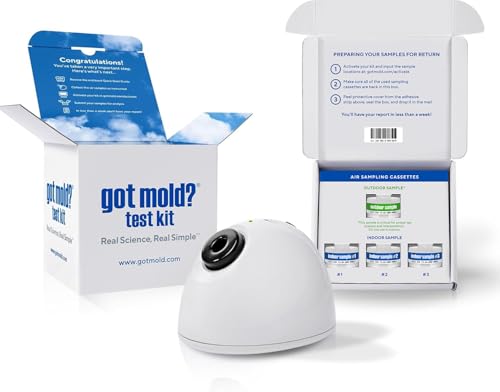
If you suspect mold at home, the internet offers a long menu of tests: air sampling, dust kits, urine tests for mold toxins, blood panels, and more. Some are sold directly to consumers. It is hard to know which of these actually help a doctor decide what is wrong with you.
The 2023 update of the German AWMF guideline on medical diagnostics for indoor mold exposure answers that question for physicians. AWMF is the umbrella group of German medical societies, and this guideline was written by many specialties together. It states what doctors should and should not do when a patient may be affected by mold at home.
This page explains, in plain language, what the guideline supports and what it rejects. It is a summary of the paper, not medical advice, and it covers medical diagnostics, not the full question of how to inspect or repair a building.
Who or what was studied
This is not an experiment on people. It is a consensus guideline, which is a set of recommendations written by expert panels after reviewing the literature. The 2023 update was prepared by a large interdisciplinary group of German, and some Austrian, medical societies and professional associations covering allergy, lung medicine, ear nose and throat medicine, occupational and environmental medicine, medical mycology, and pediatrics.
The guideline is aimed at doctors, such as allergists, lung specialists, and general practitioners, and it also serves patients and people affected by damp or mold in their homes. It follows the format of the AWMF's consensus-based guidelines, and each key statement was voted on. The paper reports that the guideline as a whole reached strong consensus.
The paper also says the authors could not find a patient organization to take part in drafting the update. A cystic fibrosis association agreed to review it only after the consensus conference and most of the writing were done.
What they found
The guideline's central message is practical. For mold in a home, find the cause of the dampness and fix it. Measuring mold in the air or counting species is rarely useful for medical purposes, especially when mold is already visible.
The guideline is just as clear about blood and other body tests. A mold allergy can be assessed with a careful history, skin testing, and specific IgE blood tests, but a positive IgE result alone does not mean mold is making you sick, and a negative one does not rule out allergy. Mold IgG antibody tests, whole blood tests, lymphocyte transformation tests, and a list of others are called out as not to be used for diagnosing mold-related illness.
It also takes a firm line on tests promoted online. Urine and blood tests for mold toxins, and measuring toxins or mold gases in your home's air or dust, are listed as having no place in medical diagnostics for mold exposure. Energy-medicine methods are rejected for lack of any scientific support.
- The 2023 German medical guideline says that, for medical purposes, indoor mold measurements are rarely useful and that counting or identifying mold species can usually be skipped when mold is visible; find and fix the cause instead.[1]
- The German guideline says testing indoor air and house dust for mycotoxins has no indication in medical diagnostics for mold exposure.[1]
- The guideline says measuring microbial volatile organic compounds (MVOC) in indoor air has no indication in medical diagnostics for mold exposure.[1]
- People with atopy often have IgE antibodies to molds without being ill, and the severity of an allergic reaction does not track the level of specific IgE, so an IgE result alone does not diagnose a mold problem.[1]
- Testing for mold-specific IgG antibodies to diagnose an immediate-type mold allergy has no diagnostic significance and must not be performed, according to the German guideline.[1]
- The German guideline says human biomonitoring of mycotoxins (for example urine mycotoxin tests) has no indication in medical diagnostics for indoor mold exposure and must not be performed.[1]
- The guideline says these tests must not be used for indoor mold exposure because evidence is insufficient: mold in blood, IgA antibodies to mold, lymphocyte subpopulations, cytokines, oxidative stress, the visual contrast sensitivity (VCS) test and tear film break-up time.[1]
- The German guideline says energy-medicine diagnostics such as electroacupuncture according to Voll, bioresonance, pendulum, Vega test and Kirlian photography must not be used for indoor mold exposure for lack of any medical or scientific evidence.[1]
How strong is this evidence
Be clear on what kind of evidence this is. The guideline authors say that no clinical studies exist on the exact topic of medical diagnostics for indoor mold exposure. The recommendations are therefore expert consensus based on a systematic literature search, not the output of trials that tested each test, and evidence levels were not assigned. That is typical for this field, but it means the guideline reflects the best judgment of experts rather than hard proof.
Some of its strength comes from how it was built. It was developed by many specialties at once, each recommendation was voted on, and the paper states that conflicts of interest were collected and reviewed and that no indication of conflicts influencing the content was found during the process. It also draws on large reviews and public health agencies, such as the US Centers for Disease Control and Prevention.
It is also a German guideline for German doctors. Health systems, building styles, and testing availability differ in other countries, so details may not carry over perfectly. And because it speaks about medical diagnosis, it should not be read as saying that checking your home for moisture problems is pointless.
What it means for you
If you can see or smell mold, the guideline's advice is to find the water source and fix it, then clean up properly. Paying for air or dust sampling to decide whether you have a problem is rarely helpful, and sampling will not tell a doctor whether you are sick. If a company offers to test your home for toxins, or your body for toxins, in order to diagnose mold illness, the guideline does not support those tests.
Be precise about what the guideline does not say. It does not say mold is harmless. It states that mold exposure can irritate mucous membranes and cause odor effects and mood disorders, and that the specific diseases tied to mold are allergies and mold infections. It also does not say your symptoms are imaginary. It says doctors should explain the state of knowledge honestly when patients link their illness to damp or mold, and it lists conditions for which there is no evidence of an association with indoor mold. That is not the same as proof that none exists.
If you have asthma, an allergy, or a weakened immune system, the guideline treats you as someone who should be especially careful about mold. Talk to your doctor about your symptoms rather than ordering mold tests yourself, and tell the doctor about any damp or mold in your home.
- The German guideline states that the most important measures for indoor mold are to identify the cause and carry out proper remediation.[1]
- The German guideline lists conditions for which there is no evidence of an association with indoor mold, including acute idiopathic pulmonary hemorrhage in children, arthritis, autoimmune diseases, chronic fatigue syndrome and endocrine disorders, and tells physicians to inform patients objectively about the state of knowledge.[1]
- The German guideline names risk groups needing special protection from indoor mold: people with immunosuppression, severe influenza, severe COVID-19, cystic fibrosis and bronchial asthma.[1]
- The guideline says eliminating the causes of dampness is the first priority and that the evidence for remediation improving asthma, respiratory symptoms and colds in adults and children is moderate.[1]
Related guides
- How to Test for Mold Yourself
- Mold Illness Symptoms: The Complete List
- What Is CIRS (Chronic Inflammatory Response Syndrome)?
- More research-backed statistics
Source
- AWMF mold guideline "Medical clinical diagnostics for indoor mold exposure" – Update 2023 AWMF Register No. 161/001. Allergologie select, 2024
These statements have not been evaluated by the Food and Drug Administration. This information is not intended to diagnose, treat, cure, or prevent any disease. Content is for informational purposes only and is not medical advice; consult a qualified healthcare provider before starting any supplement. As an Amazon Associate we earn from qualifying purchases.