EC3 vs Concrobium: Mold Control Compared
Disclosure: As an Amazon Associate, I earn from qualifying purchases. This article contains affiliate links marked with *. If you buy through these links, I may earn a small commission at no extra cost to you.
Quick Verdict
For most homeowners dealing with visible mold, Concrobium Mold Control is the better choice: it costs less, carries an EPA registration as a fungistat, and leaves a crystalline barrier that prevents regrowth on porous surfaces. EC3 Mold Spray wins for mold-sensitive households and routine maintenance: its enzyme-and-citrus-seed-extract formula is gentler, has almost no odor, and is not registered as a pesticide, which some users prefer for indoor air quality. Pick Concrobium for remediation, EC3 for prevention.
At-a-Glance Comparison
| Feature | EC3 Mold Spray | Concrobium Mold Control |
|---|---|---|
| Active Ingredient | Citrus seed extract, enzymes | Sodium carbonate, sodium bicarbonate, polymer |
| EPA Registration | Not EPA-registered (not classified as a pesticide) | EPA Reg. No. 84526-6 (fungistat) |
| Size Options | 32 oz spray, 1 gallon refill | 32 oz spray, 1 gallon, 14 oz aerosol |
| Dwell Time | 10-15 minutes | 15-20 minutes (must stay wet) |
| Residue | None visible | White crystalline film (invisible when dry on most surfaces) |
| Scent | Mild citrus | Nearly odorless (slight alkaline smell when wet) |
| Safe on Porous Surfaces | Yes | Yes (designed for drywall, wood, concrete) |
| Manufacturer | Micro Balance Health Products | Rust-Oleum (Concrobium brand) |
Product A: EC3 Mold Spray
What It Is
EC3 Mold Spray is made by Micro Balance Health Products, a company based in Arizona that focuses on products for people with mold sensitivity and environmental illness. The formula uses citrus seed extract (from grapefruit seeds) and natural enzymes to break down mold at the molecular level. It is not registered with the EPA as a pesticide, which means the manufacturer markets it as a cleaner and preventative rather than a mold killer in the regulatory sense. This distinction matters to homeowners who want a product that works through enzymatic breakdown rather than chemical action.
The EC3 line includes several products: the 32 oz ready-to-use spray (EC3 Mold Spray 32 oz*), a 1 gallon refill, EC3 Laundry Additive, and EC3 Mold Solution Concentrate. The spray is the most popular entry point for homeowners dealing with recurring mold in bathrooms, kitchens, and basements.
Strengths
- Very mild citrus scent that dissipates quickly after application
- Leaves no visible residue on most surfaces, including dark or glossy finishes
- Safe for use around people with chemical sensitivities, CIRS, and MCAS
- Can be used as a laundry additive (EC3 Laundry Additive is a related product for washing mold-contaminated clothing)
- Good for routine maintenance and prevention in low-humidity areas
- Enzyme formula targets mycotoxins, not just visible mold
Weaknesses
- Expensive compared to Concrobium (about 4x the cost per ounce)
- Not EPA-registered as a fungistat, so it does not carry the same regulatory backing for killing mold
- May require more frequent application for active mold problems
- Less effective on heavy, established mold growth that has penetrated deep into porous materials
- Limited availability in big-box hardware stores (primarily sold online)
Best Use
EC3 shines as a maintenance spray for households where someone has mold sensitivity, CIRS, or MCAS. Use it for spot-treating small areas, fogging after remediation, and weekly prevention in bathrooms and kitchens. It is also popular for treating HVAC systems and laundry. Many mold-aware homeowners keep a bottle in the bathroom and spray down shower walls after each use to prevent mold from establishing.
Product B: Concrobium Mold Control
What It Is
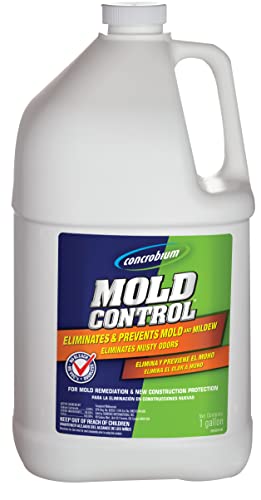
Concrobium Mold Control is an EPA-registered fungistat (EPA Reg. No. 84526-6) manufactured by Rust-Oleum. Its active ingredients are sodium carbonate (washing soda) and sodium bicarbonate (baking soda) in a proprietary polymer solution. When applied, the water evaporates and leaves behind an alkaline crystalline barrier that encapsulates mold spores and prevents regrowth as long as the surface stays dry. This mechanism is fundamentally different from EC3: instead of breaking down mold enzymatically, Concrobium physically traps and encapsulates it.
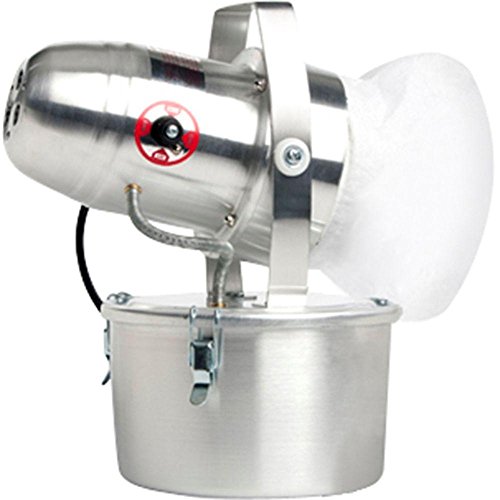
Concrobium is available in several sizes: a 32 oz trigger spray (Concrobium Mold Control 32 oz*), a 1 gallon refill (Concrobium 1 Gallon*), a 14 oz aerosol, and a fogger for large spaces (Concrobium Mold Control Fogger*). It is widely available at Home Depot, Lowe’s, and other hardware stores in addition to Amazon.
Strengths
- Very affordable, which makes it practical for large projects
- EPA-registered as a fungistat with proven efficacy against common household molds
- Creates a long-lasting barrier that prevents regrowth for months
- Works on a wide range of surfaces: drywall, wood, concrete, tile, grout, brick, stone, stucco, fabric, upholstery, and more
- No harmful chemicals or VOCs (safe for indoor use without respirator in ventilated areas)
- Trusted by professional remediators and contractors for large-scale jobs
- Widely available in retail stores across the US
Weaknesses
- Can leave a white crystalline residue on dark or glossy surfaces if over-applied
- Requires the surface to stay wet for 15-20 minutes for full efficacy (may need multiple applications on vertical surfaces)
- Mild alkaline smell while wet (dissipates when dry, similar to baking soda)
- Not ideal for people who prefer non-EPA-registered products for philosophical reasons
- Must be wiped or rinsed from non-porous surfaces after treatment (the barrier is only needed on porous surfaces)
Best Use
Concrobium is the go-to for active mold remediation. Use it on drywall after cutting out visible mold, on wood framing in basements and crawl spaces, on concrete walls, and on exterior siding. It is the standard choice for contractors and is often specified in mold remediation protocols. For homeowners tackling a basement with minor mold on concrete walls, a single gallon of Concrobium is usually enough to treat the entire space.
Head-to-Head Comparison
Effectiveness
Concrobium has the edge for killing and preventing mold on porous surfaces because its crystalline barrier physically encapsulates spores and prevents regrowth. EC3 relies on enzymatic breakdown, which is gentler but does not leave a residual barrier. For active mold growth on drywall or wood, Concrobium is more effective. For ongoing prevention on non-porous surfaces like tile and glass, both work well.
Safety
Both products are non-toxic and safe for use around children and pets when used as directed. EC3 has a slight edge for people with extreme chemical sensitivities because it uses food-grade ingredients (citrus seed extract, enzymes). Concrobium uses common household ingredients (sodium carbonate, sodium bicarbonate) and is also very safe. Neither product contains bleach, ammonia, or volatile organic compounds.
Smell
EC3 has a mild citrus scent that most people find pleasant and that dissipates within minutes. Concrobium has a faint alkaline (baking soda-like) smell when wet that disappears completely once dry. Neither product has a strong chemical odor. For people with fragrance sensitivities, Concrobium may be the better choice since it is essentially odorless when dry.
Cost per Use
Concrobium is dramatically cheaper per ounce than EC3. For a large remediation project covering 500+ square feet, the difference adds up. For a small bathroom that needs occasional spot treatment, the price difference matters less. If you are treating an entire basement or crawl space, Concrobium is the clear economic choice.
Ease of Use
Both come in ready-to-use trigger spray bottles with similar application methods. Concrobium requires the surface to stay wet for 15-20 minutes, which can mean multiple applications on vertical surfaces where the solution runs off. EC3 requires 10-15 minutes of dwell time. Both are simple to apply: spray, wait, let dry. No scrubbing is required for either product, though heavy mold growth should be brushed off before treatment for best results.
Which to Choose by Scenario
Bathroom Mold
Winner: Concrobium. Bathrooms have high moisture and porous surfaces (grout, drywall). Concrobium’s residual barrier helps prevent regrowth between cleanings. The white residue is not visible on light grout and tile. For daily prevention after showers, EC3 is also a good option if you prefer the enzyme approach.
Outdoor Mold (Siding, Decks, Concrete)
Winner: Concrobium. Large outdoor areas require volume, and Concrobium’s low cost per gallon makes it practical. It also withstands temperature changes well and works on all common exterior surfaces including wood, vinyl siding, brick, and concrete. A single gallon covers roughly 100-150 square feet.
Porous Surfaces (Drywall, Wood, Fabric)
Winner: Concrobium. This is where Concrobium’s crystalline barrier technology excels. It penetrates porous materials and leaves protection inside the surface. EC3 works on these surfaces too but does not leave a residual barrier, so mold can return more quickly if the moisture problem is not resolved.
Large Area Remediation
Winner: Concrobium. At a fraction of EC3’s price per ounce, Concrobium is the practical choice for treating entire basements, crawl spaces, or attics. Professional remediators almost always choose Concrobium for this reason.
Mold-Sensitive Households / Prevention
Winner: EC3. For households where someone has mold illness, CIRS, or chemical sensitivity, EC3’s enzyme-based formula is the preferred choice. It is also excellent for weekly maintenance spraying in bathrooms and kitchens where mold has been an issue but is currently under control. Many users report that EC3 helps with musty odors more effectively than Concrobium.
HVAC and Hard-to-Reach Areas
Winner: EC3. EC3 can be used with a fogger for HVAC systems and crawl spaces. Its lack of residue makes it safer for ductwork where loose particles could be blown into living spaces. Concrobium also offers a dedicated fogger product for large spaces, but EC3’s enzyme formula is preferred by many HVAC professionals for duct treatment.
How to Use the Winner Correctly
For most homeowners, Concrobium is the better all-around choice. Here is how to use it correctly for best results:
- Safety first. Wear gloves, eye protection, and an N95 respirator when dealing with active mold. Open windows for ventilation. Even though Concrobium is non-toxic, disturbing mold releases spores into the air.
- Prepare the surface. Brush or vacuum loose mold spores before applying. Do not use bleach (bleach does not kill mold on porous surfaces and can actually make regrowth worse by adding moisture).
- Apply generously. Spray Concrobium directly onto the moldy surface until it is thoroughly wet and dripping. For vertical surfaces, apply from bottom to top to prevent runoff from missing lower areas.
- Keep wet for 15-20 minutes. This is the most critical step. Reapply if the surface dries before the time is up. The solution needs time to penetrate porous materials and form the crystalline barrier that prevents regrowth.
- Let dry completely. Do not wipe or rinse. The white residue that forms is the active barrier. It will be invisible on most surfaces once fully dry (usually 1-2 hours depending on humidity).
- For non-porous surfaces (glass, tile, metal): wipe clean after the dwell time. The barrier is not needed on non-porous surfaces and may be visible on glossy finishes.
- Monitor and reapply. Check treated areas monthly. Reapply if mold returns or after heavy cleaning. Address the underlying moisture problem to prevent permanent recurrence. Consistent humidity control is the single most important factor for long term results.
Frequently Asked Questions
Can I use EC3 and Concrobium together?
Yes, but not at the same time. Use Concrobium for the initial remediation to kill and encapsulate existing mold. Once the area is dry and mold-free, use EC3 for ongoing maintenance and prevention. The two products use different mechanisms and do not interfere with each other when applied separately. This two-step approach is common among mold-aware homeowners.
Is Concrobium safe for use around pets?
Yes. Concrobium’s active ingredients are sodium carbonate and sodium bicarbonate, both of which are common household substances (washing soda and baking soda). Once dry, the residue is inert and non-toxic. Keep pets away from wet surfaces until dry, as with any cleaning product. If a pet licks a wet surface, rinse their mouth with water and monitor for any reaction (unlikely but possible with concentrated exposure).
Does EC3 really kill mold or just clean it?
EC3 uses citrus seed extract and enzymes to break down mold cell walls and mycotoxins. While it is not EPA-registered as a pesticide (the manufacturer does not make pesticidal claims), independent testing and user reports confirm it is effective at reducing mold and mold toxins on surfaces. It is best understood as a mold cleaner and preventative rather than a registered fungicide. For active mold growth, many users pair EC3 with Concrobium for the initial kill.
Why does Concrobium leave a white residue?
The white residue is the active ingredient (sodium carbonate) crystallizing as the water evaporates. This crystalline barrier is what prevents mold from growing back. On most surfaces (drywall, wood, concrete, grout) the residue is invisible once fully dry. On dark or glossy surfaces, wipe with a damp cloth after the 15-20 minute dwell time to remove excess. The residue is water-soluble and can be removed with a damp cloth if needed.
Which product is better for black mold?
Both products are effective against common household molds including Stachybotrys (black mold). Concrobium has the advantage of EPA registration and a residual barrier, making it the preferred choice for active black mold remediation. EC3 is a good option for follow-up treatment and prevention in sensitive households. For visible black mold on drywall, the affected section should be cut out and replaced rather than treated with any spray.
These statements have not been evaluated by the Food and Drug Administration. This information is not intended to diagnose, treat, cure, or prevent any disease. Content is for informational purposes only and is not medical advice; consult a qualified healthcare provider before starting any supplement. As an Amazon Associate we earn from qualifying purchases.