Distilled vs Cleaning Vinegar for Mold: Which One Actually Works?
Disclosure: As an Amazon Associate, MoldActionPlan earns from qualifying purchases at no extra cost to you. This article contains affiliate links to products we recommend for mold cleaning. We only recommend products we have researched and believe will help you with your mold problems.
Quick Verdict
For mold on hard, non-porous surfaces, neither standard distilled white vinegar (5% acetic acid) nor cleaning vinegar (6 to 30% acetic acid) is an EPA-registered mold killer. But both can suppress surface mold growth in the right conditions. Cleaning vinegar with 6% acidity works faster than standard 5% distilled vinegar on light mold and mildew, while 30% cleaning vinegar (like Green Gobbler) is stronger still but requires careful handling. For most homeowners dealing with small bathroom or window mold, standard distilled white vinegar at 5% is the safest, cheapest starting point. For stubborn calcium-encrusted mold or outdoor cleaning, a 30% cleaning vinegar like Green Gobbler gives you more power at a higher price.
At-a-Glance Comparison
| Feature | Distilled White Vinegar (5%) | Heinz Cleaning Vinegar (6%) | Green Gobbler 30% Vinegar |
|---|---|---|---|
| Active Ingredient | Acetic acid 5% | Acetic acid 6% | Acetic acid 30% |
| Best For | Light mold on tile, grout, windowsills, appliances | Hard water + mold, soap scum, light mold on non-porous surfaces | Outdoor mold, heavy mineral deposits, weeds, stubborn stains |
| Dwell Time | 10 to 15 minutes | 5 to 10 minutes | 2 to 5 minutes (diluted) |
| EPA Registration | Not registered for mold/disinfection | Not registered for mold/disinfection | Not registered for mold/disinfection |
| Safe for Cooking | Yes (food grade) | No | No |
| Safety Gear Needed | None required | Gloves recommended | Gloves, eye protection, ventilation |
Distilled White Vinegar: What It Is
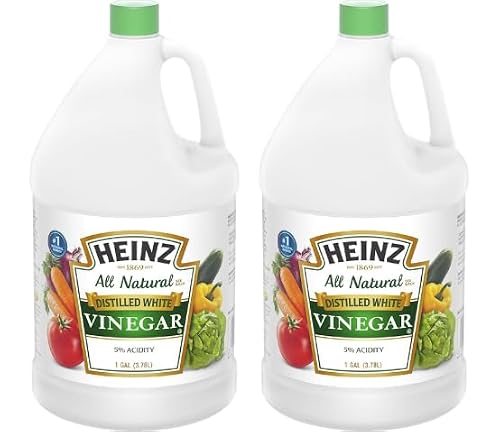
Standard distilled white vinegar is the clear liquid in the gallon jug next to the cooking oil at every grocery store. It contains 5% acetic acid and 95% water. It is made from fermented grain alcohol that is distilled and diluted to a consistent acidity level. Brands like Heinz market it as “all natural” and food-grade, meaning it is safe to eat, pickle with, and use on food-contact surfaces. The ASIN for a two-pack of Heinz 1-gallon jugs is B0HFNWMM7R.
Strengths
- Cheap. It is the most affordable option for household mold cleaning by a wide margin.
- Safe and mild. You do not need gloves or a respirator for routine use. The smell fades within 15 to 30 minutes after drying.
- Food-safe. Use it on kitchen surfaces, cutting boards, and countertops where food is prepared. Rinsing after use is still recommended.
- Effective on light mold. In a 2020 lab study, 5% acetic acid killed an Aspergillus species on clean test surfaces, though a 2015 study found household vinegar had no effect on Aspergillus fumigatus.
- No mixing needed. Pour it into a spray bottle straight from the jug. No dilution, no measuring.
Weaknesses
- Slow. It takes 10 to 15 minutes of wet contact time to kill surface mold. Many users rinse it off too soon and get poor results.
- Ineffective on porous surfaces. On drywall, wood, or unsealed grout, the liquid soaks in and does not kill mold roots below the surface. The mold will return.
- Not a registered disinfectant. The EPA does not list standard vinegar as a registered antimicrobial product. It can suppress mold growth but is not guaranteed to eliminate an established colony.
- Weak for tough buildup. 5% acidity struggles against thick calcium deposits or mold that has been growing for weeks around a leaking pipe.
Best Use
Use distilled white vinegar for small patches of surface mold on tile, glass, chrome fixtures, windowsills, and kitchen counters. Apply it undiluted, let it sit for 10 to 15 minutes, scrub with a brush, and rinse. It is also the right choice when you need a cleaner that is safe around children and pets. For routine bathroom maintenance between deeper cleanings, a weekly spray with 5% vinegar can prevent mildew from taking hold.
Cleaning Vinegar: What It Is
“Cleaning vinegar” is a broad category ranging from 6% acetic acid (Heinz Cleaning Vinegar) up to 30% (Green Gobbler). The defining feature is that these products are not food-grade and are intended only for household cleaning. The higher acid concentration makes them more effective on tough residue, mineral deposits, and mold, but it also makes them harder on skin, eyes, and some surfaces. You should never use cleaning vinegar for cooking or pickling.
Heinz Cleaning Vinegar (6% Acidity)
This is the mildest form of cleaning vinegar. At 6% acidity, it is 20% stronger than standard distilled white vinegar. It is all-natural and is effectively a step-up from the food-grade jug next to it on the shelf. While it is marketed for cleaning, the EPA does not register it as a disinfectant. It works faster on mineral deposits and light mildew than the 5% version, but the difference is modest for routine use. The main advantage shows up when you are dealing with hard water scale combined with mold.
Green Gobbler 30% Vinegar
This is a concentrated 30% acetic acid solution sold in 1-gallon jugs on the Green Gobbler website (view on Amazon). The manufacturer states it is “6x more concentrated than traditional 5% white vinegar.” It is ultra-filtered, bleach-free, and contains no ammonia. According to the product page, it works on carpet, chrome, glass, ceramics, metal, stainless steel, vinyl, porcelain, and fiberglass. Because of the high acid concentration, it must be diluted with water for most household uses. It is not safe for cooking or food contact surfaces unless fully rinsed.
Strengths
- Faster action. Higher acidity means shorter dwell times. At 30%, you need only 2 to 5 minutes for most surface mold and mineral deposits.
- Better on mineral buildup. If mold is growing on or under calcium and lime deposits, the stronger acid dissolves the scale and reaches the mold underneath.
- Outdoor tough. 30% vinegar handles driveway moss, patio mildew, and weed control alongside mold in outdoor settings where 5% vinegar is too weak.
- Versatile. Green Gobbler claims “hundreds of uses” including carpet stains, chrome polishing, glass cleaning, stainless steel, concrete, and laundry freshening.
- No bleach or ammonia. The ultra-filtered formula avoids harsh chemicals common in other cleaners.
Weaknesses
- Expensive. Green Gobbler costs 6 to 10 times as much as standard distilled white vinegar. The cost per use adds up if you clean mold frequently.
- Harsh on skin and eyes. 30% acetic acid can cause chemical burns on contact. Gloves and eye protection are required. Keep it out of reach of children.
- Not food-safe. Cleaning vinegar is not intended for cooking or food contact surfaces unless fully rinsed, and 30% vinegar should never be used undiluted on surfaces where food is prepared.
- Can damage surfaces. Undiluted 30% vinegar can etch natural stone (marble, granite, travertine), dull some metal finishes, and damage wood sealants and varnishes.
- Strong odor. The smell of 30% vinegar is sharper and more intense than standard vinegar. It can be unpleasant in enclosed spaces without good ventilation.
- Not a registered disinfectant. Like standard vinegar, 30% cleaning vinegar has no EPA registration for killing mold or pathogens.
Best Use
Use 6% cleaning vinegar for bathrooms with hard water stains and light mold. Use 30% cleaning vinegar (diluted to around 10 to 15% with water) for outdoor mold, heavy scale on shower doors, concrete patios, and stubborn mildew on patio furniture. Always test on a small hidden area first, especially on colored grout or finished surfaces.
Head to Head Comparison
Effectiveness Against Mold
Both products kill many types of surface mold. Lab research on acetic acid is mixed: 5% acetic acid killed an Aspergillus species on clean lab test surfaces in a 2020 study, whose authors still concluded it does not reliably disinfect at household-cleaning strength. Higher concentrations kill faster and may kill a wider range, but no concentration of household vinegar is a complete mold remediation tool. For porous materials like drywall or wood, vinegar is not the right solution regardless of strength. The liquid cannot penetrate deeply enough to kill the roots, so the mold will regrow.
Safety
Standard distilled white vinegar at 5% is safe enough to eat. You can use it on kitchen counters without gloves. Cleaning vinegar at 6% is still relatively mild but should not be ingested. Green Gobbler at 30% requires gloves, eye protection, and good ventilation. Inhaling concentrated acetic acid fumes can irritate the lungs. If you have children or pets in the house, the 5% option is safer to store and use without special precautions.
Smell
All vinegars smell like vinegar. There is no way around it. The higher the concentration, the stronger the smell. The smell fades as the acetic acid dries and evaporates, which takes roughly 15 to 30 minutes with ventilation. The difference between 5% and 6% is barely noticeable to most people. At 30%, the vinegar has a sharper, more pungent odor that can be unpleasant indoors. If you are sensitive to smells, stick with 5% and increase the dwell time instead.
Cost Per Use
Let us run the numbers. A standard spray bottle holds about 32 ounces. Distilled white vinegar is the cheapest option per fill. Distilled white vinegar costs 80% less than the strongest option. Over a year of weekly cleaning, the difference adds up.
Ease of Use
Distilled white vinegar wins this category by a wide margin. Pour it into a spray bottle and use it. No dilution, no gloves, no measuring. Cleaning vinegar at 6% is nearly as simple but you need to check the label to confirm you are not grabbing the 5% cooking jug. Green Gobbler at 30% requires careful measuring, dilution with water, safety gear, and storage away from children. For a quick weekly clean, most people will reach for the 5% bottle every time.
Which to Choose by Scenario
Bathroom Shower Mold
For light mold on ceramic tile and glass shower doors, use standard distilled white vinegar (5%). Spray it undiluted on the affected area, wait 15 minutes, scrub with a brush, and rinse. For heavy mineral deposits mixed with mold, step up to 6% cleaning vinegar. The extra acidity helps dissolve the hard water scale that traps mold. Avoid 30% vinegar in the shower unless you have excellent ventilation and wear eye protection, because the confined space concentrates the fumes.
Outdoor Mold (Patio, Siding, Deck)
Green Gobbler 30% vinegar is the better choice outdoors. Dilute it to about 15% (mix 1 part 30% vinegar with 1 part water), apply with a pump sprayer, let it sit for 5 minutes, and rinse with a hose. The extra strength handles surface moss, mildew, and algae that 5% vinegar will not touch. For large outdoor areas, the gallon size covers more ground than multiple bottles of weaker vinegar, though the upfront cost is higher.
Porous Surfaces (Drywall, Wood, Grout)
No type of vinegar is effective on porous surfaces. The liquid soaks into the material without reaching the mold roots beneath the surface. For drywall or wood with mold, the affected section should be cut out and replaced. Painting over it or spraying vinegar on top will not fix the problem. For grout between tiles, a dedicated mold cleaner or professional treatment is more reliable than any vinegar product.
Large Area Mold (Basement, Attic)
For mold covering 10 square feet or more, skip the vinegar entirely. Large areas require professional mold remediation with containment barriers, air filtration, and proper removal protocols. Household vinegar, no matter the concentration, is a spot cleaner for small surface mold, not a replacement for professional treatment. If you have visible mold growth across multiple panels of drywall or an entire basement wall, call a licensed mold remediation contractor.
Kitchen Mold Around Sinks and Faucets
Standard 5% distilled white vinegar is the safest choice for the kitchen. It is food-grade, so incidental contact with dishes or food prep surfaces is not a concern. Spray, wait 10 minutes, scrub, and rinse. Avoid 30% vinegar near food preparation areas because the concentrated acid requires thorough rinsing and could leave residue that affects food.
How to Use the Winner Correctly
For most indoor situations, standard distilled white vinegar at 5% is the winner. It is effective, cheap, safe, and requires no special equipment. Here is the correct procedure to get the best results:
- Safety first. Open a window or run a bathroom fan. Wear gloves if your skin is sensitive. For 30% vinegar, wear gloves and eye protection.
- Apply undiluted. Pour standard 5% white vinegar into a spray bottle. Do not mix with water. For 30% vinegar, dilute to 10 to 15% by mixing one part vinegar with one to two parts water.
- Spray the mold. Saturate the affected area completely. Do not just mist it. The surface should be visibly wet.
- Wait the full dwell time. 10 to 15 minutes for 5% vinegar. 5 to 10 minutes for 6% vinegar. 2 to 5 minutes for diluted 30% vinegar. Do not wipe it off early.
- Scrub. Use a stiff brush or sponge to loosen the dead mold from the surface. Pay attention to grout lines and corners.
- Rinse and dry. Wipe the area with a damp cloth and dry it completely. Mold needs moisture to grow, so eliminating residual dampness is critical.
- Repeat if needed. Stubborn spots may need a second application 24 hours later. For recurring mold, address the underlying moisture problem.
Never mix vinegar with bleach. The combination produces toxic chlorine gas that can cause severe respiratory damage. Never use vinegar on natural stone (marble, granite, travertine, limestone) because the acid will etch and dull the surface permanently. Do not use vinegar on waxed wood floors or unsealed wood surfaces.
Frequently Asked Questions
Can I use distilled white vinegar instead of cleaning vinegar for mold?
Yes. Standard 5% distilled white vinegar is effective for light surface mold on non-porous surfaces in bathrooms, kitchens, and windows. It is safe, cheap, and available at any grocery store. The main advantage of cleaning vinegar is faster action on tougher mineral deposits. For routine mold prevention, 5% vinegar does the job at a fraction of the cost.
Does cleaning vinegar kill black mold?
Vinegar can kill some species of dark-pigmented mold on contact, but it is not a registered black mold treatment. No concentration of household vinegar guarantees full removal of Stachybotrys chartarum (toxic black mold). If you suspect toxic black mold based on its slimy texture and dark greenish-black color, consult a professional mold inspector instead of attempting DIY removal.
Is cleaning vinegar EPA registered as a mold killer?
No. The EPA does not register standard vinegar or cleaning vinegar as a mold-killing disinfectant. The EPA recognizes acetic acid as an antimicrobial at certain concentrations for some applications, but household vinegar products are not registered pesticide products with an EPA registration number on the label. For an EPA-registered mold killer, look for products with an active EPA registration number on the label, such as Concrobium or RMR-141.
Which is stronger for cleaning, distilled white vinegar or cleaning vinegar?
Cleaning vinegar at 6% is about 20% stronger than standard 5% distilled white vinegar. Green Gobbler at 30% is about 6 times stronger than standard distilled white vinegar. The higher the percentage, the faster it works on mineral deposits and mold, but the more caution you need with safety gear and surface compatibility. For most people, 5% is strong enough for routine cleaning.
Is cleaning vinegar safe to use on porous surfaces like drywall?
No. Vinegar of any concentration is not recommended for porous surfaces. The liquid soaks into the material and does not reach the mold roots below the surface. Porous materials with mold growth should be removed and replaced, not cleaned. This applies to drywall, wood, ceiling tiles, unsealed grout, and insulation.
What happens if I accidentally use cleaning vinegar on food?
6% cleaning vinegar is unlikely to cause harm in small amounts, but it is not food-grade and is not intended for cooking. If you use it on a cutting board or counter, rinse thoroughly with water before food contact. Green Gobbler 30% vinegar should never be used on food surfaces undiluted. Always label your cleaning vinegar bottle clearly so it is not mistaken for cooking vinegar.


These statements have not been evaluated by the Food and Drug Administration. This information is not intended to diagnose, treat, cure, or prevent any disease. Content is for informational purposes only and is not medical advice; consult a qualified healthcare provider before starting any supplement. As an Amazon Associate we earn from qualifying purchases.