Tea Tree Oil vs Vinegar for Mold: Which Natural Remedy Actually Works?
Disclosure: As an Amazon Associate, MoldActionPlan earns from qualifying purchases. This disclosure helps support our research and allows us to keep providing free, unbiased information. If you purchase through our links, we may earn a small commission at no extra cost to you.
Quick Verdict
Tea tree oil wins this matchup for serious mold spot treatment. Its active antifungal compounds (terpinen-4-ol and other monoterpenes) have laboratory-proven efficacy against Aspergillus, Penicillium, and Stachybotrys (black mold), which plain vinegar cannot claim as a registered fungicide. However, vinegar (5-6% acetic acid) is much cheaper, easier to use in large areas, and effective as a surface cleaner against visible mold growth on non-porous surfaces. Choose tea tree oil for small, persistent mold spots or porous materials where you need deeper penetration. Choose vinegar for routine maintenance, large surface areas, and when budget is the main concern.
At-a-Glance Comparison
| Product | Active Ingredient | Best For | Dwell Time | EPA Reg # | Certified Fungicide? |
|---|---|---|---|---|---|
| Tea Tree Oil (NOW Foods 4 oz) | Terpinen-4-ol (from Melaleuca alternifolia) | Small spots, porous surfaces, preventative | 10-30 min | Not applicable (pure oil, not a registered pesticide) | No |
| White Distilled Vinegar | Acetic acid (5-6%) | Large areas, non-porous surfaces, maintenance | 1 hour minimum | Not registered | No |
| Benefect Decon 30 (1 gal) | Thymol (thyme oil) | Remediation sites, equipment, full decontamination | 30 seconds | EPA Reg. No. known for thymol-based products | Yes |
| Concrobium Mold Control (1 gal) | Sodium carbonate (encapsulation) | Walls, ceilings, long-term prevention | Dries to crust, no dwell needed | Not a pesticide; registered as a mold inhibitor | No (encapsulates, does not kill) |
Product A: Tea Tree Oil (Pure Essential Oil)
What It Is
Tea tree oil is a steam-distilled essential oil from the leaves of Melaleuca alternifolia, a plant native to Australia. Its primary active compound for antifungal action is terpinen-4-ol, which studies have shown disrupts fungal cell membranes and inhibits spore germination. The most widely available brand for household use is NOW Foods 100% Pure Tea Tree Oil, available in 1 oz, 4 oz, and 8 oz bottles.
Strengths
- Proven antifungal activity in multiple peer-reviewed studies against common household molds
- Penetrates porous surfaces (wood, drywall, grout) better than water-based solutions
- Strong residual effect after drying (fungistatic, meaning it suppresses regrowth)
- All-natural, no synthetic chemicals or VOCs beyond the oil itself
- A little goes a long way (mix about 1 tsp per cup of water for a spray solution)
Weaknesses
- Expensive compared to vinegar or bleach
- Strong, medicinal scent that lingers for hours (some people find it unpleasant)
- Not a registered EPA pesticide; no kill claims can be made on the label
- Requires carrier (water or alcohol) as a base, needs shaking before each use
- Can irritate skin if undiluted; must be handled with gloves
Best Use
Tea tree oil excels on small, localized mold spots in bathrooms, around window frames, on grout, and on wooden surfaces where you need the solution to penetrate deeply. It is also an excellent preventative treatment once the active mold growth has been physically removed.
Buy NOW Foods Tea Tree Oil 4 oz on Amazon

Product B: White Distilled Vinegar
What It Is
Household white distilled vinegar is a 5% acetic acid solution created by fermenting ethanol. Cleaning vinegar (6-10% acetic acid) is also available. Although widely recommended in DIY mold removal guides, vinegar is not registered with the EPA as a fungicide or antimicrobial. Its effectiveness against mold is based on anecdotal evidence and limited lab data showing that acetic acid can kill some mold strains at sufficient contact times.
Strengths
- Extremely cheap, even less for store brands
- Non-toxic and food-safe (you can eat it)
- No harmful fumes (though the smell is strong while wet)
- Safe on most non-porous surfaces (tile, glass, metal, sealed granite)
- Readily available at any grocery store
Weaknesses
- Not proven to kill all mold species, especially Stachybotrys (black mold)
- Lab tests that showed a kill used at least 15 minutes of contact, so it is not a quick wipe [1]
- Does not penetrate porous surfaces well (sits on top)
- No residual/ preventative effect after drying
- Can damage unsealed grout, natural stone, hardwood floors, and certain paints over time
- The acetic acid smell, while not harmful, is strong and can be triggering for those sensitive to strong odors
Best Use
Vinegar works well as a maintenance cleaner for small amounts of surface mold on tile, shower curtains, glass, and sealed countertops. Use it weekly to prevent buildup rather than as a heavy-duty mold killer. For active infestations or porous surfaces, a stronger solution is needed.
Buy Heinz Cleaning Vinegar (6% acidity, 1 gal) on Amazon
Head-to-Head: Tea Tree Oil vs Vinegar
Effectiveness Against Mold
Multiple studies show tea tree oil at 0.5-2% concentration inhibits the growth of Aspergillus niger, Penicillium chrysogenum, and Candida albicans. Research from the University of Western Australia found tea tree oil’s terpinen-4-ol component is specifically active against filamentous fungi. Vinegar’s acetic acid did better than its reputation in one standard lab test: at 5% it completely killed Aspergillus brasiliensis with a 15-minute contact time, though a test tube is not a moldy wall and results vary by mold species [1]. Winner: Tea Tree Oil
Tea tree oil stopped mold on lab plates but the effect faded, while 5% acetic acid killed one mold outright in a standard test
Tea tree oil: 83 mm clear zone
It fully stopped Aspergillus fumigatus around the disc, and made a 43.5 mm zone against Penicillium chrysogenum.
Spores were back
Every culture exposed to tea tree oil was forming spores again by day 14.
Half survived an hour
Tea tree oil inactivated only 50% of Aspergillus niger spores after 60 minutes.
5% acetic acid: complete kill
Vinegar-strength acetic acid completely reduced Aspergillus brasiliensis in the test tube.
Whichever you use, scrub the growth off, expect to reapply, and fix the moisture that let it grow.
Three lab studies with different methods; the cards are not head-to-head comparisons of the two products. Source: Rogawansamy et al., International Journal of Environmental Research and Public Health 2015; Huang et al., Aerosol Science and Technology 2010; Zinn and Bockmuhl, BMC Microbiology 2020
Embed this chart
Free to reuse on your site. Copy the code below; please keep the credit link.
Safety
Both products are far safer than bleach or commercial biocides. Vinegar is food-grade and safe around children and pets once dry (though the fumes can irritate respiratory conditions like asthma). Tea tree oil is toxic if ingested and can cause skin irritation undiluted, but properly diluted (1 tsp per cup of water) it is safe for household use. Neither produces chlorine gas or toxic VOCs. Winner: Tie

Smell
Vinegar smells strongly of acetic acid while wet but dissipates completely within an hour. Tea tree oil has a medicinal, camphor-like scent that can linger for hours or even days in enclosed spaces. Some people find it pleasant or therapeutic; others find it overwhelming. Winner: Vinegar (shorter odor duration)
Cost Per Use
One gallon of vinegar can cover hundreds of square feet over dozens of treatments. One 4 oz bottle of tea tree oil makes roughly 2-3 gallons of diluted spray, so each application costs more. For large-area treatment, vinegar is dramatically cheaper. Winner: Vinegar
Ease of Use
Vinegar: spray, let sit, wipe. No mixing required. Tea tree oil: must be shaken with water (it does not fully dissolve), requires measuring and dilution, and has a stronger odor while applying. Winner: Vinegar
Which to Choose by Scenario
Bathroom Mold (Shower Grout, Caulk, Tile)
Choose tea tree oil. Bathroom mold on grout and caulk is often deeply embedded. Tea tree oil’s ability to penetrate porous surfaces makes it a reasonable choice here, but its effect fades: in a lab test, every culture exposed to it was forming spores again by day 14, so plan to reapply [2]. Spray the diluted solution, let it sit 10-15 minutes, scrub, and do not rinse.
Outdoor Mold (Patio, Siding, Deck)
Choose vinegar or a dedicated product like Concrobium. Outdoor areas need large volumes of solution. Use vinegar from a garden sprayer for broad coverage. For vinyl siding or decks, Concrobium’s encapsulation approach prevents regrowth after rain exposure. Tea tree oil is too expensive for outdoor coverage of any significant size.
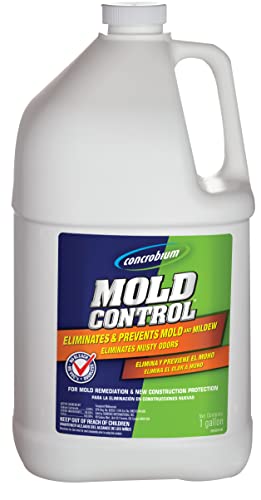
Buy Concrobium Mold Control (1 gal) on Amazon
Porous Surfaces (Drywall, Unsealed Wood, Fabric)
Choose tea tree oil. Porous materials trap mold spores inside their structure. Tea tree oil penetrates where water-based solutions (vinegar, bleach) only sit on the surface. Apply generously, let dry fully, and repeat if needed. Warning: Heavily mold-damaged drywall should be cut out and replaced regardless of the treatment used.
Large Area Infestations (Basement, Attic, Crawlspace)
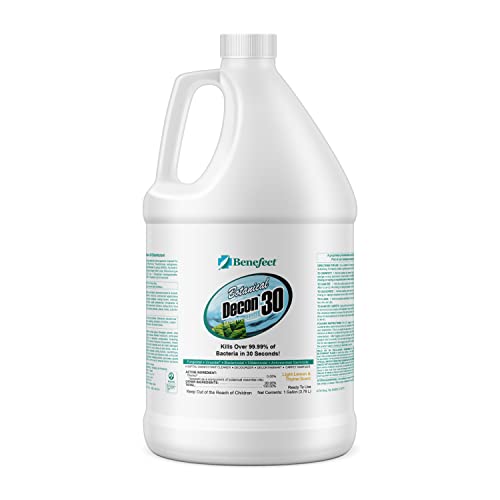
Choose a professional remediation-grade product like Benefect Decon 30. For areas over 10 square feet, the EPA recommends professional remediation. If you are treating smaller patches in a large area, use Concrobium or Benefect Decon 30 for their fast contact times and EPA-registered efficacy. Vinegar is too slow and weak for large-scale use. Tea tree oil is too expensive at volume. Benefect Decon 30 kills bacteria and mold in just 30 seconds using botanical thymol as its active ingredient.
Buy Benefect Decon 30 (1 gal) on Amazon
How to Use the Winner (Tea Tree Oil) Correctly
Dilution Recipe
- 1 teaspoon (about 5 ml) of 100% pure tea tree oil
- 1 cup (8 oz / 240 ml) of water
- Combine in a spray bottle. Shake vigorously before each use. Tea tree oil does not fully dissolve in water, so shake every time you spray.
Application Steps
- Protect yourself. Wear gloves, goggles, and an N95 mask. Mold spores are airborne and can cause respiratory irritation even with natural treatments.
- Remove visible growth first. Scrub the area with a stiff brush (dry) to remove loose mold and spores before applying liquid. This prevents the liquid from just spreading spores around.
- Spray generously. Saturate the affected area. Do not wipe immediately. The solution needs contact time to work.
- Let it dwell for 10-30 minutes. Tea tree oil needs time to penetrate fungal cell walls. Do not rinse. Let it air dry completely.
- Ventilate. Open windows or run a fan. The tea tree oil smell will fade over several hours.
- Repeat in 3-7 days. Mold spores that survived the first application may germinate. A second treatment 1 week later catches survivors and significantly reduces recurrence.
Safety Notes
- Never drink tea tree oil. It is toxic if ingested. Store away from children and pets.
- Test on a small hidden area first. Some paints and finishes react to essential oils.
- Do not use on food preparation surfaces unless you rinse thoroughly after treatment.
- For mold areas larger than 10 square feet (about 3 ft x 3 ft), consult a professional mold remediator. Natural treatments are for spot treatment and maintenance, not major infestations.
Buy a dedicated spray bottle for mold solutions on Amazon
FAQ
Can I use tea tree oil and vinegar together for mold?
Mixing them is not recommended. Vinegar (acidic) and tea tree oil (oil-based) do not emulsify well together. If you want a combined approach, use vinegar first for initial cleaning, let it dry fully, then apply diluted tea tree oil for deeper penetration and residual protection.
Does vinegar kill black mold (Stachybotrys chartarum)?
There is no peer-reviewed evidence that household vinegar (5% acetic acid) reliably kills Stachybotrys chartarum (toxic black mold). Some lab studies show partial inhibition at very long contact times, but for black mold, a registered fungicide or professional remediation is recommended. Tea tree oil has shown stronger antifungal activity across a broader spectrum of molds in lab testing.
What kills mold better, bleach or tea tree oil?
Bleach kills surface mold quickly but does not penetrate porous materials and cannot kill mold roots in drywall or wood. Tea tree oil may reach further into porous material, but its effect fades: in a lab test, mold exposed to it was forming spores again within 14 days [2]. However, bleach is a registered disinfectant with proven spore-kill at proper concentrations. For non-porous surfaces, bleach is faster. For porous surfaces tea tree oil may reach further, but neither is long-term prevention without fixing the moisture.
Is tea tree oil safe to use around pets?
Use it with caution around pets. Undiluted tea tree oil is toxic to dogs and cats, especially cats, whose livers cannot metabolize terpenes. Keep animals away from treated areas until the solution has fully dried (about 2-4 hours). If your pet ingests tea tree oil, contact a veterinarian immediately.
How often should I treat mold with tea tree oil?
For active mold spots, treat once per week for 3 weeks to ensure complete kill of spores. For preventative maintenance, treat vulnerable areas (bathroom corners, window sills, basement walls) once per month. If mold returns within 2 weeks, you likely have a moisture problem that needs fixing, not just a mold problem.
Buy a moisture meter to check for hidden leaks on Amazon
Bottom Line
For most homeowners dealing with small to moderate mold spots, tea tree oil is the better natural choice because of its proven antifungal activity, deep penetration into porous surfaces, and residual preventative effect. Vinegar is a good maintenance cleaner for surface-level mold on non-porous surfaces but is not a registered fungicide and should not be relied on for serious infestations. Whichever you choose, address the underlying moisture problem first. No treatment works permanently if the leak, humidity, or condensation issue remains.
References
- Zinn MK et al. Did granny know best? Evaluating the antibacterial, antifungal and antiviral efficacy of acetic acid for home care procedures. BMC microbiology (2020). PMID 32847510
- Rogawansamy S et al. An evaluation of antifungal agents for the treatment of fungal contamination in indoor air environments. International journal of environmental research and public health (2015). PMID 26042369
These statements have not been evaluated by the Food and Drug Administration. This information is not intended to diagnose, treat, cure, or prevent any disease. Content is for informational purposes only and is not medical advice; consult a qualified healthcare provider before starting any supplement. As an Amazon Associate we earn from qualifying purchases.