A pipe bursts at 2 AM. A washing machine overflows while you are at work. A roof leak drips for days before you notice the ceiling stain. Every water damage scenario starts the same clock: you have roughly 24 to 48 hours before mold begins to grow. After 72 hours, remediation costs can multiply by 3 to 10 times. Understanding the water damage mold timeline is the difference between a manageable cleanup and a full-scale mold remediation project.
This guide breaks down exactly what happens hour by hour after water damage, what you need to do at each stage, and how to prevent mold from ever getting a foothold.
Why the 48-Hour Rule Exists
Mold spores are everywhere — in outdoor air, indoor dust, on surfaces, and in HVAC systems. Under normal conditions, low humidity and dry surfaces keep them dormant. But mold spores need only two things to activate: moisture and an organic food source. Your home is full of organic food sources — drywall paper, wood framing, carpet backing, ceiling tiles, and furniture fabrics.
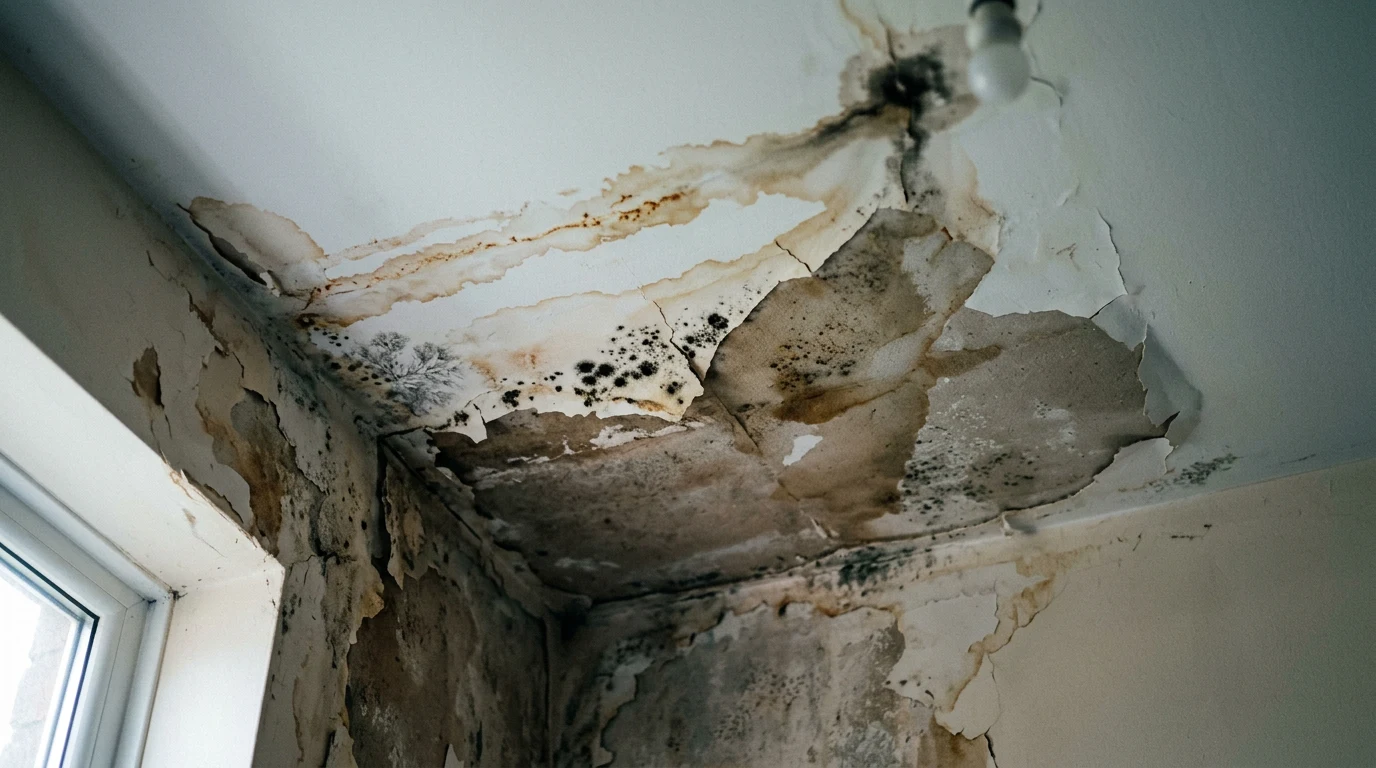
According to the EPA’s guidance on mold cleanup, mold can begin growing on damp surfaces within 24 to 48 hours. This is not a worst-case estimate — it is the standard timeline under typical indoor conditions (temperatures between 60 and 80 degrees Fahrenheit with available organic material).
The 48-hour rule means: if water-damaged materials are not dried within 48 hours, assume mold growth has started, even if you cannot see it yet.
Hour-by-Hour Water Damage Mold Timeline
0 to 1 Hour: The Initial Damage
Water spreads rapidly. A single burst pipe can release 4 to 8 gallons per minute. Within the first hour, water saturates carpet, padding, baseboards, and lower drywall. It seeps under vinyl flooring, wicks up drywall paper via capillary action, and pools in the lowest points of the structure. Furniture legs begin absorbing water from saturated carpet.
What to do: Stop the water source. Turn off the main water supply if necessary. Remove standing water with a wet vacuum, mop, or towels. Begin moving furniture off wet carpet. Take timestamped photos of all damage for insurance documentation.
1 to 24 Hours: Absorption and Spreading
Water penetrates deeper into building materials. Drywall absorbs moisture and begins to soften. Wood swells and warps. Carpet padding — a dense sponge designed to hold moisture — becomes fully saturated. Subfloor materials (plywood or OSB) begin absorbing water from below. Humidity in the affected area rises rapidly, often exceeding 80% relative humidity.
At this stage, mold spores that were dormant on surfaces begin to hydrate. They have not yet germinated, but the conditions for growth are met. The clock is running.
What to do: Extract as much water as possible. Set up fans to increase air circulation. Open windows if outdoor humidity is lower than indoor humidity. Run dehumidifiers — one commercial dehumidifier per 500 square feet of affected area. Pull back carpet edges to expose padding. Remove wet insulation from wall cavities if accessible. Call a water damage restoration company for anything beyond a minor spill.
24 to 48 Hours: Mold Germination Begins
This is the critical window. Mold spores on wet surfaces begin germinating — extending thread-like hyphae into the material they are growing on. At this stage, growth is microscopic and invisible to the naked eye. You will not see fuzzy colonies yet, but biological activity has started. Materials still wet at the 24-hour mark are now actively growing mold at the cellular level.
Drywall that has been wet for 24+ hours may need replacement even if it looks intact. The paper facing and gypsum core provide ideal nutrients, and once mold hyphae penetrate the paper layer, surface cleaning cannot fully remove the growth.
What to do: If materials are not dry yet, intensify drying efforts. Consider removing drywall that has been wet for more than 24 hours — cut it at least 12 inches above the visible water line. Remove all carpet padding that was saturated (it rarely dries fast enough and is inexpensive to replace). Continue running dehumidifiers and fans 24 hours a day. Check behind baseboards and inside wall cavities with a moisture meter.
48 to 72 Hours: Visible Mold Possible
Fast-growing species like Aspergillus and Penicillium may produce visible colonies within 48 to 72 hours on highly favorable substrates. These first appear as small discolored spots — white, green, or black pinpoints on drywall, wood, or fabric. Musty odors from mold volatile organic compounds (mVOCs) may become noticeable. If you detect a musty smell at this stage, mold growth is underway.
Behind walls, mold growth progresses faster because the enclosed space retains moisture and humidity. Visible growth on the room side of drywall often indicates far more extensive hidden growth behind it.
What to do: Any visible mold at this stage means the drying effort was insufficient. Remove and discard affected porous materials — drywall, insulation, carpet, and padding. Clean hard surfaces (studs, concrete, metal) with appropriate solutions. Continue aggressive drying of the structure. Document everything with photos.
72 Hours to 1 Week: Established Growth
Mold colonies are now established and actively producing spores. Multiple species may be competing for the same substrate. Spore counts in the air increase dramatically, spreading contamination to other rooms through air currents and the HVAC system. The HVAC ductwork can become a distribution network for mold spores throughout the building.
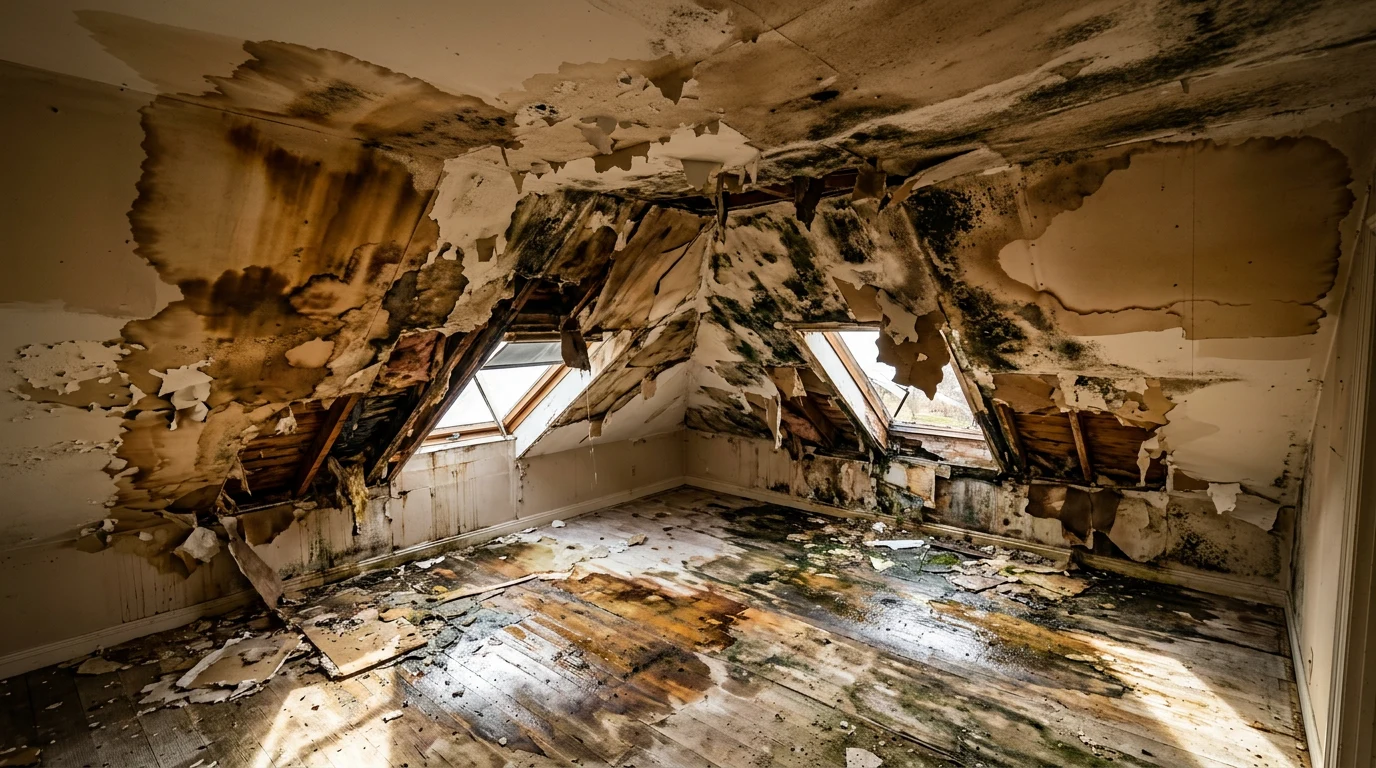
Mycotoxin production may begin as competing mold species battle for territory. The health risk to occupants increases significantly at this stage.
What to do: At this point, professional mold remediation is typically necessary. DIY cleanup is only appropriate for areas under 10 square feet. Larger areas require containment, HEPA filtration, and professional removal to prevent cross-contamination. Get a professional mold assessment to determine the full extent of contamination.
1 to 2 Weeks: Secondary Damage Accelerates
Mold penetrates deeper into building materials, compromising structural integrity. Wood framing can develop surface mold and begin to decay. Drywall crumbles. Carpet becomes unsalvageable. The area of contamination expands beyond the original water damage footprint as elevated humidity and airborne spores colonize adjacent materials.
Remediation costs at this stage are typically 3 to 10 times higher than they would have been with prompt 24-hour response. A water damage event that might have cost $1,500 to dry properly can escalate to $10,000 to $30,000 or more in mold remediation if left for 2 weeks.
Factors That Speed Up or Slow Down the Timeline
Conditions That Accelerate Mold Growth
- Warm temperatures — mold grows fastest between 77 and 86 degrees Fahrenheit. Summer water damage events in warm climates can see visible growth in as little as 24 hours
- Organic materials — drywall paper, wood, and carpet backing are ideal food sources that support rapid colonization
- Poor ventilation — enclosed spaces (wall cavities, under cabinets, behind furniture) trap humidity and create optimal mold conditions
- Previous mold history — buildings with prior mold problems have higher dormant spore loads on surfaces, giving mold a head start after new water damage
- High ambient humidity — regions with outdoor humidity consistently above 60% make indoor drying more difficult
Conditions That Slow Growth
- Cool temperatures — water damage in winter with indoor temperatures below 60 degrees Fahrenheit slows mold germination, potentially extending the safe window to 48 to 72 hours
- Non-organic surfaces — metal, glass, ceramic, and concrete resist mold colonization (though dust on these surfaces can support growth)
- Aggressive drying — professional water extraction combined with commercial dehumidifiers and air movers can dry materials below mold-supporting moisture levels within 24 to 36 hours
- Low indoor humidity — maintaining humidity below 50% during drying inhibits mold germination even on damp materials
Room-by-Room Water Damage Priorities
Not all water damage is equal. Some areas of your home are more vulnerable to mold and need faster response:
- Bathrooms — already high-humidity environments. Water damage here adds moisture to surfaces that may already be near the mold threshold. Check behind toilets, under vanities, and above shower ceilings
- Basements and crawl spaces — limited ventilation and cooler temperatures mean water takes longer to evaporate naturally. Crawl spaces are particularly problematic because they are rarely inspected
- Kitchens — dishwasher leaks, supply line failures, and refrigerator ice-maker leaks often go undetected behind appliances for days or weeks
- Attics — roof leaks often drip onto insulation, which holds moisture for weeks. Attic mold can develop extensively before anyone notices
- Laundry rooms — supply hose failures are a leading cause of residential water damage. Rubber hoses should be replaced with braided stainless steel lines every 5 years
The Insurance Clock: Why Timing Matters Financially
Most homeowner insurance policies cover sudden water damage (burst pipes, appliance failures) but have specific requirements about response timing:
- Duty to mitigate — your policy requires you to take reasonable steps to prevent further damage. Failing to dry water damage promptly can reduce or eliminate coverage
- Mold exclusions — many policies exclude mold remediation or cap coverage at $5,000 to $10,000. Preventing mold by drying quickly keeps the claim as “water damage” rather than “mold damage”
- Documentation requirements — photograph everything immediately. Save receipts for equipment rentals, professional services, and replacement materials
- Filing deadline — most policies require claims to be filed within a specific window (often 30 to 60 days). Do not wait to see if mold develops — file the water damage claim immediately
Essential Equipment for Water Damage Response
Having the right tools available dramatically improves your ability to dry water damage within the critical 48-hour window:
- Wet/dry vacuum — removes standing water from carpets and hard floors. A 10 to 14-gallon shop vac handles most residential situations
- Dehumidifiers — commercial units remove 70 to 100 pints per day compared to 30 to 50 for residential models. Rental cost is $50 to $100 per day from equipment rental stores
- Air movers (fans) — high-velocity fans direct airflow across wet surfaces, accelerating evaporation. Position them to create cross-ventilation
- Moisture meter — a pin or pinless moisture meter ($30 to $100) tells you when materials have reached safe moisture levels (under 15% for wood, under 1% for drywall). Without one, you are guessing
- Hygrometer — monitors room humidity levels. Drying is complete when ambient humidity drops below 50% and stays there with dehumidifiers off
When DIY Drying Is Not Enough
Call a professional water damage restoration company immediately if:
- Water covered more than one room or an area larger than 100 square feet
- The water source was a sewage backup or outdoor flood (Category 3 water — biohazard)
- Water reached wall cavities, subfloors, or insulation
- You cannot identify or stop the water source
- More than 24 hours passed before you discovered the damage
- Any visible mold is already present
- The affected area includes the HVAC system
Professional restoration companies have industrial equipment that can dry a typical residential water damage event in 3 to 5 days. Their moisture monitoring ensures materials reach safe levels before reconstruction begins, preventing mold growth that would require separate remediation later.
Frequently Asked Questions
Can mold grow in less than 24 hours after water damage?
Under optimal conditions — temperatures above 80 degrees Fahrenheit, high humidity, and abundant organic material — some fast-growing species like Aspergillus can begin germination in as little as 12 to 18 hours. The 24 to 48-hour guideline is a general rule, not a guaranteed safe window. In warm, humid climates, treat the timeline as 24 hours or less.
Does running the air conditioner help dry water damage?
Air conditioning removes some moisture from the air, but it is not a substitute for dehumidifiers and air movers. AC systems are designed to maintain comfort, not perform emergency drying. In fact, running the HVAC system during water damage can spread moisture and eventual mold spores to unaffected areas through the ductwork.
How do I know if my walls have mold after water damage?
Signs of hidden mold in walls include musty odors near the affected area, discoloration or bubbling paint, a moisture meter reading above 15% in the wall material weeks after the water event, and allergy-like symptoms that worsen in the room. If walls were wet for more than 48 hours and were not opened for drying, there is a high probability of interior mold growth that requires cutting open the drywall to inspect.
Is carpet salvageable after water damage?
Carpet that was wet with clean water (Category 1 — broken supply line) and dried within 24 to 48 hours can usually be saved. The carpet padding beneath it almost never can be — padding absorbs and holds water indefinitely and should be replaced. Carpet wet with sewage (Category 3) or any carpet wet for more than 72 hours should be discarded entirely.
Should I open the windows after water damage?
Only if the outdoor humidity is lower than the indoor humidity. In many climates, especially during summer, outdoor air can actually add moisture to the indoor environment. Check outdoor humidity with a weather app — if it is above 50%, keep windows closed and rely on dehumidifiers for moisture removal. In dry climates or winter conditions, opening windows can accelerate drying significantly.
Why is the 48-hour mark so critical for water damage and mold prevention?
The 48-hour mark is crucial because mold spores, which are ubiquitous, require moisture to germinate and grow. If water damage is not thoroughly dried and remediated within this timeframe, the conditions become highly favorable for mold colonies to begin forming and spreading. This rapid growth makes subsequent remediation more complex and costly.
What types of water damage are most likely to lead to mold within 48 hours?
Any type of water damage that saturates porous materials like drywall, insulation, carpets, and wood is highly likely to lead to mold within 48 hours. This includes leaks from pipes, overflowing appliances, roof leaks, and especially floodwaters, as they often introduce contaminants that accelerate microbial growth.
If I dry out the water within 48 hours, am I guaranteed to avoid mold?
While drying out the water within 48 hours significantly reduces the risk of mold growth, it doesn’t offer a 100% guarantee. Thorough drying means not just surface drying but ensuring all moisture is removed from saturated materials, often requiring professional equipment to measure moisture content in hidden areas. Residual moisture can still lead to mold.
What are the first signs of mold I should look for if water damage occurred more than 48 hours ago?
If water damage occurred more than 48 hours ago, look for musty odors, which are often the first indicator of mold growth, even before it’s visible. You might also notice discoloration or staining on walls, ceilings, or flooring, or observe fuzzy or slimy textures in affected areas.

Can mold grow in hidden areas, like behind walls, within 48 hours?
Yes, mold can absolutely begin to grow in hidden areas, such as behind walls, under flooring, or within insulation, within 48 hours if these areas become wet. These concealed locations often remain damp longer and provide an ideal environment for mold to proliferate unnoticed, making early detection challenging.
What immediate steps should I take if water damage occurs to minimize mold risk within the 48-hour window?
Immediately stop the water source, remove standing water, and begin drying the affected area using fans, dehumidifiers, and opening windows. Remove all wet porous materials that cannot be thoroughly dried, such as soaked carpets or drywall, to prevent mold from establishing itself within the critical 48-hour timeframe.
These statements have not been evaluated by the Food and Drug Administration. This information is not intended to diagnose, treat, cure, or prevent any disease. Content is for informational purposes only and is not medical advice; consult a qualified healthcare provider before starting any supplement. As an Amazon Associate we earn from qualifying purchases.
