You spot a small patch of mold on the wall — maybe the size of a quarter, maybe the size of your hand. Your first instinct is to grab some spray cleaner, wipe it off, and move on. In some cases, that is exactly the right response. But in many cases, that small visible spot is the tip of an iceberg. Behind the drywall, inside the wall cavity, across the framing — there can be 10 times more mold than what you see on the surface.
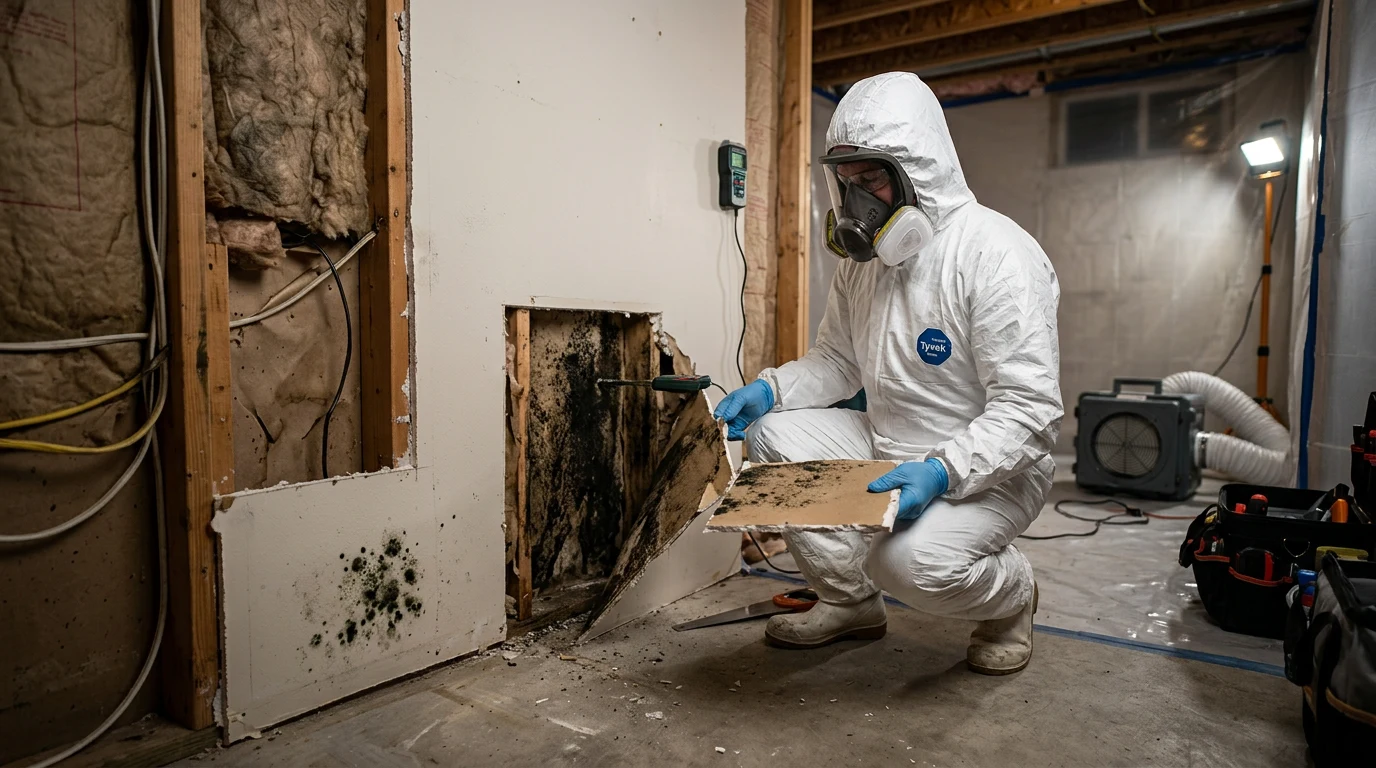
The difference between a surface cleaning situation and a major hidden mold problem depends on what is causing the moisture, where the mold is located, and how long it has been there. This guide helps you diagnose which situation you are in and what to do about it.
The Iceberg Effect: Why Visible Mold Underrepresents the Problem
Mold grows where moisture is. The surface of your wall is typically the driest part of the wall assembly. The inside of the wall cavity — where insulation, framing, and the back side of drywall create a dark, stagnant air pocket — stays wetter longer and provides more food sources for mold growth.
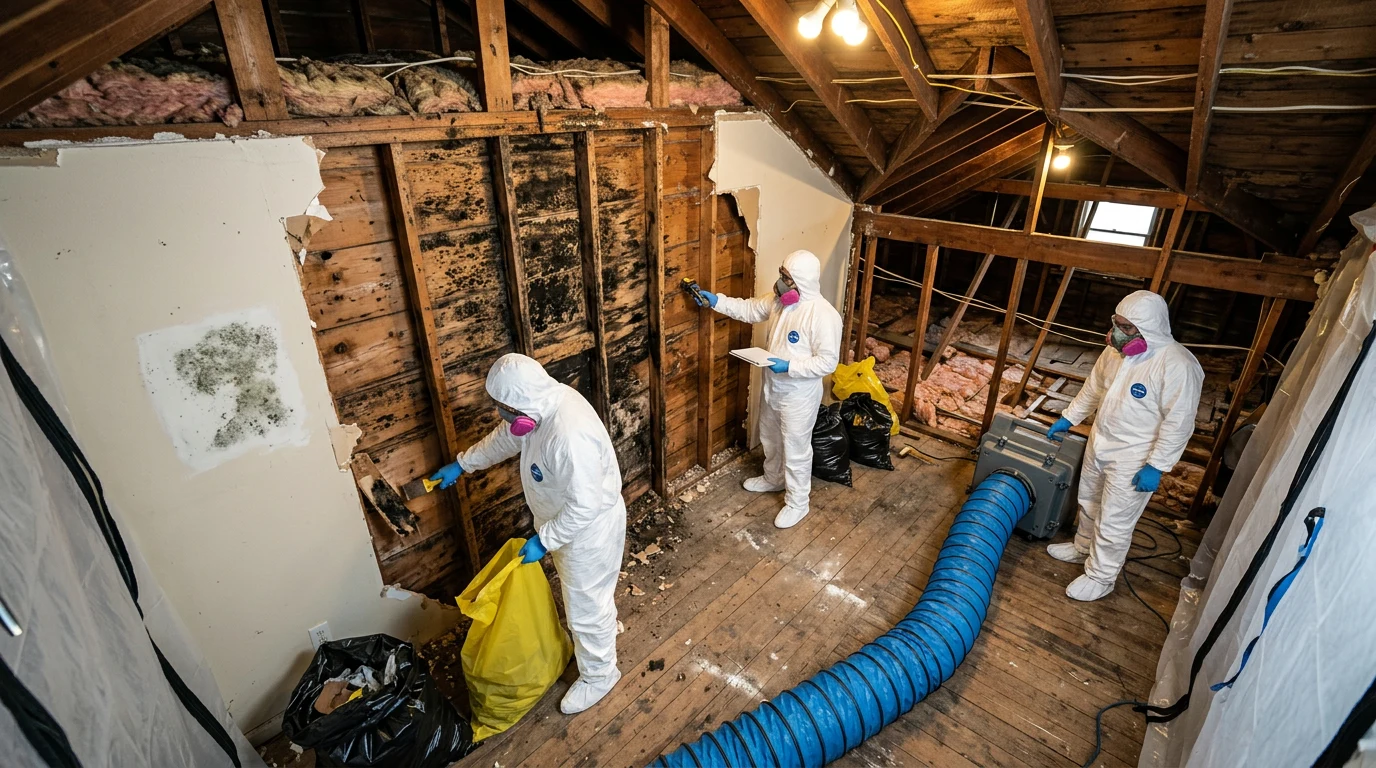
When mold appears on the painted surface of a wall, it has already done the following:
- Colonized the back side of the drywall (the paper face against the studs), which is wetter and has no paint barrier
- Spread along the drywall paper inside the wall cavity, often covering an area 5-10 times larger than the visible spot
- Potentially colonized the wood framing (studs, plates) adjacent to the moisture source
- Possibly contaminated insulation, which traps moisture and provides cellulose-based food
- Finally penetrated through the drywall to the painted surface, producing the spot you can see
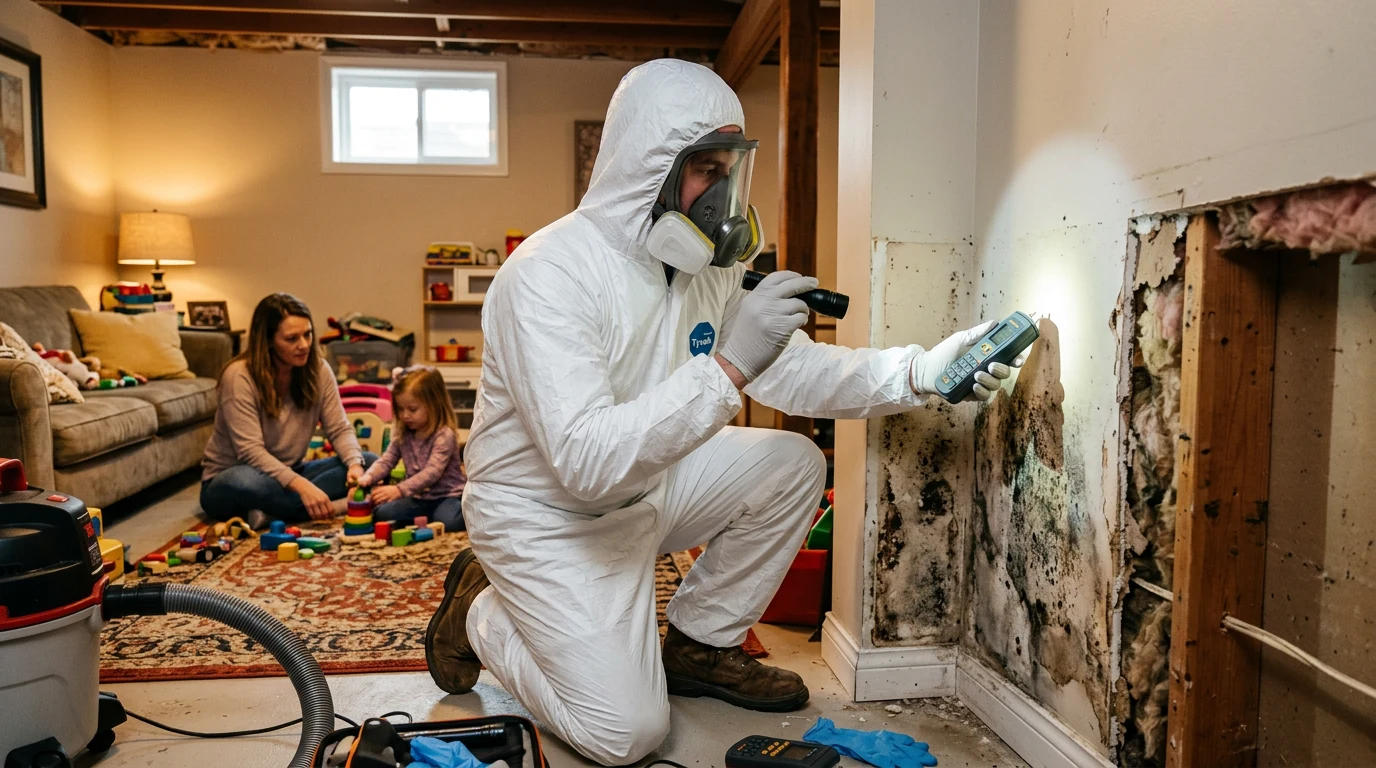
By the time mold is visible on the room-facing side of a wall, the colony behind the wall is well-established. A 4-inch visible spot on the surface can correspond to 2-4 square feet of mold growth on the backside of the drywall and surrounding materials.
Surface Mold vs. Structural Mold: The Critical Distinction
Not every visible mold spot indicates a hidden problem. The distinction between surface mold and structural mold determines your response:
Surface Mold (Usually Safe to Clean)
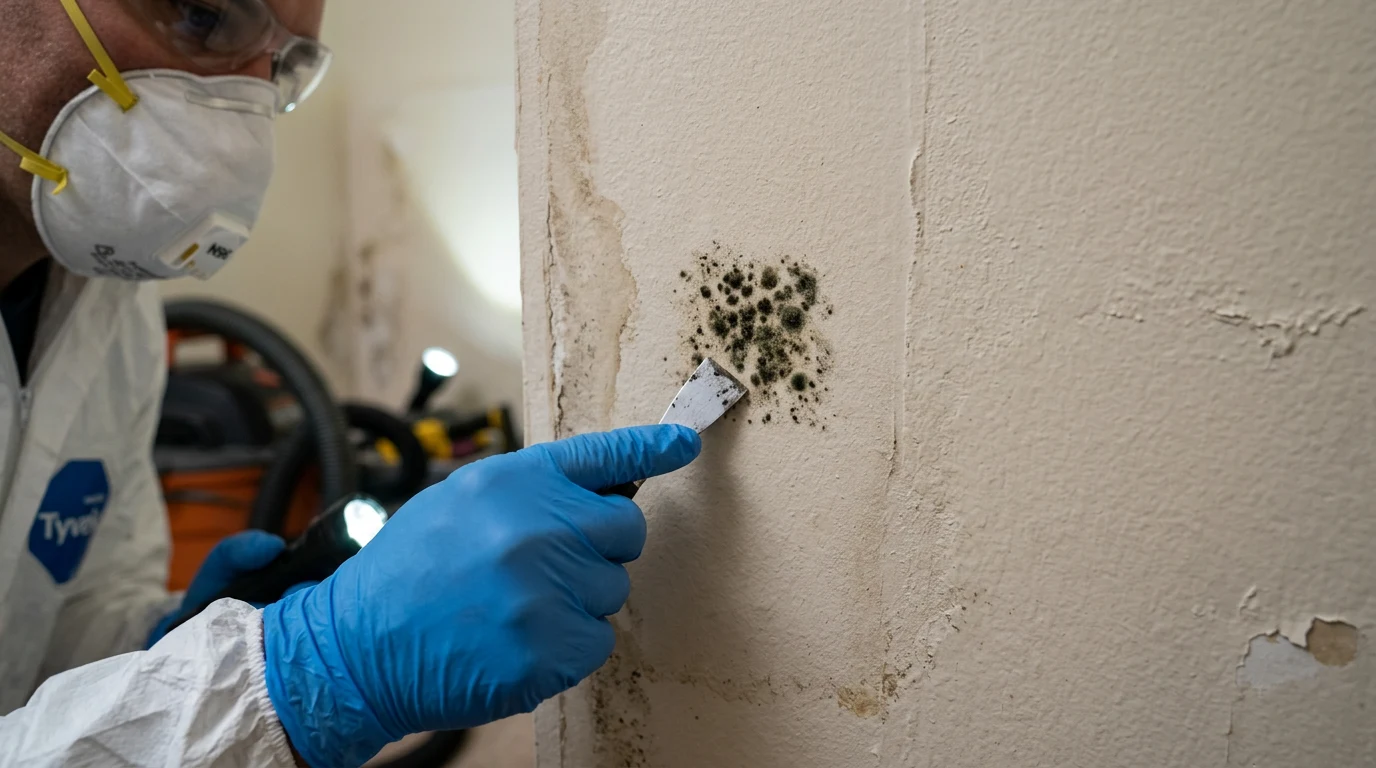
Surface mold grows on the exposed face of a material due to ambient conditions — typically high humidity or condensation. Characteristics include:
- Located on non-porous surfaces: tile, glass, metal, sealed countertops, painted surfaces that are not drywall
- Found in consistently humid areas: bathroom walls near showers, window frames with condensation, kitchen backsplash
- Wipes away easily with cleaning solution
- No musty odor beyond the immediate surface
- No moisture staining, bubbling paint, or warping of the underlying material
- The wall behind the surface feels dry to the touch and reads normal on a moisture meter
Surface mold on non-porous materials is a cleaning and humidity management issue, not a remediation issue. Clean the surface, reduce humidity, and improve ventilation. For effective cleaning approaches, see our guide on vinegar vs bleach for mold.
Structural Mold (Requires Investigation)
Structural mold has penetrated into or is growing within porous building materials. This is the scenario where a small visible spot can indicate a large hidden problem. Characteristics include:
- Located on porous surfaces: drywall, wood, carpet, ceiling tile, wallpaper
- Does not come off completely with surface cleaning — staining remains after wiping
- Associated with a musty odor that persists even after cleaning
- The wall or surface around the spot shows signs of moisture: bubbling or peeling paint, discoloration, warping, soft spots when pressed
- Moisture meter readings on the wall are elevated (above 1% for drywall, above 15% for wood)
- The spot keeps returning after cleaning
The Diagnostic Signs: What to Look For
When you find a small mold spot, run through this diagnostic checklist to determine whether it is a surface issue or a potential hidden problem:
1. The Location Test
Where is the mold growing? Location strongly predicts whether hidden mold is likely:
- Bathroom tile/grout: Almost always surface mold from shower humidity. Low risk of hidden mold unless the grout is cracked and water is getting behind the tile.
- Window frame (interior): Usually condensation-related surface mold. Moderate risk — check for water damage to the sill and drywall below the window.
- Wall adjacent to a bathroom: High risk. Water from shower/tub leaks can enter the wall cavity and grow mold you cannot see from the room side.
- Wall below a window or exterior wall: Moderate to high risk. Could indicate exterior water intrusion or condensation within the wall assembly.
- Ceiling below an upstairs bathroom: Very high risk. Water from toilet seals, shower pans, or supply lines can saturate the ceiling and wall cavities above.
- Basement wall: High risk. Foundation moisture intrusion creates the perfect environment for hidden mold between the foundation and any finished wall.
- Near any plumbing fixture: High risk. Slow leaks from supply lines, drain connections, and toilet seals are the most common source of hidden mold in residential buildings.
2. The Moisture Test
Use a moisture meter ($25-$40 at any hardware store) to check the wall around and near the mold spot. Take readings at the spot, 6 inches in each direction, and 12 inches in each direction.
- All readings normal: Likely surface mold from ambient humidity. Clean and monitor.
- Elevated at the spot but normal 6 inches away: Localized moisture source. May indicate a slow leak directly behind that location.
- Elevated readings extending 1-2 feet from the visible spot: Significant hidden moisture. The visible mold spot is almost certainly the small end of a larger problem inside the wall.
- Elevated readings extending in a downward pattern: Water is traveling by gravity from a source above. Check the floor above or the roof.
3. The Persistence Test
Clean the visible mold with an appropriate cleaning solution. Then monitor the spot:
- Mold does not return after 30 days: Likely was surface mold. The humidity conditions that caused it may have been temporary (seasonal, one-time event).
- Mold returns within 1-2 weeks: Active moisture source is feeding growth from behind. The visible spot is being resupplied with moisture and mold from inside the wall cavity.
- Mold returns in a different nearby location: The hidden colony behind the wall is expanding and finding new exit points to the surface.
4. The Smell Test
Musty odor is one of the most reliable indicators of hidden mold. Mold produces microbial volatile organic compounds (MVOCs) — gases with a distinct earthy, musty smell — as it actively grows and feeds.
- No odor: Less likely to have significant hidden mold (though not impossible — some species are less odorous than others).
- Odor only in the immediate area of the spot: Mold may be limited to a small cavity behind the wall.
- Odor throughout the room or multiple rooms: Suggests a larger hidden colony or mold in the HVAC system distributing MVOCs through the duct network.
- Odor that intensifies when HVAC runs: Mold is likely inside the HVAC system or in an area where ductwork passes through. See our guide on mold in HVAC ducts.
The 10x Rule of Hidden Mold
Remediation professionals often refer to the “10x rule” as a working estimate: the total mold contamination inside a wall cavity is typically 5-10 times the visible surface area. This is not a scientific constant, but it reflects consistent field observations:
- A 6-inch visible spot on drywall frequently reveals 2-4 square feet of mold on the backside of the drywall
- Mold on the drywall back typically extends to adjacent studs and framing
- If insulation is present, it almost always shows contamination when the drywall is contaminated
- Mold follows moisture pathways, so it often extends vertically and horizontally beyond the initial contamination point
This means a small mold spot that you might dismiss as a 5-minute cleaning project could represent 5-10 square feet of hidden contamination requiring professional remediation. This is not always the case — many small spots are truly just surface mold — but the diagnostic tests above help you determine which category yours falls into.
When to Investigate Further
Based on the diagnostic results, here is your decision framework:
Clean and Monitor (No Investigation Needed)
- Surface mold on non-porous material (tile, glass, sealed surface)
- Normal moisture meter readings around the spot
- No musty odor
- Mold does not return within 30 days after cleaning
- Obvious cause (condensation on window, humidity in bathroom)
For DIY cleaning guidance, our guides on how to get rid of mold and the best mold remover sprays cover effective approaches for surface mold.
DIY Investigation (Moderate Concern)
- Mold on drywall in a small area (under 4 square feet visible)
- Slightly elevated moisture readings at the spot but not extending far
- Mild musty odor in the immediate area
- You can access behind the wall (e.g., from an adjacent unfinished space)
DIY investigation involves cutting a small inspection hole (6×6 inches) in the drywall in the most affected area. Use a utility knife, cut between studs, and look inside with a flashlight. If you see mold on the backside of the drywall, on the studs, or on insulation, you have confirmed hidden mold. See our guide on mold on drywall for next steps.
Professional Assessment (High Concern)
- Mold on drywall exceeding 4 square feet visible
- Elevated moisture readings extending more than 12 inches from the visible spot
- Strong musty odor, especially if it affects multiple rooms
- Mold returns within days of cleaning
- Near known water sources (plumbing, foundation, roof)
- Anyone in the household experiencing unexplained respiratory symptoms
- The visible mold appears to be Stachybotrys (black, slimy texture) — see our guide on black mold vs regular mold
A professional mold assessment ($300-$600) includes moisture mapping, thermal imaging, air sampling, and a detailed report of findings. This is the appropriate starting point when diagnostic signs suggest significant hidden mold. For understanding assessment options, see our guide on DIY mold testing vs professional testing.
Common Hidden Mold Locations
These are the locations where hidden mold is most frequently discovered during professional assessments and remediation projects:
- Behind bathroom walls: Shower pans, tub surrounds, and toilet connections leak into the wall cavity from the wet side. The mold grows on the dry side, where you cannot see it from the bathroom.
- Under kitchen sinks: Slow drain leaks and supply line seepage saturate the cabinet floor and the wall behind the cabinet.
- Inside wall cavities around plumbing: Any wall with water supply or drain pipes is a candidate for hidden mold from pinhole leaks or condensation.
- Behind baseboards: Water from any source wicks behind baseboards and into the wall cavity. The baseboard conceals the moisture and mold from view.
- Above ceiling tiles: Drop ceilings hide roof leaks, condensation on ductwork, and plumbing leaks from above. The tiles absorb moisture and grow mold on their top surface.
- Inside HVAC systems: Mold in ductwork, on evaporator coils, and in condensate pans is invisible without disassembly.
- Beneath flooring: Carpet pad, the underside of hardwood, and the area between subfloor and finished floor can harbor mold from previous water events or slab moisture.
- Behind cabinets and appliances: Refrigerators, dishwashers, and washing machines can leak for months before the moisture migrates to a visible area.
What Happens If You Ignore a Small Mold Spot
If the small spot is truly surface mold from humidity, ignoring it results in a gradually expanding surface colony that is progressively harder to clean but unlikely to cause structural damage.
If the small spot is the visible edge of a hidden problem, ignoring it allows:
- Continued expansion: Hidden mold grows at approximately 1-3 inches per week under favorable conditions. Over 6 months, a wall cavity colony can expand from 2 square feet to 20+ square feet.
- Structural degradation: Mold enzymes break down cellulose in wood framing. Prolonged colonization (12+ months) can reduce the structural integrity of studs and joists. For extensive mold on wood, see our guide on mold on wood.
- Increasing remediation cost: A problem that costs $1,500-$3,000 to address today can grow into a $5,000-$15,000 project in 6-12 months.
- Air quality degradation: As the colony grows, airborne spore counts increase. The HVAC system distributes spores throughout the home.
- Escalating moisture damage: Whatever is causing the moisture does not fix itself. Plumbing leaks worsen over time. Foundation moisture intrusion increases with each rain event.
The cost of investigation ($25-$40 for a moisture meter, or $300-$600 for a professional assessment) is always less than the cost of the damage that accumulates while the problem is ignored. For details on remediation expenses, see our mold removal cost guide. For authoritative guidance on assessing and responding to mold, the EPA’s mold cleanup guide provides clear, evidence-based recommendations.
Frequently Asked Questions
Can a small mold spot make you sick?
A small visible mold spot on its own produces a limited number of airborne spores. For most healthy individuals, this level of exposure does not cause noticeable symptoms. However, if the visible spot represents a larger hidden colony, the total spore load in the air can be significantly higher than the small visible area suggests. People with mold allergies, asthma, or compromised immune systems may react to lower spore concentrations. If you are experiencing unexplained respiratory symptoms and you find visible mold, a professional assessment is warranted to determine the full extent.
How do I know if mold is behind my wall?
Four indicators suggest mold behind a wall: (1) musty odor near the wall that persists after surface cleaning, (2) elevated moisture meter readings on the wall surface, (3) visible mold spots that return within days of cleaning, and (4) paint bubbling, peeling, or discoloring in a pattern that suggests moisture behind it. A pin-type moisture meter ($25-$40) is the most useful diagnostic tool. Insert the pins through the drywall surface — readings above 1% moisture content indicate the wall is wet enough to support mold growth inside the cavity.
Should I cut open a wall to check for mold?
A small inspection hole (6×6 inches) cut between studs is a reasonable DIY diagnostic step if your moisture meter shows elevated readings and you suspect hidden mold. Use a utility knife (not a power saw — you do not want to hit wires or pipes) and wear an N95 respirator while cutting. If you find mold inside the wall, stop and assess the scope before removing more material. Disturbing a large mold colony without containment spreads spores throughout the house. For areas larger than 10 square feet, professional remediation with proper containment is recommended.
Is it safe to paint over a small mold spot?
Never paint over mold. Paint does not kill mold — it traps moisture and provides an additional food source on the back side. The mold continues growing behind the paint and eventually pushes through again, often in a larger area. If you want to address a small surface mold spot, clean it thoroughly first, allow the area to dry completely, apply a mold-killing primer (like Zinsser Mold Killing Primer), then topcoat with mold-resistant paint. But this only works for genuine surface mold on non-porous materials. If the mold is inside the drywall, paint changes nothing.
When should I call a professional for a small mold spot?
Call a professional mold assessor if: the visible mold is on drywall and exceeds 4 square feet, moisture meter readings are elevated around the spot, musty odor persists after cleaning, the mold returns within 2 weeks of cleaning, the mold appears to be Stachybotrys (black and slimy), or anyone in the household has respiratory conditions that may be mold-related. A professional assessment costs $300-$600 and provides definitive answers about whether hidden mold exists and how extensive it is.
If I only see a small patch of mold, can I just clean it myself?
While a small visible patch might seem manageable, it could be an indicator of a larger, hidden mold problem. Professional assessment is recommended to determine the true extent of the mold growth and ensure complete remediation, especially if the mold is on porous materials or in an area with past water damage.
What are the risks of ignoring a small mold spot?
Ignoring even a small mold spot allows it to continue growing and spreading, potentially leading to more extensive structural damage and increased health risks. Mold can rapidly colonize new areas, making remediation more complex and costly over time.
How quickly can a small mold spot become a big problem?
Mold can grow surprisingly fast under the right conditions, often within 24 to 48 hours of moisture exposure. A small spot can rapidly expand to cover larger areas, especially on porous surfaces, if the underlying moisture issue is not addressed.

Can a small mold spot affect my health?
Even small mold spots can release spores that, when inhaled, can trigger allergic reactions, asthma attacks, and other respiratory issues in sensitive individuals. Prolonged exposure, even to a seemingly minor patch, can lead to chronic health problems.
What’s the difference between surface mold and a deeper mold problem?
Surface mold is visible on the exterior of a material, but often indicates moisture penetration that allows mold to grow unseen within walls or under flooring. A deeper mold problem involves extensive growth within building materials, requiring more invasive remediation than simple surface cleaning.
These statements have not been evaluated by the Food and Drug Administration. This information is not intended to diagnose, treat, cure, or prevent any disease. Content is for informational purposes only and is not medical advice; consult a qualified healthcare provider before starting any supplement. As an Amazon Associate we earn from qualifying purchases.