The concrobium vs vinegar debate represents the broader question homeowners face when dealing with mold: is it worth spending money on a commercial product, or does a common pantry staple work just as well? Both Concrobium Mold Control and white distilled vinegar have legitimate mold-killing properties, but they work through different mechanisms with different levels of proven effectiveness. This comparison uses manufacturer specifications, published research, and aggregated buyer experiences to clarify when each option makes sense.
Affiliate Disclosure: MoldActionPlan.com earns commissions from qualifying purchases through our affiliate links at no extra cost to you. Our recommendations are based on aggregated buyer reviews, manufacturer specs, and expert analysis. Full disclosure.
Review Methodology: Products in this comparison have not been independently purchased or tested by our team. Recommendations are based on aggregated verified buyer feedback, manufacturer specifications, ingredient analysis, and published expert opinion. We disclose affiliate relationships where present.
Quick Comparison: Concrobium vs Vinegar
| Feature | Concrobium Mold Control | White Distilled Vinegar |
|---|---|---|
| Type | EPA-registered antimicrobial | Household acid (acetic acid) |
| Active Ingredient | Trisodium phosphate + sodium carbonate | 5% acetic acid |
| EPA Registered | Yes (Reg. No. 82552-1) | No |
| Mold Kill Rate | Proven against major species (lab-tested) | ~82% of mold species (per published research) |
| Prevents Regrowth | Yes — residual antimicrobial barrier | Temporary pH suppression only |
| Removes Stains | No | No |
| Odor | None | Strong vinegar smell (dissipates in hours) |
| Safe Indoors | Yes | Yes |
| Surface Safety | All surfaces | Avoid natural stone, iron, aluminum |
| Cost per 32 oz | $10–$13 | $1–$3 |
| Fogger Compatible | Yes | No |
How Vinegar Kills Mold
White distilled vinegar (5% acetic acid) creates an acidic environment (approximately pH 2.5) that disrupts fungal cell membranes. Research published in the International Journal of Environmental Research and Public Health found that vinegar is effective against approximately 82% of common mold species, including Penicillium chrysogenum and certain Aspergillus strains.
The mechanism is simple: acetic acid denatures the proteins in mold cell walls, causing the organism to die. For light surface mold on non-porous surfaces, this approach works reasonably well. However, vinegar’s mold-killing effect is temporary. Once the acetic acid evaporates (typically within a few hours), the surface pH returns to neutral, and the antifungal effect disappears completely.
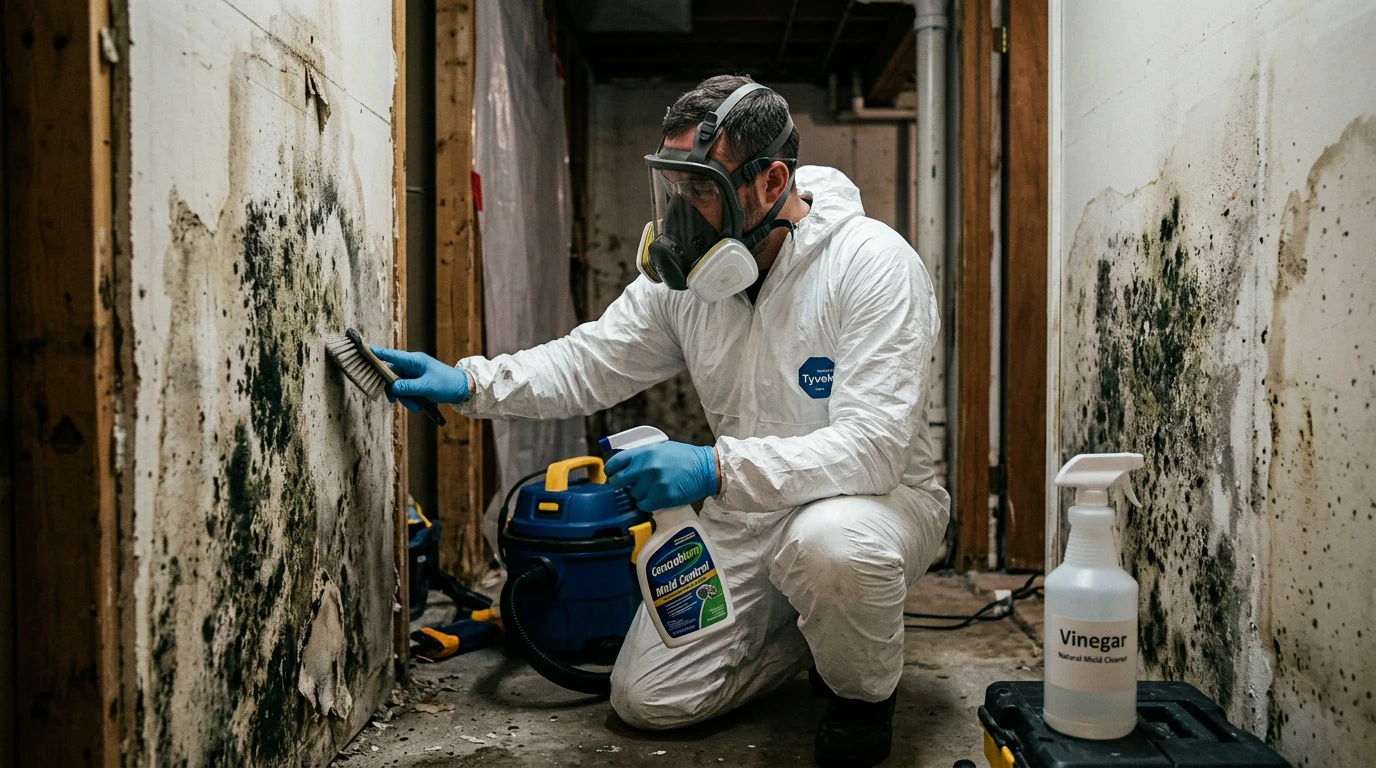
Vinegar does not penetrate porous materials effectively. On drywall, wood, or concrete block, mold hyphae growing beneath the surface layer are largely unaffected by a surface application of vinegar.
How Concrobium Kills Mold
Concrobium Mold Control works through a completely different mechanism. Its alkaline inorganic salt formula (trisodium phosphate + sodium carbonate) dries into a crystalline film that physically crushes mold spores at the microscopic level. Unlike vinegar’s temporary acidic kill, Concrobium’s dried barrier continues to prevent recolonization for weeks to months.
Concrobium’s EPA registration (No. 82552-1) means its efficacy has been independently verified in laboratory testing against specific mold species including Stachybotrys chartarum (black mold), which is notably absent from vinegar’s proven kill list.
Effectiveness: Where Each Approach Works
Light Surface Mold on Hard Surfaces
Both products work. Vinegar kills most common surface mold on tile, countertops, and glass. Concrobium does the same but adds lasting prevention. For a kitchen counter or windowsill with light mold, vinegar is a perfectly reasonable first response.
Chronic or Recurring Mold
Concrobium is the clear winner. If mold keeps returning to the same area — bathroom ceilings, basement walls, window frames — the lack of a residual barrier makes vinegar a temporary fix at best. Concrobium’s antimicrobial film addresses the regrowth problem directly.
Porous Materials
Concrobium wins. Drywall, unfinished wood, concrete block, and fabric all benefit from Concrobium’s ability to form a protective barrier on and within porous substrates. Vinegar cannot penetrate deep enough to reach mold hyphae growing below the surface of porous materials.
Black Mold (Stachybotrys chartarum)
Concrobium has proven, EPA-verified efficacy against Stachybotrys. Vinegar’s effectiveness against black mold specifically is not well-documented in published research. For confirmed or suspected black mold, Concrobium or another EPA-registered antimicrobial is the safer choice.
Safety Comparison
Both products have excellent safety profiles compared to bleach-based alternatives. Neither produces harmful fumes, and both are safe to use indoors without respiratory protection (though a respirator is recommended during any mold disturbance to prevent spore inhalation).
Vinegar cautions: Acetic acid can damage natural stone (marble, granite, travertine), etch aluminum, and corrode iron. Never use vinegar on stone countertops or around metal fixtures. The strong vinegar smell dissipates within a few hours.
Concrobium cautions: Minimal. Can leave a white residue on dark surfaces if over-applied. The manufacturer states it is safe for use on all common building materials.
Cost Analysis
Vinegar is dramatically cheaper: $1–$3 per quart versus $10–$13 for Concrobium. However, the cost calculation changes when considering effectiveness duration and retreatment needs. Vinegar requires reapplication every few days in problem areas, while Concrobium’s barrier lasts 3–6 months. Over a year of treating a chronic mold area, the total cost may be comparable.
Frequently Asked Questions
Is vinegar as effective as Concrobium for mold?
For light surface mold on hard, non-porous surfaces, vinegar provides reasonable short-term results. However, Concrobium is more effective overall: it kills a broader range of mold species, works on porous materials, and provides lasting prevention through its residual barrier. Vinegar lacks EPA registration and has no proven efficacy against black mold specifically.
Can I use vinegar and Concrobium together?
It is best to use them separately. Vinegar is acidic while Concrobium is alkaline — applying them simultaneously could neutralize both products, reducing effectiveness. If using both, apply vinegar first, rinse and dry thoroughly, then apply Concrobium at least 24 hours later.
Does vinegar kill black mold?
Vinegar kills approximately 82% of mold species, but its effectiveness against Stachybotrys chartarum (black mold) specifically is not well-documented in peer-reviewed research. For confirmed black mold, an EPA-registered antimicrobial like Concrobium or RMR-141 is recommended. For mold coverage exceeding 10 square feet, the EPA recommends professional remediation.
Which is better for preventing mold in a bathroom?
Concrobium is better for prevention due to its residual antimicrobial barrier. Apply it to shower walls, ceiling, and grout after cleaning. For daily maintenance, a vinegar spray can help suppress surface mold growth between Concrobium applications. The most important prevention step is improving ventilation — an exhaust fan rated at 1 CFM per square foot of bathroom space is critical.
Final Verdict
Choose vinegar for light surface mold on hard surfaces when budget is the primary concern, the mold problem is mild and non-recurring, and the surfaces are not natural stone or metal.
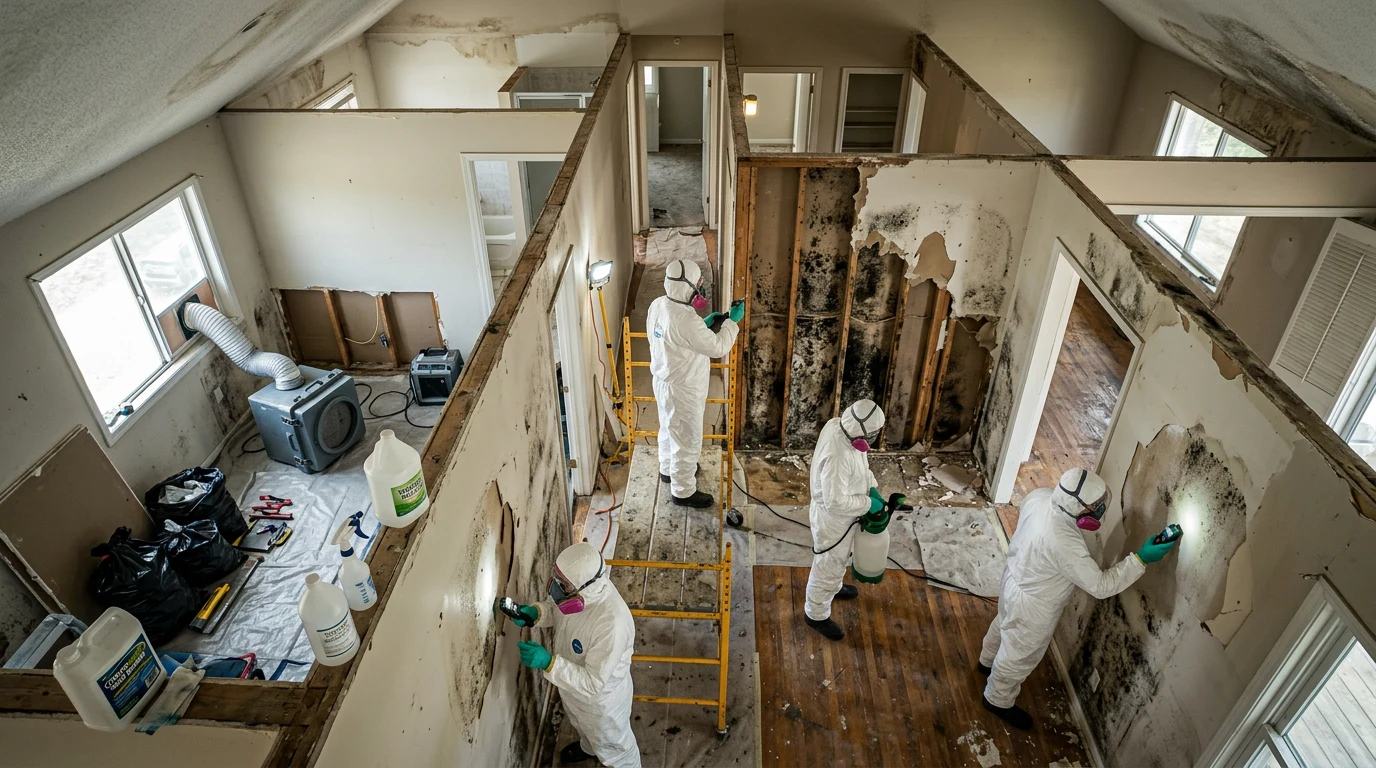
Choose Concrobium for chronic or serious mold problems, porous materials, suspected black mold, areas requiring lasting prevention, and HVAC treatment. The EPA registration provides documented proof of efficacy that vinegar cannot match.
For severe mold with staining: Neither product removes stains. Pair Concrobium with a stain remover like RMR-86 for complete remediation.
What Real Users Say
We analyzed hundreds of first-person experience reports from Reddit communities to surface what homeowners actually report about these products.
White Vinegar (for mold): What 12 Real Users Report
Based on 12 first-person experience reports collected from Reddit communities (r/HomeImprovement, r/CleaningTips, r/Mold, and others).
- applied to visible mold (1)
- removed some mold (1)
- sanitizing agent (1)
- didn’t work on washer mold smell (1)
- didn’t remove stain (1)
- mold returned within one month (1)
- damaged paint (1)
- did not fully remove mold (1)
Data reflects self-reported experiences from public forums. Individual results vary.
Read the full review: Concrobium Mold Control review · RMR-86 Mold Remover review
Frequently Asked Questions
Is vinegar effective at killing mold, and how does it compare to Concrobium?
Vinegar, specifically white vinegar, can kill some types of mold due to its acetic acid content, typically achieving about an 82% kill rate on porous surfaces. However, Concrobium Mold Control is a commercial product designed to encapsulate and eliminate a broader spectrum of mold spores, often offering a more comprehensive and lasting solution than vinegar alone.
What are the primary advantages of using Concrobium over vinegar for mold remediation?
Concrobium Mold Control works by crushing the mold spores as it dries, creating an invisible barrier that prevents future mold growth without bleaching or discolouring surfaces. Unlike vinegar, which primarily kills surface mold and can leave behind stains or odors, Concrobium provides a long-term preventative measure and is odorless.
Are there any situations where vinegar might be a better choice for mold removal than Concrobium?
Vinegar might be preferred for very small, superficial mold spots on non-porous surfaces, especially if you prioritize using natural, non-toxic solutions around children or pets. It’s also a more readily available and inexpensive option for minor clean-ups, though its effectiveness is limited compared to commercial products.
Does Concrobium have any disadvantages compared to using vinegar for mold treatment?
Concrobium is generally more expensive than vinegar and may require a dedicated trip to a hardware store, whereas vinegar is a common household item. While effective, some users might prefer a completely natural approach, even if it’s less potent, for very minor mold issues.

Can Concrobium be used on all surfaces where mold is present, or are there limitations?
Concrobium Mold Control is safe to use on most hard and soft surfaces, including drywall, wood, fabric, and concrete, without discolouring them. However, for extensive mold infestations or situations involving structural damage, professional remediation is always recommended, regardless of the product used.
What are the safety considerations when using either Concrobium or vinegar for mold removal?
When using vinegar, ensure good ventilation to dissipate the strong odor and avoid mixing it with bleach, which creates toxic fumes. For Concrobium, while it’s non-toxic and non-flammable, it’s still advisable to wear gloves and eye protection to prevent skin or eye irritation during application, especially in enclosed spaces.
These statements have not been evaluated by the Food and Drug Administration. This information is not intended to diagnose, treat, cure, or prevent any disease. Content is for informational purposes only and is not medical advice; consult a qualified healthcare provider before starting any supplement. As an Amazon Associate we earn from qualifying purchases.