Mold Removal Cost in San Francisco, CA: 2026 Pricing Guide
If you’re dealing with mold in your San Francisco, CA home, understanding the costs involved is the first step toward getting it resolved. San Francisco, CA has a moderate-high mold risk rating due to its mediterranean (cool marine) climate, 72% average humidity, and 20.7 inches of annual rainfall. This guide breaks down exactly what mold removal costs in San Francisco, what factors affect pricing, and whether you should DIY or hire a professional.
Our reviews are based on aggregated verified buyer feedback, manufacturer specifications, ingredient analysis, and published expert opinion. Products are not independently purchased or tested by our team. We may earn a commission if you purchase through our links, at no extra cost to you. How We Review
San Francisco at a Glance: Mold Risk Profile
| Factor | Detail |
|---|---|
| Population | 873,965 (metro: 4,749,008) |
| Average Home Price | $1,350,000 |
| Climate Zone | Mediterranean (cool marine) |
| Average Humidity | 72% |
| Annual Rainfall | 20.7 inches |
| Mold Risk Rating | Moderate-High |
| Common Housing Types | Victorian homes, Edwardian flats, Marina District fill-built homes, many with no central heating |
Average Mold Removal Costs in San Francisco
| Service | Cost Range |
|---|---|
| Mold Inspection | $400 – $800 |
| Small Area Remediation (under 10 sq ft) | $500 – $1,500 |
| Standard Remediation | $3,000 – $8,000 |
| Whole-House Remediation | $5,000 – $15,000+ |
| Post-Remediation Air Testing | $200 – $400 |
Why Mold Is a Concern in San Francisco
Persistent fog (especially summer), marine air, many older homes lack modern HVAC, poorly ventilated Victorian flats, Marina District built on fill prone to moisture
Local insight: San Francisco’s famous summer fog (known as ‘Karl’) can drop outdoor humidity to 90%+, and since many older Victorian homes lack central heating, indoor surfaces can become cold enough to condense that moisture.
San Francisco Housing and Mold: What to Know
In San Francisco Victorians, the bay window areas are mold hotspots. The projecting windows create cold thermal bridges, and without central heating, condensation forms on the interior glass and wood framing.
Factors That Affect Mold Removal Cost in San Francisco
- Size of affected area: Small bathroom mold vs. entire basement requires different approaches and costs
- Type of mold: Common mold is straightforward; suspected toxic mold (Stachybotrys) requires additional testing and containment
- Location: Accessible areas cost less than mold in crawl spaces, attics, or inside walls
- Cause of moisture: Fixing the underlying moisture issue (plumbing leak, drainage, humidity) adds to total cost
- Materials affected: Drywall replacement costs more than surface cleaning of tile or concrete
- Licensing requirements: California’s Toxic Mold Protection Act + SF Housing Code §1001 covers habitability. SF Rent Board allows rent reduction for mold conditions.
DIY vs. Professional Mold Removal in San Francisco
For small mold areas (under 10 square feet), DIY removal can save you $1,000-$3,000. You’ll need a N95 respirator, mold remover spray, and a moisture meter to verify the area is dry after treatment. For a basic DIY assessment, start with a home mold test kit.
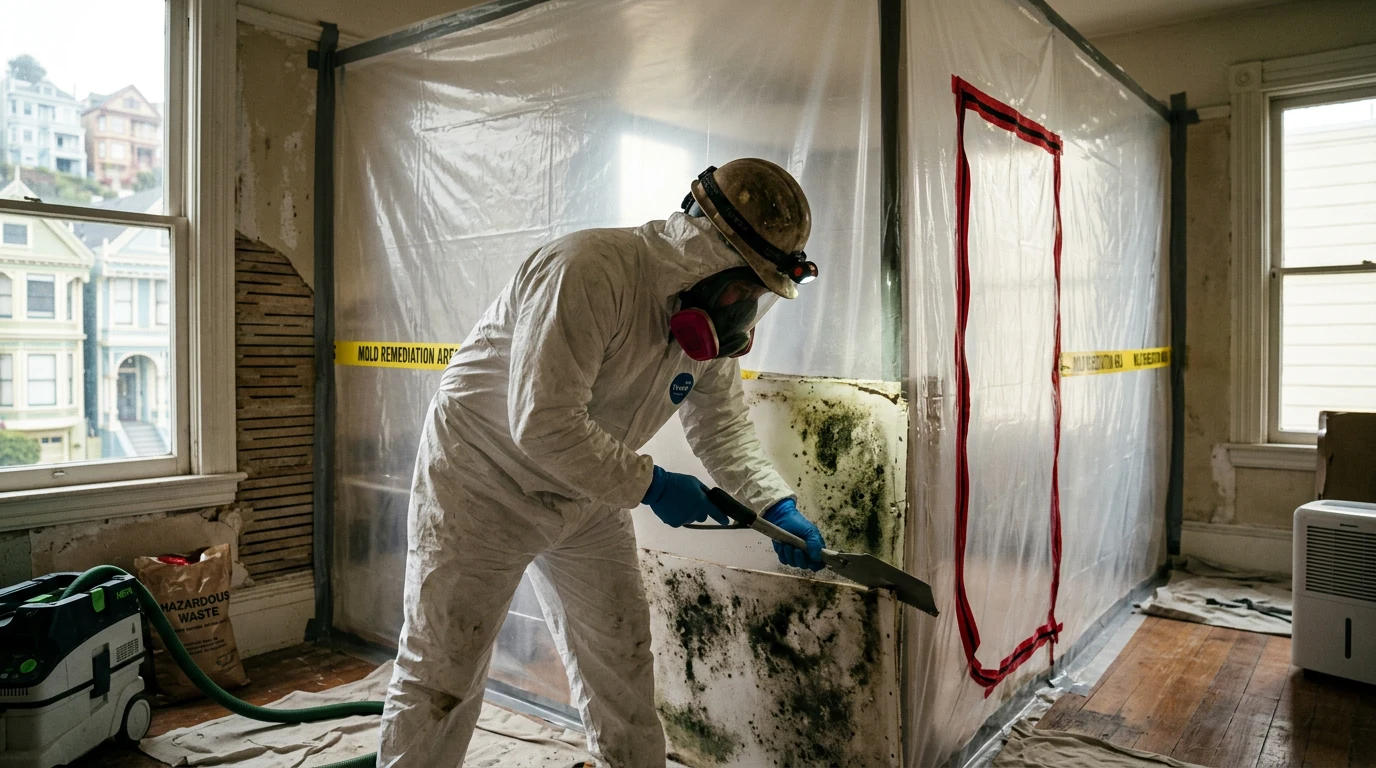
Hire a professional in San Francisco when the affected area is larger than 10 square feet, mold is in your HVAC system, you suspect mold behind walls, or anyone in the household has respiratory health issues. Use our complete DIY mold removal guide for small projects and our guide on when to test for mold to determine if you need professional help.
How to Find a Reputable Mold Remediation Company in San Francisco
- Verify licensing and insurance (check CA requirements)
- Get at least 3 written estimates
- Ask for references from recent San Francisco-area jobs
- Ensure they follow IICRC S520 mold remediation standards
- Use a different company for testing and remediation (avoids conflict of interest)
- Get a written scope of work before any work begins
Common Mold Questions in San Francisco
Does San Francisco fog cause mold?
Can I get a rent reduction for mold in SF?
How do I prevent mold in a Victorian flat?
Mold Removal Cost Breakdown by Room
The location of mold within a San Francisco home significantly affects remediation costs. Different rooms present unique challenges, from bathroom humidity to basement moisture and attic condensation issues common in older Victorian homes.
| Room/Area | Typical Cost Range | Common Issues |
|---|---|---|
| Bathroom | $500 – $2,000 | Poor ventilation, shower leaks, humidity |
| Kitchen | $800 – $3,000 | Under-sink leaks, dishwasher issues, steam |
| Basement/Crawl Space | $1,500 – $5,000 | Foundation moisture, poor ventilation |
| Attic | $1,200 – $4,000 | Roof leaks, condensation, poor insulation |
| Living Areas | $1,000 – $4,500 | Window condensation, plumbing leaks |
| Whole House | $5,000 – $20,000+ | HVAC contamination, widespread moisture |
Bathroom mold removal in San Francisco typically costs less because the affected areas are smaller and more accessible. However, Victorian-era bathrooms with original tile work may require specialized restoration techniques that increase costs. Kitchen remediation often involves appliance removal and under-cabinet work, driving up labor costs. In San Francisco’s Marina District, basement and crawl space mold is particularly expensive due to the area’s fill-based construction, which creates ongoing moisture challenges requiring comprehensive waterproofing solutions alongside mold removal.
Attic mold remediation costs vary significantly based on accessibility and insulation replacement needs. Many San Francisco Victorian homes have difficult-to-access attics, increasing labor time and costs. Whole-house remediation is most expensive but may be necessary when mold has spread through HVAC systems or when multiple moisture sources have created widespread contamination throughout the property.
How San Francisco’s Climate Affects Mold Growth and Costs
San Francisco’s Mediterranean cool marine climate creates unique conditions that directly impact both mold growth patterns and remediation costs. The city’s 72% average humidity level stays consistently above the 60% threshold where mold growth accelerates, while the annual rainfall of 20.7 inches, though moderate, is concentrated in winter months creating seasonal moisture spikes.
The famous San Francisco fog, particularly the summer marine layer known as “Karl,” creates humidity levels that can reach 90% or higher. When this moisture-laden air encounters the cold interior surfaces of Victorian homes lacking central heating, condensation forms on windows, walls, and hidden areas like wall cavities. This persistent moisture cycle drives higher mold remediation costs because the underlying moisture source is environmental rather than a simple leak that can be fixed.
San Francisco’s climate affects remediation costs in several ways. First, the persistent humidity means more thorough drying procedures are needed, extending project timelines and labor costs. Second, the marine environment accelerates corrosion in building materials, often requiring more extensive material replacement. Third, the concentrated rainy season from November through March means scheduling remediation during dry periods can be challenging, potentially leading to premium pricing during peak demand periods. Professional remediation companies in San Francisco often need to install more powerful dehumidification equipment and run it longer than in drier climates, adding to overall project costs.
Seasonal Considerations for Mold Removal in San Francisco
Mold problems in San Francisco follow predictable seasonal patterns that affect both the likelihood of discovery and the cost of remediation. The city’s wet season, running from November through March, sees the highest incidence of new mold growth as rainwater infiltration combines with reduced ventilation in closed-up homes. During this period, homeowners typically discover mold issues that may have been developing since the previous winter.
The optimal time for scheduling mold remediation in San Francisco is during the dry season, particularly April through October. During these months, lower outdoor humidity levels and minimal rainfall create ideal conditions for thorough drying and prevent recontamination during the remediation process. However, this is also peak season for remediation companies, which can drive costs up by 10-20% due to higher demand.
Summer fog season presents unique challenges for remediation scheduling. While rainfall is minimal, the persistent marine layer can maintain high humidity levels that interfere with drying processes. Professional remediation companies often need to factor in additional dehumidification time during heavy fog periods, potentially extending project timelines. Winter remediation is possible but requires more extensive moisture control measures and temporary heating solutions, increasing costs by 15-25% compared to dry season work. Planning remediation for late spring (April-May) or early fall (September-October) typically offers the best balance of favorable weather conditions and reasonable pricing.
What to Expect During Professional Mold Remediation
Professional mold remediation in San Francisco follows established protocols designed to safely remove mold while preventing cross-contamination. The process begins with a comprehensive assessment where technicians identify the extent of contamination, moisture sources, and affected materials. This initial phase typically takes 2-4 hours and determines the scope of containment and removal procedures needed.
The containment phase involves sealing off affected areas using plastic sheeting and creating negative air pressure to prevent mold spores from spreading to clean areas. In Victorian homes, this often requires careful navigation around ornate architectural features and older electrical systems. Technicians remove contaminated materials such as drywall, insulation, and carpeting, following EPA guidelines for safe disposal. HEPA filtration systems run continuously during this phase to capture airborne spores.
The cleaning and treatment phase uses antimicrobial solutions to treat remaining surfaces and structural materials. In San Francisco’s older homes, this often involves specialized techniques for cleaning historic woodwork and plaster without causing damage. The entire remediation process typically takes 3-7 days depending on the scope, with larger projects requiring additional time for materials to dry completely in the city’s humid climate. Homeowners should plan to stay elsewhere during active remediation, particularly if the HVAC system is contaminated. Final clearance testing ensures the work meets safety standards before reoccupation.
Insurance Coverage for Mold Removal in CA
California homeowner’s insurance policies have specific limitations regarding mold coverage that San Francisco residents should understand before filing claims. Most standard policies cover mold damage only when it results from a covered peril such as a burst pipe, appliance leak, or storm damage. Mold resulting from maintenance issues, long-term leaks, flooding, or high humidity is typically excluded from coverage.
Under California’s Toxic Mold Protection Act, insurance companies must clearly disclose mold coverage limitations in policies. Many insurers cap mold coverage at $5,000-$10,000 unless homeowners purchase additional coverage. Given San Francisco’s average remediation costs of $3,000-$8,000, this coverage may be insufficient for larger projects. Some insurers offer enhanced mold coverage as an endorsement for an additional premium.
When filing a mold claim in San Francisco, document the initial water damage immediately and begin mitigation within 24-48 hours to prevent exclusions based on delayed response. Take photos of both the water source and any visible mold growth. Insurance adjusters will investigate whether the mold resulted from a covered event or from maintenance negligence. Working with a certified mold testing company can provide documentation needed to support insurance claims and establish that remediation meets industry standards.
Frequently Asked Questions
How much does mold removal cost in San Francisco?
The average mold remediation cost in San Francisco, CA ranges from $3,000 – $8,000 depending on the size of the affected area, type of mold, and accessibility. Small bathroom mold removal may cost $500-$1,000, while whole-house remediation can exceed $10,000.
How much does a mold inspection cost in San Francisco?
A professional mold inspection in San Francisco, CA typically costs $400 – $800. This usually includes a visual assessment, moisture readings, and may include air or surface sampling.
Does homeowner’s insurance cover mold removal in CA?
Most homeowner’s insurance policies in CA cover mold damage if it results from a covered peril (like a burst pipe). Mold from maintenance neglect, flooding, or humidity is typically not covered. Check your specific policy.
Can I remove mold myself in San Francisco?
For small areas (under 10 square feet), DIY removal is feasible with proper PPE. For larger areas or if you have health concerns, hire a professional mold remediation company in San Francisco, CA. CA may require licensed professionals for certain projects.
Does San Francisco fog cause mold?
Yes, San Francisco’s fog creates high humidity levels (up to 90%) that promote mold growth, especially in older homes without central heating where cold surfaces cause condensation. The marine layer known as “Karl” is a major contributor to indoor moisture problems in Victorian-era buildings.
Can I get a rent reduction for mold in SF?
Under SF Housing Code §1001 and the city’s habitability requirements, tenants may be entitled to rent reductions for mold conditions that affect habitability. The SF Rent Board handles these cases, and tenants should document mold issues and notify landlords in writing before pursuing rent reduction claims.
How do I prevent mold in a Victorian flat?
Prevent mold in Victorian flats by improving ventilation with exhaust fans, using dehumidifiers during fog season, sealing windows properly, and addressing condensation in bay window areas. Consider installing proper heating to reduce cold surface condensation and use mold test kits for early detection.
What are the common mold hotspots in San Francisco homes?
Common mold hotspots in San Francisco include bay window areas in Victorian homes, bathrooms with poor ventilation, basements and crawl spaces (especially in the Marina District), areas around single-pane windows, and underneath kitchen sinks. The projecting bay windows create thermal bridges that promote condensation and mold growth.
How long does professional mold remediation take in San Francisco?
Professional mold remediation in San Francisco typically takes 3-7 days depending on the scope of work. Small bathroom projects may be completed in 1-2 days, while whole-house remediation can take 1-2 weeks. San Francisco’s humid climate may extend drying times, particularly during fog season.
Should I test for mold before or after remediation?
Both pre and post-remediation testing are recommended in San Francisco. Pre-remediation testing with an air quality test establishes baseline contamination levels, while post-remediation clearance testing confirms the work was successful. Use different companies for testing and remediation to avoid conflicts of interest.