Mold Removal Cost in Miami, FL: 2026 Pricing Guide
If you’re dealing with mold in your Miami, FL home, understanding the costs involved is the first step toward getting it resolved. Miami, FL has a very high mold risk rating due to its tropical monsoon climate, 76% average humidity, and 61.9 inches of annual rainfall. This guide breaks down exactly what mold removal costs in Miami, what factors affect pricing, and whether you should DIY or hire a professional.
Our reviews are based on aggregated verified buyer feedback, manufacturer specifications, ingredient analysis, and published expert opinion. Products are not independently purchased or tested by our team. We may earn a commission if you purchase through our links, at no extra cost to you. How We Review
Miami at a Glance: Mold Risk Profile
| Factor | Detail |
|---|---|
| Population | 442,241 (metro: 6,138,333) |
| Average Home Price | $580,000 |
| Climate Zone | Tropical monsoon |
| Average Humidity | 76% |
| Annual Rainfall | 61.9 inches |
| Mold Risk Rating | Very High |
| Common Housing Types | Concrete block construction (CBS), condos and high-rises, older homes with flat roofs |
Average Mold Removal Costs in Miami
| Service | Cost Range |
|---|---|
| Mold Inspection | $350 – $700 |
| Small Area Remediation (under 10 sq ft) | $500 – $1,500 |
| Standard Remediation | $2,000 – $6,000 |
| Whole-House Remediation | $5,000 – $15,000+ |
| Post-Remediation Air Testing | $200 – $400 |
Why Mold Is Common in Miami
Tropical climate with year-round warmth and humidity, hurricane season flooding, ocean salt air accelerates deterioration, many buildings have poor ventilation
Local insight: Miami-Dade County requires licensed mold assessors and remediators by law, one of the strictest mold regulation environments in the US. Florida is the only state requiring separate licenses for mold assessment and remediation.
Miami Housing and Mold: What to Know
In Miami condos, check behind bathroom vanities and under kitchen sinks where CBS walls meet interior finishes. Salt air corrosion often creates hidden moisture pathways.
Factors That Affect Mold Removal Cost in Miami
- Size of affected area: Small bathroom mold vs. entire basement requires different approaches and costs
- Type of mold: Common mold is straightforward; suspected toxic mold (Stachybotrys) requires additional testing and containment
- Location: Accessible areas cost less than mold in crawl spaces, attics, or inside walls
- Cause of moisture: Fixing the underlying moisture issue (plumbing leak, drainage, humidity) adds to total cost
- Materials affected: Drywall replacement costs more than surface cleaning of tile or concrete
- Licensing requirements: Florida Statute 404.056 covers mold assessment and remediation licensing. Landlords must maintain premises in compliance with building/housing codes. Mold assessors and remediators must be state-licensed.
DIY vs. Professional Mold Removal in Miami
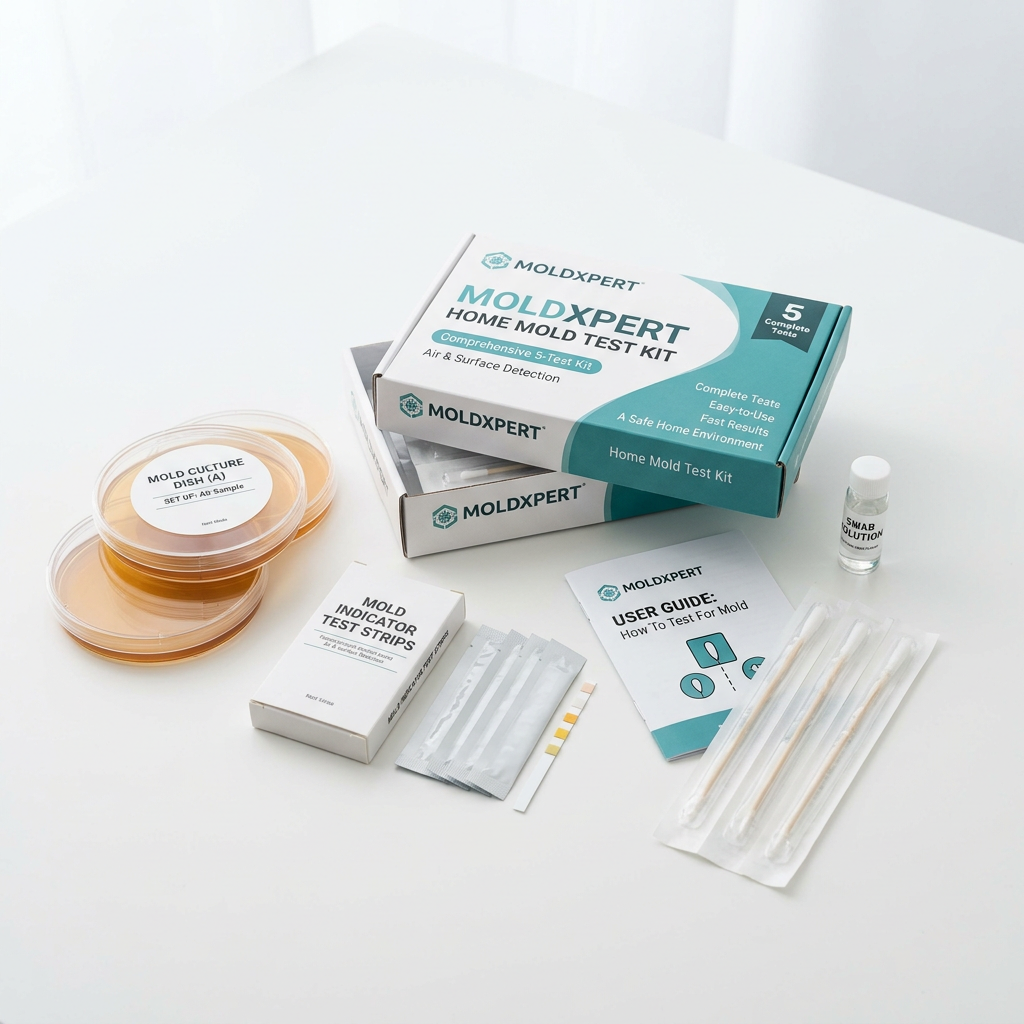
For small mold areas (under 10 square feet), DIY removal can save you $1,000-$3,000. You’ll need a N95 respirator, mold remover spray, and a moisture meter to verify the area is dry after treatment. For a basic DIY assessment, start with a home mold test kit.
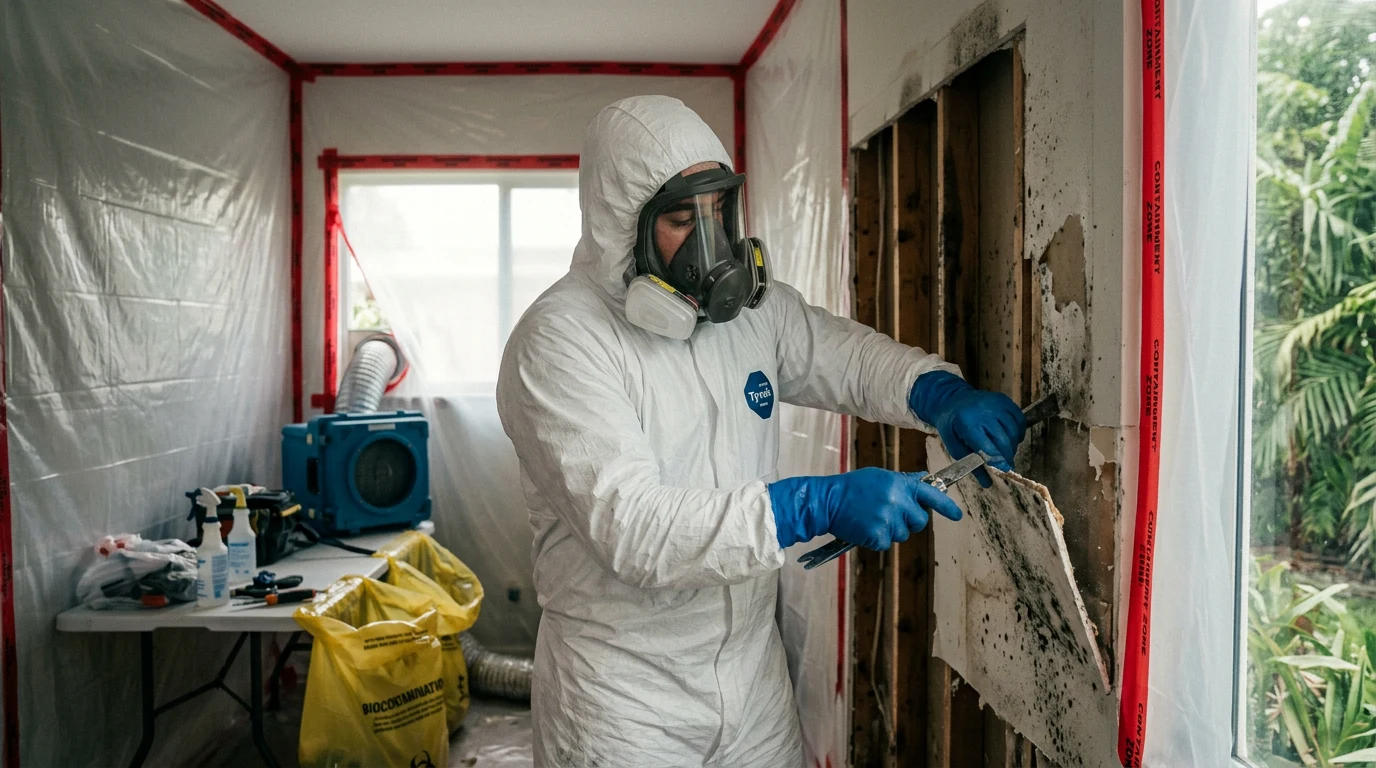
Hire a professional in Miami when the affected area is larger than 10 square feet, mold is in your HVAC system, you suspect mold behind walls, or anyone in the household has respiratory health issues. Use our complete DIY mold removal guide for small projects and our guide on when to test for mold to determine if you need professional help.
How to Find a Reputable Mold Remediation Company in Miami
- Verify licensing and insurance (check FL requirements)
- Get at least 3 written estimates
- Ask for references from recent Miami-area jobs
- Ensure they follow IICRC S520 mold remediation standards
- Use a different company for testing and remediation (avoids conflict of interest)
- Get a written scope of work before any work begins
Mold Removal Cost Breakdown by Room
Mold remediation costs in Miami vary significantly depending on the room and its specific challenges. Bathrooms typically present the most common mold issues due to poor ventilation and constant moisture exposure in CBS construction. The concrete block walls common in Miami homes can harbor moisture behind shower surrounds, making bathroom mold particularly expensive to address properly.
| Room | Cost Range | Miami-Specific Considerations |
|---|---|---|
| Bathroom | $800 – $2,500 | CBS wall moisture penetration, tile grout replacement |
| Kitchen | $1,000 – $3,000 | Behind cabinets, under sinks, dishwasher leaks |
| Basement/Crawl Space | $1,500 – $4,500 | Limited basements in Miami; focus on ground-level moisture |
| Attic | $2,000 – $5,000 | Flat roof leaks, AC condensation issues |
| Living Areas | $1,200 – $3,500 | Hurricane damage aftermath, AC duct contamination |
| Whole House | $8,000 – $25,000 | Post-hurricane flooding, major plumbing failures |
Kitchen mold removal in Miami homes often involves addressing moisture issues where CBS construction meets interior finishes. The salt air accelerates corrosion of metal fixtures, creating unexpected leak points that lead to hidden mold growth. Professional remediation companies typically need to remove sections of cabinetry to properly access affected areas, increasing costs compared to other markets.
Due to Miami’s flat roof construction and minimal basement construction, attic mold issues often stem from air conditioning condensation problems and roof membrane failures during hurricane season. The combination of extreme heat and humidity makes attic remediation particularly challenging and expensive, often requiring specialized equipment and extended drying periods.
How Miami’s Climate Affects Mold Growth and Costs
Miami’s tropical monsoon climate creates ideal conditions for mold growth year-round, with 76% average humidity levels that consistently exceed the EPA’s recommended indoor humidity of 30-50%. The city receives 61.9 inches of annual rainfall, concentrated heavily during the June through November hurricane season, creating periods of extreme moisture stress on buildings.
The consistent year-round temperatures between 70-85°F mean that mold spores remain active continuously, unlike northern climates where winter freezing provides natural mold control. This constant activity means Miami homeowners face ongoing mold pressure, requiring more frequent professional interventions and higher-grade HEPA air purifiers for prevention.
Ocean salt air compounds the problem by accelerating corrosion of building materials and creating microscopic pathways for moisture penetration. Professional remediation companies in Miami often discover extensive hidden mold growth behind seemingly intact surfaces, requiring more invasive and expensive removal procedures. The combination of salt air and high humidity also means that standard drying techniques take longer to achieve proper moisture levels, extending project timelines and increasing labor costs by 15-30% compared to drier climates.
Seasonal Considerations for Mold Removal in Miami
Mold issues peak in Miami during the wet season from May through October, when humidity levels regularly exceed 80% and afternoon thunderstorms provide daily moisture inputs. Hurricane season brings the most severe mold challenges, with major storms creating widespread water intrusion that leads to community-wide mold problems and higher remediation costs due to increased demand.
The optimal time for scheduling non-emergency mold remediation in Miami falls during the dry season from December through April. During these months, lower humidity levels (averaging 65-70%) help remediation efforts cure faster and more completely. Professional companies also offer lower pricing during this slower season, with homeowners potentially saving 10-20% on non-urgent projects.
Emergency mold remediation following hurricane damage commands premium pricing, often 25-50% higher than normal rates due to high demand and challenging working conditions. Homeowners should expect longer wait times for professional services during peak storm season and consider using mold testing kits to document issues while waiting for professional assessment.
What to Expect During Professional Mold Remediation
Professional mold remediation in Miami follows IICRC S520 standards and begins with containment setup to prevent cross-contamination. Due to Miami’s open-plan condo and home designs, establishing proper containment often requires more extensive plastic sheeting and negative air pressure systems than in traditional compartmentalized homes.
The remediation process typically takes 3-7 days for standard residential projects, though Miami’s high humidity can extend drying times. Professional teams use commercial dehumidifiers and air movers to achieve moisture levels below 15% in affected materials. The salt air environment requires special attention to metal fixtures and fasteners, which may need replacement even if not directly mold-affected.
Homeowners should vacate the affected areas during active remediation and plan for potential displacement if whole-house treatment is required. Post-remediation verification includes clearance testing with air quality testing to ensure spore counts return to normal levels. The final step involves moisture source correction, which in Miami often includes improving ventilation systems and addressing building envelope issues specific to coastal construction.
Insurance Coverage for Mold Removal in FL
Florida insurance policies typically provide limited mold coverage, usually capped at $10,000 for mold damage resulting from covered perils like burst pipes or roof leaks. However, mold resulting from flooding, maintenance neglect, or humidity issues generally falls outside standard homeowner’s coverage, making it particularly important for Miami residents to understand their policy limitations.
Due to Florida’s high mold risk, many insurers require prompt notification within 24-48 hours of discovering water damage to maintain coverage eligibility. Miami homeowners should document mold conditions immediately with photos and consider professional mold testing to establish the extent and cause before beginning remediation work.
Condo owners face additional complexity, as mold affecting common areas or building systems may fall under the HOA’s master policy rather than individual unit coverage. Understanding the division of responsibility between unit owner and association policies is crucial for Miami condo residents, particularly regarding mold in shared wall systems or building-wide HVAC contamination.
Common Mold Questions in Miami
Is my Miami landlord responsible for mold removal?
Under Florida law, landlords are responsible for maintaining rental properties in habitable condition, which includes addressing mold issues caused by structural problems, plumbing leaks, or inadequate ventilation. However, mold caused by tenant behavior like poor ventilation or unreported water damage may be the tenant’s responsibility. Miami-Dade County requires landlords to use licensed mold professionals for remediation work exceeding 10 square feet.
How do I find a licensed mold assessor in Miami-Dade?
Miami-Dade County maintains a registry of licensed mold assessors and remediators through the Florida Department of Business and Professional Regulation. Search the DBPR website for licensed professionals in your area, and verify that assessors hold separate licenses from remediators to avoid conflicts of interest. Licensed assessors must carry liability insurance and complete continuing education requirements.
Does condo insurance cover mold in Miami?
Condo insurance coverage for mold depends on whether the issue affects your unit or common areas. Unit owner policies typically cover mold damage from sudden water damage like appliance leaks, while the HOA master policy may cover mold in shared walls or building systems. Review both policies carefully and consider additional mold coverage riders, which are commonly available in Florida due to high risk levels.
Frequently Asked Questions
How much does mold removal cost in Miami?
The average mold remediation cost in Miami, FL ranges from $2,000 – $6,000 depending on the size of the affected area, type of mold, and accessibility. Small bathroom mold removal may cost $500-$1,000, while whole-house remediation can exceed $10,000.
How much does a mold inspection cost in Miami?
A professional mold inspection in Miami, FL typically costs $350 – $700. This usually includes a visual assessment, moisture readings, and may include air or surface sampling.
Does homeowner’s insurance cover mold removal in FL?
Most homeowner’s insurance policies in FL cover mold damage if it results from a covered peril (like a burst pipe). Mold from maintenance neglect, flooding, or humidity is typically not covered. Check your specific policy.
Can I remove mold myself in Miami?
For small areas (under 10 square feet), DIY removal is feasible with proper PPE. For larger areas or if you have health concerns, hire a professional mold remediation company in Miami, FL. FL may require licensed professionals for certain projects.
Why is mold so common in Miami homes?
Miami’s tropical monsoon climate creates ideal mold conditions with 76% average humidity, 61.9 inches of annual rainfall, and year-round warm temperatures. Ocean salt air accelerates building material deterioration, while concrete block construction and flat roofs common in Miami can trap moisture. Hurricane season flooding adds additional mold risk factors unique to South Florida.
How long does mold remediation take in Miami?
Standard mold remediation in Miami takes 3-7 days, though high humidity levels can extend drying times. Small bathroom projects may complete in 1-2 days, while whole-house remediation can take 1-2 weeks. Hurricane season projects often take longer due to widespread moisture issues and high demand for professional services.
What should I test for mold in Miami before buying a home?
Pre-purchase mold inspections in Miami should include moisture meter readings of CBS walls, infrared thermal imaging to detect hidden water damage, and air quality sampling for spore counts. Focus on areas where concrete block meets interior finishes, around flat roof drain systems, and in any areas with previous hurricane water damage. Consider an ERMI test for comprehensive mold species identification.
Are there specific Miami building codes for mold prevention?
Miami-Dade County follows Florida Building Code requirements for moisture control and ventilation. New construction must include vapor barriers, proper drainage systems, and adequate ventilation to prevent mold growth. The county also requires licensed professionals for mold assessment and remediation work, with specific protocols for post-hurricane building restoration to prevent widespread mold issues.
Should I get a mold inspection after hurricane damage in Miami?
Yes, professional mold inspection is recommended within 24-48 hours after any hurricane water intrusion. Miami’s climate allows mold growth to begin within 24-48 hours of water damage, and early detection prevents more extensive and costly remediation later. Document conditions immediately for insurance purposes and use mycotoxin testing if health symptoms develop after storm exposure.
What’s the difference between mold assessment and remediation licenses in Florida?
Florida requires separate licenses for mold assessment and mold remediation to prevent conflicts of interest. Mold assessors inspect, test, and develop remediation protocols but cannot perform the actual cleanup work. Mold remediators execute the cleanup plan but cannot assess their own work. This separation ensures objective evaluation and proper remediation standards, making Florida one of the most regulated mold states in the US.