Best Mold Inspectors in Nashville, TN: How to Choose (2026)
Finding a qualified mold inspector in Nashville, TN is crucial for protecting your home and family. With Nashville, TN’s high mold risk profile (69% average humidity, 47.3 inches of annual rainfall), knowing how to choose the right inspector can save you thousands in unnecessary remediation costs.
Our reviews are based on aggregated verified buyer feedback, manufacturer specifications, ingredient analysis, and published expert opinion. Products are not independently purchased or tested by our team. We may earn a commission if you purchase through our links, at no extra cost to you. How We Review
Nashville Mold Risk Profile
| Factor | Detail |
|---|---|
| Mold Risk Rating | High |
| Climate Zone | Humid subtropical |
| Average Humidity | 69% |
| Annual Rainfall | 47.3 inches |
| Avg Inspection Cost | $275 – $500 |
| Avg Remediation Cost | $1,500 – $4,500 |
Why Nashville Homes Need Mold Inspections
Limestone bedrock channels water toward foundations, heavy spring rains, rapid development on flood plains, many older homes lack modern moisture barriers
Did you know? Nashville experienced major flooding in 2010 (Cumberland River crested at 51.9 feet) and again in 2021, leaving thousands of homes with lingering moisture issues.
Nashville-Specific Mold Concerns
Nashville’s limestone bedrock creates natural water channels. If your home has a basement, check where the foundation meets the floor slab for efflorescence (white mineral deposits), which indicates water migration.
Common housing in Nashville, TN includes mix of historic homes, new construction, many with basements and crawl spaces. Each housing type has unique mold vulnerabilities that an experienced local inspector will know to check.
What a Professional Mold Inspection Includes
- Visual inspection: Systematic check of all rooms, focusing on moisture-prone areas (bathrooms, kitchen, basement, crawl space, attic)
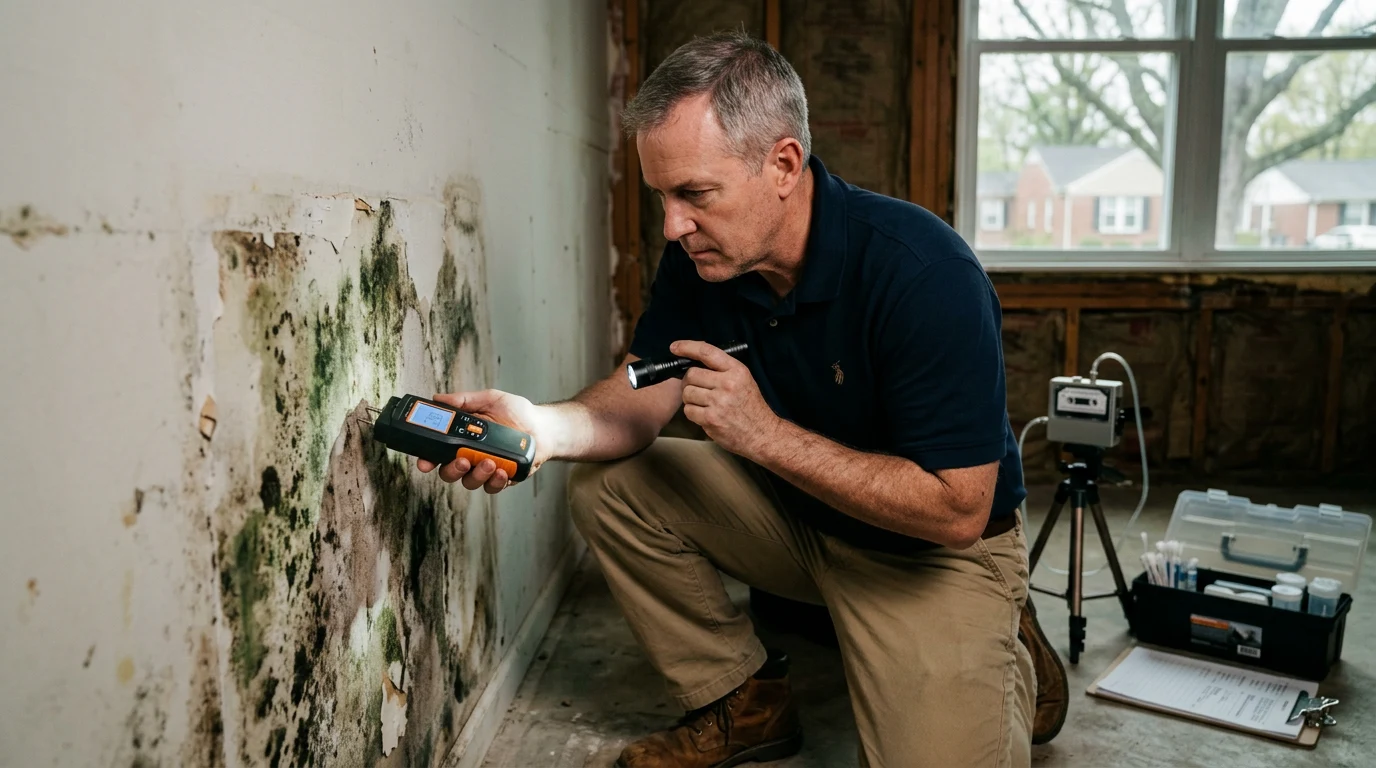
- Moisture readings: Professional-grade moisture meters to detect hidden moisture in walls, floors, and ceilings
- Air sampling: Indoor vs. outdoor spore count comparison to determine if mold levels are elevated
- Surface sampling: Swab or tape-lift samples from suspect areas, sent to an accredited lab
- Humidity assessment: Check HVAC performance, ventilation, and recommend a dehumidifier if needed
- Written report: Detailed findings with photos, lab results, and remediation recommendations
How to Choose a Mold Inspector in Nashville
- Check certifications: ACAC, IICRC, or state license (if TN requires it)
- Verify independence: The inspector should NOT also offer remediation services (conflict of interest)
- Ask about lab accreditation: Samples should go to an AIHA (American Industrial Hygiene Association) accredited lab
- Request references: Ask for recent Nashville-area inspection references
- Confirm insurance: Errors and omissions (E&O) insurance and general liability
- Get a written scope: Know exactly what the inspection covers before agreeing
Red Flags When Choosing a Mold Inspector
- Inspector also offers remediation services (conflict of interest)
- No certifications or unwilling to share credentials
- Pressure to sign a remediation contract immediately
- Extremely low price (may skip air/surface sampling)
- No written report included
- Uses scare tactics about “toxic mold” without lab confirmation
Questions to Ask Before Hiring
- What certifications do you hold?
- Are you independent from remediation companies?
- Which accredited lab do you use for samples?
- What does your inspection include, and what’s not included?
- How soon will I receive the written report?
- Do you carry E&O insurance?
- Are you familiar with Nashville’s common housing types and mold patterns?
TN Mold Laws and Regulations
Tennessee Uniform Residential Landlord Tenant Act (T.C.A. § 66-28-304) requires landlords to maintain fit and habitable premises. No specific mold statute.
DIY Mold Testing: When It Makes Sense
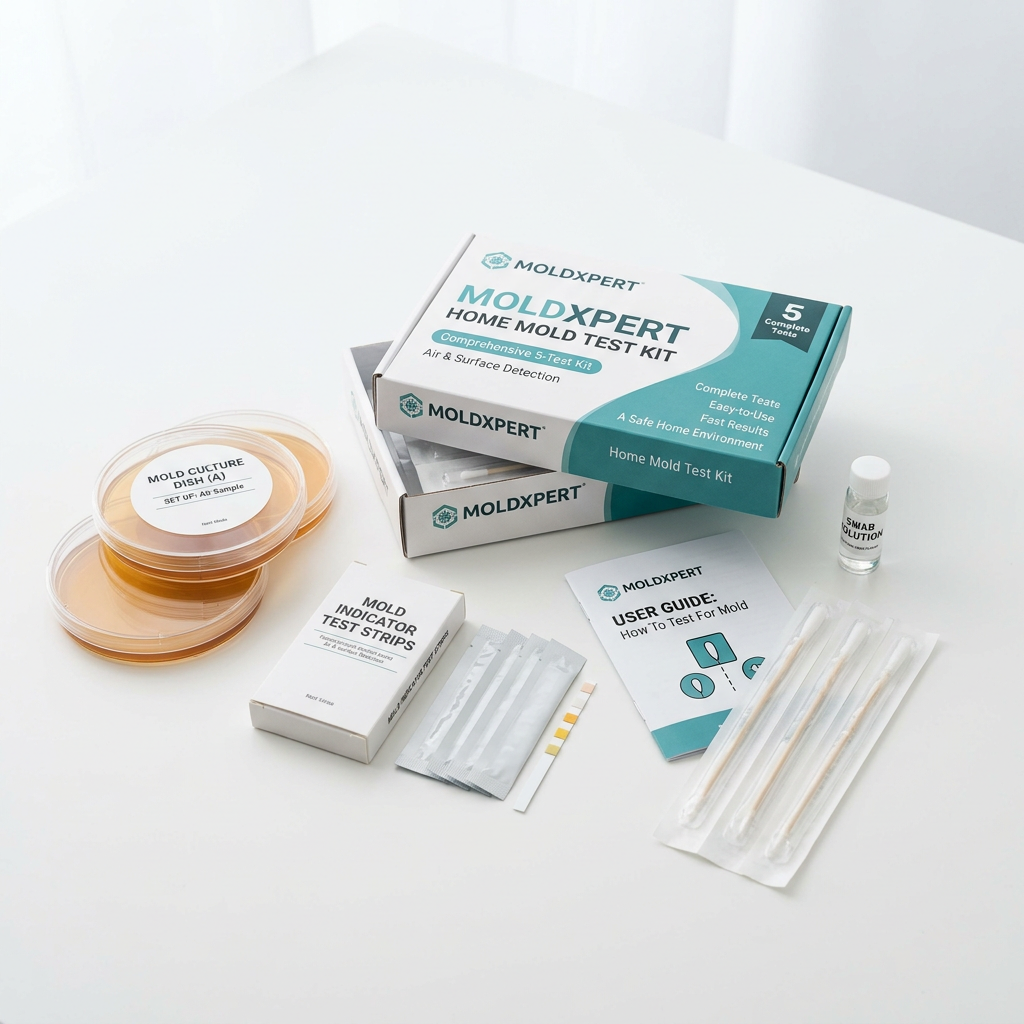
If you’re not ready for a professional inspection, a home mold test kit can give you initial information. These kits cost $30-$50 and can confirm whether mold is present, though they don’t replace a professional assessment. Read our complete mold testing guide for more information on when to test for mold.
Common Mold Questions in Nashville
Does Nashville’s limestone affect basement mold?
How quickly should I address mold after Nashville flooding?
Are Nashville home inspections required to check for mold?
What to Expect During a Mold Inspection in Nashville
A professional mold inspection in Nashville follows a systematic step-by-step process designed to identify both visible mold growth and hidden moisture issues that could lead to future problems. Understanding what to expect helps Nashville homeowners prepare for the inspection and ensures they receive comprehensive service.
The inspection begins with a thorough visual assessment of all areas in the home. The certified inspector examines moisture-prone areas including bathrooms, kitchens, basements, crawl spaces, and attics. In Nashville’s humid subtropical climate, inspectors pay special attention to HVAC systems, windows with condensation issues, and areas where Nashville’s limestone bedrock may be channeling water toward the foundation.
Next, the inspector uses professional-grade moisture mapping equipment, including infrared cameras and moisture meters, to detect hidden moisture in walls, floors, and ceilings. This technology reveals moisture intrusion that isn’t visible to the naked eye but could indicate conditions favorable to mold growth. The inspector documents moisture readings throughout the home, creating a comprehensive moisture map.
Air sampling and surface sampling procedures follow specific protocols established by industry organizations like the ACAC (American Council for Accredited Certification). Air samples compare indoor spore counts to outdoor baseline levels, while surface samples from suspected areas are collected using swab or tape-lift methods. All samples are sent to an AIHA-accredited laboratory for analysis.
The entire inspection process typically takes 1-3 hours for a typical Nashville home, depending on the size of the property and number of areas requiring detailed assessment. After completing the on-site inspection, the inspector prepares a comprehensive written report that includes detailed findings, photographs of problem areas, laboratory results, moisture readings, and specific remediation recommendations if mold is found.
Mold Inspector Certification and Licensing Requirements in TN
Tennessee does not currently require state licensing for mold inspectors, which places the responsibility on Nashville homeowners to verify that their inspector holds appropriate certifications from nationally recognized organizations. The most reputable certifications include ACAC (American Council for Accredited Certification), IICRC (Institute of Inspection Cleaning and Restoration Certification), and NAMP (National Association of Mold Professionals).
ACAC certification is considered the gold standard for mold inspectors, requiring extensive training in mold inspection protocols, sampling techniques, and report writing. ACAC-certified inspectors must complete continuing education requirements to maintain their certification, ensuring they stay current with industry best practices and evolving standards.
Nashville homeowners should understand the distinction between certified mold inspectors, mold assessors, and mold remediators. Mold inspectors conduct initial assessments to determine if mold is present. Mold assessors typically work on larger commercial projects and may design remediation protocols. Mold remediators perform the actual cleanup work but should never also conduct the initial inspection due to conflicts of interest.
Insurance requirements are crucial when hiring a mold inspector in Nashville. Qualified inspectors carry errors and omissions (E&O) insurance to protect against professional mistakes, plus general liability insurance to cover potential property damage during the inspection process. Homeowners should request proof of insurance before allowing the inspector to begin work.
Before hiring any mold inspector in Tennessee, verify their credentials through the certifying organization’s website. Legitimate inspectors willingly provide certification numbers and insurance documentation. This verification process protects Nashville homeowners from unqualified individuals who may provide inaccurate assessments or recommendations.
Red Flags When Hiring a Mold Inspector in Nashville
The biggest red flag when hiring a mold inspector in Nashville is an inspector who also offers remediation services. This creates an inherent conflict of interest where the inspector has financial incentive to find problems that require expensive remediation. Reputable mold inspection companies maintain independence from remediation contractors to ensure unbiased assessments.
Inspectors who refuse to provide a detailed written report or offer only vague verbal findings should be avoided. Professional mold inspections require comprehensive documentation including photographs, moisture readings, sampling locations, and laboratory results. Nashville homeowners need this documentation for insurance claims, real estate transactions, and remediation planning.
High-pressure tactics or scare tactics about “toxic mold” without laboratory confirmation indicate an unethical inspector. While some molds can cause health issues, legitimate inspectors let laboratory analysis determine mold species and concentrations before making health-related claims. Inspectors who use fear to pressure immediate remediation contracts are likely more interested in profit than accurate assessment.
Unusually low prices often indicate corners being cut in the inspection process. Professional mold inspections require expensive equipment, laboratory analysis, and comprehensive reporting. Inspectors offering significantly below-market rates may skip air sampling, surface sampling, or detailed moisture mapping that could miss important mold issues in Nashville’s high-risk environment.
Questions to Ask Before Hiring a Mold Inspector
Start by asking about certifications and training. A qualified Nashville mold inspector should hold certifications from recognized organizations like ACAC, IICRC, or NAMP. Ask to see certification cards or numbers that can be verified through the certifying organization’s website. Inspectors should also be able to explain their training and continuing education requirements.
Clarify exactly what the inspection includes and what additional costs might apply. Some inspectors charge separately for air sampling, surface sampling, or laboratory analysis. Understanding the complete scope and cost upfront prevents surprises and ensures comprehensive assessment of Nashville’s unique mold risk factors.
Confirm that the inspector operates independently from remediation companies. Ask directly: “Do you or your company perform mold remediation?” The answer should be a clear no. Independent inspectors can recommend multiple remediation contractors, giving homeowners options and competitive pricing for any necessary work.
Inquire about testing methods and laboratory accreditation. Professional inspectors use AIHA-accredited laboratories and can explain different sampling methods including air sampling, surface sampling, and when specialized tests like ERMI testing might be appropriate. They should also provide realistic timelines for receiving laboratory results and final reports.
What Happens After the Mold Inspection
After completing the on-site inspection, Nashville homeowners receive a comprehensive report typically within 3-5 business days once laboratory results are available. This report includes detailed findings, photographs of problem areas, moisture readings, laboratory analysis of samples, and specific recommendations for addressing any issues discovered.
Understanding the inspection report is crucial for making informed decisions. The report should clearly indicate whether mold levels are elevated compared to outdoor baseline levels and identify specific mold species found. Not all mold findings require immediate remediation – sometimes improved ventilation or minor repairs address the underlying moisture issues.
When remediation is recommended, Nashville homeowners should obtain 2-3 competitive bids from certified mold remediation contractors. The inspection report provides a roadmap for remediation work, but contractors may have different approaches and pricing. Avoid contractors who significantly deviate from the inspection recommendations without clear explanations.
Post-remediation verification testing, also called clearance testing, confirms that remediation work was successful. This testing should be performed by an independent inspector (not the remediation contractor) and follows similar protocols to the initial inspection. Clearance testing ensures that mold levels have returned to normal ranges and that moisture issues have been properly addressed.
The timeline from initial inspection to completed remediation varies depending on the extent of mold growth and complexity of moisture issues. Simple surface mold remediation might be completed within a week, while extensive remediation involving structural drying or repairs could take several weeks. Nashville’s humid climate requires careful attention to drying times during mold remediation.
Mold Inspection Cost Breakdown in Nashville
Mold inspection costs in Nashville vary based on the scope of testing and size of the property. Understanding the cost breakdown helps homeowners budget appropriately and ensures they receive comprehensive assessment of their property’s mold risk.
| Service Type | Cost Range | What’s Included |
|---|---|---|
| Visual Inspection Only | $150 – $250 | Complete home assessment, moisture readings, written report |
| Standard Inspection with Air Sampling | $275 – $400 | Visual inspection plus 2-3 air samples, lab analysis |
| Comprehensive Inspection | $400 – $500 | Visual, air sampling, surface sampling, detailed report |
| Additional Air Samples | $50 – $75 each | Extra air samples beyond standard package |
| Surface/Tape Lift Sampling | $75 – $125 each | Surface samples from suspected areas |
| ERMI Testing | $300 – $400 | Specialized DNA-based mold analysis |
| Post-Remediation Clearance | $200 – $350 | Verification testing after remediation work |
Visual inspection only is the most basic service level, suitable for routine assessments or when obvious mold growth is visible. However, Nashville’s high humidity and unique moisture challenges often require air sampling to detect hidden mold issues not visible during visual inspection alone.
Standard inspections with air sampling provide the most value for Nashville homeowners, offering comprehensive assessment at reasonable cost. Most inspectors include 2-3 strategically placed air samples that compare indoor spore levels to outdoor baseline measurements, revealing whether indoor mold levels are elevated.
ERMI (Environmental Relative Moldiness Index) testing uses DNA analysis to identify specific mold species and provides detailed information about the types of molds present. While more expensive than traditional air sampling, ERMI testing can be valuable for health-sensitive individuals or when detailed mold identification is needed.
Post-remediation clearance testing is essential after any mold remediation work to confirm that the work was successful and that mold levels have returned to acceptable ranges. Nashville’s humid climate makes thorough clearance testing particularly important to prevent recurring mold issues.
How to Prepare Your Home for a Mold Inspection
Proper preparation ensures accurate inspection results and helps the inspector efficiently assess your Nashville home’s mold risk. Avoid cleaning or disturbing suspected mold areas before the inspection, as this can disperse spores and affect air sampling accuracy. If mold growth is visible, leave it undisturbed until the inspector can document and sample the area.
For accurate air sampling results, keep windows and doors closed for 24 hours before the scheduled inspection. This allows indoor air to reach equilibrium and provides more reliable spore count measurements. Also turn off air purifiers and HEPA filtration systems 24 hours before testing, as these devices can artificially lower indoor spore counts.
Make all areas of the home accessible to the inspector, including moving furniture away from walls, opening closet doors, and clearing access to utility areas, basements, and crawl spaces. Nashville inspectors need to examine areas where moisture problems commonly occur, including behind appliances and in storage areas.
Gather relevant documentation before the inspector arrives, including maintenance records, previous inspection reports, documentation of water damage incidents, and any areas of particular concern. This information helps the inspector focus on potential problem areas and understand the home’s moisture history, particularly important in Nashville’s flood-prone environment.
When to Get a Second Opinion on Mold Inspection Results
Consider seeking a second opinion when inspection results conflict with assessments from remediation contractors. If a mold inspector finds minimal issues but a contractor recommends extensive remediation work, an independent second inspection can clarify the actual scope of the problem and prevent unnecessary expenses.
Unusually high or low spore counts compared to Nashville’s typical environmental conditions may warrant additional testing. Extremely high indoor counts could indicate sampling errors or unusual conditions, while surprisingly low counts might suggest incomplete sampling or testing during atypical weather conditions.
When buying a Nashville home, if the seller’s inspection seems incomplete or was performed without proper air and surface sampling, buyers should consider obtaining an independent assessment. Real estate transactions involve significant financial stakes, making comprehensive mold evaluation essential given Nashville’s high mold risk environment.
If recommended remediation costs seem excessive compared to the scope of visible mold growth, a second inspection can provide clarity. Some unscrupulous contractors use inflated mold findings to justify unnecessary work, particularly in high-risk areas like Nashville where homeowners may be more concerned about mold issues.
Frequently Asked Questions
How much does a mold inspection cost in Nashville?
A professional mold inspection in Nashville, TN typically costs $275 – $500. This includes a visual assessment, moisture readings with professional-grade meters, and may include air sampling or surface swabs sent to an accredited lab.
Do I need a mold inspection before buying a home in Nashville?
A mold inspection is not required for home purchases in TN, but it’s strongly recommended given Nashville, TN’s high mold risk. The inspection cost of $275 – $500 is minimal compared to potential remediation costs of $1,500 – $4,500 or more.
What certifications should a Nashville mold inspector have?
Look for certifications from the ACAC (American Council for Accredited Certification), IICRC (Institute of Inspection Cleaning and Restoration Certification), or state licensing if required. They should carry errors and omissions insurance and general liability insurance.
How long does a mold inspection take in Nashville?
A thorough mold inspection in a typical Nashville, TN home takes 1-3 hours depending on the size of the home and number of problem areas. Lab results for air or surface samples typically take 3-5 business days.
How often should Nashville homeowners get mold inspections?
Nashville homeowners should consider mold inspections annually due to the city’s high humidity and mold risk factors. Additional inspections are recommended after water damage incidents, following Nashville’s frequent spring storms, or when purchasing a home. Homes with previous mold issues should be monitored more frequently.
Can I do my own mold testing instead of hiring an inspector?
While home mold test kits can provide initial screening for $30-50, they cannot replace professional inspection for accuracy and comprehensive assessment. DIY tests may miss hidden mold issues or provide false readings, particularly important in Nashville’s complex moisture environment with limestone bedrock water channeling.
What’s the difference between mold testing and mold inspection?
Mold testing refers specifically to collecting air or surface samples for laboratory analysis, while mold inspection is a comprehensive assessment including visual examination, moisture mapping, testing, and detailed reporting. Professional inspections combine multiple assessment methods to provide complete evaluation of Nashville homes’ mold risk.
Are mold inspections required by law in TN?
Tennessee does not require mold inspections by law for most residential situations. However, the Tennessee Uniform Residential Landlord Tenant Act requires landlords to maintain habitable premises, which may include addressing mold issues. Home buyers and sellers are not legally required to conduct mold inspections, but they’re highly recommended in Nashville’s high-risk environment.
What happens if mold is found during a home inspection?
If mold is discovered during a Nashville home inspection, the inspector provides detailed findings and remediation recommendations in a written report. Homeowners then obtain quotes from certified remediation contractors and may need post-remediation clearance testing. In real estate transactions, mold findings often become negotiation points between buyers and sellers.