The best vacuum for mold cleanup is a bagged one with a true HEPA filter, which the EPA describes as able to remove at least 99.97% of airborne particles 0.3 microns in size, fitted in a housing that keeps air from slipping past the filter. A standard vacuum does the opposite: it lifts spores off surfaces and blows them out of its exhaust into rooms that were clean.
RIDGID RV2400HF HEPA Wet/Dry Vac
Our pick for most DIY jobs: certified HEPA, wet or dry, 14 gallons.
- ✓RIDGID states its HEPA filtration captures particles down to 0.3 microns
- ✓Meets the EPA’s definition of a HEPA vacuum under the lead RRP rule, per RIDGID
- ✓Picks up water too, so one machine covers a leak and the mold it left
Most mold spores are well above 0.3 microns, so a working HEPA filter stops them. The weak point is usually everything around the filter: gaps at the lid, hose and housing let air bypass it. Bagged models also matter, because emptying a bagless bin releases what you just collected.
This guide explains the HEPA ratings that matter for mold, compares five HEPA vacuums on what their makers and listings actually state, and walks through the two-pass vacuuming method used in mold remediation, whether the job is a small patch in a bathroom or a basement.
We do not buy or test the vacuums we cover. Picks are chosen from manufacturer specifications and current listings, which we checked on October 26, 2026, and each spec below names where it comes from. We may earn a commission if you buy through our links, at no extra cost to you. How We Review
Why Regular Vacuums Spread Mold Spores
Standard vacuums, even those marketed as having “HEPA-type” filters, present a serious cross-contamination risk during mold cleanup. The problem comes down to two factors: filter efficiency and system sealing.
A conventional vacuum catches crumbs, hair and coarse dust, but fine particles pass through its filter and out of the exhaust. On a moldy surface, the airflow lifts settled spores and puts them back in the air, turning a patch of growth into an airborne problem in the rest of the room.
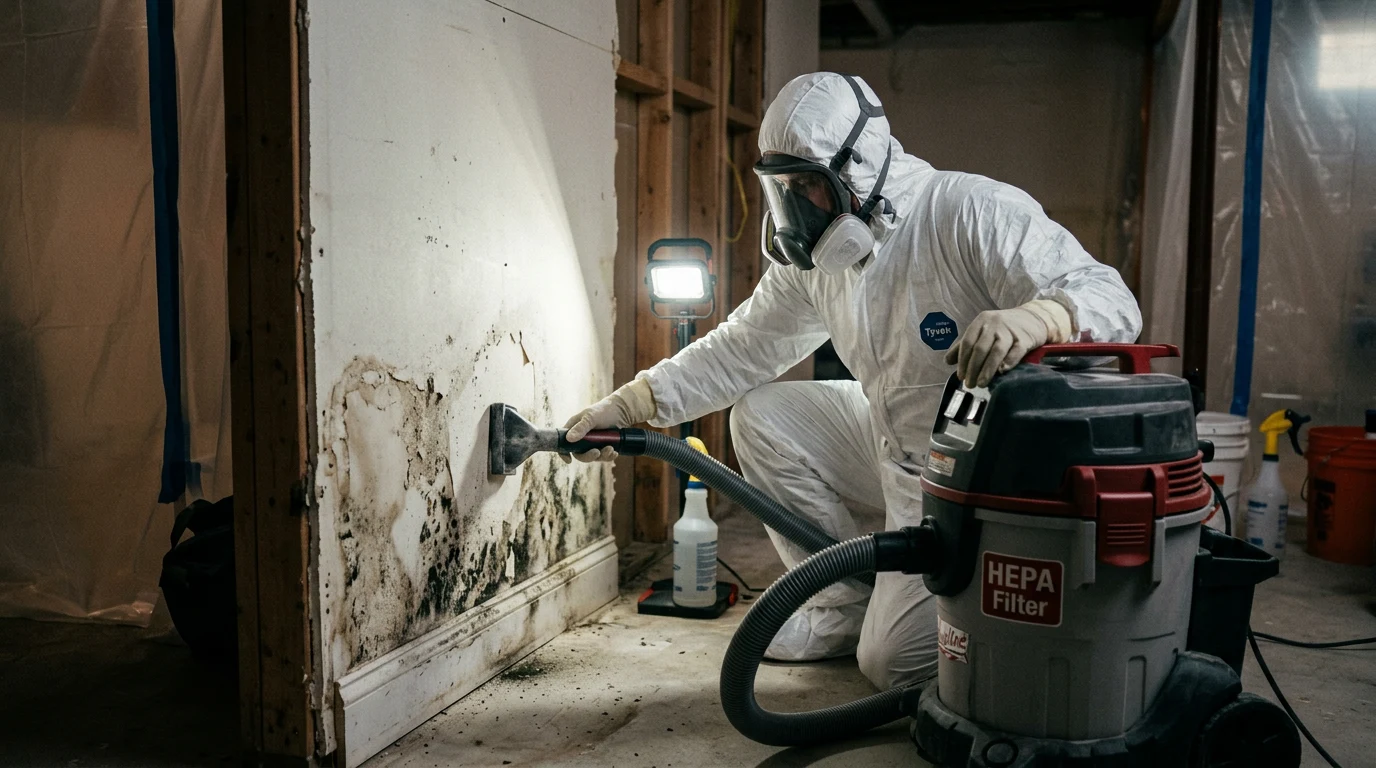
Even a vacuum with a genuine HEPA filter can leak if the system around it is not sealed. Gaps between the filter housing, canister lid, hose connections and brush head let unfiltered air escape. That is why proper mold remediation calls for a vacuum built around its HEPA filter, not a HEPA filter dropped into any housing. Professional mold remediators work to the same idea.
HEPA Filtration Standards: H13, H14, and True HEPA Explained
Not all HEPA filters are created equal, and the terminology can be confusing. Understanding the classification system helps you evaluate which HEPA vacuum for mold will actually perform at the level required for safe remediation.
True HEPA (H13 Standard)
Two rating systems are in use. Under the European EN 1822 classes, an H13 filter captures 99.95% of particles at the most penetrating particle size. In the U.S., “HEPA” means the U.S. Department of Energy figure the EPA quotes: at least 99.97% of particles 0.3 microns in size. Either is far finer than mold spores, so a real H13 or U.S. HEPA filter captures spores that pass through it.
H14 (Medical/Pharmaceutical Grade)
H14 filters capture 99.995% of particles at the MPPS. These are used in hospital operating rooms, pharmaceutical cleanrooms, and some commercial mold remediation equipment. For residential mold cleanup, H14 filtration provides an extra margin of safety but comes at a higher cost. The performance difference between H13 and H14 for mold spore capture is minimal in practical terms because mold spores are significantly larger than the 0.3-micron test particle.
ULPA vs. HEPA: When the Upgrade Matters
ULPA (ultra-low penetration air) filters go further than HEPA, rated against particles around 0.12 microns. For mold spores the extra rating adds little, because the spores are far larger than either test particle. For home mold cleanup, a true HEPA filter in a well-built housing is the standard to meet.
Watch Out for “HEPA-Type” and “HEPA-Style” Labels
Marketing labels like “HEPA-type,” “HEPA-style,” “HEPA-like” and “99% HEPA” do not promise the true HEPA rating. A bare “HEPA” with no number is not a promise either. When we checked 53 vacuum listings that Amazon returned for ten HEPA-vacuum searches on October 26, 2026, 23 of them (43%) said HEPA without stating a capture rate such as 99.97% at 0.3 microns, or calling the filtration certified. For mold work, look for the number or the certification in the maker’s own wording.
Key Features to Evaluate in a HEPA Vacuum for Mold
Beyond the HEPA filter itself, several features separate a vacuum that is safe for mold work from one that merely has a HEPA filter installed. Here is what to evaluate before purchasing.
Sealed Filtration System
A sealed system means the joints, seams and connections in the vacuum’s airpath are gasketed so air cannot leak around the HEPA filter. Without that, contaminated air bypasses the filter and re-enters the room. Look for makers that describe the whole system as sealed, not just the filter. After the filter itself, this is the most important feature for mold work.
Bag vs. Bagless for Mold Cleanup
For mold work, bagged vacuums are strongly preferred. Emptying a bagless canister releases a concentrated burst of spores into the air you are breathing. With a bag, you seal the full bag and dispose of it without that exposure. EPA’s remediation guide makes the same point about disposal: the filter and contents of the HEPA vacuum must be disposed of in well-sealed plastic bags.
Suction Power: CFM and Water Lift
Vacuum suction is measured as airflow in CFM (cubic feet per minute) and as water lift (inches of water). Airflow moves air, and the spores in it, through the filter; water lift is the pull against resistance, which matters on carpet and porous materials. Treat published figures with care: makers measure them in different ways, and we found one maker’s own page giving two different airflow numbers for the same vac.
Wet/Dry Vacuum Capabilities
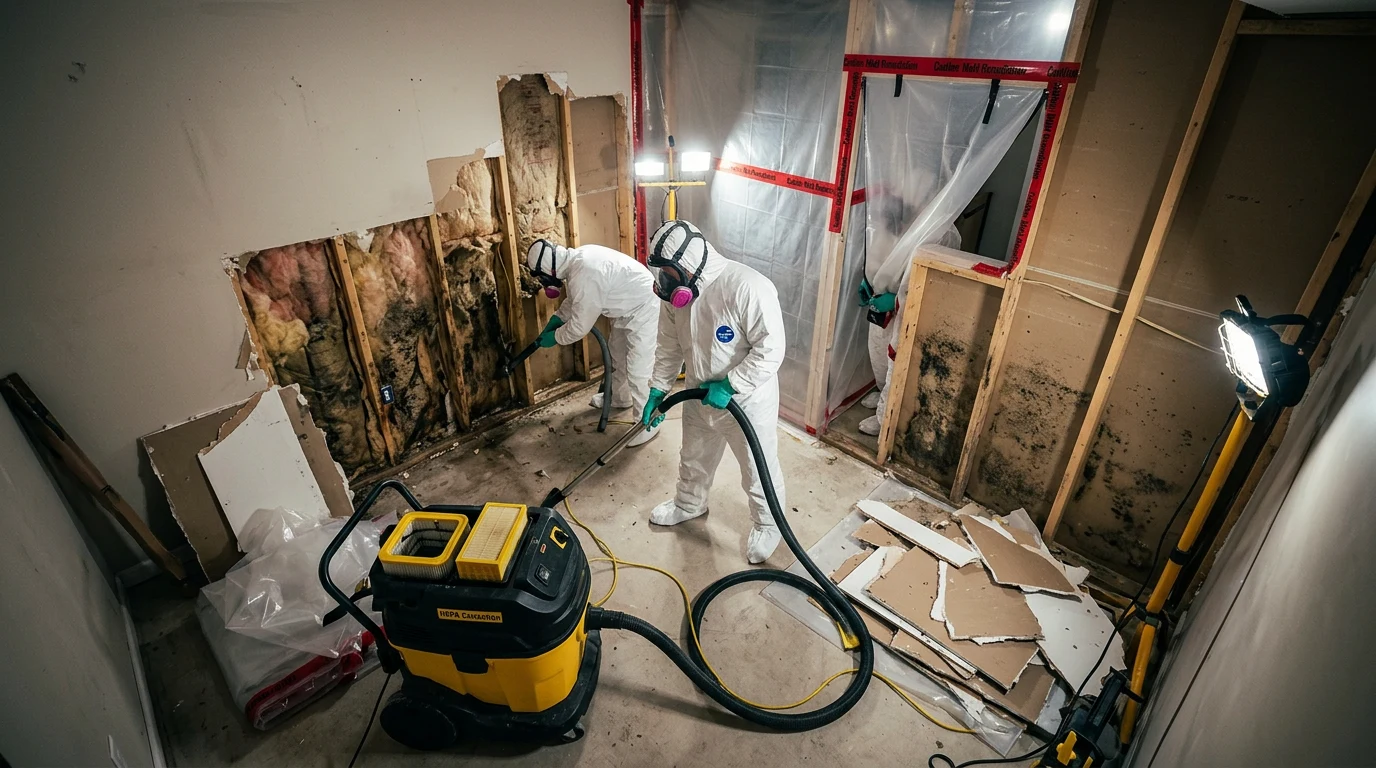
Mold grows in wet environments, so encountering standing water or damp materials during cleanup is common. A wet/dry HEPA vacuum can handle both liquid extraction and dry particulate removal without switching equipment. This is particularly valuable for black mold situations where water damage and mold growth overlap. Not all HEPA vacuums support wet pickup, and using a dry-only HEPA vacuum on wet surfaces can damage the filter and compromise its effectiveness.

Motor Wattage and Runtime
Motor power affects suction, and HEPA media resists airflow more than ordinary filters, so underpowered vacuums struggle with them. Battery HEPA vacuums exist and are handy for quick passes, but for a long cleanup a corded model will not run down halfway through.
Filter Replacement Frequency
HEPA filters load faster during mold cleanup than in everyday use, because spores, fine dust and debris clog the media. Follow the maker’s replacement schedule and replace sooner if suction drops. Before you buy, check that replacement filters and bags are easy to get for that model.
Top 5 HEPA Vacuums for Mold Cleanup (2026)
These five cover the main ways people tackle mold at home: a professional canister, a backpack, a wet/dry shop vac, a large-bag commercial canister and a household vacuum for upkeep. We chose them from what each maker and listing states, confirmed all five were for sale on October 26, 2026, and replaced two earlier picks that no longer are.
| Vacuum | Type | HEPA, as stated | Wet pickup | Best for |
|---|---|---|---|---|
| Nilfisk GM80 | Canister | HEPA or ULPA (Nilfisk) | Not stated | Professional and serious DIY |
| Atrix VACBP1 | Backpack | HEPA bag + HEPA pre-motor filter | Not stated (bagged) | Ladders, attics, crawl spaces |
| RIDGID RV2400HF | Wet/dry shop vac | Certified HEPA, to 0.3 microns | Yes | Mold plus water damage |
| Nilfisk GD930 | Canister | HEPA in lid, "certified" per listing | No (dry vacuum) | Whole-house dry cleanup |
| Miele Guard L1 Allergy | Household canister | HEPA AirClean filter | Not stated (bagged) | Ongoing upkeep |
1. Nilfisk GM80 HEPA Canister Vacuum
Best for: Professional-grade cleanup and serious DIY projects
A light-industrial canister that remediation crews have used for years. Nilfisk sells it with a choice of HEPA or ULPA filtration.
- Filtration: HEPA or ULPA, chosen at purchase (Nilfisk)
- Cord: 30 ft (Nilfisk)
- Model on Amazon: GM-80 HEPA, Nilfisk part 01790032 (Amazon listing)
Worth knowing: Nilfisk’s own page does not call the system sealed or the filter certified, and its spec table did not load for us, so we list only what it states. Amazon showed one unit left on October 26; the same vacuum is also sold through specialist retailers.

2. Atrix Ergo VACBP1 Backpack Vacuum
Best for: Ladders, attics, crawl spaces and long cleanup sessions
A backpack vacuum, so your hands stay free and the weight sits on your back and hips. That suits ceilings, stairs and tight spaces where a canister has to be dragged along behind you.
- Filtration: four stages: 8-quart HEPA bag, cloth bag, HEPA pre-motor filter, exhaust filter (Amazon listing)
- Motor: 1,400 W (Atrix)
- Airflow: 106 CFM (Atrix)
- Weight: 12 lb (Amazon listing)
Worth knowing: Atrix labels it HEPA filtration but does not describe the unit as sealed or certified. The HEPA media is in the bag and the pre-motor filter, which suits most homes; for heavy contamination, pick a unit whose maker states a sealed system.

3. RIDGID RV2400HF 14-Gallon HEPA Wet/Dry Vac
Best for: Mold that comes with water: leaks, flooding, wet basements
A shop vac built around certified HEPA filtration. RIDGID says its three-level filtration (a filter bag, a fabric filter cover and the certified HEPA filter) captures particles down to 0.3 microns, and that it meets the EPA’s definition of a HEPA vacuum under the lead Renovation, Repair and Painting rule.
- Filtration: certified HEPA, three levels, down to 0.3 microns (RIDGID)
- Tank: 14 gallons (RIDGID)
- Cord: 25 ft (RIDGID)
- Motor: 11.5 A, two-stage (RIDGID)
Worth knowing: For wet pickup, the manual says the HEPA cartridge may stay in for small amounts of liquid, but all filters come out for large amounts, and the vac then no longer meets the RRP rule for dry pickup until the HEPA filter goes back in. RIDGID’s page gives two different airflow figures, so we leave airflow out. It suits DIY mold jobs; a professional crew would more often bring a dedicated HEPA canister.

4. Nilfisk GD930 HEPA Canister Vacuum
Best for: Whole-house dry cleanup after remediation
A commercial dry canister with an upstream HEPA filter in the lid. Its 15-liter bag is large for its size, which means fewer bag changes, and fewer chances to release spores, on a big job.
- Filtration: upstream HEPA filter in the lid (Nilfisk)
- Certification: “certified HEPA filter” (Amazon listing)
- Bag: 15 L net filling (Nilfisk)
- Cord: detachable (Nilfisk)
Worth knowing: Nilfisk lists it as a dry vacuum, so it is not for water. Nilfisk’s page does not give weight or airflow.

5. Miele Guard L1 Allergy Canister Vacuum
Best for: Ongoing upkeep in a mold-prone home
A household canister for regular cleaning, with an integrated HEPA AirClean filter and Miele’s HyClean bags, which Miele sells as allowing dust-free disposal. Use it for weekly vacuuming in rooms that have had mold, alongside mold prevention like keeping humidity down, not for the remediation itself.
- Filtration: integrated HEPA AirClean filter (Amazon listing)
- Floors: hard floors and thin-pile carpet (Amazon listing)
- Motor: 1,200 W (Amazon listing)
- Reach: 36 ft operating radius (Amazon listing)
Worth knowing: It replaces the Miele Complete C3 Cat & Dog, which Amazon lists as unavailable. Miele’s own product page did not load for us, so the specs are from the Amazon listing.

Commercial vs. Residential HEPA Vacuums for Mold
Choosing between a commercial and residential HEPA vacuum depends on the scope of your mold problem and whether you plan to use the equipment for ongoing maintenance or a one-time remediation.
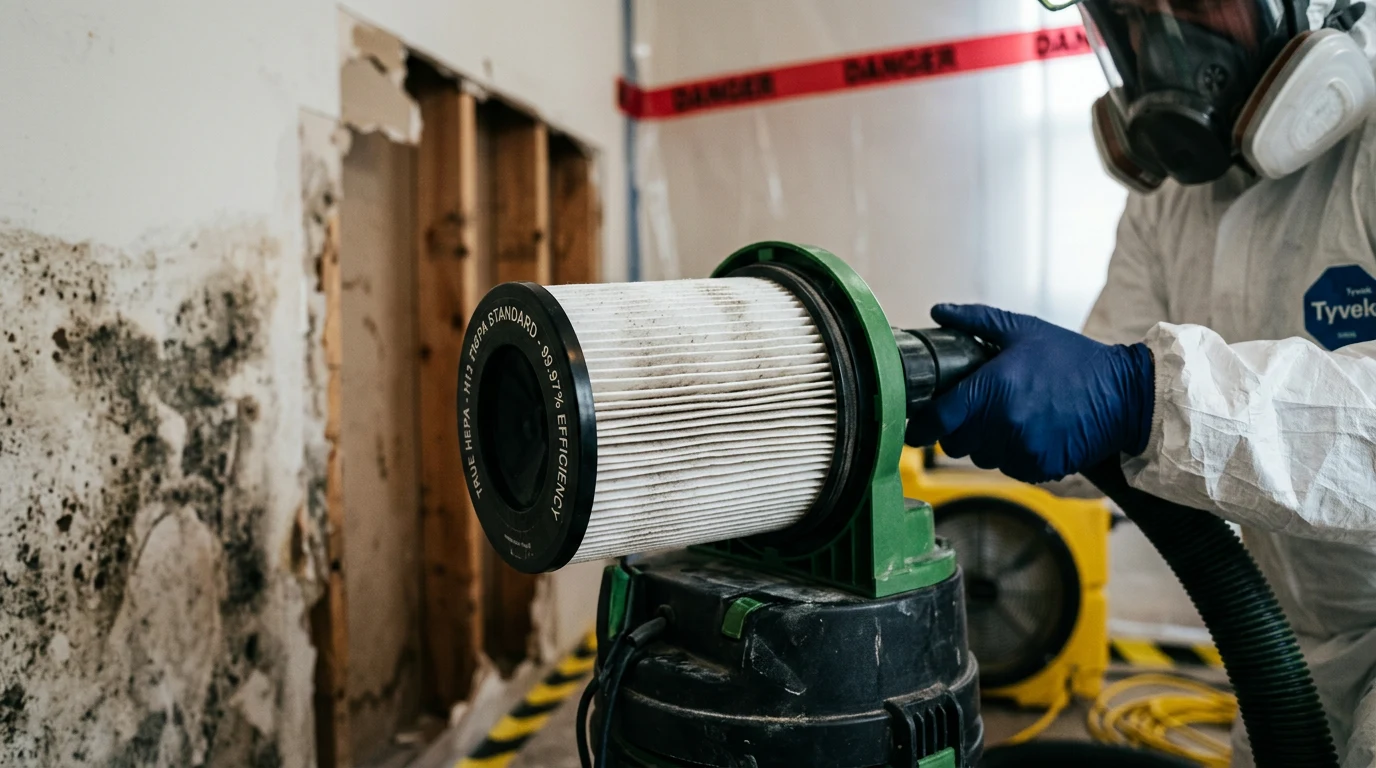
Commercial HEPA vacuums (the Nilfisk GM80 and GD930, and backpacks like the Atrix VACBP1) are built for daily professional use. They tend to have longer cords, bigger bags and tougher housings, and they handle whole-house cleanup well. They cost more than household vacuums.
Household vacuums with HEPA filters, such as the Miele Guard L1 Allergy, are built for everyday cleaning, with HEPA filtration as a feature. They suit ongoing upkeep in a mold-prone home, cleanup after remediation, and small jobs. For a patch under about 10 square feet, the size EPA says most people can clean up themselves, a good household HEPA vacuum is often enough. A HEPA wet/dry shop vac like the RIDGID RV2400HF sits between the two.
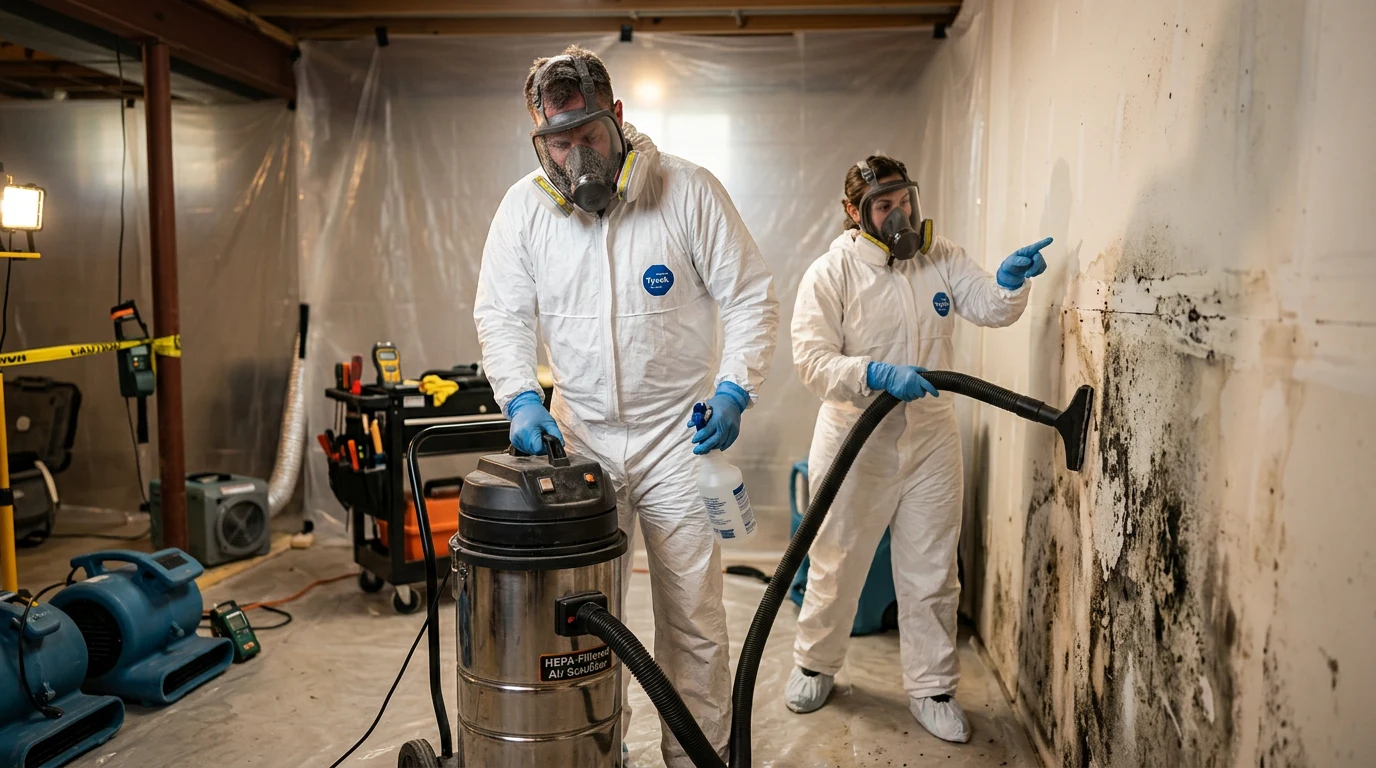

Proper Mold Cleanup Vacuuming Technique
Having the right HEPA vacuum is only half the job. Technique decides how many spores you remove and whether you spread the rest, and good technique is also prevention of cross-contamination. The steps below follow EPA’s remediation guidance.
Step 1: Contain the Area
Before vacuuming, seal the affected area from the rest of the home using plastic sheeting and painter’s tape. Close HVAC vents in the room to prevent spore distribution through ductwork. This containment step prevents mold exposure in other living spaces during the cleanup process. For larger areas (over 10 square feet), consider setting up negative air pressure using a HEPA air scrubber exhausting outside.
Step 2: Wear Proper PPE
For small cleanups, EPA’s mold guidance calls for at least an N95 respirator. For larger jobs, a half-face respirator with P100 filters gives more protection. Wear nitrile gloves, goggles (not safety glasses, since goggles seal around the eyes) and disposable coveralls. Our editorial guidelines explain how we source safety advice like this.
Step 3: HEPA Vacuum All Surfaces Before Wet Cleaning
Vacuum every surface in the contained area before applying any mold removal product: walls, ceilings, floors, window sills, HVAC registers and the tops of furniture. Use slow, overlapping strokes so the suction has time to pull spores off the surface, and on carpet go over each area in two directions. This first pass removes loose spores before wet cleaning disturbs the rest.

Step 4: Apply Mold Remover and Clean
After the first HEPA pass, apply a mold stain remover or cleaner to surfaces with visible growth (our mold remover spray guide and Concrobium vs RMR-86 comparison cover the options). Let it dwell per the label, scrub hard surfaces with a stiff brush and wipe clean with disposable rags. Bag and dispose of all cleaning materials as contaminated waste. For the full process, see the mold removal guide.
Step 5: Final HEPA Vacuum Pass
Once surfaces are dry, make a final HEPA pass over everything. This picks up spores loosened by scrubbing. EPA’s guide also recommends HEPA vacuums for dust that settled outside the remediation area, so include nearby rooms. Running a HEPA air purifier for mold during and after the cleanup helps with spores still in the air.
HEPA Vacuum Maintenance for Mold Work
Looking after your HEPA vacuum keeps it working and keeps the vacuum itself from becoming a source of contamination. Mold cleanup loads filters and bags faster than normal household use.
Filter Replacement Schedule
Replace the HEPA filter according to the manufacturer’s schedule, or sooner if you notice reduced suction or visible discoloration of the filter media. For active mold remediation work, plan to replace the filter after completing each major project. Some professionals replace the HEPA filter after every remediation job regardless of visible condition, treating it as a consumable cost of doing the work safely. Pre-filters and secondary filters should be checked and replaced or cleaned at every bag change.
Bag Disposal Protocol
After mold work, treat a full bag as contaminated material. Seal it inside a heavy plastic bag before disposal, as EPA’s remediation guide directs for HEPA vacuum contents. Change bags inside the containment area while wearing your respirator. Never shake or compress a bag to fit more in, because that can rupture it.
Decontaminating the Vacuum
After mold remediation work, wipe down the exterior of the vacuum, hose, and all attachments with a damp cloth containing a mold-inhibiting solution. Allow everything to dry completely before storing. Store the vacuum in a clean, dry location. If the vacuum was used for heavy mold contamination, consider running it for a few minutes with a fresh bag and filter to purge any spores from the internal airpath before storage.
What Remediation Guidance Says About HEPA Vacuuming
The industry standard for professional work is the IICRC S520 Standard for Professional Mold Remediation, a paid document. EPA’s public guide, Mold Remediation in Schools and Commercial Buildings, covers the same ground for anyone to read. It lists HEPA vacuuming among its cleanup methods, recommends HEPA vacuums for dust that settled outside the work area, and says the filter and contents must be disposed of in well-sealed plastic bags.
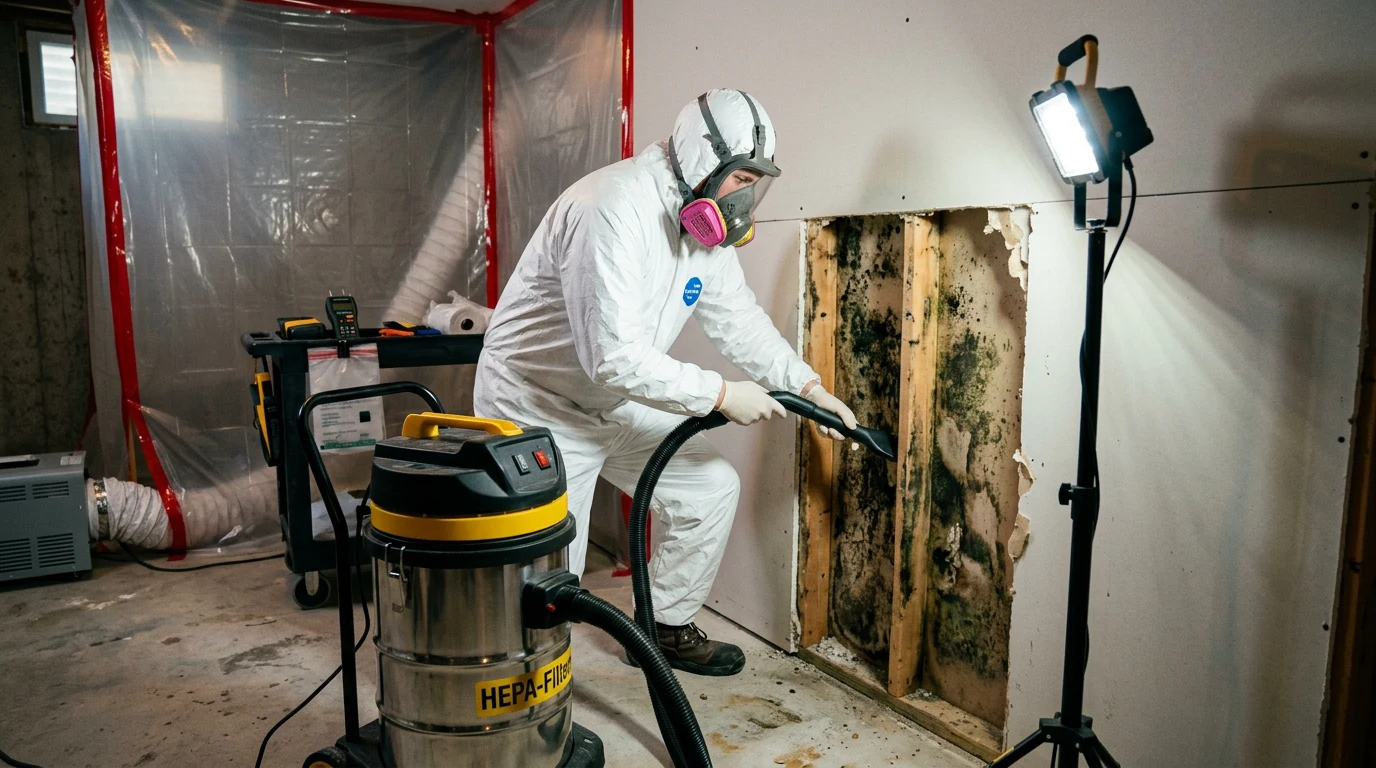
Remediators also clean in two passes, HEPA vacuuming before and after wet cleaning, as described above. For mold testing and verification, post-remediation air samples are usually compared with an outdoor sample, and thorough HEPA vacuuming helps a cleaned area reach that comparison.
Cross-Contamination Prevention During Mold Vacuuming
Preventing cross-contamination is the primary reason to use a HEPA vacuum for mold in the first place. Beyond the vacuum’s sealed filtration, several practices reduce the risk of spreading mold to unaffected areas during cleanup.
Keep the vacuum inside the containment zone during use. Do not drag the hose across clean areas. If vacuuming multiple rooms, work from the least contaminated area to the most contaminated area, finishing in the room with the heaviest mold growth. This sequence prevents carrying spores from heavily contaminated surfaces to cleaner ones.
After completing mold vacuuming, decontaminate the vacuum before moving it to a non-contained area. Wipe down the entire exterior, hose, and attachments. Some remediators place the vacuum inside a polyethylene bag for transport between contained and non-contained zones.
In-depth reviews: Nilfisk GM80 review · Atrix VACBP1 review · RIDGID HEPA wet/dry review · ProTeam backpack vacuums · Miele canister vacuums · how to use a HEPA vacuum for mold
Frequently Asked Questions About HEPA Vacuums and Mold
What makes a vacuum a true HEPA vacuum?
Two things. The filter must meet the HEPA rating, which in the U.S. means removing at least 99.97% of particles 0.3 microns in size, as the EPA describes it. And the vacuum must be built so air cannot bypass that filter through gaps in the housing, lid or hose. Look for the number or a certification in the maker's wording, not just the word HEPA.
Can a regular vacuum clean up mold?
It should not be used for it. A regular vacuum's filter lets fine particles through, so it lifts spores off surfaces and blows them out of the exhaust, spreading mold to areas that were clean.
What size HEPA vacuum do I need for home mold cleanup?
For a patch under about 10 square feet, the size the EPA says most people can clean themselves, a household HEPA canister is usually enough. For bigger areas, a commercial HEPA canister or backpack with a large bag saves time. Choose a wet/dry HEPA vac if there is water to deal with too.
How often should I replace the HEPA filter after mold cleanup?
Follow the maker's schedule, and replace sooner if suction drops or the filter is visibly loaded. Many people doing a one-off remediation fit a fresh filter afterwards. Replace a filter that gets wet.
Is a HEPA vacuum enough to remediate mold, or do I need professional help?
A HEPA vacuum is one part of the job, alongside fixing the moisture, cleaning surfaces and protecting yourself. The EPA suggests most people can handle areas under about 10 square feet. Larger areas, mold in the HVAC system, or water damage from sewage call for a professional.
Can I use a shop vac with a HEPA filter for mold?
Only if the shop vac is built for it. A HEPA cartridge in an ordinary shop vac can still leak around the lid, hose and drain. A shop vac sold with certified HEPA filtration, like the RIDGID RV2400HF, is the safer choice.
Do I need a wet/dry HEPA vacuum for mold cleanup?
Not always, but mold and water damage often come together, so one machine that does both is practical. On the RIDGID RV2400HF, the manual says the HEPA filter may stay in for small amounts of liquid, but all filters come out for large amounts, and the vac does not meet the HEPA rule for dry pickup until the HEPA filter is back in.
How should I dispose of the bag and filter after mold cleanup?
Seal the bag, and the filter if you are replacing it, in a heavy plastic bag right away, then dispose of it following local rules. EPA's remediation guide says HEPA vacuum filters and contents must go out in well-sealed plastic bags.
Final Recommendations
Match the vacuum to the job:

- Professional-scale or severe mold: the Nilfisk GM80, or the GD930 for big dry jobs with fewer bag changes
- Ladders, attics and crawl spaces: the Atrix VACBP1 backpack
- Mold plus water damage: the RIDGID RV2400HF certified HEPA wet/dry vac
- Ongoing upkeep in a mold-prone home: the Miele Guard L1 Allergy
Whichever you pick, the vacuum is one part of the job. Fix the moisture, clean the surfaces and keep checking afterwards; the mold removal guide has the full process. If you are unsure how far the mold goes, a mold inspector can tell you. For the air after cleanup, a HEPA air purifier helps with spores still floating.
What Is the Best HEPA Vacuum for Mold, in Short?
For most homeowners, a bagged vacuum with a true HEPA filter in a housing that does not leak around it. If there is water too, the RIDGID RV2400HF does both with certified HEPA filtration; for dry work across a whole house, a commercial canister like the Nilfisk GM80 or GD930. Check that the listing states the HEPA rating, not just the word.
These statements have not been evaluated by the Food and Drug Administration. This information is not intended to diagnose, treat, cure, or prevent any disease. Content is for informational purposes only and is not medical advice; consult a qualified healthcare provider before starting any supplement. As an Amazon Associate we earn from qualifying purchases.