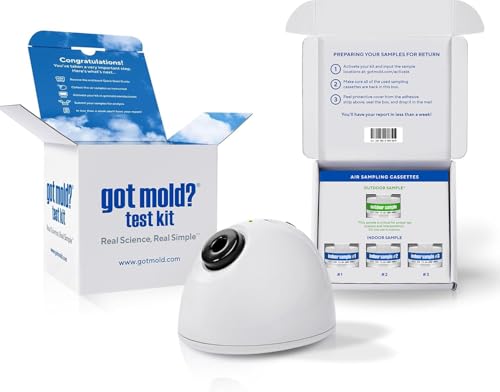
The key question with moldy books is whether the mold is active or dormant, and whether it has penetrated the paper or only sits on the surface. Active mold (fuzzy growth, musty odor, soft or staining pages) should be discarded unless the book has irreplaceable sentimental or monetary value. Dried, inactive mold on a surface that hasn’t penetrated pages can often be cleaned. This guide tells you exactly when to save and when to let go.
Save or Toss? The Decision Framework
| Condition | Decision | Reason |
|---|---|---|
| Active fuzzy mold growth on pages | Toss (usually) | Active mold releases spores; difficult to fully remediate |
| Musty smell that persists after drying | Toss | Odor indicates mold metabolism even if not visible |
| Pages stuck together from moisture | Toss | Separation causes additional tearing; mold throughout |
| Mold only on cover, pages intact and dry | Try to save | Cover can be cleaned; pages may be unaffected |
| Dry, powdery white residue on page edges | Try to save | Likely old, inactive mold — can be brushed away |
| Irreplaceable book (heirloom, signed, rare) | Professional conservator | Library/archive conservators have specialized methods |
| Paperback with mold on pages | Toss | Paperback binding doesn’t survive remediation process |
| Hardcover with isolated surface mold | Try to save | Hardcover structure survives careful cleaning better |
Why Mold Grows on Books and Paper
Paper is made from cellulose — the same organic material that makes wood vulnerable to mold. Bookbinding glues, leather covers, and fabric bindings add additional food sources. Books stored in humid environments (basements, attics, closets on exterior walls) provide everything mold needs to establish a colony.
The specific conditions that trigger book mold:
- Humidity above 65% — the threshold at which mold actively grows on paper. Below 50%, mold dormancy is maintained.
- Poor air circulation — books packed tightly on shelves trap moisture and prevent drying
- Temperature fluctuations — warm days followed by cool nights cause condensation on cool surfaces, including book covers
- Water damage or flooding — the fastest trigger; books saturated with water begin molding within 24–48 hours
- Storage in unsealed boxes — cardboard absorbs and retains moisture, creating a humid microclimate
How to Identify Mold on Books and Paper
Not all discoloration on old books is mold. Knowing what you’re dealing with determines the right approach:
- Active mold: Fuzzy growth with a green, black, blue, or white color. Often accompanied by a strong musty odor. Pages may feel slightly damp or have a tacky surface. This is the most serious condition.
- Foxing: Reddish-brown circular spots scattered across pages. Foxing is a form of fungal growth but is typically old and inactive. Not a health hazard but indicates past humidity damage.
- Mildew: White or gray powdery coating on surfaces. Usually surface-level and inactive. Less serious than fuzzy mold growth.
- Water staining: Tide marks, warped pages, or yellowing without fuzzy growth. Indicates past water damage; may or may not have mold.
- Silverfish damage: Irregular scraped or eaten areas, especially near the spine. Not mold — insect damage. Looks similar to some mold patterns.
When in doubt, wear nitrile gloves and smell the book. Active mold has a distinct earthy, musty odor. Old paper without active mold has a different, less pungent smell.
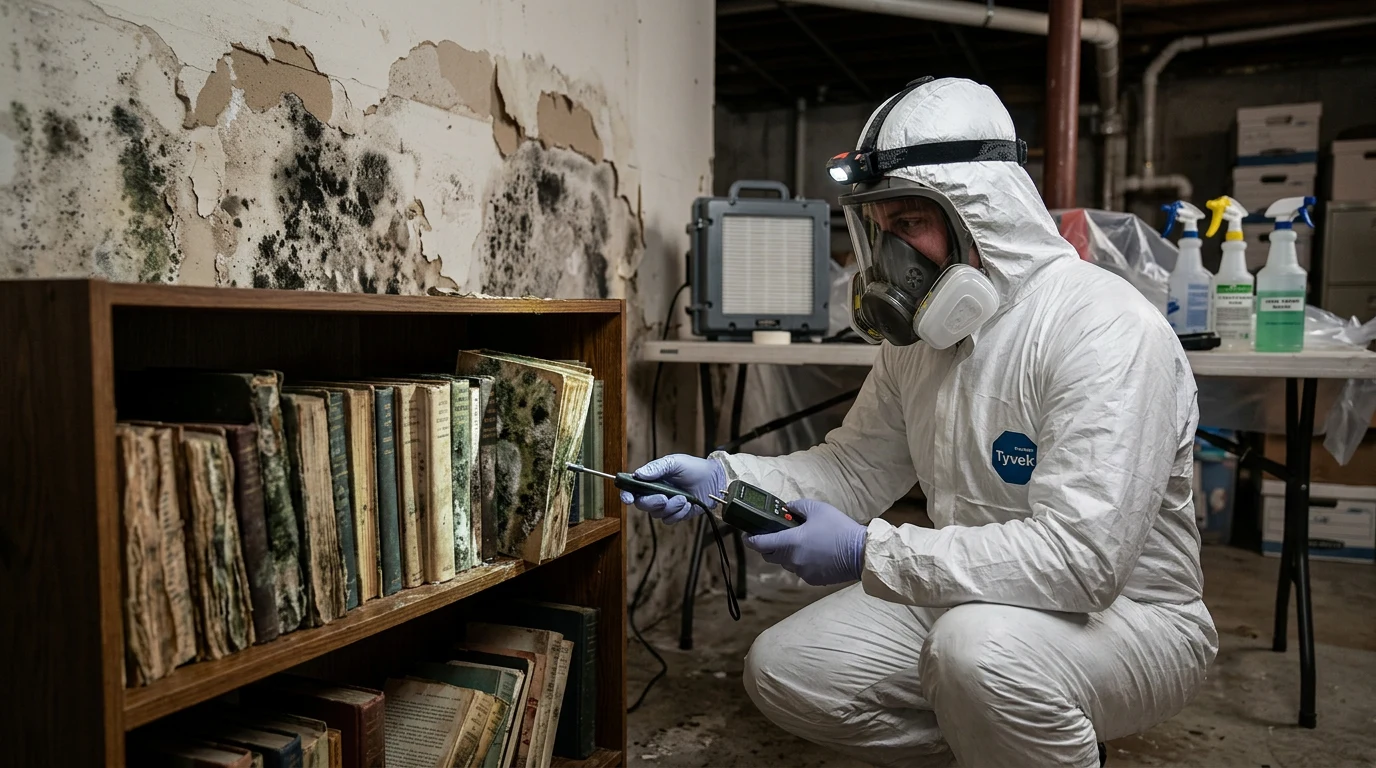
Is Moldy Book Exposure Dangerous?
Moldy books can release spores into the air when disturbed. This is rarely dangerous for healthy adults from brief exposure, but warrants precaution:
- Handle moldy books outdoors whenever possible to prevent spore release indoors
- Wear an N95 mask when handling large quantities of moldy books
- Individuals with mold allergies, asthma, or compromised immune systems should not handle moldy books without respiratory protection
- Don’t store moldy books in occupied living spaces — the ongoing spore release affects indoor air quality
How to Clean Mold from Books: Step-by-Step
These steps apply to books with inactive, surface-level mold that you’ve decided are worth saving. Do not attempt to clean books with active fuzzy mold growth — the remediation process is rarely effective and the health risk during cleaning is higher.
What You Need
- N95 respirator mask
- Nitrile gloves
- Soft-bristled brush (paintbrush or makeup brush)
- HEPA vacuum with brush attachment
- Clean white cloths
- Isopropyl alcohol (70%)
- Soft eraser (for page edges)
- Fan for drying
Process
- Work outdoors. Take the books outside to prevent spore release indoors. On a dry, sunny day if possible — UV light has mild antimicrobial properties and helps with drying.
- Let the book dry completely if it was wet. Stand it open (tent-style) in moving air for at least 24 hours before attempting any cleaning. Cleaning a damp book causes additional damage.
- Brush surface mold away gently. Use a soft-bristled brush to brush mold off page edges and covers. Brush away from the book’s spine, working toward the outer edges. Have a bag ready to contain the brushed-off material.
- HEPA vacuum the cover. Use a brush attachment on a HEPA vacuum (not a standard vacuum — it redistributes spores) to remove remaining surface material from the cover.
- Clean the cover with a cloth barely dampened with 70% isopropyl alcohol. Do not saturate — alcohol in large quantities can damage some bindings. Test in an inconspicuous area first. Allow to dry completely.
- Address page edges. For white powdery mold on page edges, a soft eraser can gently remove residue. Work carefully to avoid tearing aged paper.
- Do not attempt to clean inside pages unless the mold is limited to edges. Individual page cleaning is possible but time-intensive — appropriate only for genuinely irreplaceable books. For valuable books, consult a professional conservator.
- Allow to dry fully after any treatment. Place the book upright with pages fanned open in moving air for several hours before closing.
- Store in improved conditions. A cleaned book stored back in the same humid, poorly ventilated location will remold within weeks.
For Documents and Loose Paper
Individual pages and documents follow the same principles: dry completely first, brush off surface mold outdoors, use 70% isopropyl on non-printed areas. For documents with significant archival value (contracts, photos, certificates), professional document restoration services use specialized freezing and vacuum drying techniques that far exceed what DIY methods can achieve.
Recommended Products
Soft-Bristle Artist Brush Set — For carefully removing surface mold from page edges and covers without damage. Natural bristles work better than synthetic for delicate paper. View on Amazon
DampRid Moisture Absorber — For preventing book mold in closets, storage areas, and bookshelves. Replace every 30–60 days in humid climates. More effective than silica gel packets for larger spaces. View on Amazon
Archival Quality Storage Boxes — For long-term storage of valuable books and documents. Acid-free, sealed boxes prevent moisture infiltration and provide a stable environment. View on Amazon
Silica Gel Desiccant Packets — Place in bookshelves and storage boxes to maintain low humidity around books. Recharge in an oven at 250°F for 1–2 hours when packets indicate saturation. View on Amazon
How to Prevent Mold on Books and Paper
- Maintain humidity below 50% where books are stored — use a dehumidifier in basements and a hygrometer to monitor
- Allow air circulation on shelves — don’t pack books so tightly that air cannot move between them; leave 1–2 inches of space at the back of shelves away from exterior walls
- Avoid storing books in basements, attics, or garages unless those spaces are climate-controlled
- Store in archival boxes if not actively using — sealed acid-free boxes maintain a stable microenvironment
- Keep books away from exterior walls — temperature differential causes condensation on cold wall surfaces, which transfers to adjacent books
- Use silica gel packs in bookshelves and storage boxes in humid climates
- Check regularly — a quick visual check of stored books twice a year catches problems before they spread
When to Call a Professional
Contact a professional book conservator (not a mold remediation contractor) for:
- Rare, antique, or first-edition books with active mold
- Family heirlooms, signed copies, or books of significant personal value
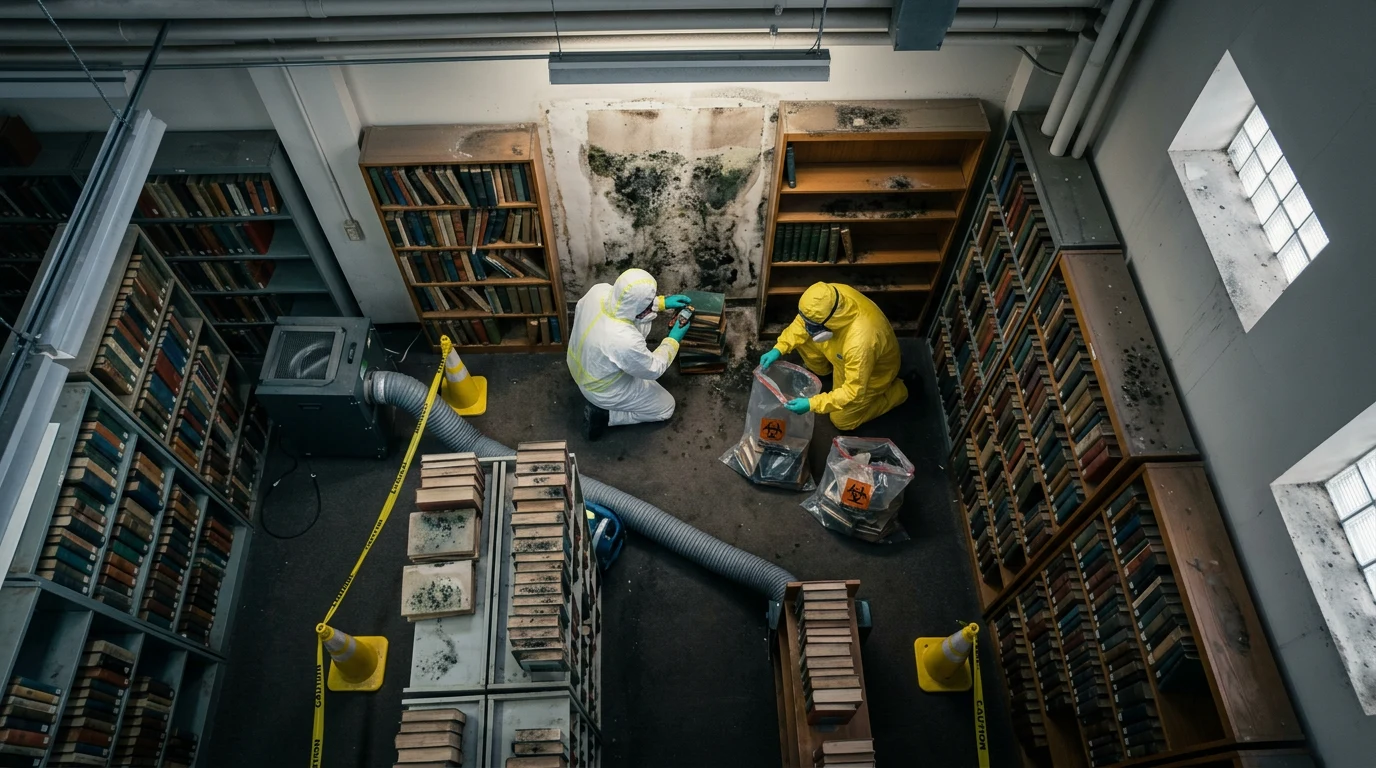
- Large collections of water-damaged books — professional freeze-drying can stabilize material before mold establishes
- Historical documents, photographs, or manuscripts — these require specialized techniques that DIY methods cannot replicate
The American Institute for Conservation (AIC) maintains a directory of certified book and paper conservators at culturalheritage.org/find-a-conservator.
Frequently Asked Questions
How do you identify mold on paper and books?
Look for fuzzy growth (green, black, white, or blue) on covers or page edges, a distinct musty odor, reddish-brown spots (foxing), or white powdery patches on surfaces. Active mold feels slightly fuzzy or tacky; old dried mold feels powdery and has little odor. Water staining without odor indicates past moisture damage but may not mean active mold.
Is mold on paper and books dangerous to your health?
Handling moldy books can release spores that cause respiratory irritation, especially in sensitive individuals. For healthy adults, brief handling is low risk with basic precautions (handling outdoors, wearing an N95). Don’t store actively moldy books in living spaces — ongoing spore release affects air quality over time.
Should I throw away moldy books or try to clean them?
Toss books with active fuzzy growth, persistent musty odor, or stuck-together pages. Try to save books with dried surface mold only on the cover, or with old powdery residue on page edges that hasn’t penetrated the paper. For irreplaceable books, consult a professional conservator before discarding.
Can you save paper and books with mold on them?
Yes, in some cases. Books with inactive, surface-level mold on covers or page edges can be cleaned with careful brushing and 70% isopropyl alcohol. Books with active mold growth throughout pages, stuck pages, or pervasive musty odor are rarely worth the effort to save unless they are genuinely irreplaceable.
What causes mold to grow on paper and books?
Humidity above 65%, poor air circulation, temperature fluctuations that cause condensation, water damage, and storage in damp spaces (basements, attics, sealed boxes). Paper and bookbinding materials are organic and provide an ideal food source for mold when moisture is present.
How do you prevent mold on paper and books?
Store books where humidity is consistently below 50%. Use silica gel packs on shelves and in storage boxes. Avoid packing shelves too tightly. Keep books away from exterior walls and out of basements and attics unless those spaces are climate-controlled. Check stored books visually twice a year.
For authoritative background, see the EPA’s guidance on mold and health.
Frequently Asked Questions
Is book mold dangerous?
Mold on books and paper can trigger allergic reactions and respiratory irritation with prolonged exposure, especially for people who are mold-sensitive, asthmatic, or immunocompromised. It’s generally lower-risk than structural mold in a home (books hold less moisture and mold mass than drywall or carpet), but the mold itself is the same type of organism, see Is Moldy Book Exposure Dangerous? above for the full breakdown of when it actually matters versus when it’s a minor nuisance.
What are the first signs of mold on paper or books?
Visible discoloration, often appearing as fuzzy spots or stains in shades of white, gray, green, or black, is a primary indicator. You might also detect a distinct musty or earthy odor emanating from the affected paper or book, even before visible signs are prominent.
Can mold on books spread to other items in my collection?
Yes, mold spores are airborne and can easily spread from an infected book or piece of paper to adjacent items, especially if they are stored in similar humid conditions. It’s crucial to isolate any moldy items immediately to prevent cross-contamination within your collection.
Is it safe to handle moldy books or paper?
It is generally not safe to handle moldy books or paper without protection, as mold spores can trigger allergic reactions or respiratory issues in sensitive individuals. Always wear gloves and a mask when dealing with moldy materials to minimize exposure.
What is the best way to clean mold from paper documents or book pages?
For minor surface mold, gently brush it off with a soft, dry brush or a HEPA-filtered vacuum cleaner in a well-ventilated area. Avoid using liquids directly on paper, as this can cause further damage and spread the mold.
How can I prevent mold from growing on my paper and books in the future?
Maintain a stable indoor environment with relative humidity levels between 30-50% and good air circulation. Store books and papers away from exterior walls, basements, and other damp areas, and consider using dehumidifiers or desiccants in humid climates.
When should I consider professional help for moldy books or paper?
If the mold growth is extensive, deeply embedded, or if you have valuable or irreplaceable items, it’s best to consult a professional conservator or archival specialist. They possess the expertise and specialized equipment to safely remediate mold without further damaging the materials.
These statements have not been evaluated by the Food and Drug Administration. This information is not intended to diagnose, treat, cure, or prevent any disease. Content is for informational purposes only and is not medical advice; consult a qualified healthcare provider before starting any supplement. As an Amazon Associate we earn from qualifying purchases.