Selecting the best N95 for mold remediation requires understanding both the respiratory hazards involved and the significant performance differences between respirator types. Mold spores range from 1 to 100 microns in diameter, and disturbing a mold colony during cleanup releases concentrated bursts of these particles into the air. A properly fitted, NIOSH-certified N95 respirator filters at least 95% of airborne particulates, making it the minimum recommended protection for mold work according to both the EPA mold remediation guidelines and OSHA standards.
This guide compares the top-rated N95 and P100 respirators for mold remediation based on NIOSH certification, aggregated buyer reviews, fit characteristics, and filtration performance. It also covers when a basic N95 is sufficient and when upgrading to a half-face respirator with P100 cartridges and organic vapor protection becomes necessary for safe mold removal.
Our reviews are based on aggregated verified buyer feedback, manufacturer specifications, ingredient analysis, and published expert opinion. Products are not independently purchased or tested by our team. We disclose affiliate relationships where present.
Quick Comparison: Best Respirators for Mold Work
Before examining individual respirators, here is a side-by-side comparison of the top-rated options based on NIOSH certification level, filtration class, and aggregated buyer feedback across thousands of verified purchases.
| Respirator | Type | NIOSH Rating | Filtration | Exhalation Valve | Best For | Avg. Rating |
|---|---|---|---|---|---|---|
| 3M 8511 N95 | Disposable | N95 | 95% particles | Yes (Cool Flow) | Small mold jobs, comfort in heat | 4.6/5 |
| 3M 8210 N95 | Disposable | N95 | 95% particles | No | Budget pick, quick cleanups | 4.5/5 |
| Honeywell DC300 N95 | Disposable | N95 | 95% particles | Yes | Wide face shapes, extended wear | 4.4/5 |
| 3M 6503QL + 2097 Filters | Half-face reusable | P100 | 99.97% particles + OV | Yes | Large remediation, chemical use | 4.7/5 |
| GVS Elipse P100 | Half-face reusable | P100 | 99.97% particles | Yes | Lightweight pro alternative | 4.5/5 |
| 3M 8293 P100 | Disposable | P100 | 99.97% particles | Yes (Cool Flow) | High protection without reusable hassle | 4.4/5 |
| Miller LPR-100 Half-Face | Half-face reusable | P100/OV | 99.97% + organic vapor | Yes | Budget reusable for chemical remediation | 4.3/5 |
Understanding Respirator Ratings for Mold Protection
Before choosing a respirator, understanding the NIOSH classification system helps clarify what level of protection each product actually delivers against mold spores and associated hazards.
NIOSH Filtration Classes Explained
The National Institute for Occupational Safety and Health (NIOSH) rates respirator filters on two dimensions: filtration efficiency and oil resistance. The letter prefix indicates oil resistance (N = not oil-resistant, R = somewhat resistant, P = strongly resistant). The number indicates the minimum filtration efficiency percentage.
- N95: Filters 95% of non-oil-based airborne particles. Adequate for mold spore protection during small-scale cleanup.
- N100 / P100: Filters 99.97% of airborne particles, equivalent to HEPA-grade filtration. Recommended for heavy mold contamination and professional remediation.
- P100 with OV (Organic Vapor): Adds activated carbon filtration for chemical vapors from biocides, encapsulants, and mold remover sprays. Essential when combining respirator use with chemical mold treatments.
Mold spores from common species like Aspergillus, Penicillium, Cladosporium, and Stachybotrys chartarum (black mold) range from approximately 1 to 100 microns. Both N95 and P100 filters capture particles in this size range effectively. The primary advantage of P100 is its HEPA-equivalent 99.97% efficiency, which reduces exposure by an additional order of magnitude compared to N95 for those working in heavily contaminated environments.
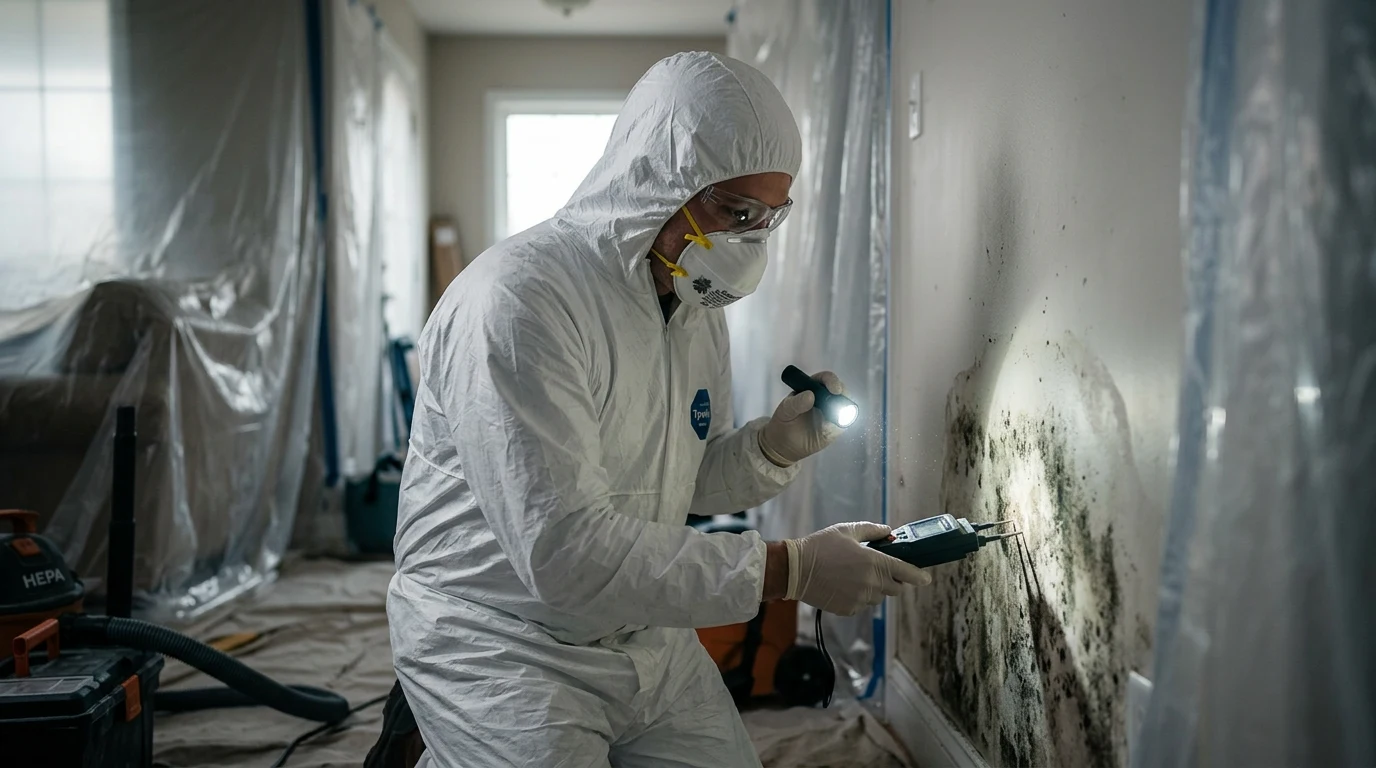
When N95 Is Sufficient vs. When to Upgrade
The EPA categorizes mold remediation by scale, with different respiratory protection requirements at each level. According to OSHA’s Respiratory Protection Standard (29 CFR 1910.134), the level of protection should match the hazard severity.
| Remediation Scale | Area Affected | Minimum Respiratory Protection |
|---|---|---|
| Small (Level 1) | Under 10 sq ft | N95 disposable respirator |
| Medium (Level 2) | 10 to 30 sq ft | N95 minimum, P100 recommended |
| Large (Level 3) | 30 to 100 sq ft | Half-face P100 with OV cartridges |
| Extensive (Level 4) | Over 100 sq ft | Full-face P100 with OV, professional crew |
For most homeowners dealing with bathroom ceiling mold or small patches behind furniture, a quality N95 disposable respirator provides adequate protection. When tackling a full basement mold remediation or any project involving chemical mold killers in enclosed spaces, a reusable half-face respirator with P100 particulate filters and organic vapor cartridges is the appropriate choice.
Best N95 Disposable Respirators for Mold
3M 8511 N95 Particulate Respirator (Cool Flow Valve)
The 3M 8511 consistently ranks as one of the most recommended N95 respirators for mold work across both professional contractors and homeowner reviews. Its Cool Flow exhalation valve reduces heat and moisture buildup inside the mask, which becomes a significant comfort factor during extended mold cleanup sessions where physical exertion increases breathing rate.
Key specifications: NIOSH N95 certified, adjustable M-shaped nose clip, two-strap design with braided headbands, electrostatic filter media. The Advanced Electret Media provides filtration efficiency that exceeds the 95% minimum across a range of particle sizes relevant to mold spore capture.
Aggregated buyer consensus (4,000+ reviews): Buyers consistently praise the comfort during multi-hour wear, the effectiveness of the nose clip seal, and the noticeable difference the exhalation valve makes in hot, humid environments like bathrooms and crawl spaces. Common complaints center on fit issues for smaller face shapes and occasional quality variation between manufacturing lots. Multiple professional mold remediators in buyer reviews specifically name this model as their go-to disposable for small to medium projects.
Best for: Homeowners tackling mold jobs under 30 square feet, especially in warm or poorly ventilated spaces. The valve reduces fogging on safety goggles, which matters for visibility during overhead work on ceiling mold.
3M 8210 N95 Particulate Respirator
The 3M 8210 is the standard-setting N95 respirator and one of the most widely used disposable masks in both construction and healthcare settings. For mold remediation, it delivers reliable NIOSH-certified filtration at approximately half the per-unit cost of valve-equipped models.
Key specifications: NIOSH N95 certified, welded dual headband straps, cushioning nose foam, lightweight cup design at approximately 8 grams. No exhalation valve, which means higher breathing resistance during physical work but also no unfiltered exhaled air escaping the mask.
Aggregated buyer consensus (10,000+ reviews): Rated as the reliable workhorse for short-duration mold cleanup. Buyers report good seal quality for average face shapes and consistent filtration performance. The primary drawback noted across reviews is heat and moisture buildup during extended wear, particularly in unventilated spaces typical of mold-affected basements and crawl spaces. Several buyers recommend keeping multiple units on hand and rotating every 1 to 2 hours during heavy work.
Best for: Budget-conscious homeowners handling small mold patches, quick cleanup tasks, or as a secondary mask for helpers during a larger project. Its low cost makes it practical to discard after each use session rather than storing and reusing.
Honeywell DC300 N95 Disposable Respirator
The Honeywell DC300 stands out for its flat-fold design that creates a larger internal breathing chamber than standard cup-style respirators. This design accommodates a wider range of face shapes and reduces the fabric-on-lips contact that some users find uncomfortable during physical work.
Key specifications: NIOSH N95 certified, flat-fold design with vertical seal, adjustable nose bridge, latex-free elastic straps. The exhalation valve version (DC301) adds a low-resistance valve for improved comfort in hot conditions.
Aggregated buyer consensus (1,500+ reviews): Buyers with wider faces or those who found 3M models too narrow frequently cite the DC300 as a better-fitting alternative. The flat-fold design also makes these easier to carry in a pocket, which reviewers appreciate for intermittent mold inspection tasks. Some buyers report that the nose bridge wire requires more deliberate shaping to achieve a good seal compared to 3M models.
Best for: Users who have difficulty achieving a proper seal with standard cup-shaped N95 respirators. A good choice for mold inspection tasks where the respirator needs to be pocketed and re-donned repeatedly throughout the day.
Best P100 and Half-Face Respirators for Mold
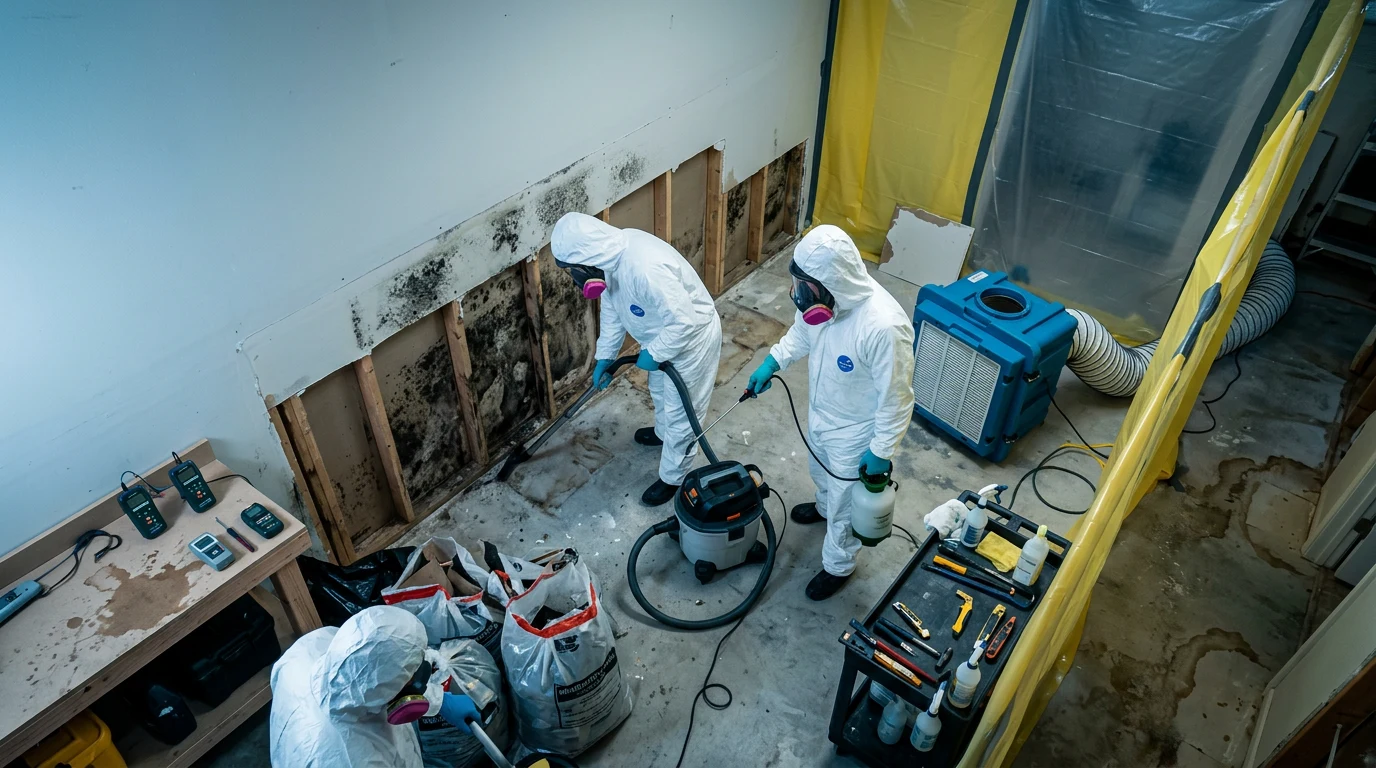
For remediation projects exceeding 10 square feet, areas with visible heavy mold contamination, or any situation involving chemical biocides and encapsulants, upgrading from a disposable N95 to a reusable half-face respirator with P100 filters is a sound investment in both safety and long-term cost efficiency.
3M 6503QL Half-Face Respirator with 2097 P100 Filters
The 3M 6500 series is the most widely recommended reusable respirator for mold remediation across professional forums, industry publications, and buyer review platforms. The 6503QL (large) pairs with 3M 2097 P100 particulate filters that also provide nuisance-level organic vapor relief, addressing both mold spore inhalation and chemical fume exposure from cleaning agents.
Key specifications: Silicone facepiece with Quick Latch (QL) drop-down mechanism, bayonet filter attachment, dual cartridge design, adjustable head cradle. The 2097 P100 filters provide 99.97% particulate filtration plus a carbon layer for nuisance-level organic vapor protection. For full organic vapor protection during heavy chemical use, the 6003 OV/Acid Gas cartridges topped with 5P71 P100 particulate pre-filters provide the highest protection configuration.
Aggregated buyer consensus (8,000+ combined reviews): Professional mold remediators overwhelmingly recommend this combination. Buyers praise the Quick Latch feature that allows pulling the mask down during breaks without removing it entirely. The silicone facepiece is noted for maintaining a reliable seal over extended periods with less facial fatigue than rigid disposables. Replacement filters cost approximately $8 to $12 per pair, making the per-use cost lower than disposable N95s for anyone doing more than occasional mold work.
Best for: Homeowners undertaking medium to large mold remediation projects, professional remediators, and anyone using chemical mold treatments in enclosed spaces. This is the standard recommendation from most mold remediation training programs.
GVS Elipse P100 Half-Face Respirator
The GVS Elipse has gained significant market share among professional contractors specifically because of its low profile and lightweight design. At roughly 130 grams with filters installed, it weighs less than half of most competing half-face respirators, reducing neck fatigue during overhead work common in ceiling and attic mold remediation.
Key specifications: NIOSH P100 certified, Hespa (High Efficiency Synthetic Particulate Air) filter media, integrated filter housing, hypoallergenic thermoplastic elastomer facepiece. The compact filter design sits close to the face, improving balance and reducing snag hazards in tight spaces like crawl spaces and wall cavities.
Aggregated buyer consensus (2,000+ reviews): Buyers consistently highlight the dramatic weight difference compared to 3M models. The compact profile receives praise from users who work in tight attic spaces and crawl spaces where bulkier respirators catch on obstacles. Some buyers note that the filter replacement cartridges are proprietary to GVS and less widely available at local hardware stores compared to 3M filters, though online availability is consistent.
Best for: Users prioritizing lightweight comfort during extended remediation work, especially in confined spaces. A strong alternative for anyone who finds traditional half-face respirators too heavy or bulky for overhead ceiling and attic mold work.
3M 8293 P100 Disposable Respirator
The 3M 8293 bridges the gap between disposable convenience and P100-grade protection. For homeowners who want HEPA-level filtration without investing in a reusable half-face respirator, this disposable P100 provides 99.97% particulate capture in a familiar cup-style form factor.
Key specifications: NIOSH P100 certified, Cool Flow exhalation valve, adjustable nose clip, oil-proof filter media. Provides the same 99.97% particle filtration as reusable P100 cartridges in a single-use design. The P100 rating also means these filters are strongly oil-resistant, relevant when using oil-based sealants or encapsulants during mold treatment.
Aggregated buyer consensus (1,200+ reviews): Buyers frequently describe these as the “best of both worlds” for occasional mold projects. The higher per-unit cost (roughly 3 to 4 times the price of an N95 disposable) is noted as worthwhile for the significant filtration upgrade. Several reviewers with mold allergies report noticeably better symptom prevention compared to N95 disposables during identical cleanup tasks.
Best for: Homeowners who want maximum disposable protection for a single remediation project without the commitment of purchasing a reusable respirator system. Also a practical backup for professionals whose reusable respirator is unavailable.
Miller LPR-100 Half-Face Respirator
The Miller LPR-100 offers P100 particulate and organic vapor protection at a lower price point than the 3M 6500 series. Originally designed for welding applications, its low-profile design and single-filter configuration have made it increasingly popular among mold remediators looking for a budget-friendly reusable option.
Key specifications: NIOSH P100/OV certified, single integrated filter cartridge, silicone facepiece, low-profile design. The combined P100 particulate and organic vapor filter in a single cartridge simplifies maintenance compared to dual-cartridge systems.
Aggregated buyer consensus (900+ reviews): Buyers appreciate the lower entry cost and single-filter simplicity. The low profile is noted as beneficial for working in tight spaces. Some reviews note that breathing resistance is slightly higher than dual-cartridge models because all airflow passes through a single filter, which can be fatiguing during heavy physical work. Replacement filter availability is more limited than 3M consumables.
Best for: Budget-conscious users who need reusable P100/OV protection for occasional mold projects and value the compact single-filter design for tight-space work.
How to Achieve a Proper Respirator Seal for Mold Work
A respirator is only as effective as its seal against the face. An improperly fitted N95 can allow 20% to 50% of airborne particles to bypass the filter entirely through gaps, reducing actual protection to levels far below the rated 95% filtration. For mold remediation, where concentrated spore bursts occur during disturbance of contaminated materials, proper fit is not optional.
User Seal Check Procedure
Every time a respirator is donned, perform both a positive and negative pressure seal check:
- Positive pressure check: Place both hands completely over the respirator and exhale firmly. The mask should puff outward with no air leaking around the edges. If air escapes near the nose, adjust the nose clip. If air escapes at the cheeks or chin, readjust the straps.
- Negative pressure check: Cover the filter surface(s) with your palms and inhale sharply. The mask should collapse slightly toward your face and hold suction for several seconds. If it does not collapse or suction breaks immediately, the seal is inadequate.
- Movement test: After achieving a seal, turn your head left and right, look up and down, and talk briefly. Recheck that no air leaks develop during facial movement typical of actual work activities.
Factors That Compromise Respirator Seal
- Facial hair: Even one day of stubble growth creates channels for unfiltered air to bypass the filter. OSHA prohibits facial hair that contacts the sealing surface for occupational respirator use. For mold remediation, clean-shaven skin at the mask seal line is essential for protection.
- Wrong size: N95 respirators come in limited sizes (most are “standard” which fits approximately 60% of face shapes). Users who consistently fail seal checks with one model should try an alternative brand or switch to a half-face respirator with adjustable sizing.
- Worn straps: Elastic headbands lose tension after repeated use, allowing the mask to pull away from the face. Disposable N95s should be discarded when strap elasticity noticeably decreases.
- Improper donning: Both straps must be positioned correctly (upper strap above the ears near the crown, lower strap below the ears at the base of the neck). A single strap around the ears, common with surgical masks, does not provide adequate seal pressure for N95 respirators.
Complete PPE Setup for Mold Remediation
Respiratory protection is one component of a complete personal protective equipment strategy for mold work. The following mold safety kit components work together with a respirator to minimize exposure during cleanup and remediation projects.
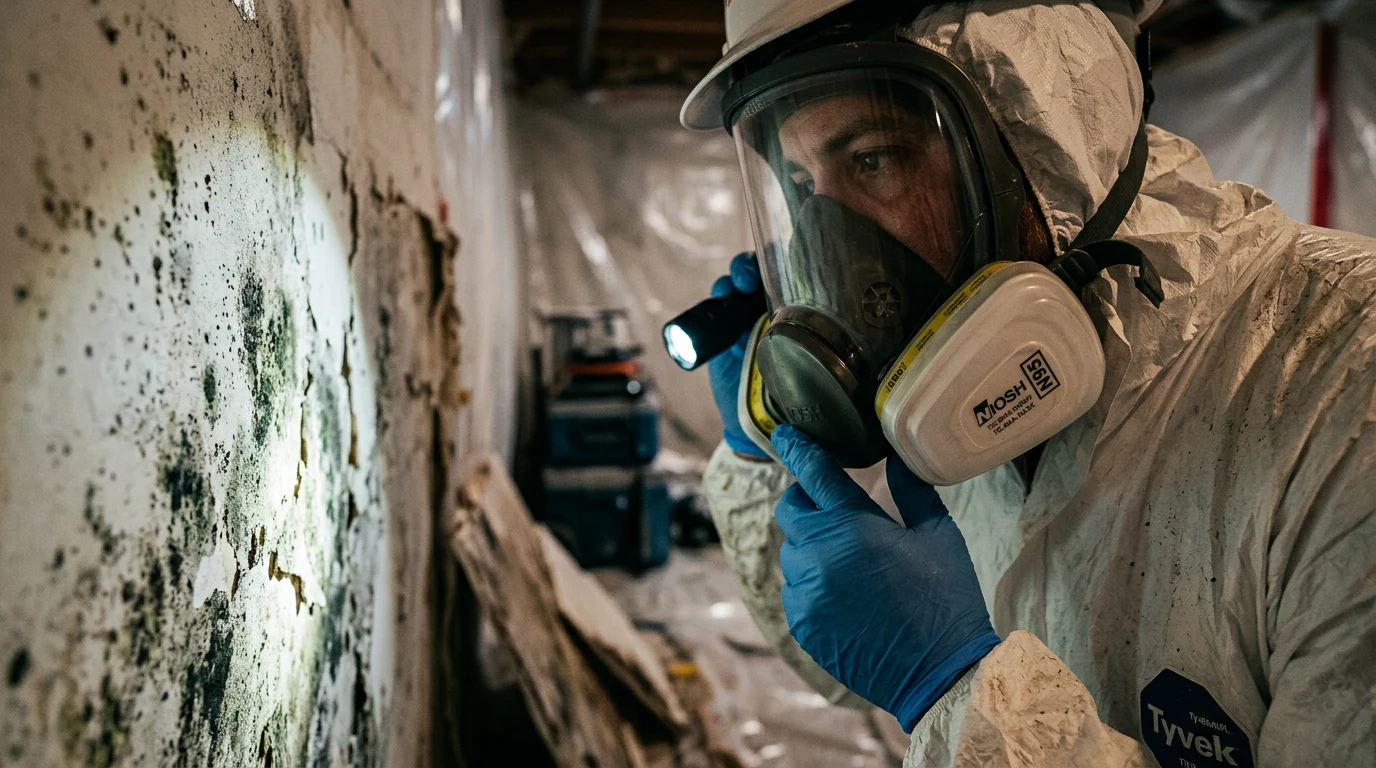
- Safety goggles (non-vented): Mold spores can cause conjunctivitis and eye irritation. Non-vented goggles prevent spore contact with the eyes. Vented goggles allow airborne particles to enter and should be avoided for mold work.
- Nitrile gloves: Extended-cuff nitrile gloves (12 inches or longer) protect hands and wrists from both mold contact and chemical cleaning agents. Latex gloves are not recommended due to allergy risk and lower chemical resistance.
- Protective clothing: Disposable Tyvek coveralls or, at minimum, long sleeves and pants that can be immediately laundered. Mold spores embed in fabric and can be transported to other areas of the home.
- HEPA vacuum: A HEPA-filtered vacuum for cleaning the work area prevents recontamination after remediation. Standard household vacuums lack HEPA filtration and can actually spread mold spores through their exhaust.
Cost Analysis: Disposable N95 vs. Reusable P100
The upfront cost of a reusable half-face respirator is higher, but the per-use cost drops quickly for anyone doing more than a single mold project. Understanding the break-even point helps determine which investment makes sense for a given situation. This cost comparison also factors into broader mold removal cost planning.
| Factor | Disposable N95 (3M 8511) | Reusable P100 (3M 6503QL + 2097) |
|---|---|---|
| Initial cost | $2 to $4 per mask | $30 to $40 for respirator + $8 to $12 for first filter pair |
| Per-use cost (after 10 uses) | $20 to $40 total | $38 to $52 total (filters last ~40 hours) |
| Per-use cost (after 30 uses) | $60 to $120 total | $46 to $64 total (1 to 2 filter changes) |
| Filtration level | 95% | 99.97% |
| Chemical vapor protection | None | Nuisance OV with 2097, full OV with 6003+5P71 |
| Comfort (extended wear) | Moderate (heat buildup) | High (silicone seal, lower breathing resistance) |
| Break-even point | N/A | Approximately 10 to 15 use sessions |
For a single small mold cleanup, a pack of disposable N95s is the practical choice. For anyone planning to handle ongoing mold issues, a basement remediation project, or multiple rooms, the reusable P100 system pays for itself within a few projects while delivering meaningfully better protection.
Common Mistakes When Using Respirators for Mold
Even with a quality respirator, improper use can negate the protection it provides. These are the most frequently reported user errors based on remediation industry training materials and buyer review feedback:
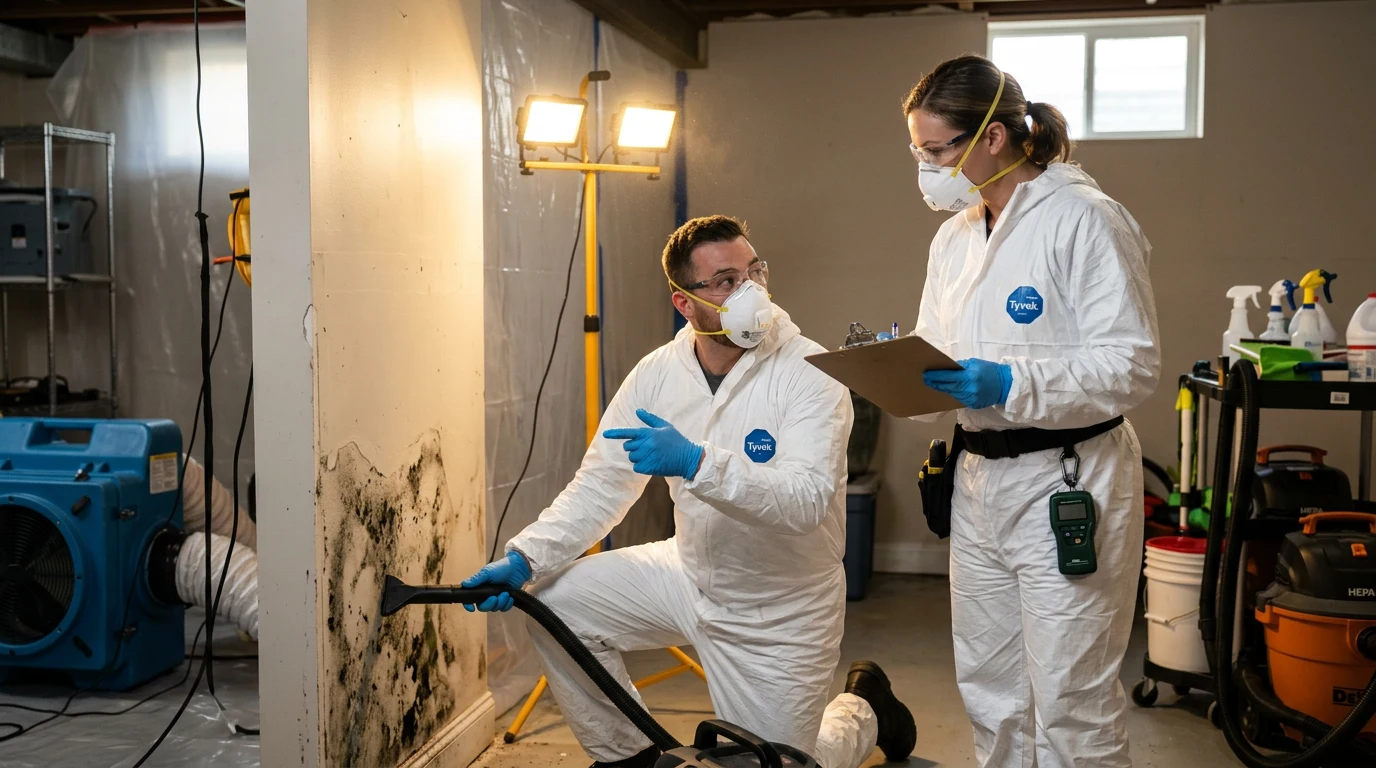
- Using a surgical mask instead of an N95: Surgical masks (the loose-fitting blue disposable type) do not form a face seal and are not NIOSH-rated for particulate filtration. They provide essentially no protection against mold spore inhalation.
- Wearing the respirator with facial hair: As noted above, even light stubble breaks the seal. This is the single most common cause of inadequate protection in both professional and homeowner settings.
- Failing to replace disposable masks: A visibly soiled, damp, or crushed N95 provides degraded filtration. Buyers frequently report reusing a single disposable mask across multiple days of a project, well beyond the recommended use life.
- Removing the respirator in the contaminated zone: Taking the mask off “for a quick break” while still in the mold-affected area exposes the user to the highest spore concentrations. Exit the containment area completely before removing respiratory protection.
- Storing disposable masks improperly: Tossing a used N95 in a toolbox or pocket compresses the filter media and contaminates the interior. Store between uses in a clean paper bag with the interior facing up.
- Ignoring chemical vapor hazards: An N95 filters particles but provides zero protection against chemical vapors from bleach, biocides, or encapsulant fumes. When using chemical mold removal products, organic vapor cartridges are necessary.
Choosing the Right Respirator: Decision Framework
Use this framework to match the right respirator to the specific mold remediation scenario:
| Scenario | Recommended Respirator | Why |
|---|---|---|
| Small bathroom mold patch (<10 sq ft) | 3M 8511 N95 or 3M 8210 N95 | N95 meets EPA minimum for small areas |
| Moderate mold on walls/ceiling (10 to 30 sq ft) | 3M 8293 P100 disposable or reusable half-face | Elevated spore levels warrant higher filtration |
| Basement or crawl space remediation | 3M 6503QL + 2097 P100 filters | Extended work time, confined space, potential chemical use |
| Mold cleanup using bleach or biocides | Half-face with P100 + OV cartridges | Particle filtration alone does not protect against chemical fumes |
| Attic mold in tight spaces | GVS Elipse P100 | Lightweight, low-profile design for confined overhead work |
| Professional remediation (>100 sq ft) | Full-face P100 with OV/AG cartridges | Maximum protection, eye protection integrated |
| Mold inspection (no disturbance) | N95 disposable | Minimal spore release when mold is not being disturbed |
Where to Buy and What to Avoid
Counterfeit N95 respirators became a significant problem during and after the COVID-19 pandemic, and the issue persists. NIOSH maintains a list of approved respirators on its Certified Equipment List (CEL). When purchasing respirators for mold remediation:
- Buy from authorized retailers: Purchase directly from major retailers (Home Depot, Lowe’s, Amazon sold-by-manufacturer listings, Grainger, Uline) rather than unknown third-party sellers.
- Verify the NIOSH approval number: Every certified respirator has a TC (Testing and Certification) number printed on it. Cross-reference this number on the NIOSH CEL database.
- Avoid single-strap “N95” masks: Authentic NIOSH N95 respirators use two straps (headbands). Single-strap ear-loop designs are not NIOSH-certified regardless of labeling.
- Check for the NIOSH stamp: The respirator itself (not just the box) must bear the NIOSH name, the approval number, the filter designation (N95, P100), and the manufacturer name.
- Be cautious with KN95 claims: KN95 is a Chinese standard (GB2626) and is not NIOSH-approved. CDC testing found that approximately 60% of tested KN95 masks did not meet their claimed filtration efficiency.
Maintaining Reusable Respirators Between Mold Projects
Reusable half-face respirators require basic maintenance to ensure continued performance and hygiene, especially between mold remediation sessions where the facepiece has been exposed to mold spores:
- Clean the facepiece after each use: Remove the filters/cartridges. Wash the facepiece with warm water and mild dish soap. Rinse thoroughly and air dry completely before reassembly. Do not use solvents or alcohol-based cleaners on silicone facepieces.
- Inspect sealing surfaces: Check the facepiece for cracks, tears, or deformation, particularly around the nose bridge and chin areas where seal integrity is critical. Replace the facepiece if any damage is visible.
- Replace filters on schedule: P100 particulate filters should be replaced when breathing resistance noticeably increases, when the filter is physically damaged, or after approximately 40 hours of cumulative use. Organic vapor cartridges have a shorter service life and should be replaced when chemical odors become detectable through the respirator.
- Store in a sealed bag: Keep the assembled respirator in a zip-lock bag or the manufacturer’s storage case in a clean, dry location. This prevents dust accumulation on the filter surfaces and keeps the facepiece clean for the next use.
Frequently Asked Questions
The following questions address the most common concerns about respirator selection and use during mold remediation, based on the topics most frequently raised in buyer reviews, remediation forums, and health authority guidance documents.
Is an N95 mask enough for mold remediation?
An N95 respirator filters at least 95% of airborne particles, including most mold spores, which typically range from 1 to 100 microns. For small mold jobs under 10 square feet, an N95 meets EPA and OSHA minimum guidelines. For larger remediation projects, areas with heavy Stachybotrys (black mold) contamination, or situations involving chemical cleaners, upgrading to a P100 half-face or full-face respirator with organic vapor cartridges provides significantly better protection.
What is the difference between N95 and P100 for mold?
N95 respirators filter 95% of airborne particles and are not oil-resistant. P100 respirators filter 99.97% of particles (equivalent to HEPA filtration) and are strongly resistant to oil-based aerosols. For mold remediation involving chemical agents like biocides or encapsulants, P100 with organic vapor cartridges is the recommended standard. The “N” designation means not oil-resistant, while “P” means strongly resistant to oil.
How do I know if my N95 fits properly for mold work?
Perform a user seal check by cupping both hands over the respirator and exhaling sharply. The mask should puff out slightly without air leaking around the edges. Facial hair, even stubble, compromises the seal significantly. OSHA requires formal fit testing for occupational use. Homeowners should at minimum perform the positive and negative pressure seal checks described in the manufacturer instructions every time the mask is donned.
Can you reuse N95 masks for mold cleanup?
Disposable N95 respirators are designed for limited reuse. Replace the mask when breathing becomes noticeably harder (indicating filter loading), when the mask is visibly soiled or damaged, when the straps lose elasticity, or after a maximum of 8 hours of cumulative use. For multi-day remediation projects, half-face reusable respirators with replaceable P100 cartridges are more cost-effective and provide better protection.
Are KN95 masks effective for mold protection?
KN95 masks are certified under the Chinese GB2626 standard rather than the U.S. NIOSH standard. While the filtration efficiency specification is similar (95%), KN95 masks are not NIOSH-approved and have shown wider quality variation in independent testing. CDC/NIOSH found that about 60% of KN95 respirators tested did not meet claimed filtration levels. For mold remediation, NIOSH-approved N95 respirators are the recommended choice.
What other PPE do I need besides a respirator for mold removal?
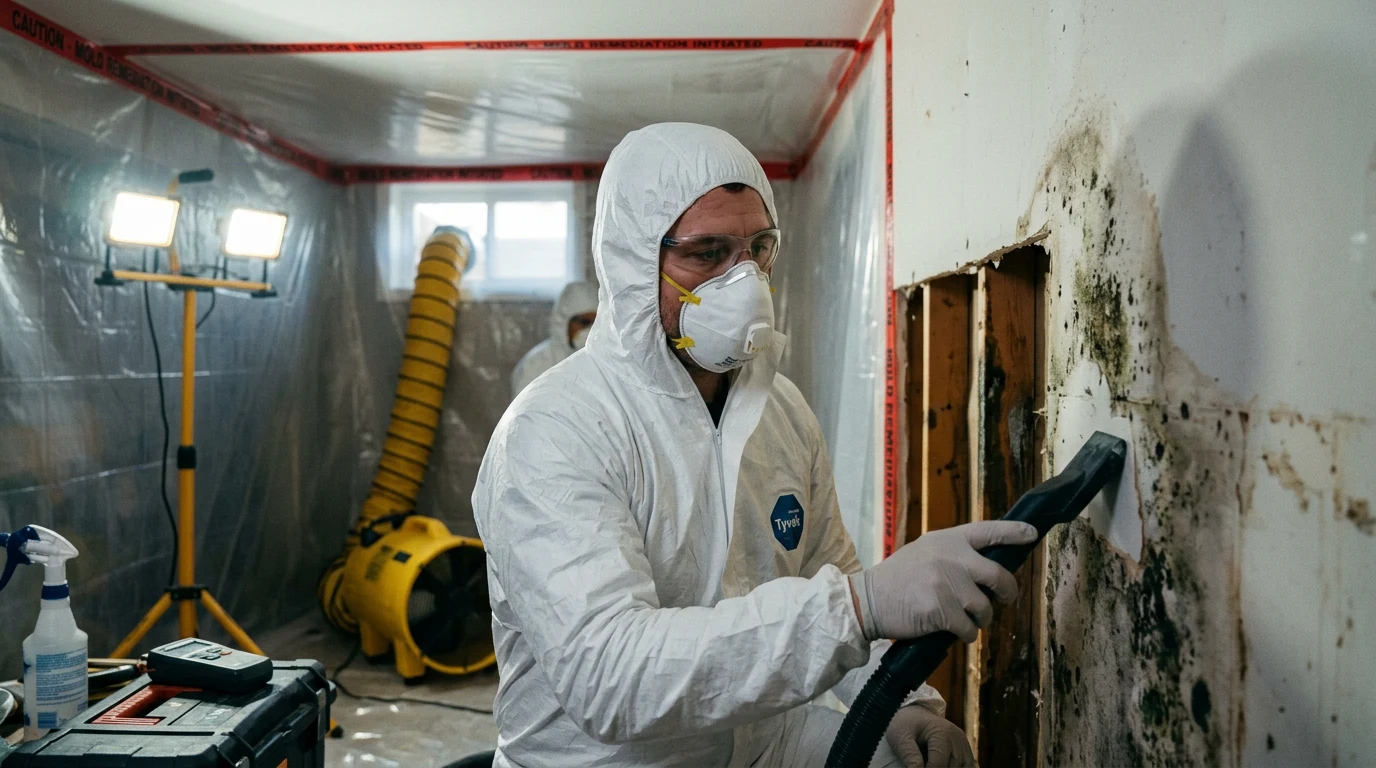
In addition to respiratory protection, the EPA and OSHA recommend nitrile or rubber gloves extending to the mid-forearm, non-vented safety goggles, and protective clothing such as a disposable Tyvek suit or long sleeves and pants. For projects exceeding 30 square feet, full containment with plastic sheeting, negative air pressure, and HEPA-filtered air scrubbers becomes necessary. A complete mold safety kit bundles the essential protective items together.
Do I need a respirator for small mold patches?
Yes. Even small mold patches release spores when disturbed during cleaning. The EPA recommends respiratory protection for any mold remediation work. Individuals with mold allergies, asthma, or compromised immune systems should wear respiratory protection even around undisturbed mold growth. The cost of a disposable N95 is minimal compared to the potential health effects of inhaling concentrated mold spores.
Why is an N95 respirator specifically recommended for mold remediation?
N95 respirators are crucial for mold remediation because they are designed to filter out at least 95% of airborne particles 0.3 microns or larger, including mold spores. This level of filtration is necessary to protect your respiratory system from inhaling these potentially harmful particles during cleanup.
Can I use a surgical mask instead of an N95 for mold remediation?
No, a surgical mask is not an adequate substitute for an N95 respirator during mold remediation. Surgical masks are primarily designed to protect others from the wearer’s respiratory emissions and do not provide a tight seal or the necessary filtration efficiency to protect the wearer from inhaling mold spores.
What features should I look for in an N95 respirator for mold remediation?
When selecting an N95 for mold remediation, prioritize features like an adjustable nose clip and head straps for a secure fit, and consider models with an exhalation valve to reduce heat and moisture buildup, enhancing comfort during extended use. Ensure the respirator is NIOSH-approved, indicated by the ‘N95’ marking and approval number.
How do I ensure a proper fit with my N95 respirator during mold remediation?
Achieving a proper fit is essential for an N95 respirator’s effectiveness; perform a user seal check every time you put it on by exhaling sharply to feel for air leakage around the edges. Facial hair, such as beards, can prevent a tight seal, rendering the respirator ineffective against mold spores.

How often should I replace my N95 respirator during mold remediation?
You should replace your N95 respirator when it becomes difficult to breathe through, if it gets damaged, or if the seal is compromised, typically after 8 hours of continuous or intermittent use in dusty conditions. For mold remediation, replace it if it becomes visibly dirty or wet, as its filtration efficiency can be reduced.
Are there any situations where an N95 respirator might not be sufficient for mold remediation?
For extensive mold contamination, especially involving large areas or black mold, an N95 respirator might not be sufficient, and a higher level of protection like a P100 respirator or even a full-face respirator may be necessary. Always consult with a professional mold remediator for severe cases to ensure appropriate safety measures are taken.
Bottom Line: Which Respirator to Buy for Mold Remediation
For most homeowners handling small to moderate mold cleanup, the 3M 8511 N95 delivers reliable NIOSH-certified protection with the comfort advantage of an exhalation valve. It is the best starting point for anyone assembling a mold remediation safety kit.
For any project exceeding 10 square feet, involving visible heavy mold growth, or requiring chemical mold removal products, the 3M 6503QL half-face respirator paired with 2097 P100 filters is the standard recommendation across professional remediation training programs. The investment pays for itself within a few projects, and the 99.97% HEPA-equivalent filtration provides a meaningful safety margin above the N95 minimum.
Regardless of which respirator is selected, proper fit, consistent seal checks, and timely filter replacement determine whether the rated filtration actually translates to real-world respiratory protection. A perfectly rated respirator with a poor seal provides less protection than a lower-rated mask that fits properly. When in doubt about fit or the scope of a mold problem, consulting a professional remediation company for assessment is a prudent step. For a broader understanding of the full remediation process, the complete mold removal guide covers each stage from identification through post-remediation verification.
These statements have not been evaluated by the Food and Drug Administration. This information is not intended to diagnose, treat, cure, or prevent any disease. Content is for informational purposes only and is not medical advice; consult a qualified healthcare provider before starting any supplement. As an Amazon Associate we earn from qualifying purchases.