Concrobium Mold Control and Mold Armor are two of the most widely available mold treatment products at hardware stores across North America. While both products target household mold problems, they use fundamentally different chemistries and serve different roles in a mold remediation strategy. This concrobium vs mold armor comparison breaks down the active ingredients, effectiveness, safety profiles, and ideal use cases to help homeowners choose the right product for their specific mold situation.
Affiliate Disclosure: MoldActionPlan.com earns commissions from qualifying purchases through our affiliate links at no extra cost to you. Our recommendations are based on aggregated buyer reviews, manufacturer specs, and expert analysis. Full disclosure.
Review Methodology: Products in this comparison have not been independently purchased or tested by our team. Recommendations are based on aggregated verified buyer feedback, manufacturer specifications, ingredient analysis, and published expert opinion. We disclose affiliate relationships where present.
Quick Comparison: Concrobium vs Mold Armor
| Feature | Concrobium Mold Control | Mold Armor FG502 |
|---|---|---|
| Primary Function | Kill mold + prevent regrowth | Kill mold + remove stains |
| Active Ingredient | Trisodium phosphate + sodium carbonate | Sodium hypochlorite (bleach-based) |
| EPA Registered | Yes (EPA Reg. No. 82552-1) | Yes (EPA registered) |
| Kills Mold | Yes, at root level | Yes, surface kill |
| Removes Stains | Minimal | Good stain removal |
| Prevents Regrowth | Yes — antimicrobial barrier | No residual protection |
| Odor | None (zero VOCs) | Strong bleach fumes |
| Safe for Indoor Use | Yes — no harmful chemicals | Requires ventilation |
| Fogger Compatible | Yes | No |
| Best Surfaces | All (including porous) | Hard, non-porous surfaces |
| Price (32 oz) | ~$10–$13 | ~$5–$8 |
| Buyer Rating | 4.3/5 (10,000+ reviews) | 4.2/5 (5,000+ reviews) |
How These Products Work
Concrobium: Prevention Through Physical Crushing
Concrobium Mold Control uses a patented formula of inorganic salts — primarily trisodium phosphate and sodium carbonate. As the solution dries, it forms an invisible crystalline film that physically crushes mold spores at the microscopic level. This residual barrier continues to prevent new mold colonization for weeks to months after application.
Concrobium is registered with the EPA as an antimicrobial product (Registration No. 82552-1), confirming independent laboratory testing against common household mold species including Stachybotrys chartarum (black mold), Aspergillus niger, and Penicillium.
Mold Armor: Bleach-Based Kill and Clean
Mold Armor FG502 is a sodium hypochlorite-based product that kills mold and mildew on contact while simultaneously removing stains through bleaching action. The product works by oxidizing both the mold organisms and the melanin pigments responsible for dark discoloration.
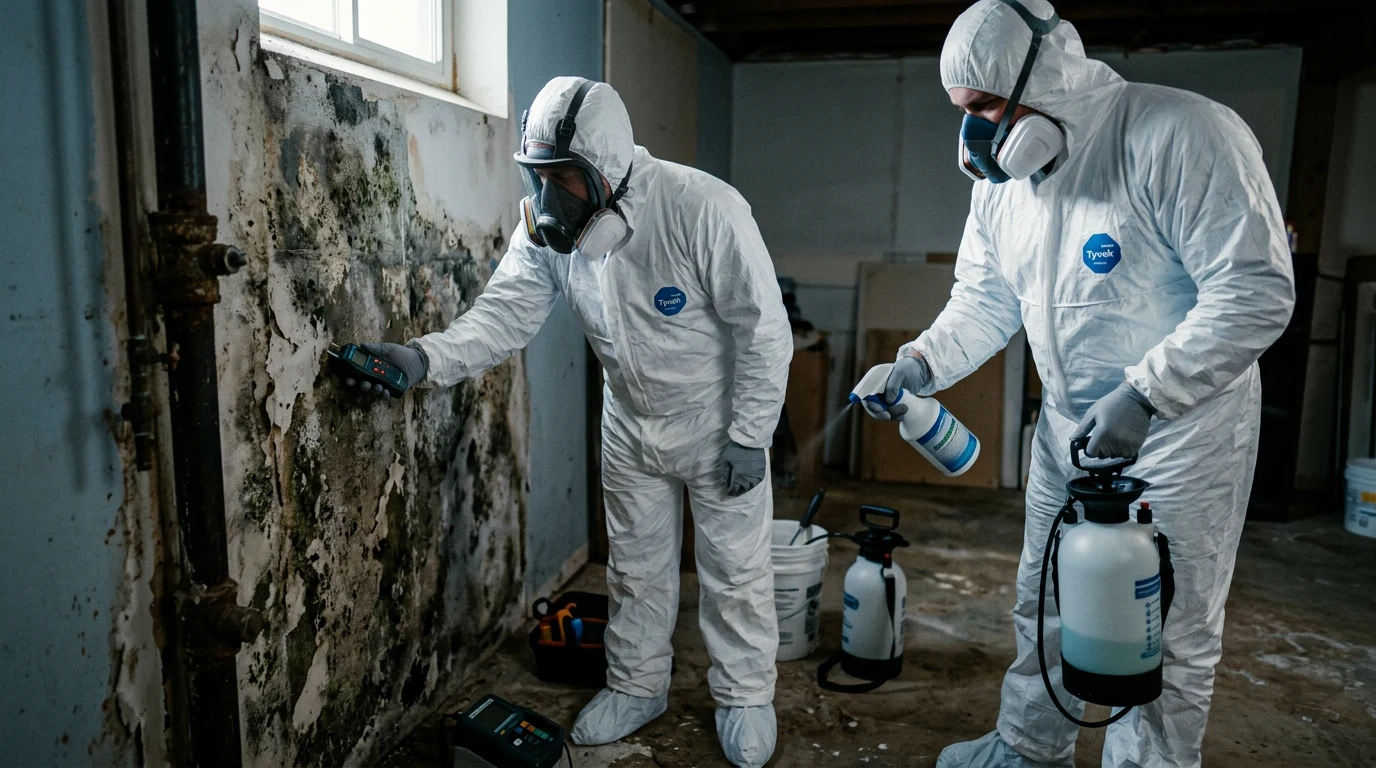
Mold Armor is EPA-registered and carries kill claims against mold, mildew, bacteria, and viruses. However, like all bleach-based products, it does not leave a residual antimicrobial barrier. Once the sodium hypochlorite evaporates, treated surfaces are immediately susceptible to recontamination.
Mold Armor also makes a separate product line — the Mold Armor FG532 Instant Mold and Mildew Stain Remover — which is a more concentrated stain-focused formula similar to RMR-86. The FG502 reviewed here is the all-purpose killer and stain remover.
Effectiveness Comparison
Mold Killing Ability
Both products kill mold effectively on contact. Concrobium gains an advantage through its residual antimicrobial barrier — the dried crystalline film continues to prevent recolonization. Mold Armor kills on contact but provides no ongoing protection. Aggregated buyer reviews confirm this pattern: Mold Armor users frequently report mold returning within weeks, while Concrobium users report longer periods of mold-free surfaces.
Stain Removal
Mold Armor wins on stain removal. The bleach-based formula removes moderate mold stains on hard surfaces, restoring tile, grout, and fiberglass to near-original appearance. For severe staining, the concentrated FG532 Stain Remover or RMR-86 are more effective.
Concrobium provides essentially zero stain removal. Killed mold colonies remain as dark spots. Cosmetic restoration always requires a separate bleaching product when using Concrobium as the primary treatment.
Surface Compatibility
Concrobium works on all surface types: drywall, wood framing, concrete, fabric, carpet, and HVAC ductwork. The zero-VOC formula is safe for porous materials where mold hyphae grow beneath the surface.
Mold Armor performs best on hard, non-porous surfaces — bathroom tile, shower surrounds, vinyl siding, and concrete. The bleach formula can damage colored fabrics, wood finishes, and painted surfaces. It is not recommended for use in HVAC systems or on porous materials like unfinished drywall.
Safety Comparison
Concrobium has a dramatically better safety profile. Zero VOCs, no bleach, no ammonia, no harmful fumes. Safe around children and pets once dry. Can be used in enclosed spaces without evacuation. This makes Concrobium the preferred choice for basement remediation, crawl spaces, attics, and homes with sensitive occupants.
Mold Armor produces significant chlorine fumes. The product label requires adequate ventilation, chemical-resistant gloves, and eye protection. Keep children and pets away during and after application until fumes dissipate. Never mix with ammonia-based cleaners.

Price and Value
Mold Armor is the budget option at $5–$8 per 32 oz bottle. Concrobium costs more at $10–$13 per 32 oz but delivers better coverage (~100 sq ft vs ~50–75 sq ft) and longer-lasting results through its residual barrier. When factoring in Mold Armor’s need for retreatment plus a separate preventive product, the total cost often exceeds Concrobium alone.
When to Choose Concrobium
- Long-term mold prevention is the priority
- Treatment involves porous surfaces (drywall, wood, fabric)
- HVAC or ductwork treatment with a mold fogger
- Limited ventilation (closets, crawl spaces, attics, RVs)
- Households with children, pets, or respiratory sensitivities
- Preventive application before mold appears
When to Choose Mold Armor
- Budget is the primary constraint
- Visible stains on hard bathroom surfaces need removal
- Quick, one-step kill-and-clean on non-porous surfaces
- Exterior surfaces (siding, patios, decks) where ventilation is not a concern
- Temporary fix before a more thorough remediation
Frequently Asked Questions
Is Concrobium better than Mold Armor?
For long-term mold prevention and safety, yes. Concrobium’s residual antimicrobial barrier and zero-fume formula make it the better choice for most indoor applications. Mold Armor is better for quick stain removal on hard surfaces when budget matters and ventilation is available.
Can Concrobium and Mold Armor be used together?
Yes. Use Mold Armor first to remove stains and kill surface mold, rinse thoroughly, allow 24 hours of drying, then apply Concrobium for lasting antimicrobial protection. Never mix the two products directly.
Does Mold Armor prevent mold from coming back?
No. Mold Armor kills mold on contact and removes stains but does not leave a residual antimicrobial barrier. Without addressing the moisture source and applying a preventive product, mold will likely return to treated areas within weeks.
Which product is safer for bathroom use?
Concrobium is safer due to its zero-fume formula. However, it will not remove existing stains. For bathroom renovation, many homeowners use Mold Armor (with windows open) for stain removal, then follow up with Concrobium for prevention. Running a dehumidifier and improving ventilation are also critical for preventing chronic bathroom mold.
Final Verdict
Concrobium is the better product for most homeowners dealing with indoor mold. Its prevention capability, safety profile, and surface versatility outweigh Mold Armor’s advantages in stain removal and price. However, Mold Armor fills a valid role as a budget-friendly stain remover for hard surfaces. The ideal approach uses both: Mold Armor for cleaning, Concrobium for protection. For how Concrobium compares to the premium stain remover RMR-86, see our Concrobium vs RMR-86 guide.
Read the full review: Concrobium Mold Control review · RMR-86 Mold Remover review
Mold Armor vs Concrobium: The Short Answer
Concrobium is generally the better pick for preventing mold from coming back (it leaves an antimicrobial barrier after it dries), while Mold Armor products are typically formulated for faster, more aggressive stain removal on already-established mold. If you’re treating a recurring problem area, Concrobium’s prevention angle usually wins out, see the full effectiveness and safety comparison above for the specific products and use cases.
Frequently Asked Questions
What are the primary differences between Concrobium Mold Control and Mold Armor FG500?
Concrobium Mold Control utilizes a unique polymer science that crushes mold spores at a microscopic level and leaves an invisible antimicrobial barrier. Mold Armor FG500, on the other hand, is primarily a bleach-based cleaner designed to kill and remove existing mold stains, often relying on sodium hypochlorite as its active ingredient.
Which product is more effective for preventing mold regrowth after initial remediation?
Concrobium Mold Control is generally more effective for preventing mold regrowth due to its invisible antimicrobial barrier that continues to inhibit new mold formation. Mold Armor FG500, while effective at killing existing mold, does not leave a long-lasting preventative barrier.
Is one product safer to use around children and pets than the other?
Concrobium Mold Control is often considered safer around children and pets as it is non-toxic, non-corrosive, and contains no harsh chemicals like bleach. Mold Armor FG500, being bleach-based, requires more caution during application and ventilation due to its stronger fumes and potential for irritation.
Which product is better for treating mold on porous surfaces like drywall or wood?
Concrobium Mold Control is generally preferred for porous surfaces like drywall and wood because its unique formula penetrates and crushes mold at the root without bleaching or damaging the material. Mold Armor FG500, due to its bleach content, can potentially lighten or damage certain porous materials.
Can both Concrobium and Mold Armor be used on outdoor surfaces?
Yes, both Concrobium Mold Control and Mold Armor FG500 can be used on outdoor surfaces, though their application methods and long-term effects differ. Concrobium provides ongoing mold inhibition, while Mold Armor primarily focuses on immediate cleaning and stain removal.
Which product offers better value for money for typical household mold issues?
The better value depends on the specific mold issue; for ongoing prevention and treatment on various surfaces, Concrobium Mold Control may offer better long-term value due to its preventative barrier. For immediate, heavy stain removal, Mold Armor FG500 might be a more cost-effective initial cleaner.
These statements have not been evaluated by the Food and Drug Administration. This information is not intended to diagnose, treat, cure, or prevent any disease. Content is for informational purposes only and is not medical advice; consult a qualified healthcare provider before starting any supplement. As an Amazon Associate we earn from qualifying purchases.